
• Contact

  • Newsletter

  • About us

  • Delivery options

  • Prospero Book Market Podcast

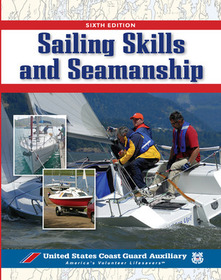
  • Sailing Skills & Seamanship
      • GET 10% OFF

      • The discount is only available for 'Alert of Favourite Topics' newsletter recipients.
      • Publisher's listprice GBP 20.00
      • The price is estimated because at the time of ordering we do not know what conversion rates will apply to HUF / product currency when the book arrives. In case HUF is weaker, the price increases slightly, in case HUF is stronger, the price goes lower slightly.

        9 030 Ft (8 600 Ft + 5% VAT)
      • Discount 10% (cc. 903 Ft off)
      • Discounted price 8 127 Ft (7 740 Ft + 5% VAT)

    9 030 Ft

    Availability

    cancelled

    Why don't you give exact delivery time?

    Delivery time is estimated on our previous experiences. We give estimations only, because we order from outside Hungary, and the delivery time mainly depends on how quickly the publisher supplies the book. Faster or slower deliveries both happen, but we do our best to supply as quickly as possible.

    Product details:

    • Publisher International Marine
    • Date of Publication 16 October 2007

    • ISBN 9780071470292
    • Binding Paperback
    • No. of pages464 pages
    • Size 271x213x21 mm
    • Weight 1218 g
    • Language English
    • 0

    Categories

    Long description:

    Learn the essentials of sailing and seamanship from one of the world’s premier boating organizations

    Since 1978, Sailing Skills and Seamanship has been the required manual for students in the U.S. Coast Guard Auxiliary’s esteemed sail-training programs. Now this exclusive handbok is available for the first time to every beginning and intermediate sailor. It is your thorough introduction to recreational sailing’s fundamentals, from choosing the right sailboat to knowing the rules of the nautical road and everything in between.

    Discover the answers to all your questions on:

    • Essential equipment, both required and recommended
    • Docking and anchoring
    • Sailing fundamentals
    • Tuning your sailboat’s rigging for best performance
    • Knots, splices, and line handling
    • Operating and maintaining outboard or inboard engines
    • Navigation and the rules of the nautical road
    • Boat handling and seamanship on coastal and inland waters
    • Trailering a sailboat
    • Marine weather and marine communications
    • And much more!

    Approved by the National Association of State Boating Law Administrators (NASBLA), with chapter review questions and answers, Sailing Skills and Seamanship is the ideal study and reference guide for honing your sailing skills and expanding your seamanship knowledge.

    Learn the essentials of sailing and seamanship from one of the world’s premier boating organizations

    Since 1978, Sailing Skills and Seamanship has been the required manual for students in the U.S. Coast Guard Auxiliary’s esteemed sail-training programs. Now this exclusive handbok is available for the first time to every beginning and intermediate sailor. It is your thorough introduction to recreational sailing’s fundamentals, from choosing the right sailboat to knowing the rules of the nautical road and everything in between.

    Discover the answers to all your questions on:

    • Essential equipment, both required and recommended
    • Docking and anchoring
    • Sailing fundamentals
    • Tuning your sailboat’s rigging for best performance
    • Knots, splices, and line handling
    • Operating and maintaining outboard or inboard engines
    • Navigation and the rules of the nautical road
    • Boat handling and seamanship on coastal and inland waters
    • Trailering a sailboat
    • Marine weather and marine communications
    • And much more!

    Approved by the National Association of State Boating Law Administrators (NASBLA), with chapter review questions and answers, Sailing Skills and Seamanship is the ideal study and reference guide for honing your sailing skills and expanding your seamanship knowledge.

    More

    Table of Contents:

    Letter from U.S. Coast Guard Auxiliary Commodore

    Introduction

    Part One: Basic Skills and Seamanship

    Chapter 1ABOUT SAILBOATS

    What Is a Boat?

    Language of the Sea

    Components of a Sailboat

    Hull Types

    Steering Systems

    Other Rigs

    Boatbuilding Materials

    Coast Guard Customer Infoline

    Marine Surveyors

    Buying a Boat

    Practice Questions

    Chapter 2HOW A BOAT SAILS

    Reading the Wind

    Points of Sailing: Running

    Points of Sailing: Close Hauled

    Points of Sailing: Reaching

    Sail Shape

    Sail Adjustments

    When the Wind Picks Up

    Practice Questions

    Chapter 3BASIC SAILBOAT MANEUVERING

    Tacking and Jibing

    Sailing a Course

    Stability and Angle of Heel

    Knowing Your Boat

    Practice Questions

    Chapter 4RIGGING AND BOAT HANDLING

    Stepping the Mast

    Making Sail

    Sailing Away

    Under Sail

    Returning to Port

    Anchoring

    Practice Questions

    Chapter 5EQUIPMENT FOR YOUR BOAT

    Requirements for Your Boat

    Fire Prevention and Detection

    Your Boat’s Equipment

    Legal Considerations

    Practice Questions

    Chapter 6TRAILERING YOUR SAILBOAT

    Legal Considerations

    Practical Considerations

    The Towing Vehicle

    Trailer Hitches

    Balancing the Load

    Handling Your Trailer

    Predeparture Checks

    Preparing to Launch

    Sailboat Trailering: Raising the Mast

    Launching

    Retrieving

    Storing Your Boat and Trailer

    Theft Prevention

    Aquatic Nuisance Species

    Float Plan

    Practice Questions

    Chapter 7YOUR “HIGHWAY” SIGNS

    Buoyage Systems

    Waterway Marks

    How Waterways Are Marked

    Light Characteristics

    Chart Symbols

    Light Structures

    Lights on Bridges

    Electronic Aids to Navigation

    Navigation Publications

    Practice Questions

    Chapter 8THE RULES OF THE NAUTICAL ROAD

    Two Sets of Rules

    To Whom Do the Rules Apply?

    Vessel Definitions

    The General Responsibility Rule

    General Considerations

    Conduct in Narrow Channels

    Traffic Separation Schemes

    Stand-On or Give-Way?

    Rules for Special Vessels

    Risk of Collision

    Bend Signals

    Restricted Visibility

    Vessel Lights and Shapes

    Distress Signals

    Homeland Security Measures

    Courtesy and Safety

    Drawbridges

    Penalties

    Practice Questions

    Chapter 9INLAND BOATING

    Inland Waters

    Inland Navigation

    Inland Seamanship

    River Currents

    Maintaining Inland Waterways

    Dams

    Locks

    River Charts

    Commercial Traffic

    Before You Go

    Practice Questions

    Chapter 10SAILING SAFETY

    Small Boat Safety

    Man Overboard

    Cold Water

    Sharing the Water with Other Boats

    Fueling Your Boat

    Carbon Monoxide Poisoning

    Weather

    Practice Questions

    Part Two: More Sailing Skills

    Chapter 11MORE ON SAIL TRIM AND BOAT HANDLING

    Setting Up the Standing Rigging

    Fractional Rigs

    Lee and Weather Helm

    Mainsail Trim and Shape

    Headsails and Headsail Trim

    When the Wind Increases

    Disabled Rudder

    Practice Questions

    Chapter 12INTRODUCTION TO NAVIGATION

    Nautical Charts

    Ship’s Compass

    Fixing Your Position

    Sources of Compass Error

    Correcting a Compass Reading

    Finding Your Position

    Speed-Time-Distance

    Dead Reckoning

    Tides

    Electronic Navigation

    GPS Operation

    Practice Your Art

    A Further Invitation

    Practice Questions

    Chapter 13ENGINES FOR SAILBOATS

    Outboard Engines

    Inboard Auxiliary Engines

    Diesel Engine Maintenance and Troubleshooting

    Batteries

    Sailboat Propellers

    Galvanic Action

    A Basic Tool Kit

    Practice Questions

    Chapter 14LINES AND KNOTS FOR YOUR BOAT

    Line or Rope?

    Rope Materials

    Rope Construction

    Measuring Rope

    Care of Rope

    Making Up a Line

    Knots, Bends, and Hitches

    Splices

    Securing Lines

    Lead Lines

    Dipping the Eye

    Practice Questions

    Chapter 15WEATHER AND SAILING

    Weather Information

    Wind and Boating

    Understanding Weather

    Nonfrontal Weather

    The Go, No-Go Decision

    Practice Questions

    Chapter 16YOUR BOAT’S RADIO

    Communications on the Water

    Functions of Radiotelephones

    Licenses

    Selecting Your VHF-FM Radio

    Installation

    Operating Your VHF-FM

    Copies of the Rules

    Calling Another Station

    Procedure Words

    Phonetic Alphabet

    Routine Radio Check

    Distress, Urgency, and Safety Calls

    Crew Training

    Practice Questions

    APPENDICES

    Appendix A: Your Responsibilities as a Boat Operator

    Appendix B: Float Plan Form and Boating Emergency Guide

    Appendix C: Boating Accident Report Form

    Appendix D: Digital Selective Calling (DSC) Radio Fact Sheet and MMSI Registration Form

    Appendix E: Metric Conversion Tables

    Appendix F: Vessel Safety Check

    Appendix G: Join the Coast Guard Auxiliary

    Appendix H: Become an Associate Member

    Appendix I: Preventive Boat Maintenance Checklist

    ANSWER KEY

    GLOSSARY

    INDEX

    More
    0