

- Publisher's listprice GBP 52.00
-
23 478 Ft (22 360 Ft + 5% VAT)
The price is estimated because at the time of ordering we do not know what conversion rates will apply to HUF / product currency when the book arrives. In case HUF is weaker, the price increases slightly, in case HUF is stronger, the price goes lower slightly.
- Discount 10% (cc. 2 348 Ft off)
- Discounted price 21 130 Ft (20 124 Ft + 5% VAT)
Subcribe now and take benefit of a favourable price.
Subscribe
23 478 Ft

Availability
printed on demand
Why don't you give exact delivery time?
Delivery time is estimated on our previous experiences. We give estimations only, because we order from outside Hungary, and the delivery time mainly depends on how quickly the publisher supplies the book. Faster or slower deliveries both happen, but we do our best to supply as quickly as possible.
Product details:
- Publisher OUP USA
- Date of Publication 12 January 2021
- ISBN 9780190051365
- Binding Hardback
- No. of pages430 pages
- Size 236x155x33 mm
- Weight 794 g
- Language English 53
Categories
Short description:
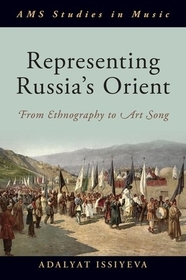
Building on long-forgotten archives and detailed case studies, Representing Russia's Orient reveals how complex representations of oriental subjects in nineteenth-century Russian art music, which often merged elements of East and West, contributed to the formation of Russia's national identity.
MoreLong description:
What is the place of ethnic minorities in the identity and culture of the majority? What happens when the colonizer appropriates the culture of the colonized? Throughout Russia's nineteenth-century expansion into the Caucasus and Central Asia, Russian intellectuals struggled with these questions that cut to the core of imperial identity. Representing Russia's Orient draws on political, cultural, and social history to tell the story of how Russia's imperial advancements and encounters with its southern and eastern neighbors influenced the development of Russian musical identity. While Russia's ethnic minorities, or inorodtsy, were located at the geographical and cultural periphery, they loomed large in composers' musical imagination and became central to the definition of Russianness itself.
Drawing from previously untapped archival and published materials, including music scores, visual art, and ethnographies, author Adalyat Issiyeva offers an in-depth study of Russian musical engagement with oriental subjects. Within a complex matrix of politics, competing ideological currents, and social and cultural transformations, some Russian composers and writers developed multidimensional representations of oriental "others" and sometimes even embraced elements of Asian musical identity. Mapping the vast repertoire of bylinas, military and children songs, music ethnographies, rare collections of Asian folk songs, art songs inspired by Decembrist literature, and the art music of famous composers from the Mighty Five and their followers — all set against the development of oriental studies in Russia — the book sheds new light on how and why Russians sometimes rejected, sometimes absorbed and transformed elements of Asian history and culture in forging their own national identity.
Representing Russia's Orient is a work of intellectual history at its finest and most compelling.
Table of Contents:
List of Figures
List of Musical Examples
Acknowledgements
Introduction
Chapter 1: Unveiling Tradition: Oriental "Others" in Nineteenth-Century Russian (Folk)Song Collections
Chapter 2: Building Images of the "Other": Russian Musical Ethnographies on Inorodtsy
Chapter 3: Aryanism and Asianism in the Quest for the Russian Identity
Chapter 4: Alexander Aliab'ev, Decembrism, and Russian Orient
Chapter 5: Balakirev, His Orient, and the Five
Chapter 6: Ethnographic Concerts at the Service of Empire
Appendix 1
Appendix 2
Bibliography
Index

