
• Contact

  • Newsletter

  • About us

  • Delivery options

  • Prospero Book Market Podcast

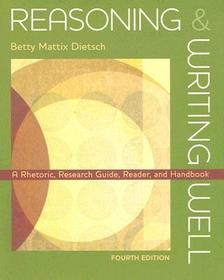
  • Reasoning and Writing Well with Student Access to Catalyst

    Reasoning and Writing Well with Student Access to Catalyst by Dietsch, Betty Mattix;

      • GET 10% OFF

      • The discount is only available for 'Alert of Favourite Topics' newsletter recipients.
      • Publisher's listprice GBP 66.99
      • The price is estimated because at the time of ordering we do not know what conversion rates will apply to HUF / product currency when the book arrives. In case HUF is weaker, the price increases slightly, in case HUF is stronger, the price goes lower slightly.

        32 004 Ft (30 480 Ft + 5% VAT)
      • Discount 10% (cc. 3 200 Ft off)
      • Discounted price 28 804 Ft (27 432 Ft + 5% VAT)

    32 004 Ft

    Availability

    Uncertain availability. Please turn to our customer service.

    Why don't you give exact delivery time?

    Delivery time is estimated on our previous experiences. We give estimations only, because we order from outside Hungary, and the delivery time mainly depends on how quickly the publisher supplies the book. Faster or slower deliveries both happen, but we do our best to supply as quickly as possible.

    Product details:

    • Edition number 4
    • Publisher McGraw-Hill Higher Education
    • Date of Publication 1 June 2005

    • ISBN 9780073205762
    • Binding Paperback
    • No. of pages pages
    • Size 231x200x32 mm
    • Weight 1198 g
    • Language English
    • 0

    Categories

    Long description:

    This modes-based reader/rhetoric/handbook offers students a comprehensive and student friendly approach to the writing process that emphasizes critical thinking as the key to successful college writing.

    More

    Table of Contents:

    * - indicates material that is new to this edition

    Contents

    A Note to Instructors

    Rhetoric and Research Writing Guide


    PART 1, The Context of Writing

    CHAPTER 1, The Rhetorical Situation and the Writing Process

    Why Learn to Reason and Write Well?

    Writing Sharpens Thinking Skills

    Writing Opens Opportunities to Learn

    Writing Nurtures Personal Development

    Writing Helps to Establish Relationships

    Writing Fosters Success in College and the Workplace

    What Is the Rhetorical Situation?

    Occasion for Writing

    Purpose for Writing

    The General Purpose

    The Specific Purpose

    Writing a Purpose Statement

    Topic

    Audience

    Voice of the Writer

    The Writing Process

    Writing and Ethics

    Thinking about What You Have Learned

    For Your Reference: Reading, Summarizing, and Other Study Skills

    Practice


    CHAPTER 2, Thinking Rhetorically

    Thinking about the Writer’s Voice

    Workplace Case Study: A Series of Collection Letters

    How Should a Writer1s Voice Sound?

    Word Choice Influences Voice


    Considering How Casual Conversation Differs from Focused Writing

    Thinking about Usage: Standard and Nonstandard

    Standard Usage

    Nonstandard Usage

    Dialect and Regionalism

    Where are Usage Labels and Abbreviations Found?

    What If Dictionaries Disagree?

    Three Vocabularies: Speaking, Writing, and Reading

    Thinking about Levels of Formality

    Informal Standard English

    Watch the Pronouns

    Mixing Levels of Formality

    Professional English

    Formal English

    Considering Four Common Concerns

    Slang and Abbreviations

    Misused Colloquialisms

    Switching Pronouns in Mid-Sentence

    Using Prescriptive Tone Appropriately

    Diplomatic Strategies

    Thinking about What You Have Learned

    Test Yourself

    Practice

    Test Yourself Answers


    CHAPTER 3, Beginning to Think Critically: Accuracy and Ethics

    Why are Accuracy and Truth Important?

    Employers Expect the Truth

    An Audience Expects the Truth

    Truth Is the Cornerstone of Trust

    Evaluating: Searching for Truth

    What is an "Established" Fact?

    Evidence Accepted as Fact in Court

    Inferences are Unproven

    Value Judgments and Point of View

    Evaluating the Writer1s Voice

    Four Ways Misinformation Arises

    Expert Opinion Sometimes Changes

    A Small Survey Is Inadequate Proof

    Facts Are Misstated and Overstated

    Stereotyping Shuts Out Fact

    Ethical Considerations: Writing Responsibly

    Limiting Unsound Generalizations

    Using Absolute Terms Accurately

    Identifying Inferences and Other Opinions

    Revising for Accuracy

    Thinking about What You Have Learned

    Test Yourself

    Practice

    Test Yourself Answers


    CHAPTER 4, Prewriting and Drafting: Discovering and Developing Ideas

    I. Prewriting Strategies

    Freewriting

    Brainstorming

    Clustering

    Questioning

    Keeping a Journal

    II. Strategies for Drafting

    Fleshing Out Prewriting Notes

    Turn Off Your Internal Censor

    When Ideas Disappear

    Focusing on Exploratory Draft

    Narrowing a Topic

    Case Study: Nita Narrows Her Topic

    Identifying the Audience and Writing a Purpose Statement

    Drafting a Basic Thesis Statement

    Where Should the Thesis Go?

    Omitting a Thesis Statement

    Starting a Scratch Outline

    Selecting a Title

    Drafting an Introduction

    Begin with an Anecdote that Sets the Scene

    Overuse of the Pronoun I

    Guideline for using the Pronoun I

    Begin with a Description

    Begin by Stating a Problem

    Begin with a Surprising Statistic or Striking Bit of History

    Begin by Disputing a Common Belief or Defying a Stereotype

    Seven Basic Ways to Organize a Draft

    Chronological Order

    Spatial Order

    Order of Importance

    Order of Generality

    Order of Formation

    Order of Complexity

    Order of Materiality

    Writing an Effective Conclusion

    End by Referring Back to the Thesis

    End with a Personal Response

    End on a Note of Optimism

    End with a Reference to a Benefit

    End with an Unexpected Twist

    Drafting on a Computer

    Thinking about What You Have Learned

    Practice


    PART 2, REVISION WORKSHOP: RETHINKING THE DRAFT

    Overview: How Does the Rhetorical Situation Affect Information Design?


    CHAPTER 5, Considering REVISING, EDITING, AND PROOFREADING

    How Do You Become Your Own Editor?

    Revision: Stage 3 of the Writing Process

    Five Major Steps of Revision

    1. Acknowledge the Need

    2. Read and Question

    3. Reread and Mark the Draft

    4. Revise and Refine

    5. Let Cool, Then Check the Focus

    Refocusing a Draft

    Focusing the title

    Creating an Intriguing Title

    Outlining

    Finding a Fresh Perspective

    Clarifying the Draft

    Revising Sluggish Openings

    Revising the Body

    Revising the Conclusion

    Case Study: A Series of Student Outlines and Drafts

    Editing and Proofreading: Stage 4 of the Writing Process

    Major Tasks in Editing and Proofreading

    Marking the Revised Draft

    Making Sentences Clear and Concise

    Finding, Fresh Language

    Create a Simile or Metaphor

    Experiment with Alliteration and Rhyme

    Proofreading Effectively

    Peer Review: Helping to Improve Each Others’ Writing

    Thinking about What You Have Learned

    Practice


    CHAPTER 6, Revising Paragraphs

    Qualities of Effective Paragraphs

    Interest

    Unity

    Completeness

    Coherence

    Clarity

    Elements of an Effective Paragraph

    The Topic Sentence

    Support Sentences

    A Concluding Sentence

    Prewriting and Drafting Paragraphs

    Narrowing a Topic Sentence

    Positioning the Topic Sentence

    The Topic Sentence at the Beginning

    The Topic Sentence in the Middle

    The Topic Sentence at the End

    Unifying a Paragraph without a Topic Sentence

    Adjusting Paragraph Length

    Strategies to Organize and Develop Paragraphs

    Narrative Paragraphs

    Descriptive Paragraphs

    Process Analysis Paragraphs

    Illustration Paragraphs

    Comparison or Contrast Paragraphs

    Paragraphs of Definition

    Transitional Paragraphs

    Thinking about What You Have Learned

    Practice


    CHAPTER 7, Restyling Sentences

    Strategies for Effective Sentences

    Choosing an Effective Voice for Verbs

    Favoring the Active Voice

    Using Understood You

    Replacing Forms of Be

    Crafting Sentences and Punctuating

    The Simple Sentence

    The Compound Sentence

    Coordinating Conjunctions

    Avoiding Comma Splices and Fused Sentences

    The Complex Sentence

    The Compound Complex Sentence

    The Periodic Sentence

    Sentence Length

    Positioning Elements within the Sentence

    Moving Elements in Independent Clauses

    Moving Modifiers and Adding Commas

    Using Expletives

    Creating Parallel Structures

    Parallel Items in a Series

    Parallel Items in Pairs

    Parallel Comparisons

    Parallel Correlative Conjunctions

    Chopping out Deadwood

    Unnecessary References to Self

    Unnecessary Prepositional Phrases

    Condensing Adjective Clauses

    Thinking about What You Have Learned

    Test Yourself

    Practice

    Test Yourself Answers


    CHAPTER 8, Selecting Effective Words

    Advantages of Reading

    Improving Word Choice

    Making the Message Clear

    Using Abstract Words

    Choosing Concrete Words

    Moving from General to Specific

    Scholarly or Simple Words?

    Considering Technical Jargon


    Making the Message Appropriate

    Weeding Out Trite Language and Clichés

    Distinguishing Denotation from Connotation

    Considering Euphemisms

    Thinking about Positive and Negative Words

    Focusing on the Positive

    Using Negative Prefixes

    Using Courtesy Words

    Using Inclusive Language in the Workplace

    Replacing Sexist Terms with Gender-free Terms

    Avoiding Generational Conflict

    Replacing Other Offensive Terms with Respectful Terms

    How When, and Where Will You Deliver the Message?

    Thinking about What You Have Learned

    Test Yourself

    Practice

    Test Yourself Answer


    Part 3: WRITING STRATEGIES

    Overview: Mising Writing Strategies for a Purpose


    CHAPTER 9, Narrating Memorable Events

    Purpose and Ethics

    General Purpose

    Specific Purpose

    Elements of Narration

    Wher
    e and When

    Who

    What

    Why

    Point of View in Narration

    First-Person Narration

    Mixing Writing Strategies

    Third-Person Narration

    Writing a Narrative Paper

    Prewriting

    Drafting an Introduction

    Opening with Action

    Opening with a Quotation

    Opening with a Comparison

    Organizing a Narrative Paper

    Developing the Narrative Paper

    Dialogue

    Concrete Details and Action Verbs

    Building Suspense

    Writing a Conclusion

    Ending with a Hint or a Hope

    Ending with a Surprise

    Ending with a Reaction

    Writing a Narrative Report

    Revising a Narrative

    Two Student Papers: Narration

    For Your Reference: Narrative Essays in the Reader

    Practice

    Twenty Ideas for a Narrative Paper


    CHAPTER 10, Describing Significant Impressions

    Purpose of Description

    What Exactly Is Description?

    Creating a Dominant Impression

    Subjective and Objective Description

    Planning a Paper of Description

    Prewriting

    Determining a Dominant Impression

    Selecting a Vantage Point and Transition

    Drafting a Paper of Description

    Drafting an Introduction

    Organizing a Description

    Developing a Description

    Revising a Description

    Two Student Papers: Description

    For Your Reference: Descriptive Essays in the Reader

    Practice

    Twenty Ideas for Descriptive Papers


    CHAPTER 11, Analyzing a Process

    What Is Process Analysis?

    Directions for Procedures

    Use Second Person for Clarity

    Workplace Case Study: Ethan Solves the Office Lounge Problem

    Process Descriptions

    Using First Person

    Using Third Person

    Transition in Process Analysis

    Writing a Process Paper

    Selecting a Topic and Prewriting

    Drafting an Introduction

    Generalization Followed by Restriction

    Historical Opening

    Combining Second Person with Person

    Developing a Process Paper

    Writing a Conclusion

    Revising a Process Paper

    Two Student Papers: Process Analysis

    For Your Reference: Process Analysis Essays in the Reader

    Test Yourself

    Practice

    Test Yourself Answers

    Twenty Ideas for Process Papers


    CHAPTER 12, Illustrating with Effective Examples

    Purpose of Examples

    Elements of Illustration

    Writing a Paper of Illustration

    Prewriting

    Organizing and Developing a Paper of Illustration

    Order

    Relevant, Accurate, and Sufficient Examples

    Weaving Examples with Explanation

    Writing a Conclusion

    Revising a Paper of Illustration

    Two Student Papers: Illustration

    For Your Reference: Illustration Essays in the Reader

    Practice

    Twenty Ideas for Papers for Illustration


    CHAPTER 13, Classifying: Sorting into Groups

    Purpose of Classification

    What Is the Basis of Classification?

    Ethical Concerns

    Writing a Paper of Classification

    Shaping a Topic to the Purpose and Audience

    Prewriting with the "Because" Technique

    Organizing a Classification Paper

    Drafting a Thesis Statement

    Developing Main Points and Embedding Transition

    Student Essay with the Main Points in the Thesis

    Making Main Points Parallel

    Writing a Conclusion

    Revising the Paper

    Two Student Papers of Classification

    For Your Reference: Classification Essays in the Reader

    Test Yourself

    Practice

    Test Yourself Answers

    Twenty Ideas for Classification papers


    CHAPTER 14,Comparing and Contrasting for a Purpose

    The Purpose of a Comparison or Contrast Paper

    Determining a Purpose

    Selecting a Suitable Topic

    Analogy: A Special Kind of Comparison

    Writing a Paper of Comparison or Contrast

    Gathering Information and Prewriting

    Organizing a Paper of Comparison or Contrast

    Drafting an Introduction

    Developing a Comparison or Contrast Paper

    Writing a Conclusion

    Transition in Comparison or Contrast Papers

    Revising a Paper of Comparison or Contrast

    Two Student Papers: Comparison

    For Your Reference: Comparison/Contrast Essays in the Reader

    Test Yourself

    Practice

    Test Yourself Answers

    Twenty Ideas for Comparison or Contrast Papers


    CHAPTER 15, Defining: IDENTIFYING BASIC CHARACTERISTICS

    The Purpose of Definition

    Formal Sentence Definition

    Extended Definition

    Consulting Sources

    Documenting Sources

    Guidelines for Using Extended Definitions

    Writing a Paper of Extended Definition

    Narrowing a Topic and Prewriting

    Organizing a Paper of Definition

    Drafting a Special Introduction

    Establishing Transition

    Developing an Extended Definition

    Operational Definition

    Defining by Comparison

    Definition by Synonym

    Definition by Negation

    Weaving Example with Explanation

    Including a Dictionary Definition for a Purpose

    Writing a Conclusion

    Closing with a Formal Sentence Definition

    Alluding to an Opening Quotation

    Ending with a Personal Lesson

    Revising a Paper of Definition

    Two Student Papers: Definition

    For Your Reference: Definition Essays in the Reader

    Practice

    Twenty Ideas for Papers of Definition


    CHAPTER 16, Investigating Causes and Consequences

    Purpose of Causal Analysis

    Workplace Case Study: The Accident

    What Is Causal Analysis?

    A Reversed Chain of Cause and Effect

    Logical Principles of Cause-and-Effect Relationships

    Two Fallacies to Avoid in Analyzing Cause and Effect

    Writing a Paper of Cause and Effect

    Planning a Cause and Effect Paper

    Drafting an Introduction

    Developing a Paper Analyzing Cause and Effect

    Writing a Conclusion

    Revising a Cause-and-Effect Paper

    Two Student Papers: Cause and Effect

    For Your Reference: Cause and Effect Essays in the Reader

    Practice

    Twenty Ideas for Papers of Cause and Effect


    PART 4, Strategies for Critical Thinking, Evaluation, and Argument


    CHAPTER 17, Proposing a Solution

    Dewey’s Method of Problem Solving

    Ethics: How Can One Be Objective?

    Workplace Case Study: Writing a Company Policy

    Organizing a Problem-Solving Paper

    Writing Strategies and Outlining

    Writing a Problem-Solving Paper

    Selecting a Topic and Prewriting

    Organizing a Problem-Solving Paper

    Drafting an Introduction

    Identifying Criteria

    What Are Criteria?

    Stating Criteria

    Proposing and Evaluating Alternatives

    Writing a Conclusion

    Revising a Problem-Solving Paper

    Two Student Papers: Problem-Solving

    For Your Reference: Problem-Solving Essays in the Reader

    Practice

    Twenty Ideas for Problem-Solving Papers


    CHAPTER 18, Shaping an Effective Argument

    Purpose of Argument

    Three Classic Appeals Used in Argument

    Workplace Case Study: 3You Got a Tiger by the Tail!2

    The Logical Appeal

    The Ethical Appeal

    The Emotional Appeal

    Using the Three Appeals

    Understanding Opposing Views and Overcoming Objections

    Writing a Classic Argument Paper

    Selecting a Topic

    Gathering Information and Prewriting

    Stating a Position

    Planning the Shape of an Argument

    Drafting a Neutral Introduction

    Finding a Common Ground

    Acknowledging Points of Agreement and Clarifying

    Refuting Opposing Points

    Dodging Fallacies

    Writing a Conclusion

    Revising an Argument

    Two Student Papers: Classic Argument

    For Your Reference: Argument Essays in the Reader

    Practice

    Twenty Ideas for Papers of Argument


    CHAPTER 19, Detecting Fallacies

    Logical Fallacies

    Card Stacking

    Either/or Fallacy

    False Analogy

    Red Herring

    Begging the Question/Circular Argument

    Hasty Generalization

    Non Sequitur

    Workplace Case Study: Non Sequitur--A Grocer's Mistake

    The Post Hoc Fallacy


    Emotional Fallacies

    Argumentation ad Hominem/Straw Man

    Bandwagon

    Plain Folk Appeal/ad Populum

    Status Appeal

    Scare Tactics

    Testimonial and Improper Appeal to Authority

    Glittering Generalities

    Ethics: Dealing with Fallacies

    Test Yourself

    Practice

    Test Yourself Answers


    PART 5, Reading Strategies and Responses to Literature


    CHAPTER 20, Reading Critically and Responding to Essays

    What to Expect in Essays

    Purpose of Essays

    Characteristics of Person
    al Essays

    Characteristics of Formal Essays

    Point of View and Voice

    Figurative Language

    The Power of Plain Words

    Critical Reading

    Evaluating What You Read

    A Strategy for Critical Reading


    Writing a Paper of Reaction or Essay Exam Answers

    Two Types of Reactions

    A Commentary

    An Argument

    Prewriting and Outlining

    Drafting

    Writing a Commentary

    Planning an Argument

    Revision and Editing

    Student Paper: Reaction


    For Your Reference: Essays in the Reader

    Practice

    Twenty Ideas for Reaction Papers


    CHAPTER 21, Reading and Responding to Short Stories, Novels, and Plays

    The Human Condition

    The Role of the Reader

    How Do Short Stories Differ from Novels?

    What Are the Major Characteristics of Novels?

    How Does Reading a Play Differ from Reading a Novel?


    Elements of Literature

    Point of View

    Setting

    Plot

    Characters

    Symbolism

    Irony

    Theme

    Figurative Language and Literary Devices

    Preparing an Analysis of Literary

    Writing about Point of View

    Writing about Setting

    Writing about Plot

    Writing about Character

    Writing about Symbols

    Writing about Irony

    Writing about Theme

    Revising

    Student Paper: Literary Analysis

    For Your Reference: Short Stories in The Reader

    Twenty Ideas for Papers of Literary Analysis


    CHAPTER 22, READING AND RESPONDING TO POETRY

    How Can a Reader Get Hold of a Poem?

    ARTHUR GUITERMAN, On the Vanity of Earthly Greatness

    CARL SANDBURG, Grass

    Reading Narrative Poems

    COUNTEE CULLEN, Incident

    Reading Lyric Poems

    Special Effects with Words

    Imagery in Lyric Poems

    JOSO, The Barley Field

    SORA, The Barley Field

    EMILY DICKINSON, [I Taste a Liquor Never Brewed]

    [Anonymous], Inception

    ARCHIBALD MACLEISH, Ars Poetica

    Preparing an Analysis of a Poem

    Developing Your Analysis

    Organizing the Paper

    Revising an Analysis of a poem

    Student Paper: Analysis of a Poem

    WILLIAM WORDSWORTH, [I Wandered Lonely as a Cloud]

    Practice


    PART 6, SURVIVAL GUIDE: PREPARING FOR EXAMS, ORAL PRESENTATIONS, AND EMPLOYMENT

    Overview: Fending off the Wolves


    CHAPTER 23, Strategies to Prepare for Exams

    Time Management

    Setting Priorities, Scheduling, and Implementing

    Reading, Note-Taking, and Review

    Ten Ways to Improve Retention

    Reviewing for Final Exams

    Predicting Exam Questions

    Before the Exam


    Three Kinds of Exams

    Open Book Exams

    Multiple Choice Exams

    Essay Exams


    Writing Complete Essay Exam Answers

    Understanding the Question

    Drafting Complete Essay Answers

    Paragraph Essays

    Sample Paragraph Essay

    Long Exam Essays

    For Your Reference: Study Aids for Literature

    Practice


    CHAPTER 24, Making Professional Presentations

    Whether Speaking to Six or to Sixty

    How Do Writing and Speaking Differ?

    Presenting Versus Reading

    Four Types of Presentations

    Planning an Extemporaneous Presentation

    Preview the Setting

    Assess the Audience

    Consider the Occasion

    Define the Purpose

    Select an Appropriate Topic


    Credibility, Organization, and Development

    Consider Credibility

    Organizing an Informative Presentation

    Organizing a Persuasive Presentation

    Considering Ethics, Logic, and Emotion

    Choosing the Right Words

    Improving Transition

    Options for Introductions and Conclusions

    Introductions

    Conclusions

    Preparing Notes and Audiovisuals

    Notes on Paper or Cards?

    Creating Effective Audiovisuals


    Practicing a Presentation

    Revising Note Cards

    Using Audiovisuals

    Improving Eye Contact,Posture, and Gestures

    Improving Vocal Variety

    Giving a Presentation

    Arrive Early

    Take a Deep Breath . . .

    Don1t Apologize Unnecessarily

    Adapt to the Audience

    End Purposefully and Gracefully

    Questions and Answers

    A Student1s Persuasive Presentation

    Practice

    Twenty Ideas for Oral Presentations


    CHAPTER 25, Effective Employment Writing

    I. Writing an Effective Resume

    Ethics, Accuracy, and Resumes

    Ten Reasons Resumes Are Discarded

    Two Popular Styles of Resumes

    The Chronological Résumé

    The Functional Résumé


    Research and Prewriting for a Resume

    Gaining an Overview of a Career Field

    Directory 1: Reliable Career Resources

    Identifying Employers1 Needs

    Identifying Qualifications

    Workplace Skills

    Academic Skills

    Personal Skills

    Personal Qualities and Work Habits

    Drafting a Resume

    The Service-Oriented Job Objective

    Summary of Qualifications

    Grouping and Sharpening Skills

    Adding Action Verbs

    Citing Accomplishments

    Education

    Work Experience

    Gaps in Work Experience

    A Series of Short-term Jobs

    Other Information on a Résumé

    Organizing a Resume

    Organizing a Chronological Résumé

    Organizing a Functional Résumé

    Case Study: Mark Focuses His Functional Résumé

    Scannable Résumés

    Keyword Summary

    Editing and Printing

    E-mail Résumés

    Preparation

    Precaution

    Responding to Online Ads and Posting Resumes Online

    Formatting a Printed Resume

    Revising, Editing, and Proofreading a Resume

    Checking Layout and Order

    Adjusting Length of Printed Résumés

    Eagle-Eyed Proofreading

    Scrutinizing Word Choice

    Directory 2: Online Employment Writing Resources

    II. Writing Letters and Other Correspondence for Employment

    Ten Common Mistakes in Letters

    Writing E-Mail Messages

    Effective Introductions

    The Name Opening

    The Creative Opening

    The Summary Opening

    The Question Opening

    The Body of the Letter

    How to Handle the Salary Question

    Effective Conclusions

    Other Considerations

    Email Cover Letters

    Revising a Cover Letter


    Format for a Business Letter

    Packaging Job Search Documents

    Providing a List of References

    Writing a Letter of Appreciation

    Workplace Case Study: Connect the Dots

    Writing a Letter of Acceptance

    Writing a Letter of Refusal

    Writing a Letter of Resignation


    PART 7, A WRITER'S RESEARCH GUIDE


    Chapter 26, Planning Research

    Primary and Secondary Research

    The Path to Objectivity

    Fact or Idea?

    Scheduling Research Tasks

    Is a Schedule Really Necessary?

    Will the Internet Cut Research Time?


    Collecting Source Information

    A Note of Encouragement

    Practice


    Chapter 27, Locating Print and Electronic Sources

    Determing the Aim or Purpose

    Informative Research Papers

    Problem-Solving Research Papers

    Research Papers of Argument

    Selecting an Appropriate Topic

    Limiting the Topic

    Starting Points

    Writing a Controlling Question

    Case Study: Flora Narrows a Very Broad Topic

    Balancing Print and Electronic Sources

    Two Important Precautions

    Avoid Identity Theft

    Know How to Avoid Plagiarism

    Finding and Evaluating Print and Electronic Sources at the Library

    Finding Your Way around the Library

    Preliminary Reading: General References

    Electronic Central Catalog

    Periodical Indexes and Abstracts

    General Indexes

    Specialized Indexes

    Government Publications

    Bibliographies

    Locating Print Sources

    Scanning Sources and Evaluating Content


    Selecting Suitable Sources

    Previewing Sources: Criteria

    Making a Working Bibliography

    How to Begin


    Accessing Networks to Borrow Materials

    Finding and Evaluating Internet Sources

    Internet Directories

    Evaluating Web Sites

    Clues to Sponsors of Web Sites

    Domain Names

    Evaluating the Reliability of Internet Documents

    Check for a Monitor

    Watch for Credentials

    Examine the Source Data

    Notice the Tone

    Notice Dates

    Evaluate the Coverage

    Preserving Online Source Information

    Obtain as much Data about Each Sources as Possible

    Save Internet Source Documents Until Your Paper Is Returned

    Directory of Reliable Web Sites

    Practice

    Twenty Ideas for Research


    Chapter 28, Identifying Sources: Supplying Documentation

    What Precisely Is Documentation

    Three Steps to Avoid Plagiarism

    Which Documentation Style Is Appropriate?

    Fre
    quently Asked Questions: Source Information

    MLA Style of Documentation

    Chapter 28 MLA Style Directory

    Parenthetical Citations: MLA Style

    Using Notes with MLA Parenthetical Citations

    Content Notes

    Bibliographic Notes

    Recommended Abbreviations for MLA Works Cited Entries

    Preparing a List of Works Cited: MLA Style

    1. Sample MLA Entries for Books

    2. Sample MLA Entries for Articles

    3. Sample MLA Entries for Miscellaneous Sources

    4. Sample MLA Entries for Electronic Sources

    APA Style of Documentation

    Chapter 28 APA Style Directory

    Parenthetical Citations: APA style

    Preparing a Reference List: APA style

    A. APA Entries: Periodicals

    B. APA Entries: Books, Brochures, and Government

    Publications

    C. APA Entries: Audiovisual Media

    D. APA Entries: Electronic Media

    Internet Articles Based on a Print Source

    Periodicals on the Internet

    Nonperiodical Documents on the Internet

    Nonperiodical Publications on CD-ROM

    Practice


    Chapter 29, Using Sources and Writing a Research Paper

    Workplace Case Study: Tracking the Truth

    When Is a List of Sources Required?

    Research Reading

    Examining Dates and Credentials

    Using Tentative Words to Discuss Findings and Theories

    Recognizing Information That Must Be Acknowledged

    Restating Common Knowledge

    Acknowledging Everything Else

    Citing Professional Opinions and Conclusions


    Note-taking, Summarizing, Paraphrasing, and Quoting

    Note-Taking and Critical Reading

    Replacing Major Words with Synonyms

    Summarizing

    Paraphrasing

    Using Quotations

    Making Changes in Quotations

    Ellipsis

    Brackets

    Quotation within a Quotation


    Making a Working Outline

    Drafting a Research Paper

    Drafting a Thesis and Introduction

    Using Signal Phrases to Integrate Quotations into the Text

    Weak Phrases

    Short Quotations

    Block Quotations

    Inserting Explanatory Notes

    Writing a Conclusion


    Revising, Editing, and Formatting

    Revising

    Checking Documentation

    Editing and Proofreading

    Using an Appropriate Format

    Margins and Indentations

    MLA Style Heading, Title, and Page Numbering

    APA Style Headings, Title, and Page Numbering

    Annotated Student Research Paper: MLA Style

    Test Yourself

    Practice

    Test Yourself Answers


    Chapter 30, Field Research: Observation, Interviews, and Surveys

    Observation

    Selecting a Site

    Preparing to Observe

    Keeping a Log

    Interviews

    Types of Interviews

    Informational Interviewing

    Unstructured Versus Structured Interviews

    Types of Questions


    Surveys

    Planning a Survey

    Representative and Random Samples

    Constructing a Questionnaire

    Distributing Questionnaire

    Workplace Case Study: Cindy Surveys Dress Codes for Bank Employees

    Drawing Conclusions from a Survey and Interviews


    Making an Outline

    Writing a Primary Research Paper or Report

    Organizing and Interpreting Findings

    Observation

    Interviews and Surveys

    How Research Papers and Research Reports Differ

    Student Paper Based on Observation

    Student Report Based on Reading and Observation

    Twenty Ideas for Observation, Interviewing, and Surveys


    A WRITER'S READER


    Alternate Contents: The Readings by Theme


    Introduction to the Reader

    How Do Essays and Short Stories Differ?

    Strategies for Critical Reading

    Second Guessing


    Narrating Memorable Events

    *Dan Greenburg, Sound and Fury

    *Maya Angelou, Momma's Encounter

    *Jean Houston, The Art of Acknowledgement

    *Philip Weiss, How to Get out of a Locked Trunk

    Describing Significant Impressions

    *Sue Hubbell, Caterpillar Afternoon

    EUDORA WELTY, One Writer’s Beginnings

    JOHN CIARDI, Dawn Watch

    LIANE NORMAN, Pedestrian Students and High-Flying Squirrels

    Analyzing a Process

    *Ian Dunbar, Fast Track to Perfection

    EUELL GIBBONS, How to Cook a Carp

    CAROL CARTER, Write Your Own Success Story

    MARYA MANNES, How Do You Know It’s Good?

    Illustrating with Effective Examples

    ETHLIE VARE AND GREG PTACEK, Mothers of Invention

    VEST, COHEN, AND THARP, Road Rage

    ANDREA LEE, Black and Well-to-Do

    *Matea Gold and David Ferrell, Going for Broke

    Classifying: Sorting into Groups

    NORMAN BROWN, Mind Over Munchies

    *Lisa Davis, Where Do We Stand?

    *James T. Baker, How Do We Find the Student?

    *Judith Ortiz Cofer, The Myth of the Latin Woman

    Comparing and Contrasting for a Purpose

    *Deborah Tannen, Gender Gap in Cyberspace

    *Phillip Lopate, A Nonsmoker with a Smoker

    AMY TAN, Mother Tongue

    *Nancy Masterson Sakamoto, Conversational Ballgames

    Definition: Identifying Basic Characteristics

    DAVID RAYMOND, On Being 17, Bright, and Unable to Read

    *WILLIAM RASPBERRY, The Handicap of Definition

    BARBARA JORDAN, Becoming Educated

    *STEPHEN L. CARTER, The Insufficiency of Honesty


    Investigating Causes and Consequences

    *Monica Sone, The Stubborn Twig: My Double Dose of Schooling

    ANNE ROIPHE, Why Marriages Fail

    NICHOLAS GAGE, The Teacher Who Changed My Life

    ELISABETH KUBLER-ROSS, The Emotional Quadrant

    Proposing a Solution

    *Dan Greenburg, Sound and Fury

    *Philip Weiss, How to Get out of a Locked Trunk

    Andrea Sachs, When the Lullaby Ends

    *Judith Ortiz Cofer, The Myth of the Latin Woman


    Argument: Shaping an Effective Argument

    Andrea Sachs, When the Lullaby Ends

    *Richard M. Restack, The Other Difference Between Boys and Girls

    *Historical Perspective on the Wal-Mart Controversy

    *Dan Levine, Wal-Mart's Big City Blues

    *Steven Malanga, The War on Wal-Mart

    *What is the "Pursuit of Happiness"?

    *C.S. Lewis, We Have No "Right to Happiness"

    *Andrew Sullivan, The Pursuit of Happiness: Four Revolutionary Words

    *Taking a Close Look at the Stars and Stripes

    *William J. Brennan, Majority Opinion of the U.S. Supreme Court in Texas v. Johnson (1989)

    *William H. Rehnquist, Dissenting Opinion in Texas v. Johnson (1989)

    Short Stories

    *Ursula Hegi, Doves

    *Charles Baxter, Scheherazade

    *Kate Chopin, Story of an Hour

    *John Updike, Still of Some Use


    The Handbook: A Guide to Grammar, Punctuation, mechanics, and Usage

    Handbook Directory

    Introduction

    What is the Best Way to Use This Handbook?

    Should a Writer Ever Break a Rule?

    1. Grammar and Usage

    2. Punctuation

    3. Capitalization

    4. Abbreviations

    5. Numbers

    6. Spelling

    7. Glossary of Usage

    Credits

    Index of Authors and Titles

    Subject Index

    More

    0