

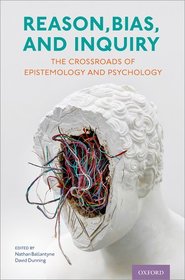
Reason, Bias, and Inquiry
The Crossroads of Epistemology and Psychology
- Publisher's listprice GBP 57.00
-
25 735 Ft (24 510 Ft + 5% VAT)
The price is estimated because at the time of ordering we do not know what conversion rates will apply to HUF / product currency when the book arrives. In case HUF is weaker, the price increases slightly, in case HUF is stronger, the price goes lower slightly.
- Discount 10% (cc. 2 573 Ft off)
- Discounted price 23 162 Ft (22 059 Ft + 5% VAT)
Subcribe now and take benefit of a favourable price.
Subscribe
25 735 Ft

Availability
printed on demand
Why don't you give exact delivery time?
Delivery time is estimated on our previous experiences. We give estimations only, because we order from outside Hungary, and the delivery time mainly depends on how quickly the publisher supplies the book. Faster or slower deliveries both happen, but we do our best to supply as quickly as possible.
Product details:
- Publisher OUP USA
- Date of Publication 14 March 2023
- ISBN 9780197636916
- Binding Hardback
- No. of pages380 pages
- Size 147x226x33 mm
- Weight 635 g
- Language English 262
Categories
Short description:
This volume brings together psychology and philosophy researchers to present current ideas and insights for addressing the challenges of knowing well in a complicated world. Topics explored include the nature of reason and bias, how reasoning influences perception, and how we assess knowledge in ourselves and ourselves.
MoreLong description:
Philosophers and psychologists routinely explore questions surrounding reasoning, inquiry, and bias, though typically in disciplinary isolation. What is the source of our intellectual errors? When can we trust information others tell us?
This volume brings together researchers from across the two disciplines to present ideas and insights for addressing the challenges of knowing well in a complicated world in four parts: how to best describe the conceptual and empirical terrain of reason and bias; how reasoning and bias influence basic perception of the physical world; how to assess knowledge and expertise in ourselves and others; and how people approach reasoning and knowledge among and about groups. Together, the chapters show what philosophers and psychologists can do together when they shine light on the challenges of reaching the truth and avoiding errors.
Reason, Bias, and Inquiry is a multidisciplinary meditation for readers who are awash in information but are uncertain how to manage it to make informed decisions.

