

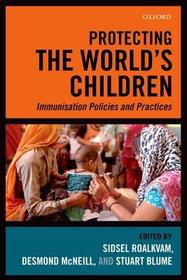
Protecting the World's Children
Immunisation policies and Practices
- Publisher's listprice GBP 69.00
-
32 964 Ft (31 395 Ft + 5% VAT)
The price is estimated because at the time of ordering we do not know what conversion rates will apply to HUF / product currency when the book arrives. In case HUF is weaker, the price increases slightly, in case HUF is stronger, the price goes lower slightly.
- Discount 10% (cc. 3 296 Ft off)
- Discounted price 29 668 Ft (28 256 Ft + 5% VAT)
Subcribe now and take benefit of a favourable price.
Subscribe
32 964 Ft

Availability
printed on demand
Why don't you give exact delivery time?
Delivery time is estimated on our previous experiences. We give estimations only, because we order from outside Hungary, and the delivery time mainly depends on how quickly the publisher supplies the book. Faster or slower deliveries both happen, but we do our best to supply as quickly as possible.
Product details:
- Publisher OUP Oxford
- Date of Publication 9 May 2013
- ISBN 9780199666447
- Binding Paperback
- No. of pages248 pages
- Size 234x158x15 mm
- Weight 376 g
- Language English 0
Categories
Short description:
Written by an an international, interdisciplinary team of experts in immunisation policy, Protecting the World's Children is an integrative study of immunisation policy and practice at a global, national and community level.
MoreLong description:
Vaccination programmes now represent a major part of the effort devoted to improving the health of children in developing countries. These donor-funded programmes tend to be global in scope and focus on worldwide goals and targets such as 'polio eradication', and the Millennium Development Goals. Health policy makers at the national level are expected to implement these programmes in a standard manner and report progress according to a few standard indicators. Pressures and incentives to achieve the targets set are then transmitted down to the community level health worker who actually meets the parents and children to implement the programmes.
Drawing on first hand, original research in India and Malawi carried out by the contributors, as well as existing literature, Protecting the World's Children: Immunisation policies and practices suggests that there is little or no scope allowed for the effects of variance in the way health systems work, the difficulties and tensions faced by health workers, or differences in the way people think about childhood illnesses that reflect cultural differences.
The book argues that the need to show progress can create distortions and lead to the production of misleading data and an unwillingness to report problems. It proposes that vaccines could more effectively serve children's health needs if immunisation programmes are better understood and acknowledged, and if local knowledge and realities were enabled to inform national and international health policy.
Written by an international, interdisciplinary team of experts in immunisation policy, Protecting the World's Children is an integrative study of immunisation policy and practice at a global, national and community level, and is an essential resource for researchers and practitioners in international and public health, as well as professionals in international and development studies.
Table of Contents:
Saving childrens' lives: perspectives on immunisation
Concepts and Approaches
The global politics of health: actors and initiatives
National commitments and global objectives
Rights and obligations in national health governance
'Immunisation is good for your children': local immunisation practices in India
Have means become ends? Getting children's health back in focus.
References

