

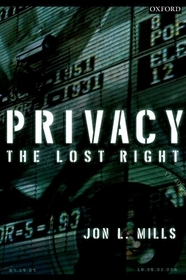
Privacy
The Lost Right
- Publisher's listprice GBP 98.00
-
44 247 Ft (42 140 Ft + 5% VAT)
The price is estimated because at the time of ordering we do not know what conversion rates will apply to HUF / product currency when the book arrives. In case HUF is weaker, the price increases slightly, in case HUF is stronger, the price goes lower slightly.
- Discount 10% (cc. 4 425 Ft off)
- Discounted price 39 822 Ft (37 926 Ft + 5% VAT)
Subcribe now and take benefit of a favourable price.
Subscribe
44 247 Ft

Availability
printed on demand
Why don't you give exact delivery time?
Delivery time is estimated on our previous experiences. We give estimations only, because we order from outside Hungary, and the delivery time mainly depends on how quickly the publisher supplies the book. Faster or slower deliveries both happen, but we do our best to supply as quickly as possible.
Product details:
- Publisher OUP USA
- Date of Publication 4 June 2009
- ISBN 9780195367355
- Binding Hardback
- No. of pages408 pages
- Size 155x236x30 mm
- Weight 709 g
- Language English 0
Categories
Long description:
The disturbing reality of contemporary life is that technology has laid bare the private facts of most people's lives. Email, cell phone calls, and individual purchasing habits are no longer secret. Individuals may be discussed on a blog, victimized by an inaccurate credit report, or have their email read by an employer or government agency without their knowledge. Government policy, mass media, and modern technology pose new challenges to privacy rights, while the law struggles to keep up with the rapid changes.
Privacy: The Lost Right evaluates the status of citizens' right to privacy in today's intrusive world. Mills reviews the history of privacy protections, the general loss of privacy, and the inadequacy of current legal remedies, especially with respect to more recent privacy concerns, such as identity theft, government surveillance, tabloid journalism, and video surveillance in public places. Mills concludes that existing regulations do not adequately protect individual privacy, and he presents options for improving privacy protections.

