

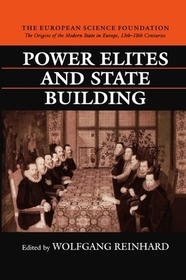
Power Elites and State Building
Series: The Origins of the Modern State in Europe, 13th to 18th Centuries;
- Publisher's listprice GBP 272.50
-
123 033 Ft (117 175 Ft + 5% VAT)
The price is estimated because at the time of ordering we do not know what conversion rates will apply to HUF / product currency when the book arrives. In case HUF is weaker, the price increases slightly, in case HUF is stronger, the price goes lower slightly.
- Discount 10% (cc. 12 303 Ft off)
- Discounted price 110 730 Ft (105 458 Ft + 5% VAT)
Subcribe now and take benefit of a favourable price.
Subscribe
123 033 Ft

Availability
printed on demand
Why don't you give exact delivery time?
Delivery time is estimated on our previous experiences. We give estimations only, because we order from outside Hungary, and the delivery time mainly depends on how quickly the publisher supplies the book. Faster or slower deliveries both happen, but we do our best to supply as quickly as possible.
Product details:
- Publisher OUP Oxford
- Date of Publication 21 March 1996
- ISBN 9780198205470
- Binding Hardback
- No. of pages332 pages
- Size 243x162x24 mm
- Weight 666 g
- Language English 0
Categories
Short description:
This is a major study of the processes by which the modern European state came to exist. It is a historical analysis of power, and how over the last thousand years it has come to reside in the state and its instruments.
MoreLong description:
The modern European state, defined by a continuous territory with a distinct borderline and complete external sovereignty, by the monopoly of every kind of legitimate use of force, and by a homogeneous mass of subjects each of whom has the same rights and duties, is the outcome of a thousand years of shifting political power and developing notions of the state. This major study, in the Origins of the Modern State in Europe series, sets out to examine the processes of state formation and the creation of power élites. A team of leading European historians explores the dominant institutions and ideologies of the past, and their role in the creation of the contemporary nation-state.
All the chapters are highly informative, but some authors succeed particularly well in presenting a problem-orientated comparative conspectus of the relevant literature.

