

- Publisher's listprice GBP 43.99
-
19 861 Ft (18 915 Ft + 5% VAT)
The price is estimated because at the time of ordering we do not know what conversion rates will apply to HUF / product currency when the book arrives. In case HUF is weaker, the price increases slightly, in case HUF is stronger, the price goes lower slightly.
- Discount 10% (cc. 1 986 Ft off)
- Discounted price 17 875 Ft (17 024 Ft + 5% VAT)
Subcribe now and take benefit of a favourable price.
Subscribe
19 861 Ft

Availability
printed on demand
Why don't you give exact delivery time?
Delivery time is estimated on our previous experiences. We give estimations only, because we order from outside Hungary, and the delivery time mainly depends on how quickly the publisher supplies the book. Faster or slower deliveries both happen, but we do our best to supply as quickly as possible.
Product details:
- Publisher OUP Oxford
- Date of Publication 31 August 2006
- ISBN 9780199249466
- Binding Paperback
- No. of pages396 pages
- Size 233x156x22 mm
- Weight 604 g
- Language English 0
Categories
Short description:
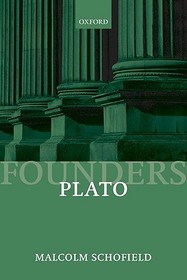
Plato is the best known and most widely studied of all the ancient Greek philosophers. Malcolm Schofield, a leading scholar of ancient philosophy, offers a lucid and accessible guide to Plato's political thought, enormously influential and much discussed in the modern world as well as the ancient. Schofield discusses Plato's ideas on education, democracy and its shortcomings, the role of knowledge in government, utopia and the idea of community, money and its grip on the psyche, and ideological uses of religion.
MoreLong description:
The Founders of Modern Political and Social Thought series presents critical examinations of the work of major political philosophers and social theorists, assessing both their initial contribution and their continuing relevance to politics and society. Each volume provides a clear, accessible, historically informed account of a thinker's work, focusing on a reassessment of the central ideas and arguments. The series encourages scholars and students to link their study of classic texts to current debates in political philosophy and social theory.
In this authoritative general account of Plato's political thought, a leading scholar of ancient Greek philosophy explores its key themes: education, democracy and its shortcomings, the role of knowledge in government, utopia and the idea of community, money and its grip on the psyche, ideological uses of religion. Between them these define what Plato considered to be the fundamental challenges for politics. All remain live issues. On all of them Plato took radical and uncomfortable positions. The radicalism derives above all from his reflections on the fate of Socrates at the hands of the Athenian democracy in 399 BC. So the book begins with chapters situating Plato's alienation from contemporary politics in its historical context, and examines at length the images of Athens and the Spartan alternative which pervade his writings on politics.
The Republic is a main focus of discussion throughout, but ideas and arguments in many other dialogues from Apology and Gorgias to the Statesman and the Laws are examined. Plato: Political Philosophy assumes a broad range of readers - with backgrounds in varied fields (politics, philosophy, classics, history) - who may have little prior knowledge of Plato. It articulates and analyses his main lines of thought, illustrating them with a liberal use of translated excerpts, and highlighting affinities with modern theorists from Machiavelli and Mill to Rawls and Habermas. Schofield's distinctive line of approach to Plato's problems constitutes a lucid and accessible guide for those needing an introduction, and at the same time will provide those who know Plato well with much food for thought.
...intriguing...
Table of Contents:
Introduction
The Republic: contexts and projects
Athens, democracy, and freedom
Problematizing democracy
The rule of knowledge
Utopia
Money and the soul
Ideology
Conclusion

