

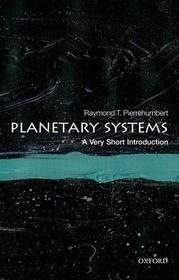
- Publisher's listprice GBP 9.99
-
4 772 Ft (4 545 Ft + 5% VAT)
The price is estimated because at the time of ordering we do not know what conversion rates will apply to HUF / product currency when the book arrives. In case HUF is weaker, the price increases slightly, in case HUF is stronger, the price goes lower slightly.
4 772 Ft

Availability
Estimated delivery time: Expected time of arrival: end of January 2026.
Not in stock at Prospero.
Why don't you give exact delivery time?
Delivery time is estimated on our previous experiences. We give estimations only, because we order from outside Hungary, and the delivery time mainly depends on how quickly the publisher supplies the book. Faster or slower deliveries both happen, but we do our best to supply as quickly as possible.
Product details:
- Publisher OUP Oxford
- Date of Publication 9 December 2021
- ISBN 9780198841128
- Binding Paperback
- No. of pages160 pages
- Size 175x114x7 mm
- Weight 130 g
- Language English
- Illustrations 13 black and white images 299
Categories
Short description:
For many decades, we were only familiar with our own system of planets, the Solar System, orbiting our Sun. Now we know that it is just one among a vast range of planetary systems around distant stars. This book explores the nature and variety of planetary systems, how they are formed, and how they die.
MoreLong description:
Not long ago, the Solar System was the only example of a planetary system - a star and the bodies orbiting it - that we knew. Now, we know thousands of planetary systems, and have even been able to observe planetary systems at the moment of their birth.
This Very Short Introduction explores this new frontier, incorporating the latest research. The book takes the reader on a journey through the grand sweep of time, from the moment galaxies begin to form after the Big Bang to trillions of years in the future when the Universe will be a dilute soup of dim galaxies populated mostly by red dwarf stars. Throughout, Raymond T. Pierrehumbert introduces the latest insights gained from a new generation of telescopes that catch planetary systems at the moment of formation, and to the theoretical advances that attempt to make sense of these observations. He explains how the elements that make up life and the planets on which life can live are forged in the interiors of dying stars, and make their way into rocky planets. He also explores the vast array of newly discovered planets orbiting stars other than our own, and explains the factors that determine their climates. Finally, he reveals what determines how long planetary systems can live, and what happens in their end-times.
Very Short Introductions: Brilliant, Sharp, Inspiring
ABOUT THE SERIES: The Very Short Introductions series from Oxford University Press contains hundreds of titles in almost every subject area. These pocket-sized books are the perfect way to get ahead in a new subject quickly. Our expert authors combine facts, analysis, perspective, new ideas, and enthusiasm to make interesting and challenging topics highly readable.
Named by the Lunar and Planetary Institute as a 'New and Noteworthy' book.
Table of Contents:
Beginnings
Creation revealed
Beautiful theories, ugly facts
What are planets made of?
A grand tour of exoplanets
Planetary climate and habitability
How it all ends
Further Reading
Index

