

- Publisher's listprice GBP 25.99
-
12 416 Ft (11 825 Ft + 5% VAT)
The price is estimated because at the time of ordering we do not know what conversion rates will apply to HUF / product currency when the book arrives. In case HUF is weaker, the price increases slightly, in case HUF is stronger, the price goes lower slightly.
- Discount 10% (cc. 1 242 Ft off)
- Discounted price 11 175 Ft (10 643 Ft + 5% VAT)
Subcribe now and take benefit of a favourable price.
Subscribe
12 416 Ft

Availability
Estimated delivery time: In stock at the publisher, but not at Prospero's office. Delivery time approx. 3-5 weeks.
Not in stock at Prospero.
Why don't you give exact delivery time?
Delivery time is estimated on our previous experiences. We give estimations only, because we order from outside Hungary, and the delivery time mainly depends on how quickly the publisher supplies the book. Faster or slower deliveries both happen, but we do our best to supply as quickly as possible.
Product details:
- Publisher OUP USA
- Date of Publication 31 March 2022
- ISBN 9780197567821
- Binding Paperback
- No. of pages256 pages
- Size 157x241x17 mm
- Weight 386 g
- Language English 200
Categories
Short description:
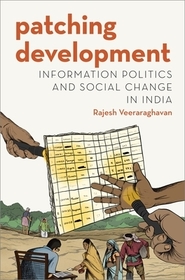
In Patching Development, Rajesh Veeraraghavan reports on a relatively positive case study of developing in India, shedding new light on the challenges and benefits of using information and technology to effectively reach marginalized citizens. The book argues that holding the state accountable for achieving the goals of a program requires a continuous series of responses that react to local implementation and information, a process of patching development. This involves altering power equations through attention to small, incremental changes in institutions and technology, documents and other processes. While each patch may have only limited local significance, the cumulative impact can potentially transform state-society relations.
MoreLong description:
Diving into an original and unusually positive case study from India, Patching Development shows how development programs can be designed to work.
How can development programs deliver benefits to marginalized citizens in ways that expand their rights and freedoms? Political will and good policy design are critical but often insufficient due to resistance from entrenched local power systems. In Patching Development, Rajesh Veeraraghavan presents an ethnography of one of the largest development programs in the world, the Indian National Rural Employment Guarantee Act (NREGA), and examines NREGA's implementation in the South Indian state of Andhra Pradesh. He finds that the local system of power is extremely difficult to transform, not because of inertia, but because of coercive counter strategy from actors at the last mile and their ability to exploit information asymmetries. Upper-level NREGA bureaucrats in Andhra Pradesh do not possess the capacity to change the power axis through direct confrontation with local elites, but instead have relied on a continuous series of responses that react to local implementation and information, a process of patching development. "Patching development" is a top-down, fine-grained, iterative socio-technical process that makes local information about implementation visible through technology and enlists participation from marginalized citizens through social audits. These processes are neither neat nor orderly and have led to a contentious sphere where the exercise of power over documents, institutions and technology is intricate, fluid and highly situated. A highly original account with global significance, this book casts new light on the challenges and benefits of using information and technology in novel ways to implement development programs.
How do you get cash payments for labor to the rural poor in the world's largest anti-poverty program? From the commanding heights of the bureaucracy to the front-lines of the village, from sophisticated software to grass roots social audits, Patching Development brilliantly shows us how the National Rural Employment Guarantee program in India has confronted the infamous problems of the last mile. The challenges and conflicts of implementing public policies to fight poverty have never been illuminated in such detail and with such analytic power.
Table of Contents:
Acknowledgments
Map
Abbreviations
Chapter 1. Introduction
Chapter 2. The Genesis of Rights-Based Governance
Chapter 3. Patching Technologies of Control
Chapter 4. Patching Institutions
Chapter 5. Public Meetings at the Last Mile
Chapter 6. Reading and Writing the State Records
Chapter 7. Caste, Class, and Audits
Chapter 8. Conclusion: Patching the Power at the Last Mile
Appendix 1. Methodology: Using Ethnography to Study Political Economy of Information
Appendix 2. Explanatory Note on Comparing NREGA Performance across States

