

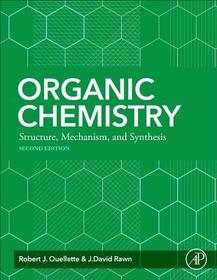
Organic Chemistry
Structure, Mechanism, Synthesis
- Publisher's listprice EUR 200.00
-
78 120 Ft (74 400 Ft + 5% VAT)
The price is estimated because at the time of ordering we do not know what conversion rates will apply to HUF / product currency when the book arrives. In case HUF is weaker, the price increases slightly, in case HUF is stronger, the price goes lower slightly.
- Discount 10% (cc. 7 812 Ft off)
- Discounted price 70 308 Ft (66 960 Ft + 5% VAT)
Subcribe now and take benefit of a favourable price.
Subscribe
78 120 Ft

Availability
Uncertain availability. Please turn to our customer service.
Why don't you give exact delivery time?
Delivery time is estimated on our previous experiences. We give estimations only, because we order from outside Hungary, and the delivery time mainly depends on how quickly the publisher supplies the book. Faster or slower deliveries both happen, but we do our best to supply as quickly as possible.
Product details:
- Edition number 2
- Publisher Academic Press
- Date of Publication 9 January 2018
- ISBN 9780128128381
- Binding Hardback
- No. of pages1056 pages
- Size 276x215 mm
- Weight 3100 g
- Language English 0
Categories
Long description:
Organic Chemistry: Structure, Mechanism, Synthesis, Second Edition, provides basic principles of this fascinating and challenging science, which lies at the interface of physical and biological sciences. Offering accessible language and engaging examples and illustrations, this valuable introduction for the in-depth chemistry course engages students and gives future and new scientists a new approach to understanding, rather than merely memorizing the key concepts underpinning this fundamental area. The book builds in a logical way from chemical bonding to resulting molecular structures, to the corresponding physical, chemical and biological properties of those molecules.
The book explores how molecular structure determines reaction mechanisms, from the smallest to the largest molecules-which in turn determine strategies for organic synthesis. The book then describes the synthetic principles which extend to every aspect of synthesis, from drug design to the methods cells employ to synthesize the molecules of which they are made. These relationships form a continuous narrative throughout the book, in which principles logically evolve from one to the next, from the simplest to the most complex examples, with abundant connections between the theory and applications.
Featuring in-book solutions and instructor PowerPoint slides, this Second Edition offers an updated and improved option for students in the two-semester course and for scientists who require a high quality introduction or refresher in the subject.
MoreTable of Contents:
1. Structure and Bonding in Organic Compounds2. Functional Groups and Their Properties3. Introduction to Organic Reaction Mechanisms4. Alkanes and Cycloalkanes: Structures and Reactions5. Stereochemistry6. Alkenes Structures and Properties7. Alkenes: Addition Reactions8. Alkynes9. Haloalkanes and Alcohols: Introduction to Nucleophilic Substitution and Elimination Reactions10. Nucleophilic Substitution and Elimination Reactions11. Conjugated Alkenes and Allylic Systems12. Arenes and Aromaticity13. Electrophilic Aromatic Substitution14. Methods for Structure Determination Nuclear Magnetic Resonance and Mass Spectrometry15. Alcohols: Reactions and Synthesis16. Ethers and Epoxides17. Aldehydes and Ketones18. Aldehydes and Ketones: Nucleophilic Addition Reactions19. Carboxylic Acids20. Carboxylic Acid Derivatives21. Condensation Reactions of Carbonyl Compounds22. Amines and Amides23. Aryl Halides, Phenols, and Anilines24. Organometallic Chemistry of Transition Metal Elements and Introduction to Retrosynthesis25. Pericyclic Reactions26. Carbohydrates27. Amino Acids, Peptides, and Proteins28. Synthetic Polymers
More
