

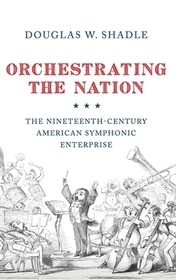
Orchestrating the Nation
The Nineteenth-Century American Symphonic Enterprise
- Publisher's listprice GBP 82.00
-
37 023 Ft (35 260 Ft + 5% VAT)
The price is estimated because at the time of ordering we do not know what conversion rates will apply to HUF / product currency when the book arrives. In case HUF is weaker, the price increases slightly, in case HUF is stronger, the price goes lower slightly.
- Discount 10% (cc. 3 702 Ft off)
- Discounted price 33 321 Ft (31 734 Ft + 5% VAT)
Subcribe now and take benefit of a favourable price.
Subscribe
37 023 Ft

Availability
printed on demand
Why don't you give exact delivery time?
Delivery time is estimated on our previous experiences. We give estimations only, because we order from outside Hungary, and the delivery time mainly depends on how quickly the publisher supplies the book. Faster or slower deliveries both happen, but we do our best to supply as quickly as possible.
Product details:
- Publisher OUP USA
- Date of Publication 26 November 2015
- ISBN 9780199358649
- Binding Hardback
- No. of pages344 pages
- Size 160x236x25 mm
- Weight 635 g
- Language English 0
Categories
Short description:
During the nineteenth century, nearly one hundred symphonies were written by over fifty composers living in the United States.
MoreLong description:
During the nineteenth century, nearly one hundred symphonies were written by over fifty composers living in the United States. With few exceptions, this repertoire is virtually forgotten today. In Orchestrating the Nation: The Nineteenth-Century American Symphonic Enterprise, author Douglas W. Shadle explores the stunning stylistic diversity of this substantial repertoire and uncovers why it failed to enter the musical mainstream.
Throughout the century, Americans longed for a distinct national musical identity. As the most prestigious of all instrumental genres, the symphony proved to be a potent vehicle in this project as composers found inspiration for their works in a dazzling array of subjects, including Niagara Falls, Hiawatha, and Western pioneers. With a wealth of musical sources at his disposal, including never-before-examined manuscripts, Shadle reveals how each component of the symphonic enterprise-from its composition, to its performance, to its immediate and continued reception by listeners and critics-contributed to competing visions of American identity.
Employing an innovative transnational historical framework, Shadle's narrative covers three continents and shows how the music of major European figures such as Beethoven, Schumann, Wagner, Liszt, Brahms, and Dvorák exerted significant influence over dialogues about the future of American musical culture. Shadle demonstrates that the perceived authority of these figures allowed snobby conductors, capricious critics, and even orchestral musicians themselves to thwart the efforts of American symphonists despite widespread public support of their music. Consequently, these works never entered the performing canons of American orchestras.
An engagingly written account of a largely unknown repertoire, Orchestrating the Nation shows how artistic and ideological debates from the nineteenth century continue to shape the culture of American orchestral music today.
Orchestrating the Nation is exhaustively researched and deftly incorporates quotations from a staggering array of critical sources. The interleaving of a critical and thoughtful review of secondary literature with these rare and important primary sources consulted in an array of American archives gives the study an extraordinary breadth. The task Shadle set for himself was a complex one, requiring a careful and deliberate manner. His success in the completion of this tome is unequivocal.
Table of Contents:
Acknowledgments
About the Companion Website
Introduction
1: The Launch of the Enterprise
2: Anthony Philip Heinrich, Hapless Wanderer
3: William Henry Fry, Operatic Translator
4: George Frederick Bristow, American Stalwart
5: The Rivalry of Nations
6: The End of an Era
Interlude: The Country Divided
7: Louis Moreau Gottschalk, Pan-American Republican
8: John Knowles Paine, Universal Classicist
9: The Rivalry of Generations
10: Ellsworth Phelps, Brooklyn Patriot
11: The Winds of Change
12: Antonín Dvorák, Bohemian Prophet
Epilogue
Works Cited

