

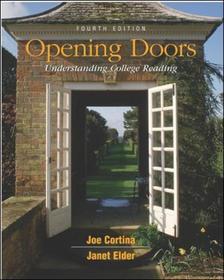
Opening Doors with Free Student CD-ROM
- Publisher's listprice GBP 45.99
-
20 764 Ft (19 775 Ft + 5% VAT)
The price is estimated because at the time of ordering we do not know what conversion rates will apply to HUF / product currency when the book arrives. In case HUF is weaker, the price increases slightly, in case HUF is stronger, the price goes lower slightly.
- Discount 10% (cc. 2 076 Ft off)
- Discounted price 18 687 Ft (17 798 Ft + 5% VAT)
Subcribe now and take benefit of a favourable price.
Subscribe
20 764 Ft

Availability
Out of print
Why don't you give exact delivery time?
Delivery time is estimated on our previous experiences. We give estimations only, because we order from outside Hungary, and the delivery time mainly depends on how quickly the publisher supplies the book. Faster or slower deliveries both happen, but we do our best to supply as quickly as possible.
Product details:
- Edition number 4
- Publisher McGraw-Hill
- Date of Publication 1 September 2004
- ISBN 9780072997668
- Binding Unidentified
- No. of pages pages
- Size 218x208x30 mm
- Weight 1150 g
- Language English 0
Categories
Long description:
Opening Doors is an intermediate college reading improvement text that presents a systematic way for students to approach their college reading assignments. Its 27 reading full-length reading selections from both textbooks and popular sources, plus 2 chapter-length selections allow opportunities for integrated, recursive practice of essential reading comprehension skills, critical reading skills, and study strategies.
This new edition includes fuller explanations, enhanced illustrations and graphics, eight new reading selections, and expanded reading selection quizzes.
Table of Contents:
* Indicates new reading
To the Instructor
To the Student
Part One: Orientation: Preparing and Organizing Yourself for Success in College
Chapter 1: Making Yourself Successful in College
Skills
Doing What Successful Students Do
Motivating Yourself
Setting Your Goals
Identifying Your Learning Style
Managing Your Time
Setting Up a Weekly Study Schedule
Making the Most of Your Study Time
Planning Further Ahead: Creating a Monthly Assignment Calendar and Using a Daily To Do List
Creating Your Summary: Developing Chapter Review Cards
Readings
Selection 1-1: "Why Go To College?" from P.O.W.E.R. Learning: Strategies for Success in College and Life by Robert S. Feldman (Study Skills)
*Selection 1-2: "Getting Ready for Prime Time: Learning the Skills Needed to Succeed Today and Tomorrow" from Understanding Business by Bill Nickels, Jim McHugh, and Susan McHugh
Selection 1-3: "Saved" from The Autobiography of Malcolm X as told to Alex Haley (Literature)
Chapter 2: Approaching College Reading and Developing a College-Level Vocabulary
Skills
Understanding the Reading Process
Improving Your Reading
Predicting as You Read
Monitoring Your Comprehension
Adjusting Your Reading Rate
Developing a College-Level Vocabulary
Using Context Clues
Using Word-Structure Clues
Using a Dictionary Pronunciation Key
Understanding Denotations and Connotations of Words
Understanding Figurative Language
Creating Your Summary: Developing Chapter Review Cards
Readings
*Selection 2-1: "Music Revolution: Napster and Recording in the Digital Age: from the Dynamics of Mass Communication: Media in the Digital Age by Joseph R. Dominick (Mass Communication)
Selection 2-2: "The Yellow Ribbon" by Pete Hamill (Literature)
Selection 2-3: "A Whale of a Survival Problem" from The Nature of Life by John Postlethwait and Janet Hopson
Chapter 3: Approaching College Assignments: Reading Textbooks and Following Directions
Skills
College Textbooks: A Process for Reading and Studying Effectively
Step 1: Prepare to Read
Step 2: Ask and Answer Questions to Enhance Your Reading
Step 3: Review by Rehearsing the Answers to Your Questions
Following Directions in Textbooks and on Tests
Guidelines for Following Directions
Example: Directions from a Textbook
Example: Directions on a Test
Creating Your Summary: Developing Chapter Review Cards
Readings
*Selection 3-1: "African Americans: The Struggle for Equality from The American Democracy by Thomas E. Patterson (Government)
Selection 3-2: "Parenthood?" from Human Development by Diane E. Papalia and Sally Wendkos Olds (Human Development)
Selection 3-3: "Art in the Service of Religion" from Living with Art by Rita Gilbert (Art Appreciation)
Part Two: Comprehension: Understanding College Textbooks by Reading for Ideas
Chapter 4: Determining the Topic and the Stated Main Idea
Skills
The Topic of a Paragraph
What is the Topic of a Paragraph, and Why is it Important?
Determining and Expressing the Topic
The Stated Main Idea of a Paragraph
What is a Stated Main Idea, and Why is it Important?
Locating the Stated Main Idea Sentence
How to Tell if you have Identified the Stated Main Idea Sentence
How to Avoid Two Common Errors in Locating a Stated Main Idea
Stated Overall Main Ideas in Longer Passages
A Word about Standardized Reading Tests: Topics and Stated Main Ideas
Creating Your Summary: Developing Chapter Review Cards
Readings
Selection 4-1: "The New Workforce: People with Disabilities" from Business Week by Michelle Conlin (Magazine Article)
Selection 4-2: "Latinos: An Emerging Influence" from Sociology: An Introduction by Richard J. Gelles and Ann Levine (Sociology)
Selection 4-3: "Muhammed" from The 100: A Ranking of the Most Influential Persons in History by Michael K. Hart (History)
Chapter 5: Formulating Implied Main Ideas
Skills
Implied Main Ideas in Paragraphs
What is an Implied Main Idea?
Why is Formulating Implied Main Ideas Important?
Formulating an Implied Main Idea
Steps to Follow
Three Formulas for Using Information in a Paragraph to Formulate the Main Idea
Requirements for Correctly Formulated Main Idea Sentences
Implied Overall Main Ideas in Longer Passages
A Word about Standardized Reading Tests: Implied Main Ideas
Creating Your Summary: Developing Chapter Review Cards
Readings
*Selection 5-1: "Identity Theft: You are at Risk" Information Synthesized from Internet Sources (Personal Finance)
Selection 5-2: "The Changing Roles of Men and Women" from U.S. News and World Report by Merrill McLoughlin with Tracy L. Shryer, Erica E. Goode, and Kathleen McAliffe (Sociology)
Selection 5-3: "Demography" from Sociology: An Introduction by Richard J. Gelles and Ann Levine
Chapter 6: Identifying Supporting Details
Skills
Supporting Details in Paragraphs
What are Supporting Details?
Why are Supporting Details Important?
Identifying and Listing Supporting Details
Major and Minor Details, and How to Tell the Difference
A Word about Standardized Reading Tests: Supporting Details
Creating Your Summary: Developing Chapter Review Cards
Readings
*Selection 6-1: "Diabetes: A New Epidemic" from Core Concepts in Health by Paul Insel and Walton Roth (Health)
Selection 6-2: "Communication Close-Up at Ben and Jerry's Homemade" from Business Communication Today by Courtland Bovee and John Thill (Business)
Selection 6-3: From A Beginner's Guide to the World Economy by Randy Charles Epping (Economics)
Chapter 7: Recognizing Authors' Writing Patterns
Skills
Patterns of Writing
What are Authors' Writing Patterns?
Why is Recognizing Writing Patterns Important?
Recognizing Authors' Writing Patterns
List Pattern
Sequence Pattern
Definition Pattern
Comparison-Contrast Pattern
Cause-Effect Pattern
Avoid Seeing Everything as a List
A Word about Other Writing Patterns
Mixed Patterns
A Word about Standardized Reading Tests: Authors' Writing Patterns
Creating Your Summary: Developing Chapter Review Cards
Readings
Selection 7-1: "Career Choice: Choosing Your Own Future" from Personal Finance by Jack R. Kapoor, Les R. Dlabay, and Robert Hughes (Personal Finance)
Selection 7-2: "The Decision to Marry" from Targeting Wellness: The Core by Marvin Levy, Mark Dignan, and Janet Shirreffs (Health)
Selection 7-3: "Reactions to Impending Death" from Essentials of Psychology by Dennis Coon (Psychology)
Chapter 8: Reading Critically
Skills
What is Critical Reading?
Critical Reading Skills
Determining an Author's Purpose and Intended Audience
Determining an Author's Point of View, Tone, and Intended Meaning
A Word about Standardized Reading Tests: Critical Reading
Creating Your Summary: Developing Chapter Review Cards
Readings
*Selection 8-1: "Think Before You Speak: Public Speaking in a Multicultural World" from The Art of Public Speaking by Stephen E. Lucas (Speech Communication)
Selection 8-2: From Having Our Say: The Delany Sisters' First 100 Years by Sarah and Elizabeth Delany with Amy Hill Hearth (Literature)
Selection 8-3: From The Joy Luck Club by Amy Tan (Literature)
Chapter 9: Thinking Critically
Skills
What is Critical Thinking, and Why Is It Important?
Critical Thinking Skills
Why Readers Fail to Think Critically
Distinguishing Facts from Opinions and Determining Whether Opinions are Well Supported
Making Inferences and Drawing Logical Conclusions
Distinguishing between Deductive and Inductive Reasoning
Evaluating an Author's Argument
Identifying Propaganda Devices
A Word about Standardized Reading Tests: Critical Thinking
Creating Your Summary: Developing Chapter Review Cards
Readings
Selection 9-1: "Sport Utility Vehicles: How Do I Hate Thee? Let Me Count the Ways" from the Dallas Morning News by Geneva Overholser
Selection 9-2: "Why Vote? Politicians Are All the Same" from American Politics in a Changing World by Janet Flammang, Dennis Gordon, Timothy Lukes, and Kenneth Smorsten (Government)
Selection 9-3: "Take Out the Trash, and Put It...Where?" from Parade Magazine by Bernard Gavzer
Part Three: Systems for Studying Textbooks: Developing a System That Works for You
Chapter 10: Selecting and Organizing Textbook Information
Skills
Studying Better Rather Than Harder
Three Keys to Studying College Textbooks
Key 1: Selectivity
Key 2: Organization
Key 3: Rehearsal
Using Textbook Features
Prefaces
Tables of Contents
Part Openings
Chapter Outlines
Chapter Objectives and Introductions
Lists and Sequences
Boxes
Tables
Graphic Aids
Vocabulary Aids
Study Questions and Activities
Chapter Summaries
Appendixes
Bibliographies, Suggested Readings, and Webliographies
Indexes
Additional Features and Supplements
Marking Textbooks: Underlining, Highlighting, a
nd Annotating
Taking Notes from Textbooks: Outlining, Mapping, and Summarizing
Guidelines for Outlining
Guidelines for the Cornell Method of Note-Taking
Guidelines for Mapping
Guidelines for Summarizing
Guidelines for Interpreting Graphic Material
Bar Graphs
Line Graphs
Pie Charts
Flowcharts
Tables
Creating Your Summary: Developing Chapter Review Cards
Reading
*Selection 10-1: "The Age of Globalization" from American History: A Survey by Alan Brinkley (History)
Chapter 11: Rehearsing Textbook Information and Preparing for Tests
Skills
Rehearsal and Memory
Studying for Tests
General Guidelines
Five-Day Test Review Plan
Creating Review Cards to Prepare for a Test
Creating Test Review Sheets
Creating Your Summary: Developing Chapter Review Cards
Reading
*Selection 11-1: "Cultural Diversity: Family Strengths and Challenges" from Marriages and Families: Intimacy, Diversity, and Strengths by David Olson and John DeFrain
Appendix 1: Glossary of Key Reading and Study Skills Terms
Appendix 2: A List of Word Parts: Prefixes, Roots, and Suffixes
Appendix 3: World Map, United States Map, and List of World Capitals
Credits
Index
Vocabulary Log
More
Part One: Orientation: Preparing and Organizing Yourself for Success in College
Chapter 1: Making Yourself Successful in College
Skills
Doing What Successful Students Do
Motivating Yourself
Setting Your Goals
Identifying Your Learning Style
Managing Your Time
Setting Up a Weekly Study Schedule
Making the Most of Your Study Time
Planning Further Ahead: Creating a Monthly Assignment Calendar and Using a Daily To Do List
Creating Your Summary: Developing Chapter Review Cards
Readings
Selection 1-1: "Why Go To College?" from P.O.W.E.R. Learning: Strategies for Success in College and Life by Robert S. Feldman (Study Skills)
*Selection 1-2: "Getting Ready for Prime Time: Learning the Skills Needed to Succeed Today and Tomorrow" from Understanding Business by Bill Nickels, Jim McHugh, and Susan McHugh
Selection 1-3: "Saved" from The Autobiography of Malcolm X as told to Alex Haley (Literature)
Chapter 2: Approaching College Reading and Developing a College-Level Vocabulary
Skills
Understanding the Reading Process
Improving Your Reading
Predicting as You Read
Monitoring Your Comprehension
Adjusting Your Reading Rate
Developing a College-Level Vocabulary
Using Context Clues
Using Word-Structure Clues
Using a Dictionary Pronunciation Key
Understanding Denotations and Connotations of Words
Understanding Figurative Language
Creating Your Summary: Developing Chapter Review Cards
Readings
*Selection 2-1: "Music Revolution: Napster and Recording in the Digital Age: from the Dynamics of Mass Communication: Media in the Digital Age by Joseph R. Dominick (Mass Communication)
Selection 2-2: "The Yellow Ribbon" by Pete Hamill (Literature)
Selection 2-3: "A Whale of a Survival Problem" from The Nature of Life by John Postlethwait and Janet Hopson
Chapter 3: Approaching College Assignments: Reading Textbooks and Following Directions
Skills
College Textbooks: A Process for Reading and Studying Effectively
Step 1: Prepare to Read
Step 2: Ask and Answer Questions to Enhance Your Reading
Step 3: Review by Rehearsing the Answers to Your Questions
Following Directions in Textbooks and on Tests
Guidelines for Following Directions
Example: Directions from a Textbook
Example: Directions on a Test
Creating Your Summary: Developing Chapter Review Cards
Readings
*Selection 3-1: "African Americans: The Struggle for Equality from The American Democracy by Thomas E. Patterson (Government)
Selection 3-2: "Parenthood?" from Human Development by Diane E. Papalia and Sally Wendkos Olds (Human Development)
Selection 3-3: "Art in the Service of Religion" from Living with Art by Rita Gilbert (Art Appreciation)
Part Two: Comprehension: Understanding College Textbooks by Reading for Ideas
Chapter 4: Determining the Topic and the Stated Main Idea
Skills
The Topic of a Paragraph
What is the Topic of a Paragraph, and Why is it Important?
Determining and Expressing the Topic
The Stated Main Idea of a Paragraph
What is a Stated Main Idea, and Why is it Important?
Locating the Stated Main Idea Sentence
How to Tell if you have Identified the Stated Main Idea Sentence
How to Avoid Two Common Errors in Locating a Stated Main Idea
Stated Overall Main Ideas in Longer Passages
A Word about Standardized Reading Tests: Topics and Stated Main Ideas
Creating Your Summary: Developing Chapter Review Cards
Readings
Selection 4-1: "The New Workforce: People with Disabilities" from Business Week by Michelle Conlin (Magazine Article)
Selection 4-2: "Latinos: An Emerging Influence" from Sociology: An Introduction by Richard J. Gelles and Ann Levine (Sociology)
Selection 4-3: "Muhammed" from The 100: A Ranking of the Most Influential Persons in History by Michael K. Hart (History)
Chapter 5: Formulating Implied Main Ideas
Skills
Implied Main Ideas in Paragraphs
What is an Implied Main Idea?
Why is Formulating Implied Main Ideas Important?
Formulating an Implied Main Idea
Steps to Follow
Three Formulas for Using Information in a Paragraph to Formulate the Main Idea
Requirements for Correctly Formulated Main Idea Sentences
Implied Overall Main Ideas in Longer Passages
A Word about Standardized Reading Tests: Implied Main Ideas
Creating Your Summary: Developing Chapter Review Cards
Readings
*Selection 5-1: "Identity Theft: You are at Risk" Information Synthesized from Internet Sources (Personal Finance)
Selection 5-2: "The Changing Roles of Men and Women" from U.S. News and World Report by Merrill McLoughlin with Tracy L. Shryer, Erica E. Goode, and Kathleen McAliffe (Sociology)
Selection 5-3: "Demography" from Sociology: An Introduction by Richard J. Gelles and Ann Levine
Chapter 6: Identifying Supporting Details
Skills
Supporting Details in Paragraphs
What are Supporting Details?
Why are Supporting Details Important?
Identifying and Listing Supporting Details
Major and Minor Details, and How to Tell the Difference
A Word about Standardized Reading Tests: Supporting Details
Creating Your Summary: Developing Chapter Review Cards
Readings
*Selection 6-1: "Diabetes: A New Epidemic" from Core Concepts in Health by Paul Insel and Walton Roth (Health)
Selection 6-2: "Communication Close-Up at Ben and Jerry's Homemade" from Business Communication Today by Courtland Bovee and John Thill (Business)
Selection 6-3: From A Beginner's Guide to the World Economy by Randy Charles Epping (Economics)
Chapter 7: Recognizing Authors' Writing Patterns
Skills
Patterns of Writing
What are Authors' Writing Patterns?
Why is Recognizing Writing Patterns Important?
Recognizing Authors' Writing Patterns
List Pattern
Sequence Pattern
Definition Pattern
Comparison-Contrast Pattern
Cause-Effect Pattern
Avoid Seeing Everything as a List
A Word about Other Writing Patterns
Mixed Patterns
A Word about Standardized Reading Tests: Authors' Writing Patterns
Creating Your Summary: Developing Chapter Review Cards
Readings
Selection 7-1: "Career Choice: Choosing Your Own Future" from Personal Finance by Jack R. Kapoor, Les R. Dlabay, and Robert Hughes (Personal Finance)
Selection 7-2: "The Decision to Marry" from Targeting Wellness: The Core by Marvin Levy, Mark Dignan, and Janet Shirreffs (Health)
Selection 7-3: "Reactions to Impending Death" from Essentials of Psychology by Dennis Coon (Psychology)
Chapter 8: Reading Critically
Skills
What is Critical Reading?
Critical Reading Skills
Determining an Author's Purpose and Intended Audience
Determining an Author's Point of View, Tone, and Intended Meaning
A Word about Standardized Reading Tests: Critical Reading
Creating Your Summary: Developing Chapter Review Cards
Readings
*Selection 8-1: "Think Before You Speak: Public Speaking in a Multicultural World" from The Art of Public Speaking by Stephen E. Lucas (Speech Communication)
Selection 8-2: From Having Our Say: The Delany Sisters' First 100 Years by Sarah and Elizabeth Delany with Amy Hill Hearth (Literature)
Selection 8-3: From The Joy Luck Club by Amy Tan (Literature)
Chapter 9: Thinking Critically
Skills
What is Critical Thinking, and Why Is It Important?
Critical Thinking Skills
Why Readers Fail to Think Critically
Distinguishing Facts from Opinions and Determining Whether Opinions are Well Supported
Making Inferences and Drawing Logical Conclusions
Distinguishing between Deductive and Inductive Reasoning
Evaluating an Author's Argument
Identifying Propaganda Devices
A Word about Standardized Reading Tests: Critical Thinking
Creating Your Summary: Developing Chapter Review Cards
Readings
Selection 9-1: "Sport Utility Vehicles: How Do I Hate Thee? Let Me Count the Ways" from the Dallas Morning News by Geneva Overholser
Selection 9-2: "Why Vote? Politicians Are All the Same" from American Politics in a Changing World by Janet Flammang, Dennis Gordon, Timothy Lukes, and Kenneth Smorsten (Government)
Selection 9-3: "Take Out the Trash, and Put It...Where?" from Parade Magazine by Bernard Gavzer
Part Three: Systems for Studying Textbooks: Developing a System That Works for You
Chapter 10: Selecting and Organizing Textbook Information
Skills
Studying Better Rather Than Harder
Three Keys to Studying College Textbooks
Key 1: Selectivity
Key 2: Organization
Key 3: Rehearsal
Using Textbook Features
Prefaces
Tables of Contents
Part Openings
Chapter Outlines
Chapter Objectives and Introductions
Lists and Sequences
Boxes
Tables
Graphic Aids
Vocabulary Aids
Study Questions and Activities
Chapter Summaries
Appendixes
Bibliographies, Suggested Readings, and Webliographies
Indexes
Additional Features and Supplements
Marking Textbooks: Underlining, Highlighting, a
nd Annotating
Taking Notes from Textbooks: Outlining, Mapping, and Summarizing
Guidelines for Outlining
Guidelines for the Cornell Method of Note-Taking
Guidelines for Mapping
Guidelines for Summarizing
Guidelines for Interpreting Graphic Material
Bar Graphs
Line Graphs
Pie Charts
Flowcharts
Tables
Creating Your Summary: Developing Chapter Review Cards
Reading
*Selection 10-1: "The Age of Globalization" from American History: A Survey by Alan Brinkley (History)
Chapter 11: Rehearsing Textbook Information and Preparing for Tests
Skills
Rehearsal and Memory
Studying for Tests
General Guidelines
Five-Day Test Review Plan
Creating Review Cards to Prepare for a Test
Creating Test Review Sheets
Creating Your Summary: Developing Chapter Review Cards
Reading
*Selection 11-1: "Cultural Diversity: Family Strengths and Challenges" from Marriages and Families: Intimacy, Diversity, and Strengths by David Olson and John DeFrain
Appendix 1: Glossary of Key Reading and Study Skills Terms
Appendix 2: A List of Word Parts: Prefixes, Roots, and Suffixes
Appendix 3: World Map, United States Map, and List of World Capitals
Credits
Index
Vocabulary Log
More
Skills
Doing What Successful Students Do
Motivating Yourself
Setting Your Goals
Identifying Your Learning Style
Managing Your Time
Setting Up a Weekly Study Schedule
Making the Most of Your Study Time
Planning Further Ahead: Creating a Monthly Assignment Calendar and Using a Daily To Do List
Creating Your Summary: Developing Chapter Review Cards
Readings
Selection 1-1: "Why Go To College?" from P.O.W.E.R. Learning: Strategies for Success in College and Life by Robert S. Feldman (Study Skills)
*Selection 1-2: "Getting Ready for Prime Time: Learning the Skills Needed to Succeed Today and Tomorrow" from Understanding Business by Bill Nickels, Jim McHugh, and Susan McHugh
Selection 1-3: "Saved" from The Autobiography of Malcolm X as told to Alex Haley (Literature)
Chapter 2: Approaching College Reading and Developing a College-Level Vocabulary
Skills
Understanding the Reading Process
Improving Your Reading
Predicting as You Read
Monitoring Your Comprehension
Adjusting Your Reading Rate
Developing a College-Level Vocabulary
Using Context Clues
Using Word-Structure Clues
Using a Dictionary Pronunciation Key
Understanding Denotations and Connotations of Words
Understanding Figurative Language
Creating Your Summary: Developing Chapter Review Cards
Readings
*Selection 2-1: "Music Revolution: Napster and Recording in the Digital Age: from the Dynamics of Mass Communication: Media in the Digital Age by Joseph R. Dominick (Mass Communication)
Selection 2-2: "The Yellow Ribbon" by Pete Hamill (Literature)
Selection 2-3: "A Whale of a Survival Problem" from The Nature of Life by John Postlethwait and Janet Hopson
Chapter 3: Approaching College Assignments: Reading Textbooks and Following Directions
Skills
College Textbooks: A Process for Reading and Studying Effectively
Step 1: Prepare to Read
Step 2: Ask and Answer Questions to Enhance Your Reading
Step 3: Review by Rehearsing the Answers to Your Questions
Following Directions in Textbooks and on Tests
Guidelines for Following Directions
Example: Directions from a Textbook
Example: Directions on a Test
Creating Your Summary: Developing Chapter Review Cards
Readings
*Selection 3-1: "African Americans: The Struggle for Equality from The American Democracy by Thomas E. Patterson (Government)
Selection 3-2: "Parenthood?" from Human Development by Diane E. Papalia and Sally Wendkos Olds (Human Development)
Selection 3-3: "Art in the Service of Religion" from Living with Art by Rita Gilbert (Art Appreciation)
Part Two: Comprehension: Understanding College Textbooks by Reading for Ideas
Chapter 4: Determining the Topic and the Stated Main Idea
Skills
The Topic of a Paragraph
What is the Topic of a Paragraph, and Why is it Important?
Determining and Expressing the Topic
The Stated Main Idea of a Paragraph
What is a Stated Main Idea, and Why is it Important?
Locating the Stated Main Idea Sentence
How to Tell if you have Identified the Stated Main Idea Sentence
How to Avoid Two Common Errors in Locating a Stated Main Idea
Stated Overall Main Ideas in Longer Passages
A Word about Standardized Reading Tests: Topics and Stated Main Ideas
Creating Your Summary: Developing Chapter Review Cards
Readings
Selection 4-1: "The New Workforce: People with Disabilities" from Business Week by Michelle Conlin (Magazine Article)
Selection 4-2: "Latinos: An Emerging Influence" from Sociology: An Introduction by Richard J. Gelles and Ann Levine (Sociology)
Selection 4-3: "Muhammed" from The 100: A Ranking of the Most Influential Persons in History by Michael K. Hart (History)
Chapter 5: Formulating Implied Main Ideas
Skills
Implied Main Ideas in Paragraphs
What is an Implied Main Idea?
Why is Formulating Implied Main Ideas Important?
Formulating an Implied Main Idea
Steps to Follow
Three Formulas for Using Information in a Paragraph to Formulate the Main Idea
Requirements for Correctly Formulated Main Idea Sentences
Implied Overall Main Ideas in Longer Passages
A Word about Standardized Reading Tests: Implied Main Ideas
Creating Your Summary: Developing Chapter Review Cards
Readings
*Selection 5-1: "Identity Theft: You are at Risk" Information Synthesized from Internet Sources (Personal Finance)
Selection 5-2: "The Changing Roles of Men and Women" from U.S. News and World Report by Merrill McLoughlin with Tracy L. Shryer, Erica E. Goode, and Kathleen McAliffe (Sociology)
Selection 5-3: "Demography" from Sociology: An Introduction by Richard J. Gelles and Ann Levine
Chapter 6: Identifying Supporting Details
Skills
Supporting Details in Paragraphs
What are Supporting Details?
Why are Supporting Details Important?
Identifying and Listing Supporting Details
Major and Minor Details, and How to Tell the Difference
A Word about Standardized Reading Tests: Supporting Details
Creating Your Summary: Developing Chapter Review Cards
Readings
*Selection 6-1: "Diabetes: A New Epidemic" from Core Concepts in Health by Paul Insel and Walton Roth (Health)
Selection 6-2: "Communication Close-Up at Ben and Jerry's Homemade" from Business Communication Today by Courtland Bovee and John Thill (Business)
Selection 6-3: From A Beginner's Guide to the World Economy by Randy Charles Epping (Economics)
Chapter 7: Recognizing Authors' Writing Patterns
Skills
Patterns of Writing
What are Authors' Writing Patterns?
Why is Recognizing Writing Patterns Important?
Recognizing Authors' Writing Patterns
List Pattern
Sequence Pattern
Definition Pattern
Comparison-Contrast Pattern
Cause-Effect Pattern
Avoid Seeing Everything as a List
A Word about Other Writing Patterns
Mixed Patterns
A Word about Standardized Reading Tests: Authors' Writing Patterns
Creating Your Summary: Developing Chapter Review Cards
Readings
Selection 7-1: "Career Choice: Choosing Your Own Future" from Personal Finance by Jack R. Kapoor, Les R. Dlabay, and Robert Hughes (Personal Finance)
Selection 7-2: "The Decision to Marry" from Targeting Wellness: The Core by Marvin Levy, Mark Dignan, and Janet Shirreffs (Health)
Selection 7-3: "Reactions to Impending Death" from Essentials of Psychology by Dennis Coon (Psychology)
Chapter 8: Reading Critically
Skills
What is Critical Reading?
Critical Reading Skills
Determining an Author's Purpose and Intended Audience
Determining an Author's Point of View, Tone, and Intended Meaning
A Word about Standardized Reading Tests: Critical Reading
Creating Your Summary: Developing Chapter Review Cards
Readings
*Selection 8-1: "Think Before You Speak: Public Speaking in a Multicultural World" from The Art of Public Speaking by Stephen E. Lucas (Speech Communication)
Selection 8-2: From Having Our Say: The Delany Sisters' First 100 Years by Sarah and Elizabeth Delany with Amy Hill Hearth (Literature)
Selection 8-3: From The Joy Luck Club by Amy Tan (Literature)
Chapter 9: Thinking Critically
Skills
What is Critical Thinking, and Why Is It Important?
Critical Thinking Skills
Why Readers Fail to Think Critically
Distinguishing Facts from Opinions and Determining Whether Opinions are Well Supported
Making Inferences and Drawing Logical Conclusions
Distinguishing between Deductive and Inductive Reasoning
Evaluating an Author's Argument
Identifying Propaganda Devices
A Word about Standardized Reading Tests: Critical Thinking
Creating Your Summary: Developing Chapter Review Cards
Readings
Selection 9-1: "Sport Utility Vehicles: How Do I Hate Thee? Let Me Count the Ways" from the Dallas Morning News by Geneva Overholser
Selection 9-2: "Why Vote? Politicians Are All the Same" from American Politics in a Changing World by Janet Flammang, Dennis Gordon, Timothy Lukes, and Kenneth Smorsten (Government)
Selection 9-3: "Take Out the Trash, and Put It...Where?" from Parade Magazine by Bernard Gavzer
Part Three: Systems for Studying Textbooks: Developing a System That Works for You
Chapter 10: Selecting and Organizing Textbook Information
Skills
Studying Better Rather Than Harder
Three Keys to Studying College Textbooks
Key 1: Selectivity
Key 2: Organization
Key 3: Rehearsal
Using Textbook Features
Prefaces
Tables of Contents
Part Openings
Chapter Outlines
Chapter Objectives and Introductions
Lists and Sequences
Boxes
Tables
Graphic Aids
Vocabulary Aids
Study Questions and Activities
Chapter Summaries
Appendixes
Bibliographies, Suggested Readings, and Webliographies
Indexes
Additional Features and Supplements
Marking Textbooks: Underlining, Highlighting, a
nd Annotating
Taking Notes from Textbooks: Outlining, Mapping, and Summarizing
Guidelines for Outlining
Guidelines for the Cornell Method of Note-Taking
Guidelines for Mapping
Guidelines for Summarizing
Guidelines for Interpreting Graphic Material
Bar Graphs
Line Graphs
Pie Charts
Flowcharts
Tables
Creating Your Summary: Developing Chapter Review Cards
Reading
*Selection 10-1: "The Age of Globalization" from American History: A Survey by Alan Brinkley (History)
Chapter 11: Rehearsing Textbook Information and Preparing for Tests
Skills
Rehearsal and Memory
Studying for Tests
General Guidelines
Five-Day Test Review Plan
Creating Review Cards to Prepare for a Test
Creating Test Review Sheets
Creating Your Summary: Developing Chapter Review Cards
Reading
*Selection 11-1: "Cultural Diversity: Family Strengths and Challenges" from Marriages and Families: Intimacy, Diversity, and Strengths by David Olson and John DeFrain
Appendix 1: Glossary of Key Reading and Study Skills Terms
Appendix 2: A List of Word Parts: Prefixes, Roots, and Suffixes
Appendix 3: World Map, United States Map, and List of World Capitals
Credits
Index
Vocabulary Log
More
Motivating Yourself
Setting Your Goals
Identifying Your Learning Style
Managing Your Time
Setting Up a Weekly Study Schedule
Making the Most of Your Study Time
Planning Further Ahead: Creating a Monthly Assignment Calendar and Using a Daily To Do List
Creating Your Summary: Developing Chapter Review Cards
Readings
Selection 1-1: "Why Go To College?" from P.O.W.E.R. Learning: Strategies for Success in College and Life by Robert S. Feldman (Study Skills)
*Selection 1-2: "Getting Ready for Prime Time: Learning the Skills Needed to Succeed Today and Tomorrow" from Understanding Business by Bill Nickels, Jim McHugh, and Susan McHugh
Selection 1-3: "Saved" from The Autobiography of Malcolm X as told to Alex Haley (Literature)
Chapter 2: Approaching College Reading and Developing a College-Level Vocabulary
Skills
Understanding the Reading Process
Improving Your Reading
Predicting as You Read
Monitoring Your Comprehension
Adjusting Your Reading Rate
Developing a College-Level Vocabulary
Using Context Clues
Using Word-Structure Clues
Using a Dictionary Pronunciation Key
Understanding Denotations and Connotations of Words
Understanding Figurative Language
Creating Your Summary: Developing Chapter Review Cards
Readings
*Selection 2-1: "Music Revolution: Napster and Recording in the Digital Age: from the Dynamics of Mass Communication: Media in the Digital Age by Joseph R. Dominick (Mass Communication)
Selection 2-2: "The Yellow Ribbon" by Pete Hamill (Literature)
Selection 2-3: "A Whale of a Survival Problem" from The Nature of Life by John Postlethwait and Janet Hopson
Chapter 3: Approaching College Assignments: Reading Textbooks and Following Directions
Skills
College Textbooks: A Process for Reading and Studying Effectively
Step 1: Prepare to Read
Step 2: Ask and Answer Questions to Enhance Your Reading
Step 3: Review by Rehearsing the Answers to Your Questions
Following Directions in Textbooks and on Tests
Guidelines for Following Directions
Example: Directions from a Textbook
Example: Directions on a Test
Creating Your Summary: Developing Chapter Review Cards
Readings
*Selection 3-1: "African Americans: The Struggle for Equality from The American Democracy by Thomas E. Patterson (Government)
Selection 3-2: "Parenthood?" from Human Development by Diane E. Papalia and Sally Wendkos Olds (Human Development)
Selection 3-3: "Art in the Service of Religion" from Living with Art by Rita Gilbert (Art Appreciation)
Part Two: Comprehension: Understanding College Textbooks by Reading for Ideas
Chapter 4: Determining the Topic and the Stated Main Idea
Skills
The Topic of a Paragraph
What is the Topic of a Paragraph, and Why is it Important?
Determining and Expressing the Topic
The Stated Main Idea of a Paragraph
What is a Stated Main Idea, and Why is it Important?
Locating the Stated Main Idea Sentence
How to Tell if you have Identified the Stated Main Idea Sentence
How to Avoid Two Common Errors in Locating a Stated Main Idea
Stated Overall Main Ideas in Longer Passages
A Word about Standardized Reading Tests: Topics and Stated Main Ideas
Creating Your Summary: Developing Chapter Review Cards
Readings
Selection 4-1: "The New Workforce: People with Disabilities" from Business Week by Michelle Conlin (Magazine Article)
Selection 4-2: "Latinos: An Emerging Influence" from Sociology: An Introduction by Richard J. Gelles and Ann Levine (Sociology)
Selection 4-3: "Muhammed" from The 100: A Ranking of the Most Influential Persons in History by Michael K. Hart (History)
Chapter 5: Formulating Implied Main Ideas
Skills
Implied Main Ideas in Paragraphs
What is an Implied Main Idea?
Why is Formulating Implied Main Ideas Important?
Formulating an Implied Main Idea
Steps to Follow
Three Formulas for Using Information in a Paragraph to Formulate the Main Idea
Requirements for Correctly Formulated Main Idea Sentences
Implied Overall Main Ideas in Longer Passages
A Word about Standardized Reading Tests: Implied Main Ideas
Creating Your Summary: Developing Chapter Review Cards
Readings
*Selection 5-1: "Identity Theft: You are at Risk" Information Synthesized from Internet Sources (Personal Finance)
Selection 5-2: "The Changing Roles of Men and Women" from U.S. News and World Report by Merrill McLoughlin with Tracy L. Shryer, Erica E. Goode, and Kathleen McAliffe (Sociology)
Selection 5-3: "Demography" from Sociology: An Introduction by Richard J. Gelles and Ann Levine
Chapter 6: Identifying Supporting Details
Skills
Supporting Details in Paragraphs
What are Supporting Details?
Why are Supporting Details Important?
Identifying and Listing Supporting Details
Major and Minor Details, and How to Tell the Difference
A Word about Standardized Reading Tests: Supporting Details
Creating Your Summary: Developing Chapter Review Cards
Readings
*Selection 6-1: "Diabetes: A New Epidemic" from Core Concepts in Health by Paul Insel and Walton Roth (Health)
Selection 6-2: "Communication Close-Up at Ben and Jerry's Homemade" from Business Communication Today by Courtland Bovee and John Thill (Business)
Selection 6-3: From A Beginner's Guide to the World Economy by Randy Charles Epping (Economics)
Chapter 7: Recognizing Authors' Writing Patterns
Skills
Patterns of Writing
What are Authors' Writing Patterns?
Why is Recognizing Writing Patterns Important?
Recognizing Authors' Writing Patterns
List Pattern
Sequence Pattern
Definition Pattern
Comparison-Contrast Pattern
Cause-Effect Pattern
Avoid Seeing Everything as a List
A Word about Other Writing Patterns
Mixed Patterns
A Word about Standardized Reading Tests: Authors' Writing Patterns
Creating Your Summary: Developing Chapter Review Cards
Readings
Selection 7-1: "Career Choice: Choosing Your Own Future" from Personal Finance by Jack R. Kapoor, Les R. Dlabay, and Robert Hughes (Personal Finance)
Selection 7-2: "The Decision to Marry" from Targeting Wellness: The Core by Marvin Levy, Mark Dignan, and Janet Shirreffs (Health)
Selection 7-3: "Reactions to Impending Death" from Essentials of Psychology by Dennis Coon (Psychology)
Chapter 8: Reading Critically
Skills
What is Critical Reading?
Critical Reading Skills
Determining an Author's Purpose and Intended Audience
Determining an Author's Point of View, Tone, and Intended Meaning
A Word about Standardized Reading Tests: Critical Reading
Creating Your Summary: Developing Chapter Review Cards
Readings
*Selection 8-1: "Think Before You Speak: Public Speaking in a Multicultural World" from The Art of Public Speaking by Stephen E. Lucas (Speech Communication)
Selection 8-2: From Having Our Say: The Delany Sisters' First 100 Years by Sarah and Elizabeth Delany with Amy Hill Hearth (Literature)
Selection 8-3: From The Joy Luck Club by Amy Tan (Literature)
Chapter 9: Thinking Critically
Skills
What is Critical Thinking, and Why Is It Important?
Critical Thinking Skills
Why Readers Fail to Think Critically
Distinguishing Facts from Opinions and Determining Whether Opinions are Well Supported
Making Inferences and Drawing Logical Conclusions
Distinguishing between Deductive and Inductive Reasoning
Evaluating an Author's Argument
Identifying Propaganda Devices
A Word about Standardized Reading Tests: Critical Thinking
Creating Your Summary: Developing Chapter Review Cards
Readings
Selection 9-1: "Sport Utility Vehicles: How Do I Hate Thee? Let Me Count the Ways" from the Dallas Morning News by Geneva Overholser
Selection 9-2: "Why Vote? Politicians Are All the Same" from American Politics in a Changing World by Janet Flammang, Dennis Gordon, Timothy Lukes, and Kenneth Smorsten (Government)
Selection 9-3: "Take Out the Trash, and Put It...Where?" from Parade Magazine by Bernard Gavzer
Part Three: Systems for Studying Textbooks: Developing a System That Works for You
Chapter 10: Selecting and Organizing Textbook Information
Skills
Studying Better Rather Than Harder
Three Keys to Studying College Textbooks
Key 1: Selectivity
Key 2: Organization
Key 3: Rehearsal
Using Textbook Features
Prefaces
Tables of Contents
Part Openings
Chapter Outlines
Chapter Objectives and Introductions
Lists and Sequences
Boxes
Tables
Graphic Aids
Vocabulary Aids
Study Questions and Activities
Chapter Summaries
Appendixes
Bibliographies, Suggested Readings, and Webliographies
Indexes
Additional Features and Supplements
Marking Textbooks: Underlining, Highlighting, a
nd Annotating
Taking Notes from Textbooks: Outlining, Mapping, and Summarizing
Guidelines for Outlining
Guidelines for the Cornell Method of Note-Taking
Guidelines for Mapping
Guidelines for Summarizing
Guidelines for Interpreting Graphic Material
Bar Graphs
Line Graphs
Pie Charts
Flowcharts
Tables
Creating Your Summary: Developing Chapter Review Cards
Reading
*Selection 10-1: "The Age of Globalization" from American History: A Survey by Alan Brinkley (History)
Chapter 11: Rehearsing Textbook Information and Preparing for Tests
Skills
Rehearsal and Memory
Studying for Tests
General Guidelines
Five-Day Test Review Plan
Creating Review Cards to Prepare for a Test
Creating Test Review Sheets
Creating Your Summary: Developing Chapter Review Cards
Reading
*Selection 11-1: "Cultural Diversity: Family Strengths and Challenges" from Marriages and Families: Intimacy, Diversity, and Strengths by David Olson and John DeFrain
Appendix 1: Glossary of Key Reading and Study Skills Terms
Appendix 2: A List of Word Parts: Prefixes, Roots, and Suffixes
Appendix 3: World Map, United States Map, and List of World Capitals
Credits
Index
Vocabulary Log
More
Identifying Your Learning Style
Managing Your Time
Setting Up a Weekly Study Schedule
Making the Most of Your Study Time
Planning Further Ahead: Creating a Monthly Assignment Calendar and Using a Daily To Do List
Creating Your Summary: Developing Chapter Review Cards
Readings
Selection 1-1: "Why Go To College?" from P.O.W.E.R. Learning: Strategies for Success in College and Life by Robert S. Feldman (Study Skills)
*Selection 1-2: "Getting Ready for Prime Time: Learning the Skills Needed to Succeed Today and Tomorrow" from Understanding Business by Bill Nickels, Jim McHugh, and Susan McHugh
Selection 1-3: "Saved" from The Autobiography of Malcolm X as told to Alex Haley (Literature)
Chapter 2: Approaching College Reading and Developing a College-Level Vocabulary
Skills
Understanding the Reading Process
Improving Your Reading
Predicting as You Read
Monitoring Your Comprehension
Adjusting Your Reading Rate
Developing a College-Level Vocabulary
Using Context Clues
Using Word-Structure Clues
Using a Dictionary Pronunciation Key
Understanding Denotations and Connotations of Words
Understanding Figurative Language
Creating Your Summary: Developing Chapter Review Cards
Readings
*Selection 2-1: "Music Revolution: Napster and Recording in the Digital Age: from the Dynamics of Mass Communication: Media in the Digital Age by Joseph R. Dominick (Mass Communication)
Selection 2-2: "The Yellow Ribbon" by Pete Hamill (Literature)
Selection 2-3: "A Whale of a Survival Problem" from The Nature of Life by John Postlethwait and Janet Hopson
Chapter 3: Approaching College Assignments: Reading Textbooks and Following Directions
Skills
College Textbooks: A Process for Reading and Studying Effectively
Step 1: Prepare to Read
Step 2: Ask and Answer Questions to Enhance Your Reading
Step 3: Review by Rehearsing the Answers to Your Questions
Following Directions in Textbooks and on Tests
Guidelines for Following Directions
Example: Directions from a Textbook
Example: Directions on a Test
Creating Your Summary: Developing Chapter Review Cards
Readings
*Selection 3-1: "African Americans: The Struggle for Equality from The American Democracy by Thomas E. Patterson (Government)
Selection 3-2: "Parenthood?" from Human Development by Diane E. Papalia and Sally Wendkos Olds (Human Development)
Selection 3-3: "Art in the Service of Religion" from Living with Art by Rita Gilbert (Art Appreciation)
Part Two: Comprehension: Understanding College Textbooks by Reading for Ideas
Chapter 4: Determining the Topic and the Stated Main Idea
Skills
The Topic of a Paragraph
What is the Topic of a Paragraph, and Why is it Important?
Determining and Expressing the Topic
The Stated Main Idea of a Paragraph
What is a Stated Main Idea, and Why is it Important?
Locating the Stated Main Idea Sentence
How to Tell if you have Identified the Stated Main Idea Sentence
How to Avoid Two Common Errors in Locating a Stated Main Idea
Stated Overall Main Ideas in Longer Passages
A Word about Standardized Reading Tests: Topics and Stated Main Ideas
Creating Your Summary: Developing Chapter Review Cards
Readings
Selection 4-1: "The New Workforce: People with Disabilities" from Business Week by Michelle Conlin (Magazine Article)
Selection 4-2: "Latinos: An Emerging Influence" from Sociology: An Introduction by Richard J. Gelles and Ann Levine (Sociology)
Selection 4-3: "Muhammed" from The 100: A Ranking of the Most Influential Persons in History by Michael K. Hart (History)
Chapter 5: Formulating Implied Main Ideas
Skills
Implied Main Ideas in Paragraphs
What is an Implied Main Idea?
Why is Formulating Implied Main Ideas Important?
Formulating an Implied Main Idea
Steps to Follow
Three Formulas for Using Information in a Paragraph to Formulate the Main Idea
Requirements for Correctly Formulated Main Idea Sentences
Implied Overall Main Ideas in Longer Passages
A Word about Standardized Reading Tests: Implied Main Ideas
Creating Your Summary: Developing Chapter Review Cards
Readings
*Selection 5-1: "Identity Theft: You are at Risk" Information Synthesized from Internet Sources (Personal Finance)
Selection 5-2: "The Changing Roles of Men and Women" from U.S. News and World Report by Merrill McLoughlin with Tracy L. Shryer, Erica E. Goode, and Kathleen McAliffe (Sociology)
Selection 5-3: "Demography" from Sociology: An Introduction by Richard J. Gelles and Ann Levine
Chapter 6: Identifying Supporting Details
Skills
Supporting Details in Paragraphs
What are Supporting Details?
Why are Supporting Details Important?
Identifying and Listing Supporting Details
Major and Minor Details, and How to Tell the Difference
A Word about Standardized Reading Tests: Supporting Details
Creating Your Summary: Developing Chapter Review Cards
Readings
*Selection 6-1: "Diabetes: A New Epidemic" from Core Concepts in Health by Paul Insel and Walton Roth (Health)
Selection 6-2: "Communication Close-Up at Ben and Jerry's Homemade" from Business Communication Today by Courtland Bovee and John Thill (Business)
Selection 6-3: From A Beginner's Guide to the World Economy by Randy Charles Epping (Economics)
Chapter 7: Recognizing Authors' Writing Patterns
Skills
Patterns of Writing
What are Authors' Writing Patterns?
Why is Recognizing Writing Patterns Important?
Recognizing Authors' Writing Patterns
List Pattern
Sequence Pattern
Definition Pattern
Comparison-Contrast Pattern
Cause-Effect Pattern
Avoid Seeing Everything as a List
A Word about Other Writing Patterns
Mixed Patterns
A Word about Standardized Reading Tests: Authors' Writing Patterns
Creating Your Summary: Developing Chapter Review Cards
Readings
Selection 7-1: "Career Choice: Choosing Your Own Future" from Personal Finance by Jack R. Kapoor, Les R. Dlabay, and Robert Hughes (Personal Finance)
Selection 7-2: "The Decision to Marry" from Targeting Wellness: The Core by Marvin Levy, Mark Dignan, and Janet Shirreffs (Health)
Selection 7-3: "Reactions to Impending Death" from Essentials of Psychology by Dennis Coon (Psychology)
Chapter 8: Reading Critically
Skills
What is Critical Reading?
Critical Reading Skills
Determining an Author's Purpose and Intended Audience
Determining an Author's Point of View, Tone, and Intended Meaning
A Word about Standardized Reading Tests: Critical Reading
Creating Your Summary: Developing Chapter Review Cards
Readings
*Selection 8-1: "Think Before You Speak: Public Speaking in a Multicultural World" from The Art of Public Speaking by Stephen E. Lucas (Speech Communication)
Selection 8-2: From Having Our Say: The Delany Sisters' First 100 Years by Sarah and Elizabeth Delany with Amy Hill Hearth (Literature)
Selection 8-3: From The Joy Luck Club by Amy Tan (Literature)
Chapter 9: Thinking Critically
Skills
What is Critical Thinking, and Why Is It Important?
Critical Thinking Skills
Why Readers Fail to Think Critically
Distinguishing Facts from Opinions and Determining Whether Opinions are Well Supported
Making Inferences and Drawing Logical Conclusions
Distinguishing between Deductive and Inductive Reasoning
Evaluating an Author's Argument
Identifying Propaganda Devices
A Word about Standardized Reading Tests: Critical Thinking
Creating Your Summary: Developing Chapter Review Cards
Readings
Selection 9-1: "Sport Utility Vehicles: How Do I Hate Thee? Let Me Count the Ways" from the Dallas Morning News by Geneva Overholser
Selection 9-2: "Why Vote? Politicians Are All the Same" from American Politics in a Changing World by Janet Flammang, Dennis Gordon, Timothy Lukes, and Kenneth Smorsten (Government)
Selection 9-3: "Take Out the Trash, and Put It...Where?" from Parade Magazine by Bernard Gavzer
Part Three: Systems for Studying Textbooks: Developing a System That Works for You
Chapter 10: Selecting and Organizing Textbook Information
Skills
Studying Better Rather Than Harder
Three Keys to Studying College Textbooks
Key 1: Selectivity
Key 2: Organization
Key 3: Rehearsal
Using Textbook Features
Prefaces
Tables of Contents
Part Openings
Chapter Outlines
Chapter Objectives and Introductions
Lists and Sequences
Boxes
Tables
Graphic Aids
Vocabulary Aids
Study Questions and Activities
Chapter Summaries
Appendixes
Bibliographies, Suggested Readings, and Webliographies
Indexes
Additional Features and Supplements
Marking Textbooks: Underlining, Highlighting, a
nd Annotating
Taking Notes from Textbooks: Outlining, Mapping, and Summarizing
Guidelines for Outlining
Guidelines for the Cornell Method of Note-Taking
Guidelines for Mapping
Guidelines for Summarizing
Guidelines for Interpreting Graphic Material
Bar Graphs
Line Graphs
Pie Charts
Flowcharts
Tables
Creating Your Summary: Developing Chapter Review Cards
Reading
*Selection 10-1: "The Age of Globalization" from American History: A Survey by Alan Brinkley (History)
Chapter 11: Rehearsing Textbook Information and Preparing for Tests
Skills
Rehearsal and Memory
Studying for Tests
General Guidelines
Five-Day Test Review Plan
Creating Review Cards to Prepare for a Test
Creating Test Review Sheets
Creating Your Summary: Developing Chapter Review Cards
Reading
*Selection 11-1: "Cultural Diversity: Family Strengths and Challenges" from Marriages and Families: Intimacy, Diversity, and Strengths by David Olson and John DeFrain
Appendix 1: Glossary of Key Reading and Study Skills Terms
Appendix 2: A List of Word Parts: Prefixes, Roots, and Suffixes
Appendix 3: World Map, United States Map, and List of World Capitals
Credits
Index
Vocabulary Log
More
Setting Up a Weekly Study Schedule
Making the Most of Your Study Time
Planning Further Ahead: Creating a Monthly Assignment Calendar and Using a Daily To Do List
Creating Your Summary: Developing Chapter Review Cards
Readings
Selection 1-1: "Why Go To College?" from P.O.W.E.R. Learning: Strategies for Success in College and Life by Robert S. Feldman (Study Skills)
*Selection 1-2: "Getting Ready for Prime Time: Learning the Skills Needed to Succeed Today and Tomorrow" from Understanding Business by Bill Nickels, Jim McHugh, and Susan McHugh
Selection 1-3: "Saved" from The Autobiography of Malcolm X as told to Alex Haley (Literature)
Chapter 2: Approaching College Reading and Developing a College-Level Vocabulary
Skills
Understanding the Reading Process
Improving Your Reading
Predicting as You Read
Monitoring Your Comprehension
Adjusting Your Reading Rate
Developing a College-Level Vocabulary
Using Context Clues
Using Word-Structure Clues
Using a Dictionary Pronunciation Key
Understanding Denotations and Connotations of Words
Understanding Figurative Language
Creating Your Summary: Developing Chapter Review Cards
Readings
*Selection 2-1: "Music Revolution: Napster and Recording in the Digital Age: from the Dynamics of Mass Communication: Media in the Digital Age by Joseph R. Dominick (Mass Communication)
Selection 2-2: "The Yellow Ribbon" by Pete Hamill (Literature)
Selection 2-3: "A Whale of a Survival Problem" from The Nature of Life by John Postlethwait and Janet Hopson
Chapter 3: Approaching College Assignments: Reading Textbooks and Following Directions
Skills
College Textbooks: A Process for Reading and Studying Effectively
Step 1: Prepare to Read
Step 2: Ask and Answer Questions to Enhance Your Reading
Step 3: Review by Rehearsing the Answers to Your Questions
Following Directions in Textbooks and on Tests
Guidelines for Following Directions
Example: Directions from a Textbook
Example: Directions on a Test
Creating Your Summary: Developing Chapter Review Cards
Readings
*Selection 3-1: "African Americans: The Struggle for Equality from The American Democracy by Thomas E. Patterson (Government)
Selection 3-2: "Parenthood?" from Human Development by Diane E. Papalia and Sally Wendkos Olds (Human Development)
Selection 3-3: "Art in the Service of Religion" from Living with Art by Rita Gilbert (Art Appreciation)
Part Two: Comprehension: Understanding College Textbooks by Reading for Ideas
Chapter 4: Determining the Topic and the Stated Main Idea
Skills
The Topic of a Paragraph
What is the Topic of a Paragraph, and Why is it Important?
Determining and Expressing the Topic
The Stated Main Idea of a Paragraph
What is a Stated Main Idea, and Why is it Important?
Locating the Stated Main Idea Sentence
How to Tell if you have Identified the Stated Main Idea Sentence
How to Avoid Two Common Errors in Locating a Stated Main Idea
Stated Overall Main Ideas in Longer Passages
A Word about Standardized Reading Tests: Topics and Stated Main Ideas
Creating Your Summary: Developing Chapter Review Cards
Readings
Selection 4-1: "The New Workforce: People with Disabilities" from Business Week by Michelle Conlin (Magazine Article)
Selection 4-2: "Latinos: An Emerging Influence" from Sociology: An Introduction by Richard J. Gelles and Ann Levine (Sociology)
Selection 4-3: "Muhammed" from The 100: A Ranking of the Most Influential Persons in History by Michael K. Hart (History)
Chapter 5: Formulating Implied Main Ideas
Skills
Implied Main Ideas in Paragraphs
What is an Implied Main Idea?
Why is Formulating Implied Main Ideas Important?
Formulating an Implied Main Idea
Steps to Follow
Three Formulas for Using Information in a Paragraph to Formulate the Main Idea
Requirements for Correctly Formulated Main Idea Sentences
Implied Overall Main Ideas in Longer Passages
A Word about Standardized Reading Tests: Implied Main Ideas
Creating Your Summary: Developing Chapter Review Cards
Readings
*Selection 5-1: "Identity Theft: You are at Risk" Information Synthesized from Internet Sources (Personal Finance)
Selection 5-2: "The Changing Roles of Men and Women" from U.S. News and World Report by Merrill McLoughlin with Tracy L. Shryer, Erica E. Goode, and Kathleen McAliffe (Sociology)
Selection 5-3: "Demography" from Sociology: An Introduction by Richard J. Gelles and Ann Levine
Chapter 6: Identifying Supporting Details
Skills
Supporting Details in Paragraphs
What are Supporting Details?
Why are Supporting Details Important?
Identifying and Listing Supporting Details
Major and Minor Details, and How to Tell the Difference
A Word about Standardized Reading Tests: Supporting Details
Creating Your Summary: Developing Chapter Review Cards
Readings
*Selection 6-1: "Diabetes: A New Epidemic" from Core Concepts in Health by Paul Insel and Walton Roth (Health)
Selection 6-2: "Communication Close-Up at Ben and Jerry's Homemade" from Business Communication Today by Courtland Bovee and John Thill (Business)
Selection 6-3: From A Beginner's Guide to the World Economy by Randy Charles Epping (Economics)
Chapter 7: Recognizing Authors' Writing Patterns
Skills
Patterns of Writing
What are Authors' Writing Patterns?
Why is Recognizing Writing Patterns Important?
Recognizing Authors' Writing Patterns
List Pattern
Sequence Pattern
Definition Pattern
Comparison-Contrast Pattern
Cause-Effect Pattern
Avoid Seeing Everything as a List
A Word about Other Writing Patterns
Mixed Patterns
A Word about Standardized Reading Tests: Authors' Writing Patterns
Creating Your Summary: Developing Chapter Review Cards
Readings
Selection 7-1: "Career Choice: Choosing Your Own Future" from Personal Finance by Jack R. Kapoor, Les R. Dlabay, and Robert Hughes (Personal Finance)
Selection 7-2: "The Decision to Marry" from Targeting Wellness: The Core by Marvin Levy, Mark Dignan, and Janet Shirreffs (Health)
Selection 7-3: "Reactions to Impending Death" from Essentials of Psychology by Dennis Coon (Psychology)
Chapter 8: Reading Critically
Skills
What is Critical Reading?
Critical Reading Skills
Determining an Author's Purpose and Intended Audience
Determining an Author's Point of View, Tone, and Intended Meaning
A Word about Standardized Reading Tests: Critical Reading
Creating Your Summary: Developing Chapter Review Cards
Readings
*Selection 8-1: "Think Before You Speak: Public Speaking in a Multicultural World" from The Art of Public Speaking by Stephen E. Lucas (Speech Communication)
Selection 8-2: From Having Our Say: The Delany Sisters' First 100 Years by Sarah and Elizabeth Delany with Amy Hill Hearth (Literature)
Selection 8-3: From The Joy Luck Club by Amy Tan (Literature)
Chapter 9: Thinking Critically
Skills
What is Critical Thinking, and Why Is It Important?
Critical Thinking Skills
Why Readers Fail to Think Critically
Distinguishing Facts from Opinions and Determining Whether Opinions are Well Supported
Making Inferences and Drawing Logical Conclusions
Distinguishing between Deductive and Inductive Reasoning
Evaluating an Author's Argument
Identifying Propaganda Devices
A Word about Standardized Reading Tests: Critical Thinking
Creating Your Summary: Developing Chapter Review Cards
Readings
Selection 9-1: "Sport Utility Vehicles: How Do I Hate Thee? Let Me Count the Ways" from the Dallas Morning News by Geneva Overholser
Selection 9-2: "Why Vote? Politicians Are All the Same" from American Politics in a Changing World by Janet Flammang, Dennis Gordon, Timothy Lukes, and Kenneth Smorsten (Government)
Selection 9-3: "Take Out the Trash, and Put It...Where?" from Parade Magazine by Bernard Gavzer
Part Three: Systems for Studying Textbooks: Developing a System That Works for You
Chapter 10: Selecting and Organizing Textbook Information
Skills
Studying Better Rather Than Harder
Three Keys to Studying College Textbooks
Key 1: Selectivity
Key 2: Organization
Key 3: Rehearsal
Using Textbook Features
Prefaces
Tables of Contents
Part Openings
Chapter Outlines
Chapter Objectives and Introductions
Lists and Sequences
Boxes
Tables
Graphic Aids
Vocabulary Aids
Study Questions and Activities
Chapter Summaries
Appendixes
Bibliographies, Suggested Readings, and Webliographies
Indexes
Additional Features and Supplements
Marking Textbooks: Underlining, Highlighting, a
nd Annotating
Taking Notes from Textbooks: Outlining, Mapping, and Summarizing
Guidelines for Outlining
Guidelines for the Cornell Method of Note-Taking
Guidelines for Mapping
Guidelines for Summarizing
Guidelines for Interpreting Graphic Material
Bar Graphs
Line Graphs
Pie Charts
Flowcharts
Tables
Creating Your Summary: Developing Chapter Review Cards
Reading
*Selection 10-1: "The Age of Globalization" from American History: A Survey by Alan Brinkley (History)
Chapter 11: Rehearsing Textbook Information and Preparing for Tests
Skills
Rehearsal and Memory
Studying for Tests
General Guidelines
Five-Day Test Review Plan
Creating Review Cards to Prepare for a Test
Creating Test Review Sheets
Creating Your Summary: Developing Chapter Review Cards
Reading
*Selection 11-1: "Cultural Diversity: Family Strengths and Challenges" from Marriages and Families: Intimacy, Diversity, and Strengths by David Olson and John DeFrain
Appendix 1: Glossary of Key Reading and Study Skills Terms
Appendix 2: A List of Word Parts: Prefixes, Roots, and Suffixes
Appendix 3: World Map, United States Map, and List of World Capitals
Credits
Index
Vocabulary Log
More
Planning Further Ahead: Creating a Monthly Assignment Calendar and Using a Daily To Do List
Creating Your Summary: Developing Chapter Review Cards
Readings
Selection 1-1: "Why Go To College?" from P.O.W.E.R. Learning: Strategies for Success in College and Life by Robert S. Feldman (Study Skills)
*Selection 1-2: "Getting Ready for Prime Time: Learning the Skills Needed to Succeed Today and Tomorrow" from Understanding Business by Bill Nickels, Jim McHugh, and Susan McHugh
Selection 1-3: "Saved" from The Autobiography of Malcolm X as told to Alex Haley (Literature)
Chapter 2: Approaching College Reading and Developing a College-Level Vocabulary
Skills
Understanding the Reading Process
Improving Your Reading
Predicting as You Read
Monitoring Your Comprehension
Adjusting Your Reading Rate
Developing a College-Level Vocabulary
Using Context Clues
Using Word-Structure Clues
Using a Dictionary Pronunciation Key
Understanding Denotations and Connotations of Words
Understanding Figurative Language
Creating Your Summary: Developing Chapter Review Cards
Readings
*Selection 2-1: "Music Revolution: Napster and Recording in the Digital Age: from the Dynamics of Mass Communication: Media in the Digital Age by Joseph R. Dominick (Mass Communication)
Selection 2-2: "The Yellow Ribbon" by Pete Hamill (Literature)
Selection 2-3: "A Whale of a Survival Problem" from The Nature of Life by John Postlethwait and Janet Hopson
Chapter 3: Approaching College Assignments: Reading Textbooks and Following Directions
Skills
College Textbooks: A Process for Reading and Studying Effectively
Step 1: Prepare to Read
Step 2: Ask and Answer Questions to Enhance Your Reading
Step 3: Review by Rehearsing the Answers to Your Questions
Following Directions in Textbooks and on Tests
Guidelines for Following Directions
Example: Directions from a Textbook
Example: Directions on a Test
Creating Your Summary: Developing Chapter Review Cards
Readings
*Selection 3-1: "African Americans: The Struggle for Equality from The American Democracy by Thomas E. Patterson (Government)
Selection 3-2: "Parenthood?" from Human Development by Diane E. Papalia and Sally Wendkos Olds (Human Development)
Selection 3-3: "Art in the Service of Religion" from Living with Art by Rita Gilbert (Art Appreciation)
Part Two: Comprehension: Understanding College Textbooks by Reading for Ideas
Chapter 4: Determining the Topic and the Stated Main Idea
Skills
The Topic of a Paragraph
What is the Topic of a Paragraph, and Why is it Important?
Determining and Expressing the Topic
The Stated Main Idea of a Paragraph
What is a Stated Main Idea, and Why is it Important?
Locating the Stated Main Idea Sentence
How to Tell if you have Identified the Stated Main Idea Sentence
How to Avoid Two Common Errors in Locating a Stated Main Idea
Stated Overall Main Ideas in Longer Passages
A Word about Standardized Reading Tests: Topics and Stated Main Ideas
Creating Your Summary: Developing Chapter Review Cards
Readings
Selection 4-1: "The New Workforce: People with Disabilities" from Business Week by Michelle Conlin (Magazine Article)
Selection 4-2: "Latinos: An Emerging Influence" from Sociology: An Introduction by Richard J. Gelles and Ann Levine (Sociology)
Selection 4-3: "Muhammed" from The 100: A Ranking of the Most Influential Persons in History by Michael K. Hart (History)
Chapter 5: Formulating Implied Main Ideas
Skills
Implied Main Ideas in Paragraphs
What is an Implied Main Idea?
Why is Formulating Implied Main Ideas Important?
Formulating an Implied Main Idea
Steps to Follow
Three Formulas for Using Information in a Paragraph to Formulate the Main Idea
Requirements for Correctly Formulated Main Idea Sentences
Implied Overall Main Ideas in Longer Passages
A Word about Standardized Reading Tests: Implied Main Ideas
Creating Your Summary: Developing Chapter Review Cards
Readings
*Selection 5-1: "Identity Theft: You are at Risk" Information Synthesized from Internet Sources (Personal Finance)
Selection 5-2: "The Changing Roles of Men and Women" from U.S. News and World Report by Merrill McLoughlin with Tracy L. Shryer, Erica E. Goode, and Kathleen McAliffe (Sociology)
Selection 5-3: "Demography" from Sociology: An Introduction by Richard J. Gelles and Ann Levine
Chapter 6: Identifying Supporting Details
Skills
Supporting Details in Paragraphs
What are Supporting Details?
Why are Supporting Details Important?
Identifying and Listing Supporting Details
Major and Minor Details, and How to Tell the Difference
A Word about Standardized Reading Tests: Supporting Details
Creating Your Summary: Developing Chapter Review Cards
Readings
*Selection 6-1: "Diabetes: A New Epidemic" from Core Concepts in Health by Paul Insel and Walton Roth (Health)
Selection 6-2: "Communication Close-Up at Ben and Jerry's Homemade" from Business Communication Today by Courtland Bovee and John Thill (Business)
Selection 6-3: From A Beginner's Guide to the World Economy by Randy Charles Epping (Economics)
Chapter 7: Recognizing Authors' Writing Patterns
Skills
Patterns of Writing
What are Authors' Writing Patterns?
Why is Recognizing Writing Patterns Important?
Recognizing Authors' Writing Patterns
List Pattern
Sequence Pattern
Definition Pattern
Comparison-Contrast Pattern
Cause-Effect Pattern
Avoid Seeing Everything as a List
A Word about Other Writing Patterns
Mixed Patterns
A Word about Standardized Reading Tests: Authors' Writing Patterns
Creating Your Summary: Developing Chapter Review Cards
Readings
Selection 7-1: "Career Choice: Choosing Your Own Future" from Personal Finance by Jack R. Kapoor, Les R. Dlabay, and Robert Hughes (Personal Finance)
Selection 7-2: "The Decision to Marry" from Targeting Wellness: The Core by Marvin Levy, Mark Dignan, and Janet Shirreffs (Health)
Selection 7-3: "Reactions to Impending Death" from Essentials of Psychology by Dennis Coon (Psychology)
Chapter 8: Reading Critically
Skills
What is Critical Reading?
Critical Reading Skills
Determining an Author's Purpose and Intended Audience
Determining an Author's Point of View, Tone, and Intended Meaning
A Word about Standardized Reading Tests: Critical Reading
Creating Your Summary: Developing Chapter Review Cards
Readings
*Selection 8-1: "Think Before You Speak: Public Speaking in a Multicultural World" from The Art of Public Speaking by Stephen E. Lucas (Speech Communication)
Selection 8-2: From Having Our Say: The Delany Sisters' First 100 Years by Sarah and Elizabeth Delany with Amy Hill Hearth (Literature)
Selection 8-3: From The Joy Luck Club by Amy Tan (Literature)
Chapter 9: Thinking Critically
Skills
What is Critical Thinking, and Why Is It Important?
Critical Thinking Skills
Why Readers Fail to Think Critically
Distinguishing Facts from Opinions and Determining Whether Opinions are Well Supported
Making Inferences and Drawing Logical Conclusions
Distinguishing between Deductive and Inductive Reasoning
Evaluating an Author's Argument
Identifying Propaganda Devices
A Word about Standardized Reading Tests: Critical Thinking
Creating Your Summary: Developing Chapter Review Cards
Readings
Selection 9-1: "Sport Utility Vehicles: How Do I Hate Thee? Let Me Count the Ways" from the Dallas Morning News by Geneva Overholser
Selection 9-2: "Why Vote? Politicians Are All the Same" from American Politics in a Changing World by Janet Flammang, Dennis Gordon, Timothy Lukes, and Kenneth Smorsten (Government)
Selection 9-3: "Take Out the Trash, and Put It...Where?" from Parade Magazine by Bernard Gavzer
Part Three: Systems for Studying Textbooks: Developing a System That Works for You
Chapter 10: Selecting and Organizing Textbook Information
Skills
Studying Better Rather Than Harder
Three Keys to Studying College Textbooks
Key 1: Selectivity
Key 2: Organization
Key 3: Rehearsal
Using Textbook Features
Prefaces
Tables of Contents
Part Openings
Chapter Outlines
Chapter Objectives and Introductions
Lists and Sequences
Boxes
Tables
Graphic Aids
Vocabulary Aids
Study Questions and Activities
Chapter Summaries
Appendixes
Bibliographies, Suggested Readings, and Webliographies
Indexes
Additional Features and Supplements
Marking Textbooks: Underlining, Highlighting, a
nd Annotating
Taking Notes from Textbooks: Outlining, Mapping, and Summarizing
Guidelines for Outlining
Guidelines for the Cornell Method of Note-Taking
Guidelines for Mapping
Guidelines for Summarizing
Guidelines for Interpreting Graphic Material
Bar Graphs
Line Graphs
Pie Charts
Flowcharts
Tables
Creating Your Summary: Developing Chapter Review Cards
Reading
*Selection 10-1: "The Age of Globalization" from American History: A Survey by Alan Brinkley (History)
Chapter 11: Rehearsing Textbook Information and Preparing for Tests
Skills
Rehearsal and Memory
Studying for Tests
General Guidelines
Five-Day Test Review Plan
Creating Review Cards to Prepare for a Test
Creating Test Review Sheets
Creating Your Summary: Developing Chapter Review Cards
Reading
*Selection 11-1: "Cultural Diversity: Family Strengths and Challenges" from Marriages and Families: Intimacy, Diversity, and Strengths by David Olson and John DeFrain
Appendix 1: Glossary of Key Reading and Study Skills Terms
Appendix 2: A List of Word Parts: Prefixes, Roots, and Suffixes
Appendix 3: World Map, United States Map, and List of World Capitals
Credits
Index
Vocabulary Log
More
Readings
Selection 1-1: "Why Go To College?" from P.O.W.E.R. Learning: Strategies for Success in College and Life by Robert S. Feldman (Study Skills)
*Selection 1-2: "Getting Ready for Prime Time: Learning the Skills Needed to Succeed Today and Tomorrow" from Understanding Business by Bill Nickels, Jim McHugh, and Susan McHugh
Selection 1-3: "Saved" from The Autobiography of Malcolm X as told to Alex Haley (Literature)
Chapter 2: Approaching College Reading and Developing a College-Level Vocabulary
Skills
Understanding the Reading Process
Improving Your Reading
Predicting as You Read
Monitoring Your Comprehension
Adjusting Your Reading Rate
Developing a College-Level Vocabulary
Using Context Clues
Using Word-Structure Clues
Using a Dictionary Pronunciation Key
Understanding Denotations and Connotations of Words
Understanding Figurative Language
Creating Your Summary: Developing Chapter Review Cards
Readings
*Selection 2-1: "Music Revolution: Napster and Recording in the Digital Age: from the Dynamics of Mass Communication: Media in the Digital Age by Joseph R. Dominick (Mass Communication)
Selection 2-2: "The Yellow Ribbon" by Pete Hamill (Literature)
Selection 2-3: "A Whale of a Survival Problem" from The Nature of Life by John Postlethwait and Janet Hopson
Chapter 3: Approaching College Assignments: Reading Textbooks and Following Directions
Skills
College Textbooks: A Process for Reading and Studying Effectively
Step 1: Prepare to Read
Step 2: Ask and Answer Questions to Enhance Your Reading
Step 3: Review by Rehearsing the Answers to Your Questions
Following Directions in Textbooks and on Tests
Guidelines for Following Directions
Example: Directions from a Textbook
Example: Directions on a Test
Creating Your Summary: Developing Chapter Review Cards
Readings
*Selection 3-1: "African Americans: The Struggle for Equality from The American Democracy by Thomas E. Patterson (Government)
Selection 3-2: "Parenthood?" from Human Development by Diane E. Papalia and Sally Wendkos Olds (Human Development)
Selection 3-3: "Art in the Service of Religion" from Living with Art by Rita Gilbert (Art Appreciation)
Part Two: Comprehension: Understanding College Textbooks by Reading for Ideas
Chapter 4: Determining the Topic and the Stated Main Idea
Skills
The Topic of a Paragraph
What is the Topic of a Paragraph, and Why is it Important?
Determining and Expressing the Topic
The Stated Main Idea of a Paragraph
What is a Stated Main Idea, and Why is it Important?
Locating the Stated Main Idea Sentence
How to Tell if you have Identified the Stated Main Idea Sentence
How to Avoid Two Common Errors in Locating a Stated Main Idea
Stated Overall Main Ideas in Longer Passages
A Word about Standardized Reading Tests: Topics and Stated Main Ideas
Creating Your Summary: Developing Chapter Review Cards
Readings
Selection 4-1: "The New Workforce: People with Disabilities" from Business Week by Michelle Conlin (Magazine Article)
Selection 4-2: "Latinos: An Emerging Influence" from Sociology: An Introduction by Richard J. Gelles and Ann Levine (Sociology)
Selection 4-3: "Muhammed" from The 100: A Ranking of the Most Influential Persons in History by Michael K. Hart (History)
Chapter 5: Formulating Implied Main Ideas
Skills
Implied Main Ideas in Paragraphs
What is an Implied Main Idea?
Why is Formulating Implied Main Ideas Important?
Formulating an Implied Main Idea
Steps to Follow
Three Formulas for Using Information in a Paragraph to Formulate the Main Idea
Requirements for Correctly Formulated Main Idea Sentences
Implied Overall Main Ideas in Longer Passages
A Word about Standardized Reading Tests: Implied Main Ideas
Creating Your Summary: Developing Chapter Review Cards
Readings
*Selection 5-1: "Identity Theft: You are at Risk" Information Synthesized from Internet Sources (Personal Finance)
Selection 5-2: "The Changing Roles of Men and Women" from U.S. News and World Report by Merrill McLoughlin with Tracy L. Shryer, Erica E. Goode, and Kathleen McAliffe (Sociology)
Selection 5-3: "Demography" from Sociology: An Introduction by Richard J. Gelles and Ann Levine
Chapter 6: Identifying Supporting Details
Skills
Supporting Details in Paragraphs
What are Supporting Details?
Why are Supporting Details Important?
Identifying and Listing Supporting Details
Major and Minor Details, and How to Tell the Difference
A Word about Standardized Reading Tests: Supporting Details
Creating Your Summary: Developing Chapter Review Cards
Readings
*Selection 6-1: "Diabetes: A New Epidemic" from Core Concepts in Health by Paul Insel and Walton Roth (Health)
Selection 6-2: "Communication Close-Up at Ben and Jerry's Homemade" from Business Communication Today by Courtland Bovee and John Thill (Business)
Selection 6-3: From A Beginner's Guide to the World Economy by Randy Charles Epping (Economics)
Chapter 7: Recognizing Authors' Writing Patterns
Skills
Patterns of Writing
What are Authors' Writing Patterns?
Why is Recognizing Writing Patterns Important?
Recognizing Authors' Writing Patterns
List Pattern
Sequence Pattern
Definition Pattern
Comparison-Contrast Pattern
Cause-Effect Pattern
Avoid Seeing Everything as a List
A Word about Other Writing Patterns
Mixed Patterns
A Word about Standardized Reading Tests: Authors' Writing Patterns
Creating Your Summary: Developing Chapter Review Cards
Readings
Selection 7-1: "Career Choice: Choosing Your Own Future" from Personal Finance by Jack R. Kapoor, Les R. Dlabay, and Robert Hughes (Personal Finance)
Selection 7-2: "The Decision to Marry" from Targeting Wellness: The Core by Marvin Levy, Mark Dignan, and Janet Shirreffs (Health)
Selection 7-3: "Reactions to Impending Death" from Essentials of Psychology by Dennis Coon (Psychology)
Chapter 8: Reading Critically
Skills
What is Critical Reading?
Critical Reading Skills
Determining an Author's Purpose and Intended Audience
Determining an Author's Point of View, Tone, and Intended Meaning
A Word about Standardized Reading Tests: Critical Reading
Creating Your Summary: Developing Chapter Review Cards
Readings
*Selection 8-1: "Think Before You Speak: Public Speaking in a Multicultural World" from The Art of Public Speaking by Stephen E. Lucas (Speech Communication)
Selection 8-2: From Having Our Say: The Delany Sisters' First 100 Years by Sarah and Elizabeth Delany with Amy Hill Hearth (Literature)
Selection 8-3: From The Joy Luck Club by Amy Tan (Literature)
Chapter 9: Thinking Critically
Skills
What is Critical Thinking, and Why Is It Important?
Critical Thinking Skills
Why Readers Fail to Think Critically
Distinguishing Facts from Opinions and Determining Whether Opinions are Well Supported
Making Inferences and Drawing Logical Conclusions
Distinguishing between Deductive and Inductive Reasoning
Evaluating an Author's Argument
Identifying Propaganda Devices
A Word about Standardized Reading Tests: Critical Thinking
Creating Your Summary: Developing Chapter Review Cards
Readings
Selection 9-1: "Sport Utility Vehicles: How Do I Hate Thee? Let Me Count the Ways" from the Dallas Morning News by Geneva Overholser
Selection 9-2: "Why Vote? Politicians Are All the Same" from American Politics in a Changing World by Janet Flammang, Dennis Gordon, Timothy Lukes, and Kenneth Smorsten (Government)
Selection 9-3: "Take Out the Trash, and Put It...Where?" from Parade Magazine by Bernard Gavzer
Part Three: Systems for Studying Textbooks: Developing a System That Works for You
Chapter 10: Selecting and Organizing Textbook Information
Skills
Studying Better Rather Than Harder
Three Keys to Studying College Textbooks
Key 1: Selectivity
Key 2: Organization
Key 3: Rehearsal
Using Textbook Features
Prefaces
Tables of Contents
Part Openings
Chapter Outlines
Chapter Objectives and Introductions
Lists and Sequences
Boxes
Tables
Graphic Aids
Vocabulary Aids
Study Questions and Activities
Chapter Summaries
Appendixes
Bibliographies, Suggested Readings, and Webliographies
Indexes
Additional Features and Supplements
Marking Textbooks: Underlining, Highlighting, a
nd Annotating
Taking Notes from Textbooks: Outlining, Mapping, and Summarizing
Guidelines for Outlining
Guidelines for the Cornell Method of Note-Taking
Guidelines for Mapping
Guidelines for Summarizing
Guidelines for Interpreting Graphic Material
Bar Graphs
Line Graphs
Pie Charts
Flowcharts
Tables
Creating Your Summary: Developing Chapter Review Cards
Reading
*Selection 10-1: "The Age of Globalization" from American History: A Survey by Alan Brinkley (History)
Chapter 11: Rehearsing Textbook Information and Preparing for Tests
Skills
Rehearsal and Memory
Studying for Tests
General Guidelines
Five-Day Test Review Plan
Creating Review Cards to Prepare for a Test
Creating Test Review Sheets
Creating Your Summary: Developing Chapter Review Cards
Reading
*Selection 11-1: "Cultural Diversity: Family Strengths and Challenges" from Marriages and Families: Intimacy, Diversity, and Strengths by David Olson and John DeFrain
Appendix 1: Glossary of Key Reading and Study Skills Terms
Appendix 2: A List of Word Parts: Prefixes, Roots, and Suffixes
Appendix 3: World Map, United States Map, and List of World Capitals
Credits
Index
Vocabulary Log
More
*Selection 1-2: "Getting Ready for Prime Time: Learning the Skills Needed to Succeed Today and Tomorrow" from Understanding Business by Bill Nickels, Jim McHugh, and Susan McHugh
Selection 1-3: "Saved" from The Autobiography of Malcolm X as told to Alex Haley (Literature)
Chapter 2: Approaching College Reading and Developing a College-Level Vocabulary
Skills
Understanding the Reading Process
Improving Your Reading
Predicting as You Read
Monitoring Your Comprehension
Adjusting Your Reading Rate
Developing a College-Level Vocabulary
Using Context Clues
Using Word-Structure Clues
Using a Dictionary Pronunciation Key
Understanding Denotations and Connotations of Words
Understanding Figurative Language
Creating Your Summary: Developing Chapter Review Cards
Readings
*Selection 2-1: "Music Revolution: Napster and Recording in the Digital Age: from the Dynamics of Mass Communication: Media in the Digital Age by Joseph R. Dominick (Mass Communication)
Selection 2-2: "The Yellow Ribbon" by Pete Hamill (Literature)
Selection 2-3: "A Whale of a Survival Problem" from The Nature of Life by John Postlethwait and Janet Hopson
Chapter 3: Approaching College Assignments: Reading Textbooks and Following Directions
Skills
College Textbooks: A Process for Reading and Studying Effectively
Step 1: Prepare to Read
Step 2: Ask and Answer Questions to Enhance Your Reading
Step 3: Review by Rehearsing the Answers to Your Questions
Following Directions in Textbooks and on Tests
Guidelines for Following Directions
Example: Directions from a Textbook
Example: Directions on a Test
Creating Your Summary: Developing Chapter Review Cards
Readings
*Selection 3-1: "African Americans: The Struggle for Equality from The American Democracy by Thomas E. Patterson (Government)
Selection 3-2: "Parenthood?" from Human Development by Diane E. Papalia and Sally Wendkos Olds (Human Development)
Selection 3-3: "Art in the Service of Religion" from Living with Art by Rita Gilbert (Art Appreciation)
Part Two: Comprehension: Understanding College Textbooks by Reading for Ideas
Chapter 4: Determining the Topic and the Stated Main Idea
Skills
The Topic of a Paragraph
What is the Topic of a Paragraph, and Why is it Important?
Determining and Expressing the Topic
The Stated Main Idea of a Paragraph
What is a Stated Main Idea, and Why is it Important?
Locating the Stated Main Idea Sentence
How to Tell if you have Identified the Stated Main Idea Sentence
How to Avoid Two Common Errors in Locating a Stated Main Idea
Stated Overall Main Ideas in Longer Passages
A Word about Standardized Reading Tests: Topics and Stated Main Ideas
Creating Your Summary: Developing Chapter Review Cards
Readings
Selection 4-1: "The New Workforce: People with Disabilities" from Business Week by Michelle Conlin (Magazine Article)
Selection 4-2: "Latinos: An Emerging Influence" from Sociology: An Introduction by Richard J. Gelles and Ann Levine (Sociology)
Selection 4-3: "Muhammed" from The 100: A Ranking of the Most Influential Persons in History by Michael K. Hart (History)
Chapter 5: Formulating Implied Main Ideas
Skills
Implied Main Ideas in Paragraphs
What is an Implied Main Idea?
Why is Formulating Implied Main Ideas Important?
Formulating an Implied Main Idea
Steps to Follow
Three Formulas for Using Information in a Paragraph to Formulate the Main Idea
Requirements for Correctly Formulated Main Idea Sentences
Implied Overall Main Ideas in Longer Passages
A Word about Standardized Reading Tests: Implied Main Ideas
Creating Your Summary: Developing Chapter Review Cards
Readings
*Selection 5-1: "Identity Theft: You are at Risk" Information Synthesized from Internet Sources (Personal Finance)
Selection 5-2: "The Changing Roles of Men and Women" from U.S. News and World Report by Merrill McLoughlin with Tracy L. Shryer, Erica E. Goode, and Kathleen McAliffe (Sociology)
Selection 5-3: "Demography" from Sociology: An Introduction by Richard J. Gelles and Ann Levine
Chapter 6: Identifying Supporting Details
Skills
Supporting Details in Paragraphs
What are Supporting Details?
Why are Supporting Details Important?
Identifying and Listing Supporting Details
Major and Minor Details, and How to Tell the Difference
A Word about Standardized Reading Tests: Supporting Details
Creating Your Summary: Developing Chapter Review Cards
Readings
*Selection 6-1: "Diabetes: A New Epidemic" from Core Concepts in Health by Paul Insel and Walton Roth (Health)
Selection 6-2: "Communication Close-Up at Ben and Jerry's Homemade" from Business Communication Today by Courtland Bovee and John Thill (Business)
Selection 6-3: From A Beginner's Guide to the World Economy by Randy Charles Epping (Economics)
Chapter 7: Recognizing Authors' Writing Patterns
Skills
Patterns of Writing
What are Authors' Writing Patterns?
Why is Recognizing Writing Patterns Important?
Recognizing Authors' Writing Patterns
List Pattern
Sequence Pattern
Definition Pattern
Comparison-Contrast Pattern
Cause-Effect Pattern
Avoid Seeing Everything as a List
A Word about Other Writing Patterns
Mixed Patterns
A Word about Standardized Reading Tests: Authors' Writing Patterns
Creating Your Summary: Developing Chapter Review Cards
Readings
Selection 7-1: "Career Choice: Choosing Your Own Future" from Personal Finance by Jack R. Kapoor, Les R. Dlabay, and Robert Hughes (Personal Finance)
Selection 7-2: "The Decision to Marry" from Targeting Wellness: The Core by Marvin Levy, Mark Dignan, and Janet Shirreffs (Health)
Selection 7-3: "Reactions to Impending Death" from Essentials of Psychology by Dennis Coon (Psychology)
Chapter 8: Reading Critically
Skills
What is Critical Reading?
Critical Reading Skills
Determining an Author's Purpose and Intended Audience
Determining an Author's Point of View, Tone, and Intended Meaning
A Word about Standardized Reading Tests: Critical Reading
Creating Your Summary: Developing Chapter Review Cards
Readings
*Selection 8-1: "Think Before You Speak: Public Speaking in a Multicultural World" from The Art of Public Speaking by Stephen E. Lucas (Speech Communication)
Selection 8-2: From Having Our Say: The Delany Sisters' First 100 Years by Sarah and Elizabeth Delany with Amy Hill Hearth (Literature)
Selection 8-3: From The Joy Luck Club by Amy Tan (Literature)
Chapter 9: Thinking Critically
Skills
What is Critical Thinking, and Why Is It Important?
Critical Thinking Skills
Why Readers Fail to Think Critically
Distinguishing Facts from Opinions and Determining Whether Opinions are Well Supported
Making Inferences and Drawing Logical Conclusions
Distinguishing between Deductive and Inductive Reasoning
Evaluating an Author's Argument
Identifying Propaganda Devices
A Word about Standardized Reading Tests: Critical Thinking
Creating Your Summary: Developing Chapter Review Cards
Readings
Selection 9-1: "Sport Utility Vehicles: How Do I Hate Thee? Let Me Count the Ways" from the Dallas Morning News by Geneva Overholser
Selection 9-2: "Why Vote? Politicians Are All the Same" from American Politics in a Changing World by Janet Flammang, Dennis Gordon, Timothy Lukes, and Kenneth Smorsten (Government)
Selection 9-3: "Take Out the Trash, and Put It...Where?" from Parade Magazine by Bernard Gavzer
Part Three: Systems for Studying Textbooks: Developing a System That Works for You
Chapter 10: Selecting and Organizing Textbook Information
Skills
Studying Better Rather Than Harder
Three Keys to Studying College Textbooks
Key 1: Selectivity
Key 2: Organization
Key 3: Rehearsal
Using Textbook Features
Prefaces
Tables of Contents
Part Openings
Chapter Outlines
Chapter Objectives and Introductions
Lists and Sequences
Boxes
Tables
Graphic Aids
Vocabulary Aids
Study Questions and Activities
Chapter Summaries
Appendixes
Bibliographies, Suggested Readings, and Webliographies
Indexes
Additional Features and Supplements
Marking Textbooks: Underlining, Highlighting, a
nd Annotating
Taking Notes from Textbooks: Outlining, Mapping, and Summarizing
Guidelines for Outlining
Guidelines for the Cornell Method of Note-Taking
Guidelines for Mapping
Guidelines for Summarizing
Guidelines for Interpreting Graphic Material
Bar Graphs
Line Graphs
Pie Charts
Flowcharts
Tables
Creating Your Summary: Developing Chapter Review Cards
Reading
*Selection 10-1: "The Age of Globalization" from American History: A Survey by Alan Brinkley (History)
Chapter 11: Rehearsing Textbook Information and Preparing for Tests
Skills
Rehearsal and Memory
Studying for Tests
General Guidelines
Five-Day Test Review Plan
Creating Review Cards to Prepare for a Test
Creating Test Review Sheets
Creating Your Summary: Developing Chapter Review Cards
Reading
*Selection 11-1: "Cultural Diversity: Family Strengths and Challenges" from Marriages and Families: Intimacy, Diversity, and Strengths by David Olson and John DeFrain
Appendix 1: Glossary of Key Reading and Study Skills Terms
Appendix 2: A List of Word Parts: Prefixes, Roots, and Suffixes
Appendix 3: World Map, United States Map, and List of World Capitals
Credits
Index
Vocabulary Log
More
Chapter 2: Approaching College Reading and Developing a College-Level Vocabulary
Skills
Understanding the Reading Process
Improving Your Reading
Predicting as You Read
Monitoring Your Comprehension
Adjusting Your Reading Rate
Developing a College-Level Vocabulary
Using Context Clues
Using Word-Structure Clues
Using a Dictionary Pronunciation Key
Understanding Denotations and Connotations of Words
Understanding Figurative Language
Creating Your Summary: Developing Chapter Review Cards
Readings
*Selection 2-1: "Music Revolution: Napster and Recording in the Digital Age: from the Dynamics of Mass Communication: Media in the Digital Age by Joseph R. Dominick (Mass Communication)
Selection 2-2: "The Yellow Ribbon" by Pete Hamill (Literature)
Selection 2-3: "A Whale of a Survival Problem" from The Nature of Life by John Postlethwait and Janet Hopson
Chapter 3: Approaching College Assignments: Reading Textbooks and Following Directions
Skills
College Textbooks: A Process for Reading and Studying Effectively
Step 1: Prepare to Read
Step 2: Ask and Answer Questions to Enhance Your Reading
Step 3: Review by Rehearsing the Answers to Your Questions
Following Directions in Textbooks and on Tests
Guidelines for Following Directions
Example: Directions from a Textbook
Example: Directions on a Test
Creating Your Summary: Developing Chapter Review Cards
Readings
*Selection 3-1: "African Americans: The Struggle for Equality from The American Democracy by Thomas E. Patterson (Government)
Selection 3-2: "Parenthood?" from Human Development by Diane E. Papalia and Sally Wendkos Olds (Human Development)
Selection 3-3: "Art in the Service of Religion" from Living with Art by Rita Gilbert (Art Appreciation)
Part Two: Comprehension: Understanding College Textbooks by Reading for Ideas
Chapter 4: Determining the Topic and the Stated Main Idea
Skills
The Topic of a Paragraph
What is the Topic of a Paragraph, and Why is it Important?
Determining and Expressing the Topic
The Stated Main Idea of a Paragraph
What is a Stated Main Idea, and Why is it Important?
Locating the Stated Main Idea Sentence
How to Tell if you have Identified the Stated Main Idea Sentence
How to Avoid Two Common Errors in Locating a Stated Main Idea
Stated Overall Main Ideas in Longer Passages
A Word about Standardized Reading Tests: Topics and Stated Main Ideas
Creating Your Summary: Developing Chapter Review Cards
Readings
Selection 4-1: "The New Workforce: People with Disabilities" from Business Week by Michelle Conlin (Magazine Article)
Selection 4-2: "Latinos: An Emerging Influence" from Sociology: An Introduction by Richard J. Gelles and Ann Levine (Sociology)
Selection 4-3: "Muhammed" from The 100: A Ranking of the Most Influential Persons in History by Michael K. Hart (History)
Chapter 5: Formulating Implied Main Ideas
Skills
Implied Main Ideas in Paragraphs
What is an Implied Main Idea?
Why is Formulating Implied Main Ideas Important?
Formulating an Implied Main Idea
Steps to Follow
Three Formulas for Using Information in a Paragraph to Formulate the Main Idea
Requirements for Correctly Formulated Main Idea Sentences
Implied Overall Main Ideas in Longer Passages
A Word about Standardized Reading Tests: Implied Main Ideas
Creating Your Summary: Developing Chapter Review Cards
Readings
*Selection 5-1: "Identity Theft: You are at Risk" Information Synthesized from Internet Sources (Personal Finance)
Selection 5-2: "The Changing Roles of Men and Women" from U.S. News and World Report by Merrill McLoughlin with Tracy L. Shryer, Erica E. Goode, and Kathleen McAliffe (Sociology)
Selection 5-3: "Demography" from Sociology: An Introduction by Richard J. Gelles and Ann Levine
Chapter 6: Identifying Supporting Details
Skills
Supporting Details in Paragraphs
What are Supporting Details?
Why are Supporting Details Important?
Identifying and Listing Supporting Details
Major and Minor Details, and How to Tell the Difference
A Word about Standardized Reading Tests: Supporting Details
Creating Your Summary: Developing Chapter Review Cards
Readings
*Selection 6-1: "Diabetes: A New Epidemic" from Core Concepts in Health by Paul Insel and Walton Roth (Health)
Selection 6-2: "Communication Close-Up at Ben and Jerry's Homemade" from Business Communication Today by Courtland Bovee and John Thill (Business)
Selection 6-3: From A Beginner's Guide to the World Economy by Randy Charles Epping (Economics)
Chapter 7: Recognizing Authors' Writing Patterns
Skills
Patterns of Writing
What are Authors' Writing Patterns?
Why is Recognizing Writing Patterns Important?
Recognizing Authors' Writing Patterns
List Pattern
Sequence Pattern
Definition Pattern
Comparison-Contrast Pattern
Cause-Effect Pattern
Avoid Seeing Everything as a List
A Word about Other Writing Patterns
Mixed Patterns
A Word about Standardized Reading Tests: Authors' Writing Patterns
Creating Your Summary: Developing Chapter Review Cards
Readings
Selection 7-1: "Career Choice: Choosing Your Own Future" from Personal Finance by Jack R. Kapoor, Les R. Dlabay, and Robert Hughes (Personal Finance)
Selection 7-2: "The Decision to Marry" from Targeting Wellness: The Core by Marvin Levy, Mark Dignan, and Janet Shirreffs (Health)
Selection 7-3: "Reactions to Impending Death" from Essentials of Psychology by Dennis Coon (Psychology)
Chapter 8: Reading Critically
Skills
What is Critical Reading?
Critical Reading Skills
Determining an Author's Purpose and Intended Audience
Determining an Author's Point of View, Tone, and Intended Meaning
A Word about Standardized Reading Tests: Critical Reading
Creating Your Summary: Developing Chapter Review Cards
Readings
*Selection 8-1: "Think Before You Speak: Public Speaking in a Multicultural World" from The Art of Public Speaking by Stephen E. Lucas (Speech Communication)
Selection 8-2: From Having Our Say: The Delany Sisters' First 100 Years by Sarah and Elizabeth Delany with Amy Hill Hearth (Literature)
Selection 8-3: From The Joy Luck Club by Amy Tan (Literature)
Chapter 9: Thinking Critically
Skills
What is Critical Thinking, and Why Is It Important?
Critical Thinking Skills
Why Readers Fail to Think Critically
Distinguishing Facts from Opinions and Determining Whether Opinions are Well Supported
Making Inferences and Drawing Logical Conclusions
Distinguishing between Deductive and Inductive Reasoning
Evaluating an Author's Argument
Identifying Propaganda Devices
A Word about Standardized Reading Tests: Critical Thinking
Creating Your Summary: Developing Chapter Review Cards
Readings
Selection 9-1: "Sport Utility Vehicles: How Do I Hate Thee? Let Me Count the Ways" from the Dallas Morning News by Geneva Overholser
Selection 9-2: "Why Vote? Politicians Are All the Same" from American Politics in a Changing World by Janet Flammang, Dennis Gordon, Timothy Lukes, and Kenneth Smorsten (Government)
Selection 9-3: "Take Out the Trash, and Put It...Where?" from Parade Magazine by Bernard Gavzer
Part Three: Systems for Studying Textbooks: Developing a System That Works for You
Chapter 10: Selecting and Organizing Textbook Information
Skills
Studying Better Rather Than Harder
Three Keys to Studying College Textbooks
Key 1: Selectivity
Key 2: Organization
Key 3: Rehearsal
Using Textbook Features
Prefaces
Tables of Contents
Part Openings
Chapter Outlines
Chapter Objectives and Introductions
Lists and Sequences
Boxes
Tables
Graphic Aids
Vocabulary Aids
Study Questions and Activities
Chapter Summaries
Appendixes
Bibliographies, Suggested Readings, and Webliographies
Indexes
Additional Features and Supplements
Marking Textbooks: Underlining, Highlighting, a
nd Annotating
Taking Notes from Textbooks: Outlining, Mapping, and Summarizing
Guidelines for Outlining
Guidelines for the Cornell Method of Note-Taking
Guidelines for Mapping
Guidelines for Summarizing
Guidelines for Interpreting Graphic Material
Bar Graphs
Line Graphs
Pie Charts
Flowcharts
Tables
Creating Your Summary: Developing Chapter Review Cards
Reading
*Selection 10-1: "The Age of Globalization" from American History: A Survey by Alan Brinkley (History)
Chapter 11: Rehearsing Textbook Information and Preparing for Tests
Skills
Rehearsal and Memory
Studying for Tests
General Guidelines
Five-Day Test Review Plan
Creating Review Cards to Prepare for a Test
Creating Test Review Sheets
Creating Your Summary: Developing Chapter Review Cards
Reading
*Selection 11-1: "Cultural Diversity: Family Strengths and Challenges" from Marriages and Families: Intimacy, Diversity, and Strengths by David Olson and John DeFrain
Appendix 1: Glossary of Key Reading and Study Skills Terms
Appendix 2: A List of Word Parts: Prefixes, Roots, and Suffixes
Appendix 3: World Map, United States Map, and List of World Capitals
Credits
Index
Vocabulary Log
More
Understanding the Reading Process
Improving Your Reading
Predicting as You Read
Monitoring Your Comprehension
Adjusting Your Reading Rate
Developing a College-Level Vocabulary
Using Context Clues
Using Word-Structure Clues
Using a Dictionary Pronunciation Key
Understanding Denotations and Connotations of Words
Understanding Figurative Language
Creating Your Summary: Developing Chapter Review Cards
Readings
*Selection 2-1: "Music Revolution: Napster and Recording in the Digital Age: from the Dynamics of Mass Communication: Media in the Digital Age by Joseph R. Dominick (Mass Communication)
Selection 2-2: "The Yellow Ribbon" by Pete Hamill (Literature)
Selection 2-3: "A Whale of a Survival Problem" from The Nature of Life by John Postlethwait and Janet Hopson
Chapter 3: Approaching College Assignments: Reading Textbooks and Following Directions
Skills
College Textbooks: A Process for Reading and Studying Effectively
Step 1: Prepare to Read
Step 2: Ask and Answer Questions to Enhance Your Reading
Step 3: Review by Rehearsing the Answers to Your Questions
Following Directions in Textbooks and on Tests
Guidelines for Following Directions
Example: Directions from a Textbook
Example: Directions on a Test
Creating Your Summary: Developing Chapter Review Cards
Readings
*Selection 3-1: "African Americans: The Struggle for Equality from The American Democracy by Thomas E. Patterson (Government)
Selection 3-2: "Parenthood?" from Human Development by Diane E. Papalia and Sally Wendkos Olds (Human Development)
Selection 3-3: "Art in the Service of Religion" from Living with Art by Rita Gilbert (Art Appreciation)
Part Two: Comprehension: Understanding College Textbooks by Reading for Ideas
Chapter 4: Determining the Topic and the Stated Main Idea
Skills
The Topic of a Paragraph
What is the Topic of a Paragraph, and Why is it Important?
Determining and Expressing the Topic
The Stated Main Idea of a Paragraph
What is a Stated Main Idea, and Why is it Important?
Locating the Stated Main Idea Sentence
How to Tell if you have Identified the Stated Main Idea Sentence
How to Avoid Two Common Errors in Locating a Stated Main Idea
Stated Overall Main Ideas in Longer Passages
A Word about Standardized Reading Tests: Topics and Stated Main Ideas
Creating Your Summary: Developing Chapter Review Cards
Readings
Selection 4-1: "The New Workforce: People with Disabilities" from Business Week by Michelle Conlin (Magazine Article)
Selection 4-2: "Latinos: An Emerging Influence" from Sociology: An Introduction by Richard J. Gelles and Ann Levine (Sociology)
Selection 4-3: "Muhammed" from The 100: A Ranking of the Most Influential Persons in History by Michael K. Hart (History)
Chapter 5: Formulating Implied Main Ideas
Skills
Implied Main Ideas in Paragraphs
What is an Implied Main Idea?
Why is Formulating Implied Main Ideas Important?
Formulating an Implied Main Idea
Steps to Follow
Three Formulas for Using Information in a Paragraph to Formulate the Main Idea
Requirements for Correctly Formulated Main Idea Sentences
Implied Overall Main Ideas in Longer Passages
A Word about Standardized Reading Tests: Implied Main Ideas
Creating Your Summary: Developing Chapter Review Cards
Readings
*Selection 5-1: "Identity Theft: You are at Risk" Information Synthesized from Internet Sources (Personal Finance)
Selection 5-2: "The Changing Roles of Men and Women" from U.S. News and World Report by Merrill McLoughlin with Tracy L. Shryer, Erica E. Goode, and Kathleen McAliffe (Sociology)
Selection 5-3: "Demography" from Sociology: An Introduction by Richard J. Gelles and Ann Levine
Chapter 6: Identifying Supporting Details
Skills
Supporting Details in Paragraphs
What are Supporting Details?
Why are Supporting Details Important?
Identifying and Listing Supporting Details
Major and Minor Details, and How to Tell the Difference
A Word about Standardized Reading Tests: Supporting Details
Creating Your Summary: Developing Chapter Review Cards
Readings
*Selection 6-1: "Diabetes: A New Epidemic" from Core Concepts in Health by Paul Insel and Walton Roth (Health)
Selection 6-2: "Communication Close-Up at Ben and Jerry's Homemade" from Business Communication Today by Courtland Bovee and John Thill (Business)
Selection 6-3: From A Beginner's Guide to the World Economy by Randy Charles Epping (Economics)
Chapter 7: Recognizing Authors' Writing Patterns
Skills
Patterns of Writing
What are Authors' Writing Patterns?
Why is Recognizing Writing Patterns Important?
Recognizing Authors' Writing Patterns
List Pattern
Sequence Pattern
Definition Pattern
Comparison-Contrast Pattern
Cause-Effect Pattern
Avoid Seeing Everything as a List
A Word about Other Writing Patterns
Mixed Patterns
A Word about Standardized Reading Tests: Authors' Writing Patterns
Creating Your Summary: Developing Chapter Review Cards
Readings
Selection 7-1: "Career Choice: Choosing Your Own Future" from Personal Finance by Jack R. Kapoor, Les R. Dlabay, and Robert Hughes (Personal Finance)
Selection 7-2: "The Decision to Marry" from Targeting Wellness: The Core by Marvin Levy, Mark Dignan, and Janet Shirreffs (Health)
Selection 7-3: "Reactions to Impending Death" from Essentials of Psychology by Dennis Coon (Psychology)
Chapter 8: Reading Critically
Skills
What is Critical Reading?
Critical Reading Skills
Determining an Author's Purpose and Intended Audience
Determining an Author's Point of View, Tone, and Intended Meaning
A Word about Standardized Reading Tests: Critical Reading
Creating Your Summary: Developing Chapter Review Cards
Readings
*Selection 8-1: "Think Before You Speak: Public Speaking in a Multicultural World" from The Art of Public Speaking by Stephen E. Lucas (Speech Communication)
Selection 8-2: From Having Our Say: The Delany Sisters' First 100 Years by Sarah and Elizabeth Delany with Amy Hill Hearth (Literature)
Selection 8-3: From The Joy Luck Club by Amy Tan (Literature)
Chapter 9: Thinking Critically
Skills
What is Critical Thinking, and Why Is It Important?
Critical Thinking Skills
Why Readers Fail to Think Critically
Distinguishing Facts from Opinions and Determining Whether Opinions are Well Supported
Making Inferences and Drawing Logical Conclusions
Distinguishing between Deductive and Inductive Reasoning
Evaluating an Author's Argument
Identifying Propaganda Devices
A Word about Standardized Reading Tests: Critical Thinking
Creating Your Summary: Developing Chapter Review Cards
Readings
Selection 9-1: "Sport Utility Vehicles: How Do I Hate Thee? Let Me Count the Ways" from the Dallas Morning News by Geneva Overholser
Selection 9-2: "Why Vote? Politicians Are All the Same" from American Politics in a Changing World by Janet Flammang, Dennis Gordon, Timothy Lukes, and Kenneth Smorsten (Government)
Selection 9-3: "Take Out the Trash, and Put It...Where?" from Parade Magazine by Bernard Gavzer
Part Three: Systems for Studying Textbooks: Developing a System That Works for You
Chapter 10: Selecting and Organizing Textbook Information
Skills
Studying Better Rather Than Harder
Three Keys to Studying College Textbooks
Key 1: Selectivity
Key 2: Organization
Key 3: Rehearsal
Using Textbook Features
Prefaces
Tables of Contents
Part Openings
Chapter Outlines
Chapter Objectives and Introductions
Lists and Sequences
Boxes
Tables
Graphic Aids
Vocabulary Aids
Study Questions and Activities
Chapter Summaries
Appendixes
Bibliographies, Suggested Readings, and Webliographies
Indexes
Additional Features and Supplements
Marking Textbooks: Underlining, Highlighting, a
nd Annotating
Taking Notes from Textbooks: Outlining, Mapping, and Summarizing
Guidelines for Outlining
Guidelines for the Cornell Method of Note-Taking
Guidelines for Mapping
Guidelines for Summarizing
Guidelines for Interpreting Graphic Material
Bar Graphs
Line Graphs
Pie Charts
Flowcharts
Tables
Creating Your Summary: Developing Chapter Review Cards
Reading
*Selection 10-1: "The Age of Globalization" from American History: A Survey by Alan Brinkley (History)
Chapter 11: Rehearsing Textbook Information and Preparing for Tests
Skills
Rehearsal and Memory
Studying for Tests
General Guidelines
Five-Day Test Review Plan
Creating Review Cards to Prepare for a Test
Creating Test Review Sheets
Creating Your Summary: Developing Chapter Review Cards
Reading
*Selection 11-1: "Cultural Diversity: Family Strengths and Challenges" from Marriages and Families: Intimacy, Diversity, and Strengths by David Olson and John DeFrain
Appendix 1: Glossary of Key Reading and Study Skills Terms
Appendix 2: A List of Word Parts: Prefixes, Roots, and Suffixes
Appendix 3: World Map, United States Map, and List of World Capitals
Credits
Index
Vocabulary Log
More
Predicting as You Read
Monitoring Your Comprehension
Adjusting Your Reading Rate
Developing a College-Level Vocabulary
Using Context Clues
Using Word-Structure Clues
Using a Dictionary Pronunciation Key
Understanding Denotations and Connotations of Words
Understanding Figurative Language
Creating Your Summary: Developing Chapter Review Cards
Readings
*Selection 2-1: "Music Revolution: Napster and Recording in the Digital Age: from the Dynamics of Mass Communication: Media in the Digital Age by Joseph R. Dominick (Mass Communication)
Selection 2-2: "The Yellow Ribbon" by Pete Hamill (Literature)
Selection 2-3: "A Whale of a Survival Problem" from The Nature of Life by John Postlethwait and Janet Hopson
Chapter 3: Approaching College Assignments: Reading Textbooks and Following Directions
Skills
College Textbooks: A Process for Reading and Studying Effectively
Step 1: Prepare to Read
Step 2: Ask and Answer Questions to Enhance Your Reading
Step 3: Review by Rehearsing the Answers to Your Questions
Following Directions in Textbooks and on Tests
Guidelines for Following Directions
Example: Directions from a Textbook
Example: Directions on a Test
Creating Your Summary: Developing Chapter Review Cards
Readings
*Selection 3-1: "African Americans: The Struggle for Equality from The American Democracy by Thomas E. Patterson (Government)
Selection 3-2: "Parenthood?" from Human Development by Diane E. Papalia and Sally Wendkos Olds (Human Development)
Selection 3-3: "Art in the Service of Religion" from Living with Art by Rita Gilbert (Art Appreciation)
Part Two: Comprehension: Understanding College Textbooks by Reading for Ideas
Chapter 4: Determining the Topic and the Stated Main Idea
Skills
The Topic of a Paragraph
What is the Topic of a Paragraph, and Why is it Important?
Determining and Expressing the Topic
The Stated Main Idea of a Paragraph
What is a Stated Main Idea, and Why is it Important?
Locating the Stated Main Idea Sentence
How to Tell if you have Identified the Stated Main Idea Sentence
How to Avoid Two Common Errors in Locating a Stated Main Idea
Stated Overall Main Ideas in Longer Passages
A Word about Standardized Reading Tests: Topics and Stated Main Ideas
Creating Your Summary: Developing Chapter Review Cards
Readings
Selection 4-1: "The New Workforce: People with Disabilities" from Business Week by Michelle Conlin (Magazine Article)
Selection 4-2: "Latinos: An Emerging Influence" from Sociology: An Introduction by Richard J. Gelles and Ann Levine (Sociology)
Selection 4-3: "Muhammed" from The 100: A Ranking of the Most Influential Persons in History by Michael K. Hart (History)
Chapter 5: Formulating Implied Main Ideas
Skills
Implied Main Ideas in Paragraphs
What is an Implied Main Idea?
Why is Formulating Implied Main Ideas Important?
Formulating an Implied Main Idea
Steps to Follow
Three Formulas for Using Information in a Paragraph to Formulate the Main Idea
Requirements for Correctly Formulated Main Idea Sentences
Implied Overall Main Ideas in Longer Passages
A Word about Standardized Reading Tests: Implied Main Ideas
Creating Your Summary: Developing Chapter Review Cards
Readings
*Selection 5-1: "Identity Theft: You are at Risk" Information Synthesized from Internet Sources (Personal Finance)
Selection 5-2: "The Changing Roles of Men and Women" from U.S. News and World Report by Merrill McLoughlin with Tracy L. Shryer, Erica E. Goode, and Kathleen McAliffe (Sociology)
Selection 5-3: "Demography" from Sociology: An Introduction by Richard J. Gelles and Ann Levine
Chapter 6: Identifying Supporting Details
Skills
Supporting Details in Paragraphs
What are Supporting Details?
Why are Supporting Details Important?
Identifying and Listing Supporting Details
Major and Minor Details, and How to Tell the Difference
A Word about Standardized Reading Tests: Supporting Details
Creating Your Summary: Developing Chapter Review Cards
Readings
*Selection 6-1: "Diabetes: A New Epidemic" from Core Concepts in Health by Paul Insel and Walton Roth (Health)
Selection 6-2: "Communication Close-Up at Ben and Jerry's Homemade" from Business Communication Today by Courtland Bovee and John Thill (Business)
Selection 6-3: From A Beginner's Guide to the World Economy by Randy Charles Epping (Economics)
Chapter 7: Recognizing Authors' Writing Patterns
Skills
Patterns of Writing
What are Authors' Writing Patterns?
Why is Recognizing Writing Patterns Important?
Recognizing Authors' Writing Patterns
List Pattern
Sequence Pattern
Definition Pattern
Comparison-Contrast Pattern
Cause-Effect Pattern
Avoid Seeing Everything as a List
A Word about Other Writing Patterns
Mixed Patterns
A Word about Standardized Reading Tests: Authors' Writing Patterns
Creating Your Summary: Developing Chapter Review Cards
Readings
Selection 7-1: "Career Choice: Choosing Your Own Future" from Personal Finance by Jack R. Kapoor, Les R. Dlabay, and Robert Hughes (Personal Finance)
Selection 7-2: "The Decision to Marry" from Targeting Wellness: The Core by Marvin Levy, Mark Dignan, and Janet Shirreffs (Health)
Selection 7-3: "Reactions to Impending Death" from Essentials of Psychology by Dennis Coon (Psychology)
Chapter 8: Reading Critically
Skills
What is Critical Reading?
Critical Reading Skills
Determining an Author's Purpose and Intended Audience
Determining an Author's Point of View, Tone, and Intended Meaning
A Word about Standardized Reading Tests: Critical Reading
Creating Your Summary: Developing Chapter Review Cards
Readings
*Selection 8-1: "Think Before You Speak: Public Speaking in a Multicultural World" from The Art of Public Speaking by Stephen E. Lucas (Speech Communication)
Selection 8-2: From Having Our Say: The Delany Sisters' First 100 Years by Sarah and Elizabeth Delany with Amy Hill Hearth (Literature)
Selection 8-3: From The Joy Luck Club by Amy Tan (Literature)
Chapter 9: Thinking Critically
Skills
What is Critical Thinking, and Why Is It Important?
Critical Thinking Skills
Why Readers Fail to Think Critically
Distinguishing Facts from Opinions and Determining Whether Opinions are Well Supported
Making Inferences and Drawing Logical Conclusions
Distinguishing between Deductive and Inductive Reasoning
Evaluating an Author's Argument
Identifying Propaganda Devices
A Word about Standardized Reading Tests: Critical Thinking
Creating Your Summary: Developing Chapter Review Cards
Readings
Selection 9-1: "Sport Utility Vehicles: How Do I Hate Thee? Let Me Count the Ways" from the Dallas Morning News by Geneva Overholser
Selection 9-2: "Why Vote? Politicians Are All the Same" from American Politics in a Changing World by Janet Flammang, Dennis Gordon, Timothy Lukes, and Kenneth Smorsten (Government)
Selection 9-3: "Take Out the Trash, and Put It...Where?" from Parade Magazine by Bernard Gavzer
Part Three: Systems for Studying Textbooks: Developing a System That Works for You
Chapter 10: Selecting and Organizing Textbook Information
Skills
Studying Better Rather Than Harder
Three Keys to Studying College Textbooks
Key 1: Selectivity
Key 2: Organization
Key 3: Rehearsal
Using Textbook Features
Prefaces
Tables of Contents
Part Openings
Chapter Outlines
Chapter Objectives and Introductions
Lists and Sequences
Boxes
Tables
Graphic Aids
Vocabulary Aids
Study Questions and Activities
Chapter Summaries
Appendixes
Bibliographies, Suggested Readings, and Webliographies
Indexes
Additional Features and Supplements
Marking Textbooks: Underlining, Highlighting, a
nd Annotating
Taking Notes from Textbooks: Outlining, Mapping, and Summarizing
Guidelines for Outlining
Guidelines for the Cornell Method of Note-Taking
Guidelines for Mapping
Guidelines for Summarizing
Guidelines for Interpreting Graphic Material
Bar Graphs
Line Graphs
Pie Charts
Flowcharts
Tables
Creating Your Summary: Developing Chapter Review Cards
Reading
*Selection 10-1: "The Age of Globalization" from American History: A Survey by Alan Brinkley (History)
Chapter 11: Rehearsing Textbook Information and Preparing for Tests
Skills
Rehearsal and Memory
Studying for Tests
General Guidelines
Five-Day Test Review Plan
Creating Review Cards to Prepare for a Test
Creating Test Review Sheets
Creating Your Summary: Developing Chapter Review Cards
Reading
*Selection 11-1: "Cultural Diversity: Family Strengths and Challenges" from Marriages and Families: Intimacy, Diversity, and Strengths by David Olson and John DeFrain
Appendix 1: Glossary of Key Reading and Study Skills Terms
Appendix 2: A List of Word Parts: Prefixes, Roots, and Suffixes
Appendix 3: World Map, United States Map, and List of World Capitals
Credits
Index
Vocabulary Log
More
Adjusting Your Reading Rate
Developing a College-Level Vocabulary
Using Context Clues
Using Word-Structure Clues
Using a Dictionary Pronunciation Key
Understanding Denotations and Connotations of Words
Understanding Figurative Language
Creating Your Summary: Developing Chapter Review Cards
Readings
*Selection 2-1: "Music Revolution: Napster and Recording in the Digital Age: from the Dynamics of Mass Communication: Media in the Digital Age by Joseph R. Dominick (Mass Communication)
Selection 2-2: "The Yellow Ribbon" by Pete Hamill (Literature)
Selection 2-3: "A Whale of a Survival Problem" from The Nature of Life by John Postlethwait and Janet Hopson
Chapter 3: Approaching College Assignments: Reading Textbooks and Following Directions
Skills
College Textbooks: A Process for Reading and Studying Effectively
Step 1: Prepare to Read
Step 2: Ask and Answer Questions to Enhance Your Reading
Step 3: Review by Rehearsing the Answers to Your Questions
Following Directions in Textbooks and on Tests
Guidelines for Following Directions
Example: Directions from a Textbook
Example: Directions on a Test
Creating Your Summary: Developing Chapter Review Cards
Readings
*Selection 3-1: "African Americans: The Struggle for Equality from The American Democracy by Thomas E. Patterson (Government)
Selection 3-2: "Parenthood?" from Human Development by Diane E. Papalia and Sally Wendkos Olds (Human Development)
Selection 3-3: "Art in the Service of Religion" from Living with Art by Rita Gilbert (Art Appreciation)
Part Two: Comprehension: Understanding College Textbooks by Reading for Ideas
Chapter 4: Determining the Topic and the Stated Main Idea
Skills
The Topic of a Paragraph
What is the Topic of a Paragraph, and Why is it Important?
Determining and Expressing the Topic
The Stated Main Idea of a Paragraph
What is a Stated Main Idea, and Why is it Important?
Locating the Stated Main Idea Sentence
How to Tell if you have Identified the Stated Main Idea Sentence
How to Avoid Two Common Errors in Locating a Stated Main Idea
Stated Overall Main Ideas in Longer Passages
A Word about Standardized Reading Tests: Topics and Stated Main Ideas
Creating Your Summary: Developing Chapter Review Cards
Readings
Selection 4-1: "The New Workforce: People with Disabilities" from Business Week by Michelle Conlin (Magazine Article)
Selection 4-2: "Latinos: An Emerging Influence" from Sociology: An Introduction by Richard J. Gelles and Ann Levine (Sociology)
Selection 4-3: "Muhammed" from The 100: A Ranking of the Most Influential Persons in History by Michael K. Hart (History)
Chapter 5: Formulating Implied Main Ideas
Skills
Implied Main Ideas in Paragraphs
What is an Implied Main Idea?
Why is Formulating Implied Main Ideas Important?
Formulating an Implied Main Idea
Steps to Follow
Three Formulas for Using Information in a Paragraph to Formulate the Main Idea
Requirements for Correctly Formulated Main Idea Sentences
Implied Overall Main Ideas in Longer Passages
A Word about Standardized Reading Tests: Implied Main Ideas
Creating Your Summary: Developing Chapter Review Cards
Readings
*Selection 5-1: "Identity Theft: You are at Risk" Information Synthesized from Internet Sources (Personal Finance)
Selection 5-2: "The Changing Roles of Men and Women" from U.S. News and World Report by Merrill McLoughlin with Tracy L. Shryer, Erica E. Goode, and Kathleen McAliffe (Sociology)
Selection 5-3: "Demography" from Sociology: An Introduction by Richard J. Gelles and Ann Levine
Chapter 6: Identifying Supporting Details
Skills
Supporting Details in Paragraphs
What are Supporting Details?
Why are Supporting Details Important?
Identifying and Listing Supporting Details
Major and Minor Details, and How to Tell the Difference
A Word about Standardized Reading Tests: Supporting Details
Creating Your Summary: Developing Chapter Review Cards
Readings
*Selection 6-1: "Diabetes: A New Epidemic" from Core Concepts in Health by Paul Insel and Walton Roth (Health)
Selection 6-2: "Communication Close-Up at Ben and Jerry's Homemade" from Business Communication Today by Courtland Bovee and John Thill (Business)
Selection 6-3: From A Beginner's Guide to the World Economy by Randy Charles Epping (Economics)
Chapter 7: Recognizing Authors' Writing Patterns
Skills
Patterns of Writing
What are Authors' Writing Patterns?
Why is Recognizing Writing Patterns Important?
Recognizing Authors' Writing Patterns
List Pattern
Sequence Pattern
Definition Pattern
Comparison-Contrast Pattern
Cause-Effect Pattern
Avoid Seeing Everything as a List
A Word about Other Writing Patterns
Mixed Patterns
A Word about Standardized Reading Tests: Authors' Writing Patterns
Creating Your Summary: Developing Chapter Review Cards
Readings
Selection 7-1: "Career Choice: Choosing Your Own Future" from Personal Finance by Jack R. Kapoor, Les R. Dlabay, and Robert Hughes (Personal Finance)
Selection 7-2: "The Decision to Marry" from Targeting Wellness: The Core by Marvin Levy, Mark Dignan, and Janet Shirreffs (Health)
Selection 7-3: "Reactions to Impending Death" from Essentials of Psychology by Dennis Coon (Psychology)
Chapter 8: Reading Critically
Skills
What is Critical Reading?
Critical Reading Skills
Determining an Author's Purpose and Intended Audience
Determining an Author's Point of View, Tone, and Intended Meaning
A Word about Standardized Reading Tests: Critical Reading
Creating Your Summary: Developing Chapter Review Cards
Readings
*Selection 8-1: "Think Before You Speak: Public Speaking in a Multicultural World" from The Art of Public Speaking by Stephen E. Lucas (Speech Communication)
Selection 8-2: From Having Our Say: The Delany Sisters' First 100 Years by Sarah and Elizabeth Delany with Amy Hill Hearth (Literature)
Selection 8-3: From The Joy Luck Club by Amy Tan (Literature)
Chapter 9: Thinking Critically
Skills
What is Critical Thinking, and Why Is It Important?
Critical Thinking Skills
Why Readers Fail to Think Critically
Distinguishing Facts from Opinions and Determining Whether Opinions are Well Supported
Making Inferences and Drawing Logical Conclusions
Distinguishing between Deductive and Inductive Reasoning
Evaluating an Author's Argument
Identifying Propaganda Devices
A Word about Standardized Reading Tests: Critical Thinking
Creating Your Summary: Developing Chapter Review Cards
Readings
Selection 9-1: "Sport Utility Vehicles: How Do I Hate Thee? Let Me Count the Ways" from the Dallas Morning News by Geneva Overholser
Selection 9-2: "Why Vote? Politicians Are All the Same" from American Politics in a Changing World by Janet Flammang, Dennis Gordon, Timothy Lukes, and Kenneth Smorsten (Government)
Selection 9-3: "Take Out the Trash, and Put It...Where?" from Parade Magazine by Bernard Gavzer
Part Three: Systems for Studying Textbooks: Developing a System That Works for You
Chapter 10: Selecting and Organizing Textbook Information
Skills
Studying Better Rather Than Harder
Three Keys to Studying College Textbooks
Key 1: Selectivity
Key 2: Organization
Key 3: Rehearsal
Using Textbook Features
Prefaces
Tables of Contents
Part Openings
Chapter Outlines
Chapter Objectives and Introductions
Lists and Sequences
Boxes
Tables
Graphic Aids
Vocabulary Aids
Study Questions and Activities
Chapter Summaries
Appendixes
Bibliographies, Suggested Readings, and Webliographies
Indexes
Additional Features and Supplements
Marking Textbooks: Underlining, Highlighting, a
nd Annotating
Taking Notes from Textbooks: Outlining, Mapping, and Summarizing
Guidelines for Outlining
Guidelines for the Cornell Method of Note-Taking
Guidelines for Mapping
Guidelines for Summarizing
Guidelines for Interpreting Graphic Material
Bar Graphs
Line Graphs
Pie Charts
Flowcharts
Tables
Creating Your Summary: Developing Chapter Review Cards
Reading
*Selection 10-1: "The Age of Globalization" from American History: A Survey by Alan Brinkley (History)
Chapter 11: Rehearsing Textbook Information and Preparing for Tests
Skills
Rehearsal and Memory
Studying for Tests
General Guidelines
Five-Day Test Review Plan
Creating Review Cards to Prepare for a Test
Creating Test Review Sheets
Creating Your Summary: Developing Chapter Review Cards
Reading
*Selection 11-1: "Cultural Diversity: Family Strengths and Challenges" from Marriages and Families: Intimacy, Diversity, and Strengths by David Olson and John DeFrain
Appendix 1: Glossary of Key Reading and Study Skills Terms
Appendix 2: A List of Word Parts: Prefixes, Roots, and Suffixes
Appendix 3: World Map, United States Map, and List of World Capitals
Credits
Index
Vocabulary Log
More
Using Context Clues
Using Word-Structure Clues
Using a Dictionary Pronunciation Key
Understanding Denotations and Connotations of Words
Understanding Figurative Language
Creating Your Summary: Developing Chapter Review Cards
Readings
*Selection 2-1: "Music Revolution: Napster and Recording in the Digital Age: from the Dynamics of Mass Communication: Media in the Digital Age by Joseph R. Dominick (Mass Communication)
Selection 2-2: "The Yellow Ribbon" by Pete Hamill (Literature)
Selection 2-3: "A Whale of a Survival Problem" from The Nature of Life by John Postlethwait and Janet Hopson
Chapter 3: Approaching College Assignments: Reading Textbooks and Following Directions
Skills
College Textbooks: A Process for Reading and Studying Effectively
Step 1: Prepare to Read
Step 2: Ask and Answer Questions to Enhance Your Reading
Step 3: Review by Rehearsing the Answers to Your Questions
Following Directions in Textbooks and on Tests
Guidelines for Following Directions
Example: Directions from a Textbook
Example: Directions on a Test
Creating Your Summary: Developing Chapter Review Cards
Readings
*Selection 3-1: "African Americans: The Struggle for Equality from The American Democracy by Thomas E. Patterson (Government)
Selection 3-2: "Parenthood?" from Human Development by Diane E. Papalia and Sally Wendkos Olds (Human Development)
Selection 3-3: "Art in the Service of Religion" from Living with Art by Rita Gilbert (Art Appreciation)
Part Two: Comprehension: Understanding College Textbooks by Reading for Ideas
Chapter 4: Determining the Topic and the Stated Main Idea
Skills
The Topic of a Paragraph
What is the Topic of a Paragraph, and Why is it Important?
Determining and Expressing the Topic
The Stated Main Idea of a Paragraph
What is a Stated Main Idea, and Why is it Important?
Locating the Stated Main Idea Sentence
How to Tell if you have Identified the Stated Main Idea Sentence
How to Avoid Two Common Errors in Locating a Stated Main Idea
Stated Overall Main Ideas in Longer Passages
A Word about Standardized Reading Tests: Topics and Stated Main Ideas
Creating Your Summary: Developing Chapter Review Cards
Readings
Selection 4-1: "The New Workforce: People with Disabilities" from Business Week by Michelle Conlin (Magazine Article)
Selection 4-2: "Latinos: An Emerging Influence" from Sociology: An Introduction by Richard J. Gelles and Ann Levine (Sociology)
Selection 4-3: "Muhammed" from The 100: A Ranking of the Most Influential Persons in History by Michael K. Hart (History)
Chapter 5: Formulating Implied Main Ideas
Skills
Implied Main Ideas in Paragraphs
What is an Implied Main Idea?
Why is Formulating Implied Main Ideas Important?
Formulating an Implied Main Idea
Steps to Follow
Three Formulas for Using Information in a Paragraph to Formulate the Main Idea
Requirements for Correctly Formulated Main Idea Sentences
Implied Overall Main Ideas in Longer Passages
A Word about Standardized Reading Tests: Implied Main Ideas
Creating Your Summary: Developing Chapter Review Cards
Readings
*Selection 5-1: "Identity Theft: You are at Risk" Information Synthesized from Internet Sources (Personal Finance)
Selection 5-2: "The Changing Roles of Men and Women" from U.S. News and World Report by Merrill McLoughlin with Tracy L. Shryer, Erica E. Goode, and Kathleen McAliffe (Sociology)
Selection 5-3: "Demography" from Sociology: An Introduction by Richard J. Gelles and Ann Levine
Chapter 6: Identifying Supporting Details
Skills
Supporting Details in Paragraphs
What are Supporting Details?
Why are Supporting Details Important?
Identifying and Listing Supporting Details
Major and Minor Details, and How to Tell the Difference
A Word about Standardized Reading Tests: Supporting Details
Creating Your Summary: Developing Chapter Review Cards
Readings
*Selection 6-1: "Diabetes: A New Epidemic" from Core Concepts in Health by Paul Insel and Walton Roth (Health)
Selection 6-2: "Communication Close-Up at Ben and Jerry's Homemade" from Business Communication Today by Courtland Bovee and John Thill (Business)
Selection 6-3: From A Beginner's Guide to the World Economy by Randy Charles Epping (Economics)
Chapter 7: Recognizing Authors' Writing Patterns
Skills
Patterns of Writing
What are Authors' Writing Patterns?
Why is Recognizing Writing Patterns Important?
Recognizing Authors' Writing Patterns
List Pattern
Sequence Pattern
Definition Pattern
Comparison-Contrast Pattern
Cause-Effect Pattern
Avoid Seeing Everything as a List
A Word about Other Writing Patterns
Mixed Patterns
A Word about Standardized Reading Tests: Authors' Writing Patterns
Creating Your Summary: Developing Chapter Review Cards
Readings
Selection 7-1: "Career Choice: Choosing Your Own Future" from Personal Finance by Jack R. Kapoor, Les R. Dlabay, and Robert Hughes (Personal Finance)
Selection 7-2: "The Decision to Marry" from Targeting Wellness: The Core by Marvin Levy, Mark Dignan, and Janet Shirreffs (Health)
Selection 7-3: "Reactions to Impending Death" from Essentials of Psychology by Dennis Coon (Psychology)
Chapter 8: Reading Critically
Skills
What is Critical Reading?
Critical Reading Skills
Determining an Author's Purpose and Intended Audience
Determining an Author's Point of View, Tone, and Intended Meaning
A Word about Standardized Reading Tests: Critical Reading
Creating Your Summary: Developing Chapter Review Cards
Readings
*Selection 8-1: "Think Before You Speak: Public Speaking in a Multicultural World" from The Art of Public Speaking by Stephen E. Lucas (Speech Communication)
Selection 8-2: From Having Our Say: The Delany Sisters' First 100 Years by Sarah and Elizabeth Delany with Amy Hill Hearth (Literature)
Selection 8-3: From The Joy Luck Club by Amy Tan (Literature)
Chapter 9: Thinking Critically
Skills
What is Critical Thinking, and Why Is It Important?
Critical Thinking Skills
Why Readers Fail to Think Critically
Distinguishing Facts from Opinions and Determining Whether Opinions are Well Supported
Making Inferences and Drawing Logical Conclusions
Distinguishing between Deductive and Inductive Reasoning
Evaluating an Author's Argument
Identifying Propaganda Devices
A Word about Standardized Reading Tests: Critical Thinking
Creating Your Summary: Developing Chapter Review Cards
Readings
Selection 9-1: "Sport Utility Vehicles: How Do I Hate Thee? Let Me Count the Ways" from the Dallas Morning News by Geneva Overholser
Selection 9-2: "Why Vote? Politicians Are All the Same" from American Politics in a Changing World by Janet Flammang, Dennis Gordon, Timothy Lukes, and Kenneth Smorsten (Government)
Selection 9-3: "Take Out the Trash, and Put It...Where?" from Parade Magazine by Bernard Gavzer
Part Three: Systems for Studying Textbooks: Developing a System That Works for You
Chapter 10: Selecting and Organizing Textbook Information
Skills
Studying Better Rather Than Harder
Three Keys to Studying College Textbooks
Key 1: Selectivity
Key 2: Organization
Key 3: Rehearsal
Using Textbook Features
Prefaces
Tables of Contents
Part Openings
Chapter Outlines
Chapter Objectives and Introductions
Lists and Sequences
Boxes
Tables
Graphic Aids
Vocabulary Aids
Study Questions and Activities
Chapter Summaries
Appendixes
Bibliographies, Suggested Readings, and Webliographies
Indexes
Additional Features and Supplements
Marking Textbooks: Underlining, Highlighting, a
nd Annotating
Taking Notes from Textbooks: Outlining, Mapping, and Summarizing
Guidelines for Outlining
Guidelines for the Cornell Method of Note-Taking
Guidelines for Mapping
Guidelines for Summarizing
Guidelines for Interpreting Graphic Material
Bar Graphs
Line Graphs
Pie Charts
Flowcharts
Tables
Creating Your Summary: Developing Chapter Review Cards
Reading
*Selection 10-1: "The Age of Globalization" from American History: A Survey by Alan Brinkley (History)
Chapter 11: Rehearsing Textbook Information and Preparing for Tests
Skills
Rehearsal and Memory
Studying for Tests
General Guidelines
Five-Day Test Review Plan
Creating Review Cards to Prepare for a Test
Creating Test Review Sheets
Creating Your Summary: Developing Chapter Review Cards
Reading
*Selection 11-1: "Cultural Diversity: Family Strengths and Challenges" from Marriages and Families: Intimacy, Diversity, and Strengths by David Olson and John DeFrain
Appendix 1: Glossary of Key Reading and Study Skills Terms
Appendix 2: A List of Word Parts: Prefixes, Roots, and Suffixes
Appendix 3: World Map, United States Map, and List of World Capitals
Credits
Index
Vocabulary Log
More
Using a Dictionary Pronunciation Key
Understanding Denotations and Connotations of Words
Understanding Figurative Language
Creating Your Summary: Developing Chapter Review Cards
Readings
*Selection 2-1: "Music Revolution: Napster and Recording in the Digital Age: from the Dynamics of Mass Communication: Media in the Digital Age by Joseph R. Dominick (Mass Communication)
Selection 2-2: "The Yellow Ribbon" by Pete Hamill (Literature)
Selection 2-3: "A Whale of a Survival Problem" from The Nature of Life by John Postlethwait and Janet Hopson
Chapter 3: Approaching College Assignments: Reading Textbooks and Following Directions
Skills
College Textbooks: A Process for Reading and Studying Effectively
Step 1: Prepare to Read
Step 2: Ask and Answer Questions to Enhance Your Reading
Step 3: Review by Rehearsing the Answers to Your Questions
Following Directions in Textbooks and on Tests
Guidelines for Following Directions
Example: Directions from a Textbook
Example: Directions on a Test
Creating Your Summary: Developing Chapter Review Cards
Readings
*Selection 3-1: "African Americans: The Struggle for Equality from The American Democracy by Thomas E. Patterson (Government)
Selection 3-2: "Parenthood?" from Human Development by Diane E. Papalia and Sally Wendkos Olds (Human Development)
Selection 3-3: "Art in the Service of Religion" from Living with Art by Rita Gilbert (Art Appreciation)
Part Two: Comprehension: Understanding College Textbooks by Reading for Ideas
Chapter 4: Determining the Topic and the Stated Main Idea
Skills
The Topic of a Paragraph
What is the Topic of a Paragraph, and Why is it Important?
Determining and Expressing the Topic
The Stated Main Idea of a Paragraph
What is a Stated Main Idea, and Why is it Important?
Locating the Stated Main Idea Sentence
How to Tell if you have Identified the Stated Main Idea Sentence
How to Avoid Two Common Errors in Locating a Stated Main Idea
Stated Overall Main Ideas in Longer Passages
A Word about Standardized Reading Tests: Topics and Stated Main Ideas
Creating Your Summary: Developing Chapter Review Cards
Readings
Selection 4-1: "The New Workforce: People with Disabilities" from Business Week by Michelle Conlin (Magazine Article)
Selection 4-2: "Latinos: An Emerging Influence" from Sociology: An Introduction by Richard J. Gelles and Ann Levine (Sociology)
Selection 4-3: "Muhammed" from The 100: A Ranking of the Most Influential Persons in History by Michael K. Hart (History)
Chapter 5: Formulating Implied Main Ideas
Skills
Implied Main Ideas in Paragraphs
What is an Implied Main Idea?
Why is Formulating Implied Main Ideas Important?
Formulating an Implied Main Idea
Steps to Follow
Three Formulas for Using Information in a Paragraph to Formulate the Main Idea
Requirements for Correctly Formulated Main Idea Sentences
Implied Overall Main Ideas in Longer Passages
A Word about Standardized Reading Tests: Implied Main Ideas
Creating Your Summary: Developing Chapter Review Cards
Readings
*Selection 5-1: "Identity Theft: You are at Risk" Information Synthesized from Internet Sources (Personal Finance)
Selection 5-2: "The Changing Roles of Men and Women" from U.S. News and World Report by Merrill McLoughlin with Tracy L. Shryer, Erica E. Goode, and Kathleen McAliffe (Sociology)
Selection 5-3: "Demography" from Sociology: An Introduction by Richard J. Gelles and Ann Levine
Chapter 6: Identifying Supporting Details
Skills
Supporting Details in Paragraphs
What are Supporting Details?
Why are Supporting Details Important?
Identifying and Listing Supporting Details
Major and Minor Details, and How to Tell the Difference
A Word about Standardized Reading Tests: Supporting Details
Creating Your Summary: Developing Chapter Review Cards
Readings
*Selection 6-1: "Diabetes: A New Epidemic" from Core Concepts in Health by Paul Insel and Walton Roth (Health)
Selection 6-2: "Communication Close-Up at Ben and Jerry's Homemade" from Business Communication Today by Courtland Bovee and John Thill (Business)
Selection 6-3: From A Beginner's Guide to the World Economy by Randy Charles Epping (Economics)
Chapter 7: Recognizing Authors' Writing Patterns
Skills
Patterns of Writing
What are Authors' Writing Patterns?
Why is Recognizing Writing Patterns Important?
Recognizing Authors' Writing Patterns
List Pattern
Sequence Pattern
Definition Pattern
Comparison-Contrast Pattern
Cause-Effect Pattern
Avoid Seeing Everything as a List
A Word about Other Writing Patterns
Mixed Patterns
A Word about Standardized Reading Tests: Authors' Writing Patterns
Creating Your Summary: Developing Chapter Review Cards
Readings
Selection 7-1: "Career Choice: Choosing Your Own Future" from Personal Finance by Jack R. Kapoor, Les R. Dlabay, and Robert Hughes (Personal Finance)
Selection 7-2: "The Decision to Marry" from Targeting Wellness: The Core by Marvin Levy, Mark Dignan, and Janet Shirreffs (Health)
Selection 7-3: "Reactions to Impending Death" from Essentials of Psychology by Dennis Coon (Psychology)
Chapter 8: Reading Critically
Skills
What is Critical Reading?
Critical Reading Skills
Determining an Author's Purpose and Intended Audience
Determining an Author's Point of View, Tone, and Intended Meaning
A Word about Standardized Reading Tests: Critical Reading
Creating Your Summary: Developing Chapter Review Cards
Readings
*Selection 8-1: "Think Before You Speak: Public Speaking in a Multicultural World" from The Art of Public Speaking by Stephen E. Lucas (Speech Communication)
Selection 8-2: From Having Our Say: The Delany Sisters' First 100 Years by Sarah and Elizabeth Delany with Amy Hill Hearth (Literature)
Selection 8-3: From The Joy Luck Club by Amy Tan (Literature)
Chapter 9: Thinking Critically
Skills
What is Critical Thinking, and Why Is It Important?
Critical Thinking Skills
Why Readers Fail to Think Critically
Distinguishing Facts from Opinions and Determining Whether Opinions are Well Supported
Making Inferences and Drawing Logical Conclusions
Distinguishing between Deductive and Inductive Reasoning
Evaluating an Author's Argument
Identifying Propaganda Devices
A Word about Standardized Reading Tests: Critical Thinking
Creating Your Summary: Developing Chapter Review Cards
Readings
Selection 9-1: "Sport Utility Vehicles: How Do I Hate Thee? Let Me Count the Ways" from the Dallas Morning News by Geneva Overholser
Selection 9-2: "Why Vote? Politicians Are All the Same" from American Politics in a Changing World by Janet Flammang, Dennis Gordon, Timothy Lukes, and Kenneth Smorsten (Government)
Selection 9-3: "Take Out the Trash, and Put It...Where?" from Parade Magazine by Bernard Gavzer
Part Three: Systems for Studying Textbooks: Developing a System That Works for You
Chapter 10: Selecting and Organizing Textbook Information
Skills
Studying Better Rather Than Harder
Three Keys to Studying College Textbooks
Key 1: Selectivity
Key 2: Organization
Key 3: Rehearsal
Using Textbook Features
Prefaces
Tables of Contents
Part Openings
Chapter Outlines
Chapter Objectives and Introductions
Lists and Sequences
Boxes
Tables
Graphic Aids
Vocabulary Aids
Study Questions and Activities
Chapter Summaries
Appendixes
Bibliographies, Suggested Readings, and Webliographies
Indexes
Additional Features and Supplements
Marking Textbooks: Underlining, Highlighting, a
nd Annotating
Taking Notes from Textbooks: Outlining, Mapping, and Summarizing
Guidelines for Outlining
Guidelines for the Cornell Method of Note-Taking
Guidelines for Mapping
Guidelines for Summarizing
Guidelines for Interpreting Graphic Material
Bar Graphs
Line Graphs
Pie Charts
Flowcharts
Tables
Creating Your Summary: Developing Chapter Review Cards
Reading
*Selection 10-1: "The Age of Globalization" from American History: A Survey by Alan Brinkley (History)
Chapter 11: Rehearsing Textbook Information and Preparing for Tests
Skills
Rehearsal and Memory
Studying for Tests
General Guidelines
Five-Day Test Review Plan
Creating Review Cards to Prepare for a Test
Creating Test Review Sheets
Creating Your Summary: Developing Chapter Review Cards
Reading
*Selection 11-1: "Cultural Diversity: Family Strengths and Challenges" from Marriages and Families: Intimacy, Diversity, and Strengths by David Olson and John DeFrain
Appendix 1: Glossary of Key Reading and Study Skills Terms
Appendix 2: A List of Word Parts: Prefixes, Roots, and Suffixes
Appendix 3: World Map, United States Map, and List of World Capitals
Credits
Index
Vocabulary Log
More
Understanding Figurative Language
Creating Your Summary: Developing Chapter Review Cards
Readings
*Selection 2-1: "Music Revolution: Napster and Recording in the Digital Age: from the Dynamics of Mass Communication: Media in the Digital Age by Joseph R. Dominick (Mass Communication)
Selection 2-2: "The Yellow Ribbon" by Pete Hamill (Literature)
Selection 2-3: "A Whale of a Survival Problem" from The Nature of Life by John Postlethwait and Janet Hopson
Chapter 3: Approaching College Assignments: Reading Textbooks and Following Directions
Skills
College Textbooks: A Process for Reading and Studying Effectively
Step 1: Prepare to Read
Step 2: Ask and Answer Questions to Enhance Your Reading
Step 3: Review by Rehearsing the Answers to Your Questions
Following Directions in Textbooks and on Tests
Guidelines for Following Directions
Example: Directions from a Textbook
Example: Directions on a Test
Creating Your Summary: Developing Chapter Review Cards
Readings
*Selection 3-1: "African Americans: The Struggle for Equality from The American Democracy by Thomas E. Patterson (Government)
Selection 3-2: "Parenthood?" from Human Development by Diane E. Papalia and Sally Wendkos Olds (Human Development)
Selection 3-3: "Art in the Service of Religion" from Living with Art by Rita Gilbert (Art Appreciation)
Part Two: Comprehension: Understanding College Textbooks by Reading for Ideas
Chapter 4: Determining the Topic and the Stated Main Idea
Skills
The Topic of a Paragraph
What is the Topic of a Paragraph, and Why is it Important?
Determining and Expressing the Topic
The Stated Main Idea of a Paragraph
What is a Stated Main Idea, and Why is it Important?
Locating the Stated Main Idea Sentence
How to Tell if you have Identified the Stated Main Idea Sentence
How to Avoid Two Common Errors in Locating a Stated Main Idea
Stated Overall Main Ideas in Longer Passages
A Word about Standardized Reading Tests: Topics and Stated Main Ideas
Creating Your Summary: Developing Chapter Review Cards
Readings
Selection 4-1: "The New Workforce: People with Disabilities" from Business Week by Michelle Conlin (Magazine Article)
Selection 4-2: "Latinos: An Emerging Influence" from Sociology: An Introduction by Richard J. Gelles and Ann Levine (Sociology)
Selection 4-3: "Muhammed" from The 100: A Ranking of the Most Influential Persons in History by Michael K. Hart (History)
Chapter 5: Formulating Implied Main Ideas
Skills
Implied Main Ideas in Paragraphs
What is an Implied Main Idea?
Why is Formulating Implied Main Ideas Important?
Formulating an Implied Main Idea
Steps to Follow
Three Formulas for Using Information in a Paragraph to Formulate the Main Idea
Requirements for Correctly Formulated Main Idea Sentences
Implied Overall Main Ideas in Longer Passages
A Word about Standardized Reading Tests: Implied Main Ideas
Creating Your Summary: Developing Chapter Review Cards
Readings
*Selection 5-1: "Identity Theft: You are at Risk" Information Synthesized from Internet Sources (Personal Finance)
Selection 5-2: "The Changing Roles of Men and Women" from U.S. News and World Report by Merrill McLoughlin with Tracy L. Shryer, Erica E. Goode, and Kathleen McAliffe (Sociology)
Selection 5-3: "Demography" from Sociology: An Introduction by Richard J. Gelles and Ann Levine
Chapter 6: Identifying Supporting Details
Skills
Supporting Details in Paragraphs
What are Supporting Details?
Why are Supporting Details Important?
Identifying and Listing Supporting Details
Major and Minor Details, and How to Tell the Difference
A Word about Standardized Reading Tests: Supporting Details
Creating Your Summary: Developing Chapter Review Cards
Readings
*Selection 6-1: "Diabetes: A New Epidemic" from Core Concepts in Health by Paul Insel and Walton Roth (Health)
Selection 6-2: "Communication Close-Up at Ben and Jerry's Homemade" from Business Communication Today by Courtland Bovee and John Thill (Business)
Selection 6-3: From A Beginner's Guide to the World Economy by Randy Charles Epping (Economics)
Chapter 7: Recognizing Authors' Writing Patterns
Skills
Patterns of Writing
What are Authors' Writing Patterns?
Why is Recognizing Writing Patterns Important?
Recognizing Authors' Writing Patterns
List Pattern
Sequence Pattern
Definition Pattern
Comparison-Contrast Pattern
Cause-Effect Pattern
Avoid Seeing Everything as a List
A Word about Other Writing Patterns
Mixed Patterns
A Word about Standardized Reading Tests: Authors' Writing Patterns
Creating Your Summary: Developing Chapter Review Cards
Readings
Selection 7-1: "Career Choice: Choosing Your Own Future" from Personal Finance by Jack R. Kapoor, Les R. Dlabay, and Robert Hughes (Personal Finance)
Selection 7-2: "The Decision to Marry" from Targeting Wellness: The Core by Marvin Levy, Mark Dignan, and Janet Shirreffs (Health)
Selection 7-3: "Reactions to Impending Death" from Essentials of Psychology by Dennis Coon (Psychology)
Chapter 8: Reading Critically
Skills
What is Critical Reading?
Critical Reading Skills
Determining an Author's Purpose and Intended Audience
Determining an Author's Point of View, Tone, and Intended Meaning
A Word about Standardized Reading Tests: Critical Reading
Creating Your Summary: Developing Chapter Review Cards
Readings
*Selection 8-1: "Think Before You Speak: Public Speaking in a Multicultural World" from The Art of Public Speaking by Stephen E. Lucas (Speech Communication)
Selection 8-2: From Having Our Say: The Delany Sisters' First 100 Years by Sarah and Elizabeth Delany with Amy Hill Hearth (Literature)
Selection 8-3: From The Joy Luck Club by Amy Tan (Literature)
Chapter 9: Thinking Critically
Skills
What is Critical Thinking, and Why Is It Important?
Critical Thinking Skills
Why Readers Fail to Think Critically
Distinguishing Facts from Opinions and Determining Whether Opinions are Well Supported
Making Inferences and Drawing Logical Conclusions
Distinguishing between Deductive and Inductive Reasoning
Evaluating an Author's Argument
Identifying Propaganda Devices
A Word about Standardized Reading Tests: Critical Thinking
Creating Your Summary: Developing Chapter Review Cards
Readings
Selection 9-1: "Sport Utility Vehicles: How Do I Hate Thee? Let Me Count the Ways" from the Dallas Morning News by Geneva Overholser
Selection 9-2: "Why Vote? Politicians Are All the Same" from American Politics in a Changing World by Janet Flammang, Dennis Gordon, Timothy Lukes, and Kenneth Smorsten (Government)
Selection 9-3: "Take Out the Trash, and Put It...Where?" from Parade Magazine by Bernard Gavzer
Part Three: Systems for Studying Textbooks: Developing a System That Works for You
Chapter 10: Selecting and Organizing Textbook Information
Skills
Studying Better Rather Than Harder
Three Keys to Studying College Textbooks
Key 1: Selectivity
Key 2: Organization
Key 3: Rehearsal
Using Textbook Features
Prefaces
Tables of Contents
Part Openings
Chapter Outlines
Chapter Objectives and Introductions
Lists and Sequences
Boxes
Tables
Graphic Aids
Vocabulary Aids
Study Questions and Activities
Chapter Summaries
Appendixes
Bibliographies, Suggested Readings, and Webliographies
Indexes
Additional Features and Supplements
Marking Textbooks: Underlining, Highlighting, a
nd Annotating
Taking Notes from Textbooks: Outlining, Mapping, and Summarizing
Guidelines for Outlining
Guidelines for the Cornell Method of Note-Taking
Guidelines for Mapping
Guidelines for Summarizing
Guidelines for Interpreting Graphic Material
Bar Graphs
Line Graphs
Pie Charts
Flowcharts
Tables
Creating Your Summary: Developing Chapter Review Cards
Reading
*Selection 10-1: "The Age of Globalization" from American History: A Survey by Alan Brinkley (History)
Chapter 11: Rehearsing Textbook Information and Preparing for Tests
Skills
Rehearsal and Memory
Studying for Tests
General Guidelines
Five-Day Test Review Plan
Creating Review Cards to Prepare for a Test
Creating Test Review Sheets
Creating Your Summary: Developing Chapter Review Cards
Reading
*Selection 11-1: "Cultural Diversity: Family Strengths and Challenges" from Marriages and Families: Intimacy, Diversity, and Strengths by David Olson and John DeFrain
Appendix 1: Glossary of Key Reading and Study Skills Terms
Appendix 2: A List of Word Parts: Prefixes, Roots, and Suffixes
Appendix 3: World Map, United States Map, and List of World Capitals
Credits
Index
Vocabulary Log
More
Readings
*Selection 2-1: "Music Revolution: Napster and Recording in the Digital Age: from the Dynamics of Mass Communication: Media in the Digital Age by Joseph R. Dominick (Mass Communication)
Selection 2-2: "The Yellow Ribbon" by Pete Hamill (Literature)
Selection 2-3: "A Whale of a Survival Problem" from The Nature of Life by John Postlethwait and Janet Hopson
Chapter 3: Approaching College Assignments: Reading Textbooks and Following Directions
Skills
College Textbooks: A Process for Reading and Studying Effectively
Step 1: Prepare to Read
Step 2: Ask and Answer Questions to Enhance Your Reading
Step 3: Review by Rehearsing the Answers to Your Questions
Following Directions in Textbooks and on Tests
Guidelines for Following Directions
Example: Directions from a Textbook
Example: Directions on a Test
Creating Your Summary: Developing Chapter Review Cards
Readings
*Selection 3-1: "African Americans: The Struggle for Equality from The American Democracy by Thomas E. Patterson (Government)
Selection 3-2: "Parenthood?" from Human Development by Diane E. Papalia and Sally Wendkos Olds (Human Development)
Selection 3-3: "Art in the Service of Religion" from Living with Art by Rita Gilbert (Art Appreciation)
Part Two: Comprehension: Understanding College Textbooks by Reading for Ideas
Chapter 4: Determining the Topic and the Stated Main Idea
Skills
The Topic of a Paragraph
What is the Topic of a Paragraph, and Why is it Important?
Determining and Expressing the Topic
The Stated Main Idea of a Paragraph
What is a Stated Main Idea, and Why is it Important?
Locating the Stated Main Idea Sentence
How to Tell if you have Identified the Stated Main Idea Sentence
How to Avoid Two Common Errors in Locating a Stated Main Idea
Stated Overall Main Ideas in Longer Passages
A Word about Standardized Reading Tests: Topics and Stated Main Ideas
Creating Your Summary: Developing Chapter Review Cards
Readings
Selection 4-1: "The New Workforce: People with Disabilities" from Business Week by Michelle Conlin (Magazine Article)
Selection 4-2: "Latinos: An Emerging Influence" from Sociology: An Introduction by Richard J. Gelles and Ann Levine (Sociology)
Selection 4-3: "Muhammed" from The 100: A Ranking of the Most Influential Persons in History by Michael K. Hart (History)
Chapter 5: Formulating Implied Main Ideas
Skills
Implied Main Ideas in Paragraphs
What is an Implied Main Idea?
Why is Formulating Implied Main Ideas Important?
Formulating an Implied Main Idea
Steps to Follow
Three Formulas for Using Information in a Paragraph to Formulate the Main Idea
Requirements for Correctly Formulated Main Idea Sentences
Implied Overall Main Ideas in Longer Passages
A Word about Standardized Reading Tests: Implied Main Ideas
Creating Your Summary: Developing Chapter Review Cards
Readings
*Selection 5-1: "Identity Theft: You are at Risk" Information Synthesized from Internet Sources (Personal Finance)
Selection 5-2: "The Changing Roles of Men and Women" from U.S. News and World Report by Merrill McLoughlin with Tracy L. Shryer, Erica E. Goode, and Kathleen McAliffe (Sociology)
Selection 5-3: "Demography" from Sociology: An Introduction by Richard J. Gelles and Ann Levine
Chapter 6: Identifying Supporting Details
Skills
Supporting Details in Paragraphs
What are Supporting Details?
Why are Supporting Details Important?
Identifying and Listing Supporting Details
Major and Minor Details, and How to Tell the Difference
A Word about Standardized Reading Tests: Supporting Details
Creating Your Summary: Developing Chapter Review Cards
Readings
*Selection 6-1: "Diabetes: A New Epidemic" from Core Concepts in Health by Paul Insel and Walton Roth (Health)
Selection 6-2: "Communication Close-Up at Ben and Jerry's Homemade" from Business Communication Today by Courtland Bovee and John Thill (Business)
Selection 6-3: From A Beginner's Guide to the World Economy by Randy Charles Epping (Economics)
Chapter 7: Recognizing Authors' Writing Patterns
Skills
Patterns of Writing
What are Authors' Writing Patterns?
Why is Recognizing Writing Patterns Important?
Recognizing Authors' Writing Patterns
List Pattern
Sequence Pattern
Definition Pattern
Comparison-Contrast Pattern
Cause-Effect Pattern
Avoid Seeing Everything as a List
A Word about Other Writing Patterns
Mixed Patterns
A Word about Standardized Reading Tests: Authors' Writing Patterns
Creating Your Summary: Developing Chapter Review Cards
Readings
Selection 7-1: "Career Choice: Choosing Your Own Future" from Personal Finance by Jack R. Kapoor, Les R. Dlabay, and Robert Hughes (Personal Finance)
Selection 7-2: "The Decision to Marry" from Targeting Wellness: The Core by Marvin Levy, Mark Dignan, and Janet Shirreffs (Health)
Selection 7-3: "Reactions to Impending Death" from Essentials of Psychology by Dennis Coon (Psychology)
Chapter 8: Reading Critically
Skills
What is Critical Reading?
Critical Reading Skills
Determining an Author's Purpose and Intended Audience
Determining an Author's Point of View, Tone, and Intended Meaning
A Word about Standardized Reading Tests: Critical Reading
Creating Your Summary: Developing Chapter Review Cards
Readings
*Selection 8-1: "Think Before You Speak: Public Speaking in a Multicultural World" from The Art of Public Speaking by Stephen E. Lucas (Speech Communication)
Selection 8-2: From Having Our Say: The Delany Sisters' First 100 Years by Sarah and Elizabeth Delany with Amy Hill Hearth (Literature)
Selection 8-3: From The Joy Luck Club by Amy Tan (Literature)
Chapter 9: Thinking Critically
Skills
What is Critical Thinking, and Why Is It Important?
Critical Thinking Skills
Why Readers Fail to Think Critically
Distinguishing Facts from Opinions and Determining Whether Opinions are Well Supported
Making Inferences and Drawing Logical Conclusions
Distinguishing between Deductive and Inductive Reasoning
Evaluating an Author's Argument
Identifying Propaganda Devices
A Word about Standardized Reading Tests: Critical Thinking
Creating Your Summary: Developing Chapter Review Cards
Readings
Selection 9-1: "Sport Utility Vehicles: How Do I Hate Thee? Let Me Count the Ways" from the Dallas Morning News by Geneva Overholser
Selection 9-2: "Why Vote? Politicians Are All the Same" from American Politics in a Changing World by Janet Flammang, Dennis Gordon, Timothy Lukes, and Kenneth Smorsten (Government)
Selection 9-3: "Take Out the Trash, and Put It...Where?" from Parade Magazine by Bernard Gavzer
Part Three: Systems for Studying Textbooks: Developing a System That Works for You
Chapter 10: Selecting and Organizing Textbook Information
Skills
Studying Better Rather Than Harder
Three Keys to Studying College Textbooks
Key 1: Selectivity
Key 2: Organization
Key 3: Rehearsal
Using Textbook Features
Prefaces
Tables of Contents
Part Openings
Chapter Outlines
Chapter Objectives and Introductions
Lists and Sequences
Boxes
Tables
Graphic Aids
Vocabulary Aids
Study Questions and Activities
Chapter Summaries
Appendixes
Bibliographies, Suggested Readings, and Webliographies
Indexes
Additional Features and Supplements
Marking Textbooks: Underlining, Highlighting, a
nd Annotating
Taking Notes from Textbooks: Outlining, Mapping, and Summarizing
Guidelines for Outlining
Guidelines for the Cornell Method of Note-Taking
Guidelines for Mapping
Guidelines for Summarizing
Guidelines for Interpreting Graphic Material
Bar Graphs
Line Graphs
Pie Charts
Flowcharts
Tables
Creating Your Summary: Developing Chapter Review Cards
Reading
*Selection 10-1: "The Age of Globalization" from American History: A Survey by Alan Brinkley (History)
Chapter 11: Rehearsing Textbook Information and Preparing for Tests
Skills
Rehearsal and Memory
Studying for Tests
General Guidelines
Five-Day Test Review Plan
Creating Review Cards to Prepare for a Test
Creating Test Review Sheets
Creating Your Summary: Developing Chapter Review Cards
Reading
*Selection 11-1: "Cultural Diversity: Family Strengths and Challenges" from Marriages and Families: Intimacy, Diversity, and Strengths by David Olson and John DeFrain
Appendix 1: Glossary of Key Reading and Study Skills Terms
Appendix 2: A List of Word Parts: Prefixes, Roots, and Suffixes
Appendix 3: World Map, United States Map, and List of World Capitals
Credits
Index
Vocabulary Log
More
Selection 2-2: "The Yellow Ribbon" by Pete Hamill (Literature)
Selection 2-3: "A Whale of a Survival Problem" from The Nature of Life by John Postlethwait and Janet Hopson
Chapter 3: Approaching College Assignments: Reading Textbooks and Following Directions
Skills
College Textbooks: A Process for Reading and Studying Effectively
Step 1: Prepare to Read
Step 2: Ask and Answer Questions to Enhance Your Reading
Step 3: Review by Rehearsing the Answers to Your Questions
Following Directions in Textbooks and on Tests
Guidelines for Following Directions
Example: Directions from a Textbook
Example: Directions on a Test
Creating Your Summary: Developing Chapter Review Cards
Readings
*Selection 3-1: "African Americans: The Struggle for Equality from The American Democracy by Thomas E. Patterson (Government)
Selection 3-2: "Parenthood?" from Human Development by Diane E. Papalia and Sally Wendkos Olds (Human Development)
Selection 3-3: "Art in the Service of Religion" from Living with Art by Rita Gilbert (Art Appreciation)
Part Two: Comprehension: Understanding College Textbooks by Reading for Ideas
Chapter 4: Determining the Topic and the Stated Main Idea
Skills
The Topic of a Paragraph
What is the Topic of a Paragraph, and Why is it Important?
Determining and Expressing the Topic
The Stated Main Idea of a Paragraph
What is a Stated Main Idea, and Why is it Important?
Locating the Stated Main Idea Sentence
How to Tell if you have Identified the Stated Main Idea Sentence
How to Avoid Two Common Errors in Locating a Stated Main Idea
Stated Overall Main Ideas in Longer Passages
A Word about Standardized Reading Tests: Topics and Stated Main Ideas
Creating Your Summary: Developing Chapter Review Cards
Readings
Selection 4-1: "The New Workforce: People with Disabilities" from Business Week by Michelle Conlin (Magazine Article)
Selection 4-2: "Latinos: An Emerging Influence" from Sociology: An Introduction by Richard J. Gelles and Ann Levine (Sociology)
Selection 4-3: "Muhammed" from The 100: A Ranking of the Most Influential Persons in History by Michael K. Hart (History)
Chapter 5: Formulating Implied Main Ideas
Skills
Implied Main Ideas in Paragraphs
What is an Implied Main Idea?
Why is Formulating Implied Main Ideas Important?
Formulating an Implied Main Idea
Steps to Follow
Three Formulas for Using Information in a Paragraph to Formulate the Main Idea
Requirements for Correctly Formulated Main Idea Sentences
Implied Overall Main Ideas in Longer Passages
A Word about Standardized Reading Tests: Implied Main Ideas
Creating Your Summary: Developing Chapter Review Cards
Readings
*Selection 5-1: "Identity Theft: You are at Risk" Information Synthesized from Internet Sources (Personal Finance)
Selection 5-2: "The Changing Roles of Men and Women" from U.S. News and World Report by Merrill McLoughlin with Tracy L. Shryer, Erica E. Goode, and Kathleen McAliffe (Sociology)
Selection 5-3: "Demography" from Sociology: An Introduction by Richard J. Gelles and Ann Levine
Chapter 6: Identifying Supporting Details
Skills
Supporting Details in Paragraphs
What are Supporting Details?
Why are Supporting Details Important?
Identifying and Listing Supporting Details
Major and Minor Details, and How to Tell the Difference
A Word about Standardized Reading Tests: Supporting Details
Creating Your Summary: Developing Chapter Review Cards
Readings
*Selection 6-1: "Diabetes: A New Epidemic" from Core Concepts in Health by Paul Insel and Walton Roth (Health)
Selection 6-2: "Communication Close-Up at Ben and Jerry's Homemade" from Business Communication Today by Courtland Bovee and John Thill (Business)
Selection 6-3: From A Beginner's Guide to the World Economy by Randy Charles Epping (Economics)
Chapter 7: Recognizing Authors' Writing Patterns
Skills
Patterns of Writing
What are Authors' Writing Patterns?
Why is Recognizing Writing Patterns Important?
Recognizing Authors' Writing Patterns
List Pattern
Sequence Pattern
Definition Pattern
Comparison-Contrast Pattern
Cause-Effect Pattern
Avoid Seeing Everything as a List
A Word about Other Writing Patterns
Mixed Patterns
A Word about Standardized Reading Tests: Authors' Writing Patterns
Creating Your Summary: Developing Chapter Review Cards
Readings
Selection 7-1: "Career Choice: Choosing Your Own Future" from Personal Finance by Jack R. Kapoor, Les R. Dlabay, and Robert Hughes (Personal Finance)
Selection 7-2: "The Decision to Marry" from Targeting Wellness: The Core by Marvin Levy, Mark Dignan, and Janet Shirreffs (Health)
Selection 7-3: "Reactions to Impending Death" from Essentials of Psychology by Dennis Coon (Psychology)
Chapter 8: Reading Critically
Skills
What is Critical Reading?
Critical Reading Skills
Determining an Author's Purpose and Intended Audience
Determining an Author's Point of View, Tone, and Intended Meaning
A Word about Standardized Reading Tests: Critical Reading
Creating Your Summary: Developing Chapter Review Cards
Readings
*Selection 8-1: "Think Before You Speak: Public Speaking in a Multicultural World" from The Art of Public Speaking by Stephen E. Lucas (Speech Communication)
Selection 8-2: From Having Our Say: The Delany Sisters' First 100 Years by Sarah and Elizabeth Delany with Amy Hill Hearth (Literature)
Selection 8-3: From The Joy Luck Club by Amy Tan (Literature)
Chapter 9: Thinking Critically
Skills
What is Critical Thinking, and Why Is It Important?
Critical Thinking Skills
Why Readers Fail to Think Critically
Distinguishing Facts from Opinions and Determining Whether Opinions are Well Supported
Making Inferences and Drawing Logical Conclusions
Distinguishing between Deductive and Inductive Reasoning
Evaluating an Author's Argument
Identifying Propaganda Devices
A Word about Standardized Reading Tests: Critical Thinking
Creating Your Summary: Developing Chapter Review Cards
Readings
Selection 9-1: "Sport Utility Vehicles: How Do I Hate Thee? Let Me Count the Ways" from the Dallas Morning News by Geneva Overholser
Selection 9-2: "Why Vote? Politicians Are All the Same" from American Politics in a Changing World by Janet Flammang, Dennis Gordon, Timothy Lukes, and Kenneth Smorsten (Government)
Selection 9-3: "Take Out the Trash, and Put It...Where?" from Parade Magazine by Bernard Gavzer
Part Three: Systems for Studying Textbooks: Developing a System That Works for You
Chapter 10: Selecting and Organizing Textbook Information
Skills
Studying Better Rather Than Harder
Three Keys to Studying College Textbooks
Key 1: Selectivity
Key 2: Organization
Key 3: Rehearsal
Using Textbook Features
Prefaces
Tables of Contents
Part Openings
Chapter Outlines
Chapter Objectives and Introductions
Lists and Sequences
Boxes
Tables
Graphic Aids
Vocabulary Aids
Study Questions and Activities
Chapter Summaries
Appendixes
Bibliographies, Suggested Readings, and Webliographies
Indexes
Additional Features and Supplements
Marking Textbooks: Underlining, Highlighting, a
nd Annotating
Taking Notes from Textbooks: Outlining, Mapping, and Summarizing
Guidelines for Outlining
Guidelines for the Cornell Method of Note-Taking
Guidelines for Mapping
Guidelines for Summarizing
Guidelines for Interpreting Graphic Material
Bar Graphs
Line Graphs
Pie Charts
Flowcharts
Tables
Creating Your Summary: Developing Chapter Review Cards
Reading
*Selection 10-1: "The Age of Globalization" from American History: A Survey by Alan Brinkley (History)
Chapter 11: Rehearsing Textbook Information and Preparing for Tests
Skills
Rehearsal and Memory
Studying for Tests
General Guidelines
Five-Day Test Review Plan
Creating Review Cards to Prepare for a Test
Creating Test Review Sheets
Creating Your Summary: Developing Chapter Review Cards
Reading
*Selection 11-1: "Cultural Diversity: Family Strengths and Challenges" from Marriages and Families: Intimacy, Diversity, and Strengths by David Olson and John DeFrain
Appendix 1: Glossary of Key Reading and Study Skills Terms
Appendix 2: A List of Word Parts: Prefixes, Roots, and Suffixes
Appendix 3: World Map, United States Map, and List of World Capitals
Credits
Index
Vocabulary Log
More
Chapter 3: Approaching College Assignments: Reading Textbooks and Following Directions
Skills
College Textbooks: A Process for Reading and Studying Effectively
Step 1: Prepare to Read
Step 2: Ask and Answer Questions to Enhance Your Reading
Step 3: Review by Rehearsing the Answers to Your Questions
Following Directions in Textbooks and on Tests
Guidelines for Following Directions
Example: Directions from a Textbook
Example: Directions on a Test
Creating Your Summary: Developing Chapter Review Cards
Readings
*Selection 3-1: "African Americans: The Struggle for Equality from The American Democracy by Thomas E. Patterson (Government)
Selection 3-2: "Parenthood?" from Human Development by Diane E. Papalia and Sally Wendkos Olds (Human Development)
Selection 3-3: "Art in the Service of Religion" from Living with Art by Rita Gilbert (Art Appreciation)
Part Two: Comprehension: Understanding College Textbooks by Reading for Ideas
Chapter 4: Determining the Topic and the Stated Main Idea
Skills
The Topic of a Paragraph
What is the Topic of a Paragraph, and Why is it Important?
Determining and Expressing the Topic
The Stated Main Idea of a Paragraph
What is a Stated Main Idea, and Why is it Important?
Locating the Stated Main Idea Sentence
How to Tell if you have Identified the Stated Main Idea Sentence
How to Avoid Two Common Errors in Locating a Stated Main Idea
Stated Overall Main Ideas in Longer Passages
A Word about Standardized Reading Tests: Topics and Stated Main Ideas
Creating Your Summary: Developing Chapter Review Cards
Readings
Selection 4-1: "The New Workforce: People with Disabilities" from Business Week by Michelle Conlin (Magazine Article)
Selection 4-2: "Latinos: An Emerging Influence" from Sociology: An Introduction by Richard J. Gelles and Ann Levine (Sociology)
Selection 4-3: "Muhammed" from The 100: A Ranking of the Most Influential Persons in History by Michael K. Hart (History)
Chapter 5: Formulating Implied Main Ideas
Skills
Implied Main Ideas in Paragraphs
What is an Implied Main Idea?
Why is Formulating Implied Main Ideas Important?
Formulating an Implied Main Idea
Steps to Follow
Three Formulas for Using Information in a Paragraph to Formulate the Main Idea
Requirements for Correctly Formulated Main Idea Sentences
Implied Overall Main Ideas in Longer Passages
A Word about Standardized Reading Tests: Implied Main Ideas
Creating Your Summary: Developing Chapter Review Cards
Readings
*Selection 5-1: "Identity Theft: You are at Risk" Information Synthesized from Internet Sources (Personal Finance)
Selection 5-2: "The Changing Roles of Men and Women" from U.S. News and World Report by Merrill McLoughlin with Tracy L. Shryer, Erica E. Goode, and Kathleen McAliffe (Sociology)
Selection 5-3: "Demography" from Sociology: An Introduction by Richard J. Gelles and Ann Levine
Chapter 6: Identifying Supporting Details
Skills
Supporting Details in Paragraphs
What are Supporting Details?
Why are Supporting Details Important?
Identifying and Listing Supporting Details
Major and Minor Details, and How to Tell the Difference
A Word about Standardized Reading Tests: Supporting Details
Creating Your Summary: Developing Chapter Review Cards
Readings
*Selection 6-1: "Diabetes: A New Epidemic" from Core Concepts in Health by Paul Insel and Walton Roth (Health)
Selection 6-2: "Communication Close-Up at Ben and Jerry's Homemade" from Business Communication Today by Courtland Bovee and John Thill (Business)
Selection 6-3: From A Beginner's Guide to the World Economy by Randy Charles Epping (Economics)
Chapter 7: Recognizing Authors' Writing Patterns
Skills
Patterns of Writing
What are Authors' Writing Patterns?
Why is Recognizing Writing Patterns Important?
Recognizing Authors' Writing Patterns
List Pattern
Sequence Pattern
Definition Pattern
Comparison-Contrast Pattern
Cause-Effect Pattern
Avoid Seeing Everything as a List
A Word about Other Writing Patterns
Mixed Patterns
A Word about Standardized Reading Tests: Authors' Writing Patterns
Creating Your Summary: Developing Chapter Review Cards
Readings
Selection 7-1: "Career Choice: Choosing Your Own Future" from Personal Finance by Jack R. Kapoor, Les R. Dlabay, and Robert Hughes (Personal Finance)
Selection 7-2: "The Decision to Marry" from Targeting Wellness: The Core by Marvin Levy, Mark Dignan, and Janet Shirreffs (Health)
Selection 7-3: "Reactions to Impending Death" from Essentials of Psychology by Dennis Coon (Psychology)
Chapter 8: Reading Critically
Skills
What is Critical Reading?
Critical Reading Skills
Determining an Author's Purpose and Intended Audience
Determining an Author's Point of View, Tone, and Intended Meaning
A Word about Standardized Reading Tests: Critical Reading
Creating Your Summary: Developing Chapter Review Cards
Readings
*Selection 8-1: "Think Before You Speak: Public Speaking in a Multicultural World" from The Art of Public Speaking by Stephen E. Lucas (Speech Communication)
Selection 8-2: From Having Our Say: The Delany Sisters' First 100 Years by Sarah and Elizabeth Delany with Amy Hill Hearth (Literature)
Selection 8-3: From The Joy Luck Club by Amy Tan (Literature)
Chapter 9: Thinking Critically
Skills
What is Critical Thinking, and Why Is It Important?
Critical Thinking Skills
Why Readers Fail to Think Critically
Distinguishing Facts from Opinions and Determining Whether Opinions are Well Supported
Making Inferences and Drawing Logical Conclusions
Distinguishing between Deductive and Inductive Reasoning
Evaluating an Author's Argument
Identifying Propaganda Devices
A Word about Standardized Reading Tests: Critical Thinking
Creating Your Summary: Developing Chapter Review Cards
Readings
Selection 9-1: "Sport Utility Vehicles: How Do I Hate Thee? Let Me Count the Ways" from the Dallas Morning News by Geneva Overholser
Selection 9-2: "Why Vote? Politicians Are All the Same" from American Politics in a Changing World by Janet Flammang, Dennis Gordon, Timothy Lukes, and Kenneth Smorsten (Government)
Selection 9-3: "Take Out the Trash, and Put It...Where?" from Parade Magazine by Bernard Gavzer
Part Three: Systems for Studying Textbooks: Developing a System That Works for You
Chapter 10: Selecting and Organizing Textbook Information
Skills
Studying Better Rather Than Harder
Three Keys to Studying College Textbooks
Key 1: Selectivity
Key 2: Organization
Key 3: Rehearsal
Using Textbook Features
Prefaces
Tables of Contents
Part Openings
Chapter Outlines
Chapter Objectives and Introductions
Lists and Sequences
Boxes
Tables
Graphic Aids
Vocabulary Aids
Study Questions and Activities
Chapter Summaries
Appendixes
Bibliographies, Suggested Readings, and Webliographies
Indexes
Additional Features and Supplements
Marking Textbooks: Underlining, Highlighting, a
nd Annotating
Taking Notes from Textbooks: Outlining, Mapping, and Summarizing
Guidelines for Outlining
Guidelines for the Cornell Method of Note-Taking
Guidelines for Mapping
Guidelines for Summarizing
Guidelines for Interpreting Graphic Material
Bar Graphs
Line Graphs
Pie Charts
Flowcharts
Tables
Creating Your Summary: Developing Chapter Review Cards
Reading
*Selection 10-1: "The Age of Globalization" from American History: A Survey by Alan Brinkley (History)
Chapter 11: Rehearsing Textbook Information and Preparing for Tests
Skills
Rehearsal and Memory
Studying for Tests
General Guidelines
Five-Day Test Review Plan
Creating Review Cards to Prepare for a Test
Creating Test Review Sheets
Creating Your Summary: Developing Chapter Review Cards
Reading
*Selection 11-1: "Cultural Diversity: Family Strengths and Challenges" from Marriages and Families: Intimacy, Diversity, and Strengths by David Olson and John DeFrain
Appendix 1: Glossary of Key Reading and Study Skills Terms
Appendix 2: A List of Word Parts: Prefixes, Roots, and Suffixes
Appendix 3: World Map, United States Map, and List of World Capitals
Credits
Index
Vocabulary Log
More
College Textbooks: A Process for Reading and Studying Effectively
Step 1: Prepare to Read
Step 2: Ask and Answer Questions to Enhance Your Reading
Step 3: Review by Rehearsing the Answers to Your Questions
Following Directions in Textbooks and on Tests
Guidelines for Following Directions
Example: Directions from a Textbook
Example: Directions on a Test
Creating Your Summary: Developing Chapter Review Cards
Readings
*Selection 3-1: "African Americans: The Struggle for Equality from The American Democracy by Thomas E. Patterson (Government)
Selection 3-2: "Parenthood?" from Human Development by Diane E. Papalia and Sally Wendkos Olds (Human Development)
Selection 3-3: "Art in the Service of Religion" from Living with Art by Rita Gilbert (Art Appreciation)
Part Two: Comprehension: Understanding College Textbooks by Reading for Ideas
Chapter 4: Determining the Topic and the Stated Main Idea
Skills
The Topic of a Paragraph
What is the Topic of a Paragraph, and Why is it Important?
Determining and Expressing the Topic
The Stated Main Idea of a Paragraph
What is a Stated Main Idea, and Why is it Important?
Locating the Stated Main Idea Sentence
How to Tell if you have Identified the Stated Main Idea Sentence
How to Avoid Two Common Errors in Locating a Stated Main Idea
Stated Overall Main Ideas in Longer Passages
A Word about Standardized Reading Tests: Topics and Stated Main Ideas
Creating Your Summary: Developing Chapter Review Cards
Readings
Selection 4-1: "The New Workforce: People with Disabilities" from Business Week by Michelle Conlin (Magazine Article)
Selection 4-2: "Latinos: An Emerging Influence" from Sociology: An Introduction by Richard J. Gelles and Ann Levine (Sociology)
Selection 4-3: "Muhammed" from The 100: A Ranking of the Most Influential Persons in History by Michael K. Hart (History)
Chapter 5: Formulating Implied Main Ideas
Skills
Implied Main Ideas in Paragraphs
What is an Implied Main Idea?
Why is Formulating Implied Main Ideas Important?
Formulating an Implied Main Idea
Steps to Follow
Three Formulas for Using Information in a Paragraph to Formulate the Main Idea
Requirements for Correctly Formulated Main Idea Sentences
Implied Overall Main Ideas in Longer Passages
A Word about Standardized Reading Tests: Implied Main Ideas
Creating Your Summary: Developing Chapter Review Cards
Readings
*Selection 5-1: "Identity Theft: You are at Risk" Information Synthesized from Internet Sources (Personal Finance)
Selection 5-2: "The Changing Roles of Men and Women" from U.S. News and World Report by Merrill McLoughlin with Tracy L. Shryer, Erica E. Goode, and Kathleen McAliffe (Sociology)
Selection 5-3: "Demography" from Sociology: An Introduction by Richard J. Gelles and Ann Levine
Chapter 6: Identifying Supporting Details
Skills
Supporting Details in Paragraphs
What are Supporting Details?
Why are Supporting Details Important?
Identifying and Listing Supporting Details
Major and Minor Details, and How to Tell the Difference
A Word about Standardized Reading Tests: Supporting Details
Creating Your Summary: Developing Chapter Review Cards
Readings
*Selection 6-1: "Diabetes: A New Epidemic" from Core Concepts in Health by Paul Insel and Walton Roth (Health)
Selection 6-2: "Communication Close-Up at Ben and Jerry's Homemade" from Business Communication Today by Courtland Bovee and John Thill (Business)
Selection 6-3: From A Beginner's Guide to the World Economy by Randy Charles Epping (Economics)
Chapter 7: Recognizing Authors' Writing Patterns
Skills
Patterns of Writing
What are Authors' Writing Patterns?
Why is Recognizing Writing Patterns Important?
Recognizing Authors' Writing Patterns
List Pattern
Sequence Pattern
Definition Pattern
Comparison-Contrast Pattern
Cause-Effect Pattern
Avoid Seeing Everything as a List
A Word about Other Writing Patterns
Mixed Patterns
A Word about Standardized Reading Tests: Authors' Writing Patterns
Creating Your Summary: Developing Chapter Review Cards
Readings
Selection 7-1: "Career Choice: Choosing Your Own Future" from Personal Finance by Jack R. Kapoor, Les R. Dlabay, and Robert Hughes (Personal Finance)
Selection 7-2: "The Decision to Marry" from Targeting Wellness: The Core by Marvin Levy, Mark Dignan, and Janet Shirreffs (Health)
Selection 7-3: "Reactions to Impending Death" from Essentials of Psychology by Dennis Coon (Psychology)
Chapter 8: Reading Critically
Skills
What is Critical Reading?
Critical Reading Skills
Determining an Author's Purpose and Intended Audience
Determining an Author's Point of View, Tone, and Intended Meaning
A Word about Standardized Reading Tests: Critical Reading
Creating Your Summary: Developing Chapter Review Cards
Readings
*Selection 8-1: "Think Before You Speak: Public Speaking in a Multicultural World" from The Art of Public Speaking by Stephen E. Lucas (Speech Communication)
Selection 8-2: From Having Our Say: The Delany Sisters' First 100 Years by Sarah and Elizabeth Delany with Amy Hill Hearth (Literature)
Selection 8-3: From The Joy Luck Club by Amy Tan (Literature)
Chapter 9: Thinking Critically
Skills
What is Critical Thinking, and Why Is It Important?
Critical Thinking Skills
Why Readers Fail to Think Critically
Distinguishing Facts from Opinions and Determining Whether Opinions are Well Supported
Making Inferences and Drawing Logical Conclusions
Distinguishing between Deductive and Inductive Reasoning
Evaluating an Author's Argument
Identifying Propaganda Devices
A Word about Standardized Reading Tests: Critical Thinking
Creating Your Summary: Developing Chapter Review Cards
Readings
Selection 9-1: "Sport Utility Vehicles: How Do I Hate Thee? Let Me Count the Ways" from the Dallas Morning News by Geneva Overholser
Selection 9-2: "Why Vote? Politicians Are All the Same" from American Politics in a Changing World by Janet Flammang, Dennis Gordon, Timothy Lukes, and Kenneth Smorsten (Government)
Selection 9-3: "Take Out the Trash, and Put It...Where?" from Parade Magazine by Bernard Gavzer
Part Three: Systems for Studying Textbooks: Developing a System That Works for You
Chapter 10: Selecting and Organizing Textbook Information
Skills
Studying Better Rather Than Harder
Three Keys to Studying College Textbooks
Key 1: Selectivity
Key 2: Organization
Key 3: Rehearsal
Using Textbook Features
Prefaces
Tables of Contents
Part Openings
Chapter Outlines
Chapter Objectives and Introductions
Lists and Sequences
Boxes
Tables
Graphic Aids
Vocabulary Aids
Study Questions and Activities
Chapter Summaries
Appendixes
Bibliographies, Suggested Readings, and Webliographies
Indexes
Additional Features and Supplements
Marking Textbooks: Underlining, Highlighting, a
nd Annotating
Taking Notes from Textbooks: Outlining, Mapping, and Summarizing
Guidelines for Outlining
Guidelines for the Cornell Method of Note-Taking
Guidelines for Mapping
Guidelines for Summarizing
Guidelines for Interpreting Graphic Material
Bar Graphs
Line Graphs
Pie Charts
Flowcharts
Tables
Creating Your Summary: Developing Chapter Review Cards
Reading
*Selection 10-1: "The Age of Globalization" from American History: A Survey by Alan Brinkley (History)
Chapter 11: Rehearsing Textbook Information and Preparing for Tests
Skills
Rehearsal and Memory
Studying for Tests
General Guidelines
Five-Day Test Review Plan
Creating Review Cards to Prepare for a Test
Creating Test Review Sheets
Creating Your Summary: Developing Chapter Review Cards
Reading
*Selection 11-1: "Cultural Diversity: Family Strengths and Challenges" from Marriages and Families: Intimacy, Diversity, and Strengths by David Olson and John DeFrain
Appendix 1: Glossary of Key Reading and Study Skills Terms
Appendix 2: A List of Word Parts: Prefixes, Roots, and Suffixes
Appendix 3: World Map, United States Map, and List of World Capitals
Credits
Index
Vocabulary Log
More
Step 2: Ask and Answer Questions to Enhance Your Reading
Step 3: Review by Rehearsing the Answers to Your Questions
Following Directions in Textbooks and on Tests
Guidelines for Following Directions
Example: Directions from a Textbook
Example: Directions on a Test
Creating Your Summary: Developing Chapter Review Cards
Readings
*Selection 3-1: "African Americans: The Struggle for Equality from The American Democracy by Thomas E. Patterson (Government)
Selection 3-2: "Parenthood?" from Human Development by Diane E. Papalia and Sally Wendkos Olds (Human Development)
Selection 3-3: "Art in the Service of Religion" from Living with Art by Rita Gilbert (Art Appreciation)
Part Two: Comprehension: Understanding College Textbooks by Reading for Ideas
Chapter 4: Determining the Topic and the Stated Main Idea
Skills
The Topic of a Paragraph
What is the Topic of a Paragraph, and Why is it Important?
Determining and Expressing the Topic
The Stated Main Idea of a Paragraph
What is a Stated Main Idea, and Why is it Important?
Locating the Stated Main Idea Sentence
How to Tell if you have Identified the Stated Main Idea Sentence
How to Avoid Two Common Errors in Locating a Stated Main Idea
Stated Overall Main Ideas in Longer Passages
A Word about Standardized Reading Tests: Topics and Stated Main Ideas
Creating Your Summary: Developing Chapter Review Cards
Readings
Selection 4-1: "The New Workforce: People with Disabilities" from Business Week by Michelle Conlin (Magazine Article)
Selection 4-2: "Latinos: An Emerging Influence" from Sociology: An Introduction by Richard J. Gelles and Ann Levine (Sociology)
Selection 4-3: "Muhammed" from The 100: A Ranking of the Most Influential Persons in History by Michael K. Hart (History)
Chapter 5: Formulating Implied Main Ideas
Skills
Implied Main Ideas in Paragraphs
What is an Implied Main Idea?
Why is Formulating Implied Main Ideas Important?
Formulating an Implied Main Idea
Steps to Follow
Three Formulas for Using Information in a Paragraph to Formulate the Main Idea
Requirements for Correctly Formulated Main Idea Sentences
Implied Overall Main Ideas in Longer Passages
A Word about Standardized Reading Tests: Implied Main Ideas
Creating Your Summary: Developing Chapter Review Cards
Readings
*Selection 5-1: "Identity Theft: You are at Risk" Information Synthesized from Internet Sources (Personal Finance)
Selection 5-2: "The Changing Roles of Men and Women" from U.S. News and World Report by Merrill McLoughlin with Tracy L. Shryer, Erica E. Goode, and Kathleen McAliffe (Sociology)
Selection 5-3: "Demography" from Sociology: An Introduction by Richard J. Gelles and Ann Levine
Chapter 6: Identifying Supporting Details
Skills
Supporting Details in Paragraphs
What are Supporting Details?
Why are Supporting Details Important?
Identifying and Listing Supporting Details
Major and Minor Details, and How to Tell the Difference
A Word about Standardized Reading Tests: Supporting Details
Creating Your Summary: Developing Chapter Review Cards
Readings
*Selection 6-1: "Diabetes: A New Epidemic" from Core Concepts in Health by Paul Insel and Walton Roth (Health)
Selection 6-2: "Communication Close-Up at Ben and Jerry's Homemade" from Business Communication Today by Courtland Bovee and John Thill (Business)
Selection 6-3: From A Beginner's Guide to the World Economy by Randy Charles Epping (Economics)
Chapter 7: Recognizing Authors' Writing Patterns
Skills
Patterns of Writing
What are Authors' Writing Patterns?
Why is Recognizing Writing Patterns Important?
Recognizing Authors' Writing Patterns
List Pattern
Sequence Pattern
Definition Pattern
Comparison-Contrast Pattern
Cause-Effect Pattern
Avoid Seeing Everything as a List
A Word about Other Writing Patterns
Mixed Patterns
A Word about Standardized Reading Tests: Authors' Writing Patterns
Creating Your Summary: Developing Chapter Review Cards
Readings
Selection 7-1: "Career Choice: Choosing Your Own Future" from Personal Finance by Jack R. Kapoor, Les R. Dlabay, and Robert Hughes (Personal Finance)
Selection 7-2: "The Decision to Marry" from Targeting Wellness: The Core by Marvin Levy, Mark Dignan, and Janet Shirreffs (Health)
Selection 7-3: "Reactions to Impending Death" from Essentials of Psychology by Dennis Coon (Psychology)
Chapter 8: Reading Critically
Skills
What is Critical Reading?
Critical Reading Skills
Determining an Author's Purpose and Intended Audience
Determining an Author's Point of View, Tone, and Intended Meaning
A Word about Standardized Reading Tests: Critical Reading
Creating Your Summary: Developing Chapter Review Cards
Readings
*Selection 8-1: "Think Before You Speak: Public Speaking in a Multicultural World" from The Art of Public Speaking by Stephen E. Lucas (Speech Communication)
Selection 8-2: From Having Our Say: The Delany Sisters' First 100 Years by Sarah and Elizabeth Delany with Amy Hill Hearth (Literature)
Selection 8-3: From The Joy Luck Club by Amy Tan (Literature)
Chapter 9: Thinking Critically
Skills
What is Critical Thinking, and Why Is It Important?
Critical Thinking Skills
Why Readers Fail to Think Critically
Distinguishing Facts from Opinions and Determining Whether Opinions are Well Supported
Making Inferences and Drawing Logical Conclusions
Distinguishing between Deductive and Inductive Reasoning
Evaluating an Author's Argument
Identifying Propaganda Devices
A Word about Standardized Reading Tests: Critical Thinking
Creating Your Summary: Developing Chapter Review Cards
Readings
Selection 9-1: "Sport Utility Vehicles: How Do I Hate Thee? Let Me Count the Ways" from the Dallas Morning News by Geneva Overholser
Selection 9-2: "Why Vote? Politicians Are All the Same" from American Politics in a Changing World by Janet Flammang, Dennis Gordon, Timothy Lukes, and Kenneth Smorsten (Government)
Selection 9-3: "Take Out the Trash, and Put It...Where?" from Parade Magazine by Bernard Gavzer
Part Three: Systems for Studying Textbooks: Developing a System That Works for You
Chapter 10: Selecting and Organizing Textbook Information
Skills
Studying Better Rather Than Harder
Three Keys to Studying College Textbooks
Key 1: Selectivity
Key 2: Organization
Key 3: Rehearsal
Using Textbook Features
Prefaces
Tables of Contents
Part Openings
Chapter Outlines
Chapter Objectives and Introductions
Lists and Sequences
Boxes
Tables
Graphic Aids
Vocabulary Aids
Study Questions and Activities
Chapter Summaries
Appendixes
Bibliographies, Suggested Readings, and Webliographies
Indexes
Additional Features and Supplements
Marking Textbooks: Underlining, Highlighting, a
nd Annotating
Taking Notes from Textbooks: Outlining, Mapping, and Summarizing
Guidelines for Outlining
Guidelines for the Cornell Method of Note-Taking
Guidelines for Mapping
Guidelines for Summarizing
Guidelines for Interpreting Graphic Material
Bar Graphs
Line Graphs
Pie Charts
Flowcharts
Tables
Creating Your Summary: Developing Chapter Review Cards
Reading
*Selection 10-1: "The Age of Globalization" from American History: A Survey by Alan Brinkley (History)
Chapter 11: Rehearsing Textbook Information and Preparing for Tests
Skills
Rehearsal and Memory
Studying for Tests
General Guidelines
Five-Day Test Review Plan
Creating Review Cards to Prepare for a Test
Creating Test Review Sheets
Creating Your Summary: Developing Chapter Review Cards
Reading
*Selection 11-1: "Cultural Diversity: Family Strengths and Challenges" from Marriages and Families: Intimacy, Diversity, and Strengths by David Olson and John DeFrain
Appendix 1: Glossary of Key Reading and Study Skills Terms
Appendix 2: A List of Word Parts: Prefixes, Roots, and Suffixes
Appendix 3: World Map, United States Map, and List of World Capitals
Credits
Index
Vocabulary Log
More
Following Directions in Textbooks and on Tests
Guidelines for Following Directions
Example: Directions from a Textbook
Example: Directions on a Test
Creating Your Summary: Developing Chapter Review Cards
Readings
*Selection 3-1: "African Americans: The Struggle for Equality from The American Democracy by Thomas E. Patterson (Government)
Selection 3-2: "Parenthood?" from Human Development by Diane E. Papalia and Sally Wendkos Olds (Human Development)
Selection 3-3: "Art in the Service of Religion" from Living with Art by Rita Gilbert (Art Appreciation)
Part Two: Comprehension: Understanding College Textbooks by Reading for Ideas
Chapter 4: Determining the Topic and the Stated Main Idea
Skills
The Topic of a Paragraph
What is the Topic of a Paragraph, and Why is it Important?
Determining and Expressing the Topic
The Stated Main Idea of a Paragraph
What is a Stated Main Idea, and Why is it Important?
Locating the Stated Main Idea Sentence
How to Tell if you have Identified the Stated Main Idea Sentence
How to Avoid Two Common Errors in Locating a Stated Main Idea
Stated Overall Main Ideas in Longer Passages
A Word about Standardized Reading Tests: Topics and Stated Main Ideas
Creating Your Summary: Developing Chapter Review Cards
Readings
Selection 4-1: "The New Workforce: People with Disabilities" from Business Week by Michelle Conlin (Magazine Article)
Selection 4-2: "Latinos: An Emerging Influence" from Sociology: An Introduction by Richard J. Gelles and Ann Levine (Sociology)
Selection 4-3: "Muhammed" from The 100: A Ranking of the Most Influential Persons in History by Michael K. Hart (History)
Chapter 5: Formulating Implied Main Ideas
Skills
Implied Main Ideas in Paragraphs
What is an Implied Main Idea?
Why is Formulating Implied Main Ideas Important?
Formulating an Implied Main Idea
Steps to Follow
Three Formulas for Using Information in a Paragraph to Formulate the Main Idea
Requirements for Correctly Formulated Main Idea Sentences
Implied Overall Main Ideas in Longer Passages
A Word about Standardized Reading Tests: Implied Main Ideas
Creating Your Summary: Developing Chapter Review Cards
Readings
*Selection 5-1: "Identity Theft: You are at Risk" Information Synthesized from Internet Sources (Personal Finance)
Selection 5-2: "The Changing Roles of Men and Women" from U.S. News and World Report by Merrill McLoughlin with Tracy L. Shryer, Erica E. Goode, and Kathleen McAliffe (Sociology)
Selection 5-3: "Demography" from Sociology: An Introduction by Richard J. Gelles and Ann Levine
Chapter 6: Identifying Supporting Details
Skills
Supporting Details in Paragraphs
What are Supporting Details?
Why are Supporting Details Important?
Identifying and Listing Supporting Details
Major and Minor Details, and How to Tell the Difference
A Word about Standardized Reading Tests: Supporting Details
Creating Your Summary: Developing Chapter Review Cards
Readings
*Selection 6-1: "Diabetes: A New Epidemic" from Core Concepts in Health by Paul Insel and Walton Roth (Health)
Selection 6-2: "Communication Close-Up at Ben and Jerry's Homemade" from Business Communication Today by Courtland Bovee and John Thill (Business)
Selection 6-3: From A Beginner's Guide to the World Economy by Randy Charles Epping (Economics)
Chapter 7: Recognizing Authors' Writing Patterns
Skills
Patterns of Writing
What are Authors' Writing Patterns?
Why is Recognizing Writing Patterns Important?
Recognizing Authors' Writing Patterns
List Pattern
Sequence Pattern
Definition Pattern
Comparison-Contrast Pattern
Cause-Effect Pattern
Avoid Seeing Everything as a List
A Word about Other Writing Patterns
Mixed Patterns
A Word about Standardized Reading Tests: Authors' Writing Patterns
Creating Your Summary: Developing Chapter Review Cards
Readings
Selection 7-1: "Career Choice: Choosing Your Own Future" from Personal Finance by Jack R. Kapoor, Les R. Dlabay, and Robert Hughes (Personal Finance)
Selection 7-2: "The Decision to Marry" from Targeting Wellness: The Core by Marvin Levy, Mark Dignan, and Janet Shirreffs (Health)
Selection 7-3: "Reactions to Impending Death" from Essentials of Psychology by Dennis Coon (Psychology)
Chapter 8: Reading Critically
Skills
What is Critical Reading?
Critical Reading Skills
Determining an Author's Purpose and Intended Audience
Determining an Author's Point of View, Tone, and Intended Meaning
A Word about Standardized Reading Tests: Critical Reading
Creating Your Summary: Developing Chapter Review Cards
Readings
*Selection 8-1: "Think Before You Speak: Public Speaking in a Multicultural World" from The Art of Public Speaking by Stephen E. Lucas (Speech Communication)
Selection 8-2: From Having Our Say: The Delany Sisters' First 100 Years by Sarah and Elizabeth Delany with Amy Hill Hearth (Literature)
Selection 8-3: From The Joy Luck Club by Amy Tan (Literature)
Chapter 9: Thinking Critically
Skills
What is Critical Thinking, and Why Is It Important?
Critical Thinking Skills
Why Readers Fail to Think Critically
Distinguishing Facts from Opinions and Determining Whether Opinions are Well Supported
Making Inferences and Drawing Logical Conclusions
Distinguishing between Deductive and Inductive Reasoning
Evaluating an Author's Argument
Identifying Propaganda Devices
A Word about Standardized Reading Tests: Critical Thinking
Creating Your Summary: Developing Chapter Review Cards
Readings
Selection 9-1: "Sport Utility Vehicles: How Do I Hate Thee? Let Me Count the Ways" from the Dallas Morning News by Geneva Overholser
Selection 9-2: "Why Vote? Politicians Are All the Same" from American Politics in a Changing World by Janet Flammang, Dennis Gordon, Timothy Lukes, and Kenneth Smorsten (Government)
Selection 9-3: "Take Out the Trash, and Put It...Where?" from Parade Magazine by Bernard Gavzer
Part Three: Systems for Studying Textbooks: Developing a System That Works for You
Chapter 10: Selecting and Organizing Textbook Information
Skills
Studying Better Rather Than Harder
Three Keys to Studying College Textbooks
Key 1: Selectivity
Key 2: Organization
Key 3: Rehearsal
Using Textbook Features
Prefaces
Tables of Contents
Part Openings
Chapter Outlines
Chapter Objectives and Introductions
Lists and Sequences
Boxes
Tables
Graphic Aids
Vocabulary Aids
Study Questions and Activities
Chapter Summaries
Appendixes
Bibliographies, Suggested Readings, and Webliographies
Indexes
Additional Features and Supplements
Marking Textbooks: Underlining, Highlighting, a
nd Annotating
Taking Notes from Textbooks: Outlining, Mapping, and Summarizing
Guidelines for Outlining
Guidelines for the Cornell Method of Note-Taking
Guidelines for Mapping
Guidelines for Summarizing
Guidelines for Interpreting Graphic Material
Bar Graphs
Line Graphs
Pie Charts
Flowcharts
Tables
Creating Your Summary: Developing Chapter Review Cards
Reading
*Selection 10-1: "The Age of Globalization" from American History: A Survey by Alan Brinkley (History)
Chapter 11: Rehearsing Textbook Information and Preparing for Tests
Skills
Rehearsal and Memory
Studying for Tests
General Guidelines
Five-Day Test Review Plan
Creating Review Cards to Prepare for a Test
Creating Test Review Sheets
Creating Your Summary: Developing Chapter Review Cards
Reading
*Selection 11-1: "Cultural Diversity: Family Strengths and Challenges" from Marriages and Families: Intimacy, Diversity, and Strengths by David Olson and John DeFrain
Appendix 1: Glossary of Key Reading and Study Skills Terms
Appendix 2: A List of Word Parts: Prefixes, Roots, and Suffixes
Appendix 3: World Map, United States Map, and List of World Capitals
Credits
Index
Vocabulary Log
More
Example: Directions from a Textbook
Example: Directions on a Test
Creating Your Summary: Developing Chapter Review Cards
Readings
*Selection 3-1: "African Americans: The Struggle for Equality from The American Democracy by Thomas E. Patterson (Government)
Selection 3-2: "Parenthood?" from Human Development by Diane E. Papalia and Sally Wendkos Olds (Human Development)
Selection 3-3: "Art in the Service of Religion" from Living with Art by Rita Gilbert (Art Appreciation)
Part Two: Comprehension: Understanding College Textbooks by Reading for Ideas
Chapter 4: Determining the Topic and the Stated Main Idea
Skills
The Topic of a Paragraph
What is the Topic of a Paragraph, and Why is it Important?
Determining and Expressing the Topic
The Stated Main Idea of a Paragraph
What is a Stated Main Idea, and Why is it Important?
Locating the Stated Main Idea Sentence
How to Tell if you have Identified the Stated Main Idea Sentence
How to Avoid Two Common Errors in Locating a Stated Main Idea
Stated Overall Main Ideas in Longer Passages
A Word about Standardized Reading Tests: Topics and Stated Main Ideas
Creating Your Summary: Developing Chapter Review Cards
Readings
Selection 4-1: "The New Workforce: People with Disabilities" from Business Week by Michelle Conlin (Magazine Article)
Selection 4-2: "Latinos: An Emerging Influence" from Sociology: An Introduction by Richard J. Gelles and Ann Levine (Sociology)
Selection 4-3: "Muhammed" from The 100: A Ranking of the Most Influential Persons in History by Michael K. Hart (History)
Chapter 5: Formulating Implied Main Ideas
Skills
Implied Main Ideas in Paragraphs
What is an Implied Main Idea?
Why is Formulating Implied Main Ideas Important?
Formulating an Implied Main Idea
Steps to Follow
Three Formulas for Using Information in a Paragraph to Formulate the Main Idea
Requirements for Correctly Formulated Main Idea Sentences
Implied Overall Main Ideas in Longer Passages
A Word about Standardized Reading Tests: Implied Main Ideas
Creating Your Summary: Developing Chapter Review Cards
Readings
*Selection 5-1: "Identity Theft: You are at Risk" Information Synthesized from Internet Sources (Personal Finance)
Selection 5-2: "The Changing Roles of Men and Women" from U.S. News and World Report by Merrill McLoughlin with Tracy L. Shryer, Erica E. Goode, and Kathleen McAliffe (Sociology)
Selection 5-3: "Demography" from Sociology: An Introduction by Richard J. Gelles and Ann Levine
Chapter 6: Identifying Supporting Details
Skills
Supporting Details in Paragraphs
What are Supporting Details?
Why are Supporting Details Important?
Identifying and Listing Supporting Details
Major and Minor Details, and How to Tell the Difference
A Word about Standardized Reading Tests: Supporting Details
Creating Your Summary: Developing Chapter Review Cards
Readings
*Selection 6-1: "Diabetes: A New Epidemic" from Core Concepts in Health by Paul Insel and Walton Roth (Health)
Selection 6-2: "Communication Close-Up at Ben and Jerry's Homemade" from Business Communication Today by Courtland Bovee and John Thill (Business)
Selection 6-3: From A Beginner's Guide to the World Economy by Randy Charles Epping (Economics)
Chapter 7: Recognizing Authors' Writing Patterns
Skills
Patterns of Writing
What are Authors' Writing Patterns?
Why is Recognizing Writing Patterns Important?
Recognizing Authors' Writing Patterns
List Pattern
Sequence Pattern
Definition Pattern
Comparison-Contrast Pattern
Cause-Effect Pattern
Avoid Seeing Everything as a List
A Word about Other Writing Patterns
Mixed Patterns
A Word about Standardized Reading Tests: Authors' Writing Patterns
Creating Your Summary: Developing Chapter Review Cards
Readings
Selection 7-1: "Career Choice: Choosing Your Own Future" from Personal Finance by Jack R. Kapoor, Les R. Dlabay, and Robert Hughes (Personal Finance)
Selection 7-2: "The Decision to Marry" from Targeting Wellness: The Core by Marvin Levy, Mark Dignan, and Janet Shirreffs (Health)
Selection 7-3: "Reactions to Impending Death" from Essentials of Psychology by Dennis Coon (Psychology)
Chapter 8: Reading Critically
Skills
What is Critical Reading?
Critical Reading Skills
Determining an Author's Purpose and Intended Audience
Determining an Author's Point of View, Tone, and Intended Meaning
A Word about Standardized Reading Tests: Critical Reading
Creating Your Summary: Developing Chapter Review Cards
Readings
*Selection 8-1: "Think Before You Speak: Public Speaking in a Multicultural World" from The Art of Public Speaking by Stephen E. Lucas (Speech Communication)
Selection 8-2: From Having Our Say: The Delany Sisters' First 100 Years by Sarah and Elizabeth Delany with Amy Hill Hearth (Literature)
Selection 8-3: From The Joy Luck Club by Amy Tan (Literature)
Chapter 9: Thinking Critically
Skills
What is Critical Thinking, and Why Is It Important?
Critical Thinking Skills
Why Readers Fail to Think Critically
Distinguishing Facts from Opinions and Determining Whether Opinions are Well Supported
Making Inferences and Drawing Logical Conclusions
Distinguishing between Deductive and Inductive Reasoning
Evaluating an Author's Argument
Identifying Propaganda Devices
A Word about Standardized Reading Tests: Critical Thinking
Creating Your Summary: Developing Chapter Review Cards
Readings
Selection 9-1: "Sport Utility Vehicles: How Do I Hate Thee? Let Me Count the Ways" from the Dallas Morning News by Geneva Overholser
Selection 9-2: "Why Vote? Politicians Are All the Same" from American Politics in a Changing World by Janet Flammang, Dennis Gordon, Timothy Lukes, and Kenneth Smorsten (Government)
Selection 9-3: "Take Out the Trash, and Put It...Where?" from Parade Magazine by Bernard Gavzer
Part Three: Systems for Studying Textbooks: Developing a System That Works for You
Chapter 10: Selecting and Organizing Textbook Information
Skills
Studying Better Rather Than Harder
Three Keys to Studying College Textbooks
Key 1: Selectivity
Key 2: Organization
Key 3: Rehearsal
Using Textbook Features
Prefaces
Tables of Contents
Part Openings
Chapter Outlines
Chapter Objectives and Introductions
Lists and Sequences
Boxes
Tables
Graphic Aids
Vocabulary Aids
Study Questions and Activities
Chapter Summaries
Appendixes
Bibliographies, Suggested Readings, and Webliographies
Indexes
Additional Features and Supplements
Marking Textbooks: Underlining, Highlighting, a
nd Annotating
Taking Notes from Textbooks: Outlining, Mapping, and Summarizing
Guidelines for Outlining
Guidelines for the Cornell Method of Note-Taking
Guidelines for Mapping
Guidelines for Summarizing
Guidelines for Interpreting Graphic Material
Bar Graphs
Line Graphs
Pie Charts
Flowcharts
Tables
Creating Your Summary: Developing Chapter Review Cards
Reading
*Selection 10-1: "The Age of Globalization" from American History: A Survey by Alan Brinkley (History)
Chapter 11: Rehearsing Textbook Information and Preparing for Tests
Skills
Rehearsal and Memory
Studying for Tests
General Guidelines
Five-Day Test Review Plan
Creating Review Cards to Prepare for a Test
Creating Test Review Sheets
Creating Your Summary: Developing Chapter Review Cards
Reading
*Selection 11-1: "Cultural Diversity: Family Strengths and Challenges" from Marriages and Families: Intimacy, Diversity, and Strengths by David Olson and John DeFrain
Appendix 1: Glossary of Key Reading and Study Skills Terms
Appendix 2: A List of Word Parts: Prefixes, Roots, and Suffixes
Appendix 3: World Map, United States Map, and List of World Capitals
Credits
Index
Vocabulary Log
More
Creating Your Summary: Developing Chapter Review Cards
Readings
*Selection 3-1: "African Americans: The Struggle for Equality from The American Democracy by Thomas E. Patterson (Government)
Selection 3-2: "Parenthood?" from Human Development by Diane E. Papalia and Sally Wendkos Olds (Human Development)
Selection 3-3: "Art in the Service of Religion" from Living with Art by Rita Gilbert (Art Appreciation)
Part Two: Comprehension: Understanding College Textbooks by Reading for Ideas
Chapter 4: Determining the Topic and the Stated Main Idea
Skills
The Topic of a Paragraph
What is the Topic of a Paragraph, and Why is it Important?
Determining and Expressing the Topic
The Stated Main Idea of a Paragraph
What is a Stated Main Idea, and Why is it Important?
Locating the Stated Main Idea Sentence
How to Tell if you have Identified the Stated Main Idea Sentence
How to Avoid Two Common Errors in Locating a Stated Main Idea
Stated Overall Main Ideas in Longer Passages
A Word about Standardized Reading Tests: Topics and Stated Main Ideas
Creating Your Summary: Developing Chapter Review Cards
Readings
Selection 4-1: "The New Workforce: People with Disabilities" from Business Week by Michelle Conlin (Magazine Article)
Selection 4-2: "Latinos: An Emerging Influence" from Sociology: An Introduction by Richard J. Gelles and Ann Levine (Sociology)
Selection 4-3: "Muhammed" from The 100: A Ranking of the Most Influential Persons in History by Michael K. Hart (History)
Chapter 5: Formulating Implied Main Ideas
Skills
Implied Main Ideas in Paragraphs
What is an Implied Main Idea?
Why is Formulating Implied Main Ideas Important?
Formulating an Implied Main Idea
Steps to Follow
Three Formulas for Using Information in a Paragraph to Formulate the Main Idea
Requirements for Correctly Formulated Main Idea Sentences
Implied Overall Main Ideas in Longer Passages
A Word about Standardized Reading Tests: Implied Main Ideas
Creating Your Summary: Developing Chapter Review Cards
Readings
*Selection 5-1: "Identity Theft: You are at Risk" Information Synthesized from Internet Sources (Personal Finance)
Selection 5-2: "The Changing Roles of Men and Women" from U.S. News and World Report by Merrill McLoughlin with Tracy L. Shryer, Erica E. Goode, and Kathleen McAliffe (Sociology)
Selection 5-3: "Demography" from Sociology: An Introduction by Richard J. Gelles and Ann Levine
Chapter 6: Identifying Supporting Details
Skills
Supporting Details in Paragraphs
What are Supporting Details?
Why are Supporting Details Important?
Identifying and Listing Supporting Details
Major and Minor Details, and How to Tell the Difference
A Word about Standardized Reading Tests: Supporting Details
Creating Your Summary: Developing Chapter Review Cards
Readings
*Selection 6-1: "Diabetes: A New Epidemic" from Core Concepts in Health by Paul Insel and Walton Roth (Health)
Selection 6-2: "Communication Close-Up at Ben and Jerry's Homemade" from Business Communication Today by Courtland Bovee and John Thill (Business)
Selection 6-3: From A Beginner's Guide to the World Economy by Randy Charles Epping (Economics)
Chapter 7: Recognizing Authors' Writing Patterns
Skills
Patterns of Writing
What are Authors' Writing Patterns?
Why is Recognizing Writing Patterns Important?
Recognizing Authors' Writing Patterns
List Pattern
Sequence Pattern
Definition Pattern
Comparison-Contrast Pattern
Cause-Effect Pattern
Avoid Seeing Everything as a List
A Word about Other Writing Patterns
Mixed Patterns
A Word about Standardized Reading Tests: Authors' Writing Patterns
Creating Your Summary: Developing Chapter Review Cards
Readings
Selection 7-1: "Career Choice: Choosing Your Own Future" from Personal Finance by Jack R. Kapoor, Les R. Dlabay, and Robert Hughes (Personal Finance)
Selection 7-2: "The Decision to Marry" from Targeting Wellness: The Core by Marvin Levy, Mark Dignan, and Janet Shirreffs (Health)
Selection 7-3: "Reactions to Impending Death" from Essentials of Psychology by Dennis Coon (Psychology)
Chapter 8: Reading Critically
Skills
What is Critical Reading?
Critical Reading Skills
Determining an Author's Purpose and Intended Audience
Determining an Author's Point of View, Tone, and Intended Meaning
A Word about Standardized Reading Tests: Critical Reading
Creating Your Summary: Developing Chapter Review Cards
Readings
*Selection 8-1: "Think Before You Speak: Public Speaking in a Multicultural World" from The Art of Public Speaking by Stephen E. Lucas (Speech Communication)
Selection 8-2: From Having Our Say: The Delany Sisters' First 100 Years by Sarah and Elizabeth Delany with Amy Hill Hearth (Literature)
Selection 8-3: From The Joy Luck Club by Amy Tan (Literature)
Chapter 9: Thinking Critically
Skills
What is Critical Thinking, and Why Is It Important?
Critical Thinking Skills
Why Readers Fail to Think Critically
Distinguishing Facts from Opinions and Determining Whether Opinions are Well Supported
Making Inferences and Drawing Logical Conclusions
Distinguishing between Deductive and Inductive Reasoning
Evaluating an Author's Argument
Identifying Propaganda Devices
A Word about Standardized Reading Tests: Critical Thinking
Creating Your Summary: Developing Chapter Review Cards
Readings
Selection 9-1: "Sport Utility Vehicles: How Do I Hate Thee? Let Me Count the Ways" from the Dallas Morning News by Geneva Overholser
Selection 9-2: "Why Vote? Politicians Are All the Same" from American Politics in a Changing World by Janet Flammang, Dennis Gordon, Timothy Lukes, and Kenneth Smorsten (Government)
Selection 9-3: "Take Out the Trash, and Put It...Where?" from Parade Magazine by Bernard Gavzer
Part Three: Systems for Studying Textbooks: Developing a System That Works for You
Chapter 10: Selecting and Organizing Textbook Information
Skills
Studying Better Rather Than Harder
Three Keys to Studying College Textbooks
Key 1: Selectivity
Key 2: Organization
Key 3: Rehearsal
Using Textbook Features
Prefaces
Tables of Contents
Part Openings
Chapter Outlines
Chapter Objectives and Introductions
Lists and Sequences
Boxes
Tables
Graphic Aids
Vocabulary Aids
Study Questions and Activities
Chapter Summaries
Appendixes
Bibliographies, Suggested Readings, and Webliographies
Indexes
Additional Features and Supplements
Marking Textbooks: Underlining, Highlighting, a
nd Annotating
Taking Notes from Textbooks: Outlining, Mapping, and Summarizing
Guidelines for Outlining
Guidelines for the Cornell Method of Note-Taking
Guidelines for Mapping
Guidelines for Summarizing
Guidelines for Interpreting Graphic Material
Bar Graphs
Line Graphs
Pie Charts
Flowcharts
Tables
Creating Your Summary: Developing Chapter Review Cards
Reading
*Selection 10-1: "The Age of Globalization" from American History: A Survey by Alan Brinkley (History)
Chapter 11: Rehearsing Textbook Information and Preparing for Tests
Skills
Rehearsal and Memory
Studying for Tests
General Guidelines
Five-Day Test Review Plan
Creating Review Cards to Prepare for a Test
Creating Test Review Sheets
Creating Your Summary: Developing Chapter Review Cards
Reading
*Selection 11-1: "Cultural Diversity: Family Strengths and Challenges" from Marriages and Families: Intimacy, Diversity, and Strengths by David Olson and John DeFrain
Appendix 1: Glossary of Key Reading and Study Skills Terms
Appendix 2: A List of Word Parts: Prefixes, Roots, and Suffixes
Appendix 3: World Map, United States Map, and List of World Capitals
Credits
Index
Vocabulary Log
More
*Selection 3-1: "African Americans: The Struggle for Equality from The American Democracy by Thomas E. Patterson (Government)
Selection 3-2: "Parenthood?" from Human Development by Diane E. Papalia and Sally Wendkos Olds (Human Development)
Selection 3-3: "Art in the Service of Religion" from Living with Art by Rita Gilbert (Art Appreciation)
Part Two: Comprehension: Understanding College Textbooks by Reading for Ideas
Chapter 4: Determining the Topic and the Stated Main Idea
Skills
The Topic of a Paragraph
What is the Topic of a Paragraph, and Why is it Important?
Determining and Expressing the Topic
The Stated Main Idea of a Paragraph
What is a Stated Main Idea, and Why is it Important?
Locating the Stated Main Idea Sentence
How to Tell if you have Identified the Stated Main Idea Sentence
How to Avoid Two Common Errors in Locating a Stated Main Idea
Stated Overall Main Ideas in Longer Passages
A Word about Standardized Reading Tests: Topics and Stated Main Ideas
Creating Your Summary: Developing Chapter Review Cards
Readings
Selection 4-1: "The New Workforce: People with Disabilities" from Business Week by Michelle Conlin (Magazine Article)
Selection 4-2: "Latinos: An Emerging Influence" from Sociology: An Introduction by Richard J. Gelles and Ann Levine (Sociology)
Selection 4-3: "Muhammed" from The 100: A Ranking of the Most Influential Persons in History by Michael K. Hart (History)
Chapter 5: Formulating Implied Main Ideas
Skills
Implied Main Ideas in Paragraphs
What is an Implied Main Idea?
Why is Formulating Implied Main Ideas Important?
Formulating an Implied Main Idea
Steps to Follow
Three Formulas for Using Information in a Paragraph to Formulate the Main Idea
Requirements for Correctly Formulated Main Idea Sentences
Implied Overall Main Ideas in Longer Passages
A Word about Standardized Reading Tests: Implied Main Ideas
Creating Your Summary: Developing Chapter Review Cards
Readings
*Selection 5-1: "Identity Theft: You are at Risk" Information Synthesized from Internet Sources (Personal Finance)
Selection 5-2: "The Changing Roles of Men and Women" from U.S. News and World Report by Merrill McLoughlin with Tracy L. Shryer, Erica E. Goode, and Kathleen McAliffe (Sociology)
Selection 5-3: "Demography" from Sociology: An Introduction by Richard J. Gelles and Ann Levine
Chapter 6: Identifying Supporting Details
Skills
Supporting Details in Paragraphs
What are Supporting Details?
Why are Supporting Details Important?
Identifying and Listing Supporting Details
Major and Minor Details, and How to Tell the Difference
A Word about Standardized Reading Tests: Supporting Details
Creating Your Summary: Developing Chapter Review Cards
Readings
*Selection 6-1: "Diabetes: A New Epidemic" from Core Concepts in Health by Paul Insel and Walton Roth (Health)
Selection 6-2: "Communication Close-Up at Ben and Jerry's Homemade" from Business Communication Today by Courtland Bovee and John Thill (Business)
Selection 6-3: From A Beginner's Guide to the World Economy by Randy Charles Epping (Economics)
Chapter 7: Recognizing Authors' Writing Patterns
Skills
Patterns of Writing
What are Authors' Writing Patterns?
Why is Recognizing Writing Patterns Important?
Recognizing Authors' Writing Patterns
List Pattern
Sequence Pattern
Definition Pattern
Comparison-Contrast Pattern
Cause-Effect Pattern
Avoid Seeing Everything as a List
A Word about Other Writing Patterns
Mixed Patterns
A Word about Standardized Reading Tests: Authors' Writing Patterns
Creating Your Summary: Developing Chapter Review Cards
Readings
Selection 7-1: "Career Choice: Choosing Your Own Future" from Personal Finance by Jack R. Kapoor, Les R. Dlabay, and Robert Hughes (Personal Finance)
Selection 7-2: "The Decision to Marry" from Targeting Wellness: The Core by Marvin Levy, Mark Dignan, and Janet Shirreffs (Health)
Selection 7-3: "Reactions to Impending Death" from Essentials of Psychology by Dennis Coon (Psychology)
Chapter 8: Reading Critically
Skills
What is Critical Reading?
Critical Reading Skills
Determining an Author's Purpose and Intended Audience
Determining an Author's Point of View, Tone, and Intended Meaning
A Word about Standardized Reading Tests: Critical Reading
Creating Your Summary: Developing Chapter Review Cards
Readings
*Selection 8-1: "Think Before You Speak: Public Speaking in a Multicultural World" from The Art of Public Speaking by Stephen E. Lucas (Speech Communication)
Selection 8-2: From Having Our Say: The Delany Sisters' First 100 Years by Sarah and Elizabeth Delany with Amy Hill Hearth (Literature)
Selection 8-3: From The Joy Luck Club by Amy Tan (Literature)
Chapter 9: Thinking Critically
Skills
What is Critical Thinking, and Why Is It Important?
Critical Thinking Skills
Why Readers Fail to Think Critically
Distinguishing Facts from Opinions and Determining Whether Opinions are Well Supported
Making Inferences and Drawing Logical Conclusions
Distinguishing between Deductive and Inductive Reasoning
Evaluating an Author's Argument
Identifying Propaganda Devices
A Word about Standardized Reading Tests: Critical Thinking
Creating Your Summary: Developing Chapter Review Cards
Readings
Selection 9-1: "Sport Utility Vehicles: How Do I Hate Thee? Let Me Count the Ways" from the Dallas Morning News by Geneva Overholser
Selection 9-2: "Why Vote? Politicians Are All the Same" from American Politics in a Changing World by Janet Flammang, Dennis Gordon, Timothy Lukes, and Kenneth Smorsten (Government)
Selection 9-3: "Take Out the Trash, and Put It...Where?" from Parade Magazine by Bernard Gavzer
Part Three: Systems for Studying Textbooks: Developing a System That Works for You
Chapter 10: Selecting and Organizing Textbook Information
Skills
Studying Better Rather Than Harder
Three Keys to Studying College Textbooks
Key 1: Selectivity
Key 2: Organization
Key 3: Rehearsal
Using Textbook Features
Prefaces
Tables of Contents
Part Openings
Chapter Outlines
Chapter Objectives and Introductions
Lists and Sequences
Boxes
Tables
Graphic Aids
Vocabulary Aids
Study Questions and Activities
Chapter Summaries
Appendixes
Bibliographies, Suggested Readings, and Webliographies
Indexes
Additional Features and Supplements
Marking Textbooks: Underlining, Highlighting, a
nd Annotating
Taking Notes from Textbooks: Outlining, Mapping, and Summarizing
Guidelines for Outlining
Guidelines for the Cornell Method of Note-Taking
Guidelines for Mapping
Guidelines for Summarizing
Guidelines for Interpreting Graphic Material
Bar Graphs
Line Graphs
Pie Charts
Flowcharts
Tables
Creating Your Summary: Developing Chapter Review Cards
Reading
*Selection 10-1: "The Age of Globalization" from American History: A Survey by Alan Brinkley (History)
Chapter 11: Rehearsing Textbook Information and Preparing for Tests
Skills
Rehearsal and Memory
Studying for Tests
General Guidelines
Five-Day Test Review Plan
Creating Review Cards to Prepare for a Test
Creating Test Review Sheets
Creating Your Summary: Developing Chapter Review Cards
Reading
*Selection 11-1: "Cultural Diversity: Family Strengths and Challenges" from Marriages and Families: Intimacy, Diversity, and Strengths by David Olson and John DeFrain
Appendix 1: Glossary of Key Reading and Study Skills Terms
Appendix 2: A List of Word Parts: Prefixes, Roots, and Suffixes
Appendix 3: World Map, United States Map, and List of World Capitals
Credits
Index
Vocabulary Log
More
Selection 3-3: "Art in the Service of Religion" from Living with Art by Rita Gilbert (Art Appreciation)
Part Two: Comprehension: Understanding College Textbooks by Reading for Ideas
Chapter 4: Determining the Topic and the Stated Main Idea
Skills
The Topic of a Paragraph
What is the Topic of a Paragraph, and Why is it Important?
Determining and Expressing the Topic
The Stated Main Idea of a Paragraph
What is a Stated Main Idea, and Why is it Important?
Locating the Stated Main Idea Sentence
How to Tell if you have Identified the Stated Main Idea Sentence
How to Avoid Two Common Errors in Locating a Stated Main Idea
Stated Overall Main Ideas in Longer Passages
A Word about Standardized Reading Tests: Topics and Stated Main Ideas
Creating Your Summary: Developing Chapter Review Cards
Readings
Selection 4-1: "The New Workforce: People with Disabilities" from Business Week by Michelle Conlin (Magazine Article)
Selection 4-2: "Latinos: An Emerging Influence" from Sociology: An Introduction by Richard J. Gelles and Ann Levine (Sociology)
Selection 4-3: "Muhammed" from The 100: A Ranking of the Most Influential Persons in History by Michael K. Hart (History)
Chapter 5: Formulating Implied Main Ideas
Skills
Implied Main Ideas in Paragraphs
What is an Implied Main Idea?
Why is Formulating Implied Main Ideas Important?
Formulating an Implied Main Idea
Steps to Follow
Three Formulas for Using Information in a Paragraph to Formulate the Main Idea
Requirements for Correctly Formulated Main Idea Sentences
Implied Overall Main Ideas in Longer Passages
A Word about Standardized Reading Tests: Implied Main Ideas
Creating Your Summary: Developing Chapter Review Cards
Readings
*Selection 5-1: "Identity Theft: You are at Risk" Information Synthesized from Internet Sources (Personal Finance)
Selection 5-2: "The Changing Roles of Men and Women" from U.S. News and World Report by Merrill McLoughlin with Tracy L. Shryer, Erica E. Goode, and Kathleen McAliffe (Sociology)
Selection 5-3: "Demography" from Sociology: An Introduction by Richard J. Gelles and Ann Levine
Chapter 6: Identifying Supporting Details
Skills
Supporting Details in Paragraphs
What are Supporting Details?
Why are Supporting Details Important?
Identifying and Listing Supporting Details
Major and Minor Details, and How to Tell the Difference
A Word about Standardized Reading Tests: Supporting Details
Creating Your Summary: Developing Chapter Review Cards
Readings
*Selection 6-1: "Diabetes: A New Epidemic" from Core Concepts in Health by Paul Insel and Walton Roth (Health)
Selection 6-2: "Communication Close-Up at Ben and Jerry's Homemade" from Business Communication Today by Courtland Bovee and John Thill (Business)
Selection 6-3: From A Beginner's Guide to the World Economy by Randy Charles Epping (Economics)
Chapter 7: Recognizing Authors' Writing Patterns
Skills
Patterns of Writing
What are Authors' Writing Patterns?
Why is Recognizing Writing Patterns Important?
Recognizing Authors' Writing Patterns
List Pattern
Sequence Pattern
Definition Pattern
Comparison-Contrast Pattern
Cause-Effect Pattern
Avoid Seeing Everything as a List
A Word about Other Writing Patterns
Mixed Patterns
A Word about Standardized Reading Tests: Authors' Writing Patterns
Creating Your Summary: Developing Chapter Review Cards
Readings
Selection 7-1: "Career Choice: Choosing Your Own Future" from Personal Finance by Jack R. Kapoor, Les R. Dlabay, and Robert Hughes (Personal Finance)
Selection 7-2: "The Decision to Marry" from Targeting Wellness: The Core by Marvin Levy, Mark Dignan, and Janet Shirreffs (Health)
Selection 7-3: "Reactions to Impending Death" from Essentials of Psychology by Dennis Coon (Psychology)
Chapter 8: Reading Critically
Skills
What is Critical Reading?
Critical Reading Skills
Determining an Author's Purpose and Intended Audience
Determining an Author's Point of View, Tone, and Intended Meaning
A Word about Standardized Reading Tests: Critical Reading
Creating Your Summary: Developing Chapter Review Cards
Readings
*Selection 8-1: "Think Before You Speak: Public Speaking in a Multicultural World" from The Art of Public Speaking by Stephen E. Lucas (Speech Communication)
Selection 8-2: From Having Our Say: The Delany Sisters' First 100 Years by Sarah and Elizabeth Delany with Amy Hill Hearth (Literature)
Selection 8-3: From The Joy Luck Club by Amy Tan (Literature)
Chapter 9: Thinking Critically
Skills
What is Critical Thinking, and Why Is It Important?
Critical Thinking Skills
Why Readers Fail to Think Critically
Distinguishing Facts from Opinions and Determining Whether Opinions are Well Supported
Making Inferences and Drawing Logical Conclusions
Distinguishing between Deductive and Inductive Reasoning
Evaluating an Author's Argument
Identifying Propaganda Devices
A Word about Standardized Reading Tests: Critical Thinking
Creating Your Summary: Developing Chapter Review Cards
Readings
Selection 9-1: "Sport Utility Vehicles: How Do I Hate Thee? Let Me Count the Ways" from the Dallas Morning News by Geneva Overholser
Selection 9-2: "Why Vote? Politicians Are All the Same" from American Politics in a Changing World by Janet Flammang, Dennis Gordon, Timothy Lukes, and Kenneth Smorsten (Government)
Selection 9-3: "Take Out the Trash, and Put It...Where?" from Parade Magazine by Bernard Gavzer
Part Three: Systems for Studying Textbooks: Developing a System That Works for You
Chapter 10: Selecting and Organizing Textbook Information
Skills
Studying Better Rather Than Harder
Three Keys to Studying College Textbooks
Key 1: Selectivity
Key 2: Organization
Key 3: Rehearsal
Using Textbook Features
Prefaces
Tables of Contents
Part Openings
Chapter Outlines
Chapter Objectives and Introductions
Lists and Sequences
Boxes
Tables
Graphic Aids
Vocabulary Aids
Study Questions and Activities
Chapter Summaries
Appendixes
Bibliographies, Suggested Readings, and Webliographies
Indexes
Additional Features and Supplements
Marking Textbooks: Underlining, Highlighting, a
nd Annotating
Taking Notes from Textbooks: Outlining, Mapping, and Summarizing
Guidelines for Outlining
Guidelines for the Cornell Method of Note-Taking
Guidelines for Mapping
Guidelines for Summarizing
Guidelines for Interpreting Graphic Material
Bar Graphs
Line Graphs
Pie Charts
Flowcharts
Tables
Creating Your Summary: Developing Chapter Review Cards
Reading
*Selection 10-1: "The Age of Globalization" from American History: A Survey by Alan Brinkley (History)
Chapter 11: Rehearsing Textbook Information and Preparing for Tests
Skills
Rehearsal and Memory
Studying for Tests
General Guidelines
Five-Day Test Review Plan
Creating Review Cards to Prepare for a Test
Creating Test Review Sheets
Creating Your Summary: Developing Chapter Review Cards
Reading
*Selection 11-1: "Cultural Diversity: Family Strengths and Challenges" from Marriages and Families: Intimacy, Diversity, and Strengths by David Olson and John DeFrain
Appendix 1: Glossary of Key Reading and Study Skills Terms
Appendix 2: A List of Word Parts: Prefixes, Roots, and Suffixes
Appendix 3: World Map, United States Map, and List of World Capitals
Credits
Index
Vocabulary Log
More
Chapter 4: Determining the Topic and the Stated Main Idea
Skills
The Topic of a Paragraph
What is the Topic of a Paragraph, and Why is it Important?
Determining and Expressing the Topic
The Stated Main Idea of a Paragraph
What is a Stated Main Idea, and Why is it Important?
Locating the Stated Main Idea Sentence
How to Tell if you have Identified the Stated Main Idea Sentence
How to Avoid Two Common Errors in Locating a Stated Main Idea
Stated Overall Main Ideas in Longer Passages
A Word about Standardized Reading Tests: Topics and Stated Main Ideas
Creating Your Summary: Developing Chapter Review Cards
Readings
Selection 4-1: "The New Workforce: People with Disabilities" from Business Week by Michelle Conlin (Magazine Article)
Selection 4-2: "Latinos: An Emerging Influence" from Sociology: An Introduction by Richard J. Gelles and Ann Levine (Sociology)
Selection 4-3: "Muhammed" from The 100: A Ranking of the Most Influential Persons in History by Michael K. Hart (History)
Chapter 5: Formulating Implied Main Ideas
Skills
Implied Main Ideas in Paragraphs
What is an Implied Main Idea?
Why is Formulating Implied Main Ideas Important?
Formulating an Implied Main Idea
Steps to Follow
Three Formulas for Using Information in a Paragraph to Formulate the Main Idea
Requirements for Correctly Formulated Main Idea Sentences
Implied Overall Main Ideas in Longer Passages
A Word about Standardized Reading Tests: Implied Main Ideas
Creating Your Summary: Developing Chapter Review Cards
Readings
*Selection 5-1: "Identity Theft: You are at Risk" Information Synthesized from Internet Sources (Personal Finance)
Selection 5-2: "The Changing Roles of Men and Women" from U.S. News and World Report by Merrill McLoughlin with Tracy L. Shryer, Erica E. Goode, and Kathleen McAliffe (Sociology)
Selection 5-3: "Demography" from Sociology: An Introduction by Richard J. Gelles and Ann Levine
Chapter 6: Identifying Supporting Details
Skills
Supporting Details in Paragraphs
What are Supporting Details?
Why are Supporting Details Important?
Identifying and Listing Supporting Details
Major and Minor Details, and How to Tell the Difference
A Word about Standardized Reading Tests: Supporting Details
Creating Your Summary: Developing Chapter Review Cards
Readings
*Selection 6-1: "Diabetes: A New Epidemic" from Core Concepts in Health by Paul Insel and Walton Roth (Health)
Selection 6-2: "Communication Close-Up at Ben and Jerry's Homemade" from Business Communication Today by Courtland Bovee and John Thill (Business)
Selection 6-3: From A Beginner's Guide to the World Economy by Randy Charles Epping (Economics)
Chapter 7: Recognizing Authors' Writing Patterns
Skills
Patterns of Writing
What are Authors' Writing Patterns?
Why is Recognizing Writing Patterns Important?
Recognizing Authors' Writing Patterns
List Pattern
Sequence Pattern
Definition Pattern
Comparison-Contrast Pattern
Cause-Effect Pattern
Avoid Seeing Everything as a List
A Word about Other Writing Patterns
Mixed Patterns
A Word about Standardized Reading Tests: Authors' Writing Patterns
Creating Your Summary: Developing Chapter Review Cards
Readings
Selection 7-1: "Career Choice: Choosing Your Own Future" from Personal Finance by Jack R. Kapoor, Les R. Dlabay, and Robert Hughes (Personal Finance)
Selection 7-2: "The Decision to Marry" from Targeting Wellness: The Core by Marvin Levy, Mark Dignan, and Janet Shirreffs (Health)
Selection 7-3: "Reactions to Impending Death" from Essentials of Psychology by Dennis Coon (Psychology)
Chapter 8: Reading Critically
Skills
What is Critical Reading?
Critical Reading Skills
Determining an Author's Purpose and Intended Audience
Determining an Author's Point of View, Tone, and Intended Meaning
A Word about Standardized Reading Tests: Critical Reading
Creating Your Summary: Developing Chapter Review Cards
Readings
*Selection 8-1: "Think Before You Speak: Public Speaking in a Multicultural World" from The Art of Public Speaking by Stephen E. Lucas (Speech Communication)
Selection 8-2: From Having Our Say: The Delany Sisters' First 100 Years by Sarah and Elizabeth Delany with Amy Hill Hearth (Literature)
Selection 8-3: From The Joy Luck Club by Amy Tan (Literature)
Chapter 9: Thinking Critically
Skills
What is Critical Thinking, and Why Is It Important?
Critical Thinking Skills
Why Readers Fail to Think Critically
Distinguishing Facts from Opinions and Determining Whether Opinions are Well Supported
Making Inferences and Drawing Logical Conclusions
Distinguishing between Deductive and Inductive Reasoning
Evaluating an Author's Argument
Identifying Propaganda Devices
A Word about Standardized Reading Tests: Critical Thinking
Creating Your Summary: Developing Chapter Review Cards
Readings
Selection 9-1: "Sport Utility Vehicles: How Do I Hate Thee? Let Me Count the Ways" from the Dallas Morning News by Geneva Overholser
Selection 9-2: "Why Vote? Politicians Are All the Same" from American Politics in a Changing World by Janet Flammang, Dennis Gordon, Timothy Lukes, and Kenneth Smorsten (Government)
Selection 9-3: "Take Out the Trash, and Put It...Where?" from Parade Magazine by Bernard Gavzer
Part Three: Systems for Studying Textbooks: Developing a System That Works for You
Chapter 10: Selecting and Organizing Textbook Information
Skills
Studying Better Rather Than Harder
Three Keys to Studying College Textbooks
Key 1: Selectivity
Key 2: Organization
Key 3: Rehearsal
Using Textbook Features
Prefaces
Tables of Contents
Part Openings
Chapter Outlines
Chapter Objectives and Introductions
Lists and Sequences
Boxes
Tables
Graphic Aids
Vocabulary Aids
Study Questions and Activities
Chapter Summaries
Appendixes
Bibliographies, Suggested Readings, and Webliographies
Indexes
Additional Features and Supplements
Marking Textbooks: Underlining, Highlighting, a
nd Annotating
Taking Notes from Textbooks: Outlining, Mapping, and Summarizing
Guidelines for Outlining
Guidelines for the Cornell Method of Note-Taking
Guidelines for Mapping
Guidelines for Summarizing
Guidelines for Interpreting Graphic Material
Bar Graphs
Line Graphs
Pie Charts
Flowcharts
Tables
Creating Your Summary: Developing Chapter Review Cards
Reading
*Selection 10-1: "The Age of Globalization" from American History: A Survey by Alan Brinkley (History)
Chapter 11: Rehearsing Textbook Information and Preparing for Tests
Skills
Rehearsal and Memory
Studying for Tests
General Guidelines
Five-Day Test Review Plan
Creating Review Cards to Prepare for a Test
Creating Test Review Sheets
Creating Your Summary: Developing Chapter Review Cards
Reading
*Selection 11-1: "Cultural Diversity: Family Strengths and Challenges" from Marriages and Families: Intimacy, Diversity, and Strengths by David Olson and John DeFrain
Appendix 1: Glossary of Key Reading and Study Skills Terms
Appendix 2: A List of Word Parts: Prefixes, Roots, and Suffixes
Appendix 3: World Map, United States Map, and List of World Capitals
Credits
Index
Vocabulary Log
More
The Topic of a Paragraph
What is the Topic of a Paragraph, and Why is it Important?
Determining and Expressing the Topic
The Stated Main Idea of a Paragraph
What is a Stated Main Idea, and Why is it Important?
Locating the Stated Main Idea Sentence
How to Tell if you have Identified the Stated Main Idea Sentence
How to Avoid Two Common Errors in Locating a Stated Main Idea
Stated Overall Main Ideas in Longer Passages
A Word about Standardized Reading Tests: Topics and Stated Main Ideas
Creating Your Summary: Developing Chapter Review Cards
Readings
Selection 4-1: "The New Workforce: People with Disabilities" from Business Week by Michelle Conlin (Magazine Article)
Selection 4-2: "Latinos: An Emerging Influence" from Sociology: An Introduction by Richard J. Gelles and Ann Levine (Sociology)
Selection 4-3: "Muhammed" from The 100: A Ranking of the Most Influential Persons in History by Michael K. Hart (History)
Chapter 5: Formulating Implied Main Ideas
Skills
Implied Main Ideas in Paragraphs
What is an Implied Main Idea?
Why is Formulating Implied Main Ideas Important?
Formulating an Implied Main Idea
Steps to Follow
Three Formulas for Using Information in a Paragraph to Formulate the Main Idea
Requirements for Correctly Formulated Main Idea Sentences
Implied Overall Main Ideas in Longer Passages
A Word about Standardized Reading Tests: Implied Main Ideas
Creating Your Summary: Developing Chapter Review Cards
Readings
*Selection 5-1: "Identity Theft: You are at Risk" Information Synthesized from Internet Sources (Personal Finance)
Selection 5-2: "The Changing Roles of Men and Women" from U.S. News and World Report by Merrill McLoughlin with Tracy L. Shryer, Erica E. Goode, and Kathleen McAliffe (Sociology)
Selection 5-3: "Demography" from Sociology: An Introduction by Richard J. Gelles and Ann Levine
Chapter 6: Identifying Supporting Details
Skills
Supporting Details in Paragraphs
What are Supporting Details?
Why are Supporting Details Important?
Identifying and Listing Supporting Details
Major and Minor Details, and How to Tell the Difference
A Word about Standardized Reading Tests: Supporting Details
Creating Your Summary: Developing Chapter Review Cards
Readings
*Selection 6-1: "Diabetes: A New Epidemic" from Core Concepts in Health by Paul Insel and Walton Roth (Health)
Selection 6-2: "Communication Close-Up at Ben and Jerry's Homemade" from Business Communication Today by Courtland Bovee and John Thill (Business)
Selection 6-3: From A Beginner's Guide to the World Economy by Randy Charles Epping (Economics)
Chapter 7: Recognizing Authors' Writing Patterns
Skills
Patterns of Writing
What are Authors' Writing Patterns?
Why is Recognizing Writing Patterns Important?
Recognizing Authors' Writing Patterns
List Pattern
Sequence Pattern
Definition Pattern
Comparison-Contrast Pattern
Cause-Effect Pattern
Avoid Seeing Everything as a List
A Word about Other Writing Patterns
Mixed Patterns
A Word about Standardized Reading Tests: Authors' Writing Patterns
Creating Your Summary: Developing Chapter Review Cards
Readings
Selection 7-1: "Career Choice: Choosing Your Own Future" from Personal Finance by Jack R. Kapoor, Les R. Dlabay, and Robert Hughes (Personal Finance)
Selection 7-2: "The Decision to Marry" from Targeting Wellness: The Core by Marvin Levy, Mark Dignan, and Janet Shirreffs (Health)
Selection 7-3: "Reactions to Impending Death" from Essentials of Psychology by Dennis Coon (Psychology)
Chapter 8: Reading Critically
Skills
What is Critical Reading?
Critical Reading Skills
Determining an Author's Purpose and Intended Audience
Determining an Author's Point of View, Tone, and Intended Meaning
A Word about Standardized Reading Tests: Critical Reading
Creating Your Summary: Developing Chapter Review Cards
Readings
*Selection 8-1: "Think Before You Speak: Public Speaking in a Multicultural World" from The Art of Public Speaking by Stephen E. Lucas (Speech Communication)
Selection 8-2: From Having Our Say: The Delany Sisters' First 100 Years by Sarah and Elizabeth Delany with Amy Hill Hearth (Literature)
Selection 8-3: From The Joy Luck Club by Amy Tan (Literature)
Chapter 9: Thinking Critically
Skills
What is Critical Thinking, and Why Is It Important?
Critical Thinking Skills
Why Readers Fail to Think Critically
Distinguishing Facts from Opinions and Determining Whether Opinions are Well Supported
Making Inferences and Drawing Logical Conclusions
Distinguishing between Deductive and Inductive Reasoning
Evaluating an Author's Argument
Identifying Propaganda Devices
A Word about Standardized Reading Tests: Critical Thinking
Creating Your Summary: Developing Chapter Review Cards
Readings
Selection 9-1: "Sport Utility Vehicles: How Do I Hate Thee? Let Me Count the Ways" from the Dallas Morning News by Geneva Overholser
Selection 9-2: "Why Vote? Politicians Are All the Same" from American Politics in a Changing World by Janet Flammang, Dennis Gordon, Timothy Lukes, and Kenneth Smorsten (Government)
Selection 9-3: "Take Out the Trash, and Put It...Where?" from Parade Magazine by Bernard Gavzer
Part Three: Systems for Studying Textbooks: Developing a System That Works for You
Chapter 10: Selecting and Organizing Textbook Information
Skills
Studying Better Rather Than Harder
Three Keys to Studying College Textbooks
Key 1: Selectivity
Key 2: Organization
Key 3: Rehearsal
Using Textbook Features
Prefaces
Tables of Contents
Part Openings
Chapter Outlines
Chapter Objectives and Introductions
Lists and Sequences
Boxes
Tables
Graphic Aids
Vocabulary Aids
Study Questions and Activities
Chapter Summaries
Appendixes
Bibliographies, Suggested Readings, and Webliographies
Indexes
Additional Features and Supplements
Marking Textbooks: Underlining, Highlighting, a
nd Annotating
Taking Notes from Textbooks: Outlining, Mapping, and Summarizing
Guidelines for Outlining
Guidelines for the Cornell Method of Note-Taking
Guidelines for Mapping
Guidelines for Summarizing
Guidelines for Interpreting Graphic Material
Bar Graphs
Line Graphs
Pie Charts
Flowcharts
Tables
Creating Your Summary: Developing Chapter Review Cards
Reading
*Selection 10-1: "The Age of Globalization" from American History: A Survey by Alan Brinkley (History)
Chapter 11: Rehearsing Textbook Information and Preparing for Tests
Skills
Rehearsal and Memory
Studying for Tests
General Guidelines
Five-Day Test Review Plan
Creating Review Cards to Prepare for a Test
Creating Test Review Sheets
Creating Your Summary: Developing Chapter Review Cards
Reading
*Selection 11-1: "Cultural Diversity: Family Strengths and Challenges" from Marriages and Families: Intimacy, Diversity, and Strengths by David Olson and John DeFrain
Appendix 1: Glossary of Key Reading and Study Skills Terms
Appendix 2: A List of Word Parts: Prefixes, Roots, and Suffixes
Appendix 3: World Map, United States Map, and List of World Capitals
Credits
Index
Vocabulary Log
More
Determining and Expressing the Topic
The Stated Main Idea of a Paragraph
What is a Stated Main Idea, and Why is it Important?
Locating the Stated Main Idea Sentence
How to Tell if you have Identified the Stated Main Idea Sentence
How to Avoid Two Common Errors in Locating a Stated Main Idea
Stated Overall Main Ideas in Longer Passages
A Word about Standardized Reading Tests: Topics and Stated Main Ideas
Creating Your Summary: Developing Chapter Review Cards
Readings
Selection 4-1: "The New Workforce: People with Disabilities" from Business Week by Michelle Conlin (Magazine Article)
Selection 4-2: "Latinos: An Emerging Influence" from Sociology: An Introduction by Richard J. Gelles and Ann Levine (Sociology)
Selection 4-3: "Muhammed" from The 100: A Ranking of the Most Influential Persons in History by Michael K. Hart (History)
Chapter 5: Formulating Implied Main Ideas
Skills
Implied Main Ideas in Paragraphs
What is an Implied Main Idea?
Why is Formulating Implied Main Ideas Important?
Formulating an Implied Main Idea
Steps to Follow
Three Formulas for Using Information in a Paragraph to Formulate the Main Idea
Requirements for Correctly Formulated Main Idea Sentences
Implied Overall Main Ideas in Longer Passages
A Word about Standardized Reading Tests: Implied Main Ideas
Creating Your Summary: Developing Chapter Review Cards
Readings
*Selection 5-1: "Identity Theft: You are at Risk" Information Synthesized from Internet Sources (Personal Finance)
Selection 5-2: "The Changing Roles of Men and Women" from U.S. News and World Report by Merrill McLoughlin with Tracy L. Shryer, Erica E. Goode, and Kathleen McAliffe (Sociology)
Selection 5-3: "Demography" from Sociology: An Introduction by Richard J. Gelles and Ann Levine
Chapter 6: Identifying Supporting Details
Skills
Supporting Details in Paragraphs
What are Supporting Details?
Why are Supporting Details Important?
Identifying and Listing Supporting Details
Major and Minor Details, and How to Tell the Difference
A Word about Standardized Reading Tests: Supporting Details
Creating Your Summary: Developing Chapter Review Cards
Readings
*Selection 6-1: "Diabetes: A New Epidemic" from Core Concepts in Health by Paul Insel and Walton Roth (Health)
Selection 6-2: "Communication Close-Up at Ben and Jerry's Homemade" from Business Communication Today by Courtland Bovee and John Thill (Business)
Selection 6-3: From A Beginner's Guide to the World Economy by Randy Charles Epping (Economics)
Chapter 7: Recognizing Authors' Writing Patterns
Skills
Patterns of Writing
What are Authors' Writing Patterns?
Why is Recognizing Writing Patterns Important?
Recognizing Authors' Writing Patterns
List Pattern
Sequence Pattern
Definition Pattern
Comparison-Contrast Pattern
Cause-Effect Pattern
Avoid Seeing Everything as a List
A Word about Other Writing Patterns
Mixed Patterns
A Word about Standardized Reading Tests: Authors' Writing Patterns
Creating Your Summary: Developing Chapter Review Cards
Readings
Selection 7-1: "Career Choice: Choosing Your Own Future" from Personal Finance by Jack R. Kapoor, Les R. Dlabay, and Robert Hughes (Personal Finance)
Selection 7-2: "The Decision to Marry" from Targeting Wellness: The Core by Marvin Levy, Mark Dignan, and Janet Shirreffs (Health)
Selection 7-3: "Reactions to Impending Death" from Essentials of Psychology by Dennis Coon (Psychology)
Chapter 8: Reading Critically
Skills
What is Critical Reading?
Critical Reading Skills
Determining an Author's Purpose and Intended Audience
Determining an Author's Point of View, Tone, and Intended Meaning
A Word about Standardized Reading Tests: Critical Reading
Creating Your Summary: Developing Chapter Review Cards
Readings
*Selection 8-1: "Think Before You Speak: Public Speaking in a Multicultural World" from The Art of Public Speaking by Stephen E. Lucas (Speech Communication)
Selection 8-2: From Having Our Say: The Delany Sisters' First 100 Years by Sarah and Elizabeth Delany with Amy Hill Hearth (Literature)
Selection 8-3: From The Joy Luck Club by Amy Tan (Literature)
Chapter 9: Thinking Critically
Skills
What is Critical Thinking, and Why Is It Important?
Critical Thinking Skills
Why Readers Fail to Think Critically
Distinguishing Facts from Opinions and Determining Whether Opinions are Well Supported
Making Inferences and Drawing Logical Conclusions
Distinguishing between Deductive and Inductive Reasoning
Evaluating an Author's Argument
Identifying Propaganda Devices
A Word about Standardized Reading Tests: Critical Thinking
Creating Your Summary: Developing Chapter Review Cards
Readings
Selection 9-1: "Sport Utility Vehicles: How Do I Hate Thee? Let Me Count the Ways" from the Dallas Morning News by Geneva Overholser
Selection 9-2: "Why Vote? Politicians Are All the Same" from American Politics in a Changing World by Janet Flammang, Dennis Gordon, Timothy Lukes, and Kenneth Smorsten (Government)
Selection 9-3: "Take Out the Trash, and Put It...Where?" from Parade Magazine by Bernard Gavzer
Part Three: Systems for Studying Textbooks: Developing a System That Works for You
Chapter 10: Selecting and Organizing Textbook Information
Skills
Studying Better Rather Than Harder
Three Keys to Studying College Textbooks
Key 1: Selectivity
Key 2: Organization
Key 3: Rehearsal
Using Textbook Features
Prefaces
Tables of Contents
Part Openings
Chapter Outlines
Chapter Objectives and Introductions
Lists and Sequences
Boxes
Tables
Graphic Aids
Vocabulary Aids
Study Questions and Activities
Chapter Summaries
Appendixes
Bibliographies, Suggested Readings, and Webliographies
Indexes
Additional Features and Supplements
Marking Textbooks: Underlining, Highlighting, a
nd Annotating
Taking Notes from Textbooks: Outlining, Mapping, and Summarizing
Guidelines for Outlining
Guidelines for the Cornell Method of Note-Taking
Guidelines for Mapping
Guidelines for Summarizing
Guidelines for Interpreting Graphic Material
Bar Graphs
Line Graphs
Pie Charts
Flowcharts
Tables
Creating Your Summary: Developing Chapter Review Cards
Reading
*Selection 10-1: "The Age of Globalization" from American History: A Survey by Alan Brinkley (History)
Chapter 11: Rehearsing Textbook Information and Preparing for Tests
Skills
Rehearsal and Memory
Studying for Tests
General Guidelines
Five-Day Test Review Plan
Creating Review Cards to Prepare for a Test
Creating Test Review Sheets
Creating Your Summary: Developing Chapter Review Cards
Reading
*Selection 11-1: "Cultural Diversity: Family Strengths and Challenges" from Marriages and Families: Intimacy, Diversity, and Strengths by David Olson and John DeFrain
Appendix 1: Glossary of Key Reading and Study Skills Terms
Appendix 2: A List of Word Parts: Prefixes, Roots, and Suffixes
Appendix 3: World Map, United States Map, and List of World Capitals
Credits
Index
Vocabulary Log
More
What is a Stated Main Idea, and Why is it Important?
Locating the Stated Main Idea Sentence
How to Tell if you have Identified the Stated Main Idea Sentence
How to Avoid Two Common Errors in Locating a Stated Main Idea
Stated Overall Main Ideas in Longer Passages
A Word about Standardized Reading Tests: Topics and Stated Main Ideas
Creating Your Summary: Developing Chapter Review Cards
Readings
Selection 4-1: "The New Workforce: People with Disabilities" from Business Week by Michelle Conlin (Magazine Article)
Selection 4-2: "Latinos: An Emerging Influence" from Sociology: An Introduction by Richard J. Gelles and Ann Levine (Sociology)
Selection 4-3: "Muhammed" from The 100: A Ranking of the Most Influential Persons in History by Michael K. Hart (History)
Chapter 5: Formulating Implied Main Ideas
Skills
Implied Main Ideas in Paragraphs
What is an Implied Main Idea?
Why is Formulating Implied Main Ideas Important?
Formulating an Implied Main Idea
Steps to Follow
Three Formulas for Using Information in a Paragraph to Formulate the Main Idea
Requirements for Correctly Formulated Main Idea Sentences
Implied Overall Main Ideas in Longer Passages
A Word about Standardized Reading Tests: Implied Main Ideas
Creating Your Summary: Developing Chapter Review Cards
Readings
*Selection 5-1: "Identity Theft: You are at Risk" Information Synthesized from Internet Sources (Personal Finance)
Selection 5-2: "The Changing Roles of Men and Women" from U.S. News and World Report by Merrill McLoughlin with Tracy L. Shryer, Erica E. Goode, and Kathleen McAliffe (Sociology)
Selection 5-3: "Demography" from Sociology: An Introduction by Richard J. Gelles and Ann Levine
Chapter 6: Identifying Supporting Details
Skills
Supporting Details in Paragraphs
What are Supporting Details?
Why are Supporting Details Important?
Identifying and Listing Supporting Details
Major and Minor Details, and How to Tell the Difference
A Word about Standardized Reading Tests: Supporting Details
Creating Your Summary: Developing Chapter Review Cards
Readings
*Selection 6-1: "Diabetes: A New Epidemic" from Core Concepts in Health by Paul Insel and Walton Roth (Health)
Selection 6-2: "Communication Close-Up at Ben and Jerry's Homemade" from Business Communication Today by Courtland Bovee and John Thill (Business)
Selection 6-3: From A Beginner's Guide to the World Economy by Randy Charles Epping (Economics)
Chapter 7: Recognizing Authors' Writing Patterns
Skills
Patterns of Writing
What are Authors' Writing Patterns?
Why is Recognizing Writing Patterns Important?
Recognizing Authors' Writing Patterns
List Pattern
Sequence Pattern
Definition Pattern
Comparison-Contrast Pattern
Cause-Effect Pattern
Avoid Seeing Everything as a List
A Word about Other Writing Patterns
Mixed Patterns
A Word about Standardized Reading Tests: Authors' Writing Patterns
Creating Your Summary: Developing Chapter Review Cards
Readings
Selection 7-1: "Career Choice: Choosing Your Own Future" from Personal Finance by Jack R. Kapoor, Les R. Dlabay, and Robert Hughes (Personal Finance)
Selection 7-2: "The Decision to Marry" from Targeting Wellness: The Core by Marvin Levy, Mark Dignan, and Janet Shirreffs (Health)
Selection 7-3: "Reactions to Impending Death" from Essentials of Psychology by Dennis Coon (Psychology)
Chapter 8: Reading Critically
Skills
What is Critical Reading?
Critical Reading Skills
Determining an Author's Purpose and Intended Audience
Determining an Author's Point of View, Tone, and Intended Meaning
A Word about Standardized Reading Tests: Critical Reading
Creating Your Summary: Developing Chapter Review Cards
Readings
*Selection 8-1: "Think Before You Speak: Public Speaking in a Multicultural World" from The Art of Public Speaking by Stephen E. Lucas (Speech Communication)
Selection 8-2: From Having Our Say: The Delany Sisters' First 100 Years by Sarah and Elizabeth Delany with Amy Hill Hearth (Literature)
Selection 8-3: From The Joy Luck Club by Amy Tan (Literature)
Chapter 9: Thinking Critically
Skills
What is Critical Thinking, and Why Is It Important?
Critical Thinking Skills
Why Readers Fail to Think Critically
Distinguishing Facts from Opinions and Determining Whether Opinions are Well Supported
Making Inferences and Drawing Logical Conclusions
Distinguishing between Deductive and Inductive Reasoning
Evaluating an Author's Argument
Identifying Propaganda Devices
A Word about Standardized Reading Tests: Critical Thinking
Creating Your Summary: Developing Chapter Review Cards
Readings
Selection 9-1: "Sport Utility Vehicles: How Do I Hate Thee? Let Me Count the Ways" from the Dallas Morning News by Geneva Overholser
Selection 9-2: "Why Vote? Politicians Are All the Same" from American Politics in a Changing World by Janet Flammang, Dennis Gordon, Timothy Lukes, and Kenneth Smorsten (Government)
Selection 9-3: "Take Out the Trash, and Put It...Where?" from Parade Magazine by Bernard Gavzer
Part Three: Systems for Studying Textbooks: Developing a System That Works for You
Chapter 10: Selecting and Organizing Textbook Information
Skills
Studying Better Rather Than Harder
Three Keys to Studying College Textbooks
Key 1: Selectivity
Key 2: Organization
Key 3: Rehearsal
Using Textbook Features
Prefaces
Tables of Contents
Part Openings
Chapter Outlines
Chapter Objectives and Introductions
Lists and Sequences
Boxes
Tables
Graphic Aids
Vocabulary Aids
Study Questions and Activities
Chapter Summaries
Appendixes
Bibliographies, Suggested Readings, and Webliographies
Indexes
Additional Features and Supplements
Marking Textbooks: Underlining, Highlighting, a
nd Annotating
Taking Notes from Textbooks: Outlining, Mapping, and Summarizing
Guidelines for Outlining
Guidelines for the Cornell Method of Note-Taking
Guidelines for Mapping
Guidelines for Summarizing
Guidelines for Interpreting Graphic Material
Bar Graphs
Line Graphs
Pie Charts
Flowcharts
Tables
Creating Your Summary: Developing Chapter Review Cards
Reading
*Selection 10-1: "The Age of Globalization" from American History: A Survey by Alan Brinkley (History)
Chapter 11: Rehearsing Textbook Information and Preparing for Tests
Skills
Rehearsal and Memory
Studying for Tests
General Guidelines
Five-Day Test Review Plan
Creating Review Cards to Prepare for a Test
Creating Test Review Sheets
Creating Your Summary: Developing Chapter Review Cards
Reading
*Selection 11-1: "Cultural Diversity: Family Strengths and Challenges" from Marriages and Families: Intimacy, Diversity, and Strengths by David Olson and John DeFrain
Appendix 1: Glossary of Key Reading and Study Skills Terms
Appendix 2: A List of Word Parts: Prefixes, Roots, and Suffixes
Appendix 3: World Map, United States Map, and List of World Capitals
Credits
Index
Vocabulary Log
More
How to Tell if you have Identified the Stated Main Idea Sentence
How to Avoid Two Common Errors in Locating a Stated Main Idea
Stated Overall Main Ideas in Longer Passages
A Word about Standardized Reading Tests: Topics and Stated Main Ideas
Creating Your Summary: Developing Chapter Review Cards
Readings
Selection 4-1: "The New Workforce: People with Disabilities" from Business Week by Michelle Conlin (Magazine Article)
Selection 4-2: "Latinos: An Emerging Influence" from Sociology: An Introduction by Richard J. Gelles and Ann Levine (Sociology)
Selection 4-3: "Muhammed" from The 100: A Ranking of the Most Influential Persons in History by Michael K. Hart (History)
Chapter 5: Formulating Implied Main Ideas
Skills
Implied Main Ideas in Paragraphs
What is an Implied Main Idea?
Why is Formulating Implied Main Ideas Important?
Formulating an Implied Main Idea
Steps to Follow
Three Formulas for Using Information in a Paragraph to Formulate the Main Idea
Requirements for Correctly Formulated Main Idea Sentences
Implied Overall Main Ideas in Longer Passages
A Word about Standardized Reading Tests: Implied Main Ideas
Creating Your Summary: Developing Chapter Review Cards
Readings
*Selection 5-1: "Identity Theft: You are at Risk" Information Synthesized from Internet Sources (Personal Finance)
Selection 5-2: "The Changing Roles of Men and Women" from U.S. News and World Report by Merrill McLoughlin with Tracy L. Shryer, Erica E. Goode, and Kathleen McAliffe (Sociology)
Selection 5-3: "Demography" from Sociology: An Introduction by Richard J. Gelles and Ann Levine
Chapter 6: Identifying Supporting Details
Skills
Supporting Details in Paragraphs
What are Supporting Details?
Why are Supporting Details Important?
Identifying and Listing Supporting Details
Major and Minor Details, and How to Tell the Difference
A Word about Standardized Reading Tests: Supporting Details
Creating Your Summary: Developing Chapter Review Cards
Readings
*Selection 6-1: "Diabetes: A New Epidemic" from Core Concepts in Health by Paul Insel and Walton Roth (Health)
Selection 6-2: "Communication Close-Up at Ben and Jerry's Homemade" from Business Communication Today by Courtland Bovee and John Thill (Business)
Selection 6-3: From A Beginner's Guide to the World Economy by Randy Charles Epping (Economics)
Chapter 7: Recognizing Authors' Writing Patterns
Skills
Patterns of Writing
What are Authors' Writing Patterns?
Why is Recognizing Writing Patterns Important?
Recognizing Authors' Writing Patterns
List Pattern
Sequence Pattern
Definition Pattern
Comparison-Contrast Pattern
Cause-Effect Pattern
Avoid Seeing Everything as a List
A Word about Other Writing Patterns
Mixed Patterns
A Word about Standardized Reading Tests: Authors' Writing Patterns
Creating Your Summary: Developing Chapter Review Cards
Readings
Selection 7-1: "Career Choice: Choosing Your Own Future" from Personal Finance by Jack R. Kapoor, Les R. Dlabay, and Robert Hughes (Personal Finance)
Selection 7-2: "The Decision to Marry" from Targeting Wellness: The Core by Marvin Levy, Mark Dignan, and Janet Shirreffs (Health)
Selection 7-3: "Reactions to Impending Death" from Essentials of Psychology by Dennis Coon (Psychology)
Chapter 8: Reading Critically
Skills
What is Critical Reading?
Critical Reading Skills
Determining an Author's Purpose and Intended Audience
Determining an Author's Point of View, Tone, and Intended Meaning
A Word about Standardized Reading Tests: Critical Reading
Creating Your Summary: Developing Chapter Review Cards
Readings
*Selection 8-1: "Think Before You Speak: Public Speaking in a Multicultural World" from The Art of Public Speaking by Stephen E. Lucas (Speech Communication)
Selection 8-2: From Having Our Say: The Delany Sisters' First 100 Years by Sarah and Elizabeth Delany with Amy Hill Hearth (Literature)
Selection 8-3: From The Joy Luck Club by Amy Tan (Literature)
Chapter 9: Thinking Critically
Skills
What is Critical Thinking, and Why Is It Important?
Critical Thinking Skills
Why Readers Fail to Think Critically
Distinguishing Facts from Opinions and Determining Whether Opinions are Well Supported
Making Inferences and Drawing Logical Conclusions
Distinguishing between Deductive and Inductive Reasoning
Evaluating an Author's Argument
Identifying Propaganda Devices
A Word about Standardized Reading Tests: Critical Thinking
Creating Your Summary: Developing Chapter Review Cards
Readings
Selection 9-1: "Sport Utility Vehicles: How Do I Hate Thee? Let Me Count the Ways" from the Dallas Morning News by Geneva Overholser
Selection 9-2: "Why Vote? Politicians Are All the Same" from American Politics in a Changing World by Janet Flammang, Dennis Gordon, Timothy Lukes, and Kenneth Smorsten (Government)
Selection 9-3: "Take Out the Trash, and Put It...Where?" from Parade Magazine by Bernard Gavzer
Part Three: Systems for Studying Textbooks: Developing a System That Works for You
Chapter 10: Selecting and Organizing Textbook Information
Skills
Studying Better Rather Than Harder
Three Keys to Studying College Textbooks
Key 1: Selectivity
Key 2: Organization
Key 3: Rehearsal
Using Textbook Features
Prefaces
Tables of Contents
Part Openings
Chapter Outlines
Chapter Objectives and Introductions
Lists and Sequences
Boxes
Tables
Graphic Aids
Vocabulary Aids
Study Questions and Activities
Chapter Summaries
Appendixes
Bibliographies, Suggested Readings, and Webliographies
Indexes
Additional Features and Supplements
Marking Textbooks: Underlining, Highlighting, a
nd Annotating
Taking Notes from Textbooks: Outlining, Mapping, and Summarizing
Guidelines for Outlining
Guidelines for the Cornell Method of Note-Taking
Guidelines for Mapping
Guidelines for Summarizing
Guidelines for Interpreting Graphic Material
Bar Graphs
Line Graphs
Pie Charts
Flowcharts
Tables
Creating Your Summary: Developing Chapter Review Cards
Reading
*Selection 10-1: "The Age of Globalization" from American History: A Survey by Alan Brinkley (History)
Chapter 11: Rehearsing Textbook Information and Preparing for Tests
Skills
Rehearsal and Memory
Studying for Tests
General Guidelines
Five-Day Test Review Plan
Creating Review Cards to Prepare for a Test
Creating Test Review Sheets
Creating Your Summary: Developing Chapter Review Cards
Reading
*Selection 11-1: "Cultural Diversity: Family Strengths and Challenges" from Marriages and Families: Intimacy, Diversity, and Strengths by David Olson and John DeFrain
Appendix 1: Glossary of Key Reading and Study Skills Terms
Appendix 2: A List of Word Parts: Prefixes, Roots, and Suffixes
Appendix 3: World Map, United States Map, and List of World Capitals
Credits
Index
Vocabulary Log
More
Stated Overall Main Ideas in Longer Passages
A Word about Standardized Reading Tests: Topics and Stated Main Ideas
Creating Your Summary: Developing Chapter Review Cards
Readings
Selection 4-1: "The New Workforce: People with Disabilities" from Business Week by Michelle Conlin (Magazine Article)
Selection 4-2: "Latinos: An Emerging Influence" from Sociology: An Introduction by Richard J. Gelles and Ann Levine (Sociology)
Selection 4-3: "Muhammed" from The 100: A Ranking of the Most Influential Persons in History by Michael K. Hart (History)
Chapter 5: Formulating Implied Main Ideas
Skills
Implied Main Ideas in Paragraphs
What is an Implied Main Idea?
Why is Formulating Implied Main Ideas Important?
Formulating an Implied Main Idea
Steps to Follow
Three Formulas for Using Information in a Paragraph to Formulate the Main Idea
Requirements for Correctly Formulated Main Idea Sentences
Implied Overall Main Ideas in Longer Passages
A Word about Standardized Reading Tests: Implied Main Ideas
Creating Your Summary: Developing Chapter Review Cards
Readings
*Selection 5-1: "Identity Theft: You are at Risk" Information Synthesized from Internet Sources (Personal Finance)
Selection 5-2: "The Changing Roles of Men and Women" from U.S. News and World Report by Merrill McLoughlin with Tracy L. Shryer, Erica E. Goode, and Kathleen McAliffe (Sociology)
Selection 5-3: "Demography" from Sociology: An Introduction by Richard J. Gelles and Ann Levine
Chapter 6: Identifying Supporting Details
Skills
Supporting Details in Paragraphs
What are Supporting Details?
Why are Supporting Details Important?
Identifying and Listing Supporting Details
Major and Minor Details, and How to Tell the Difference
A Word about Standardized Reading Tests: Supporting Details
Creating Your Summary: Developing Chapter Review Cards
Readings
*Selection 6-1: "Diabetes: A New Epidemic" from Core Concepts in Health by Paul Insel and Walton Roth (Health)
Selection 6-2: "Communication Close-Up at Ben and Jerry's Homemade" from Business Communication Today by Courtland Bovee and John Thill (Business)
Selection 6-3: From A Beginner's Guide to the World Economy by Randy Charles Epping (Economics)
Chapter 7: Recognizing Authors' Writing Patterns
Skills
Patterns of Writing
What are Authors' Writing Patterns?
Why is Recognizing Writing Patterns Important?
Recognizing Authors' Writing Patterns
List Pattern
Sequence Pattern
Definition Pattern
Comparison-Contrast Pattern
Cause-Effect Pattern
Avoid Seeing Everything as a List
A Word about Other Writing Patterns
Mixed Patterns
A Word about Standardized Reading Tests: Authors' Writing Patterns
Creating Your Summary: Developing Chapter Review Cards
Readings
Selection 7-1: "Career Choice: Choosing Your Own Future" from Personal Finance by Jack R. Kapoor, Les R. Dlabay, and Robert Hughes (Personal Finance)
Selection 7-2: "The Decision to Marry" from Targeting Wellness: The Core by Marvin Levy, Mark Dignan, and Janet Shirreffs (Health)
Selection 7-3: "Reactions to Impending Death" from Essentials of Psychology by Dennis Coon (Psychology)
Chapter 8: Reading Critically
Skills
What is Critical Reading?
Critical Reading Skills
Determining an Author's Purpose and Intended Audience
Determining an Author's Point of View, Tone, and Intended Meaning
A Word about Standardized Reading Tests: Critical Reading
Creating Your Summary: Developing Chapter Review Cards
Readings
*Selection 8-1: "Think Before You Speak: Public Speaking in a Multicultural World" from The Art of Public Speaking by Stephen E. Lucas (Speech Communication)
Selection 8-2: From Having Our Say: The Delany Sisters' First 100 Years by Sarah and Elizabeth Delany with Amy Hill Hearth (Literature)
Selection 8-3: From The Joy Luck Club by Amy Tan (Literature)
Chapter 9: Thinking Critically
Skills
What is Critical Thinking, and Why Is It Important?
Critical Thinking Skills
Why Readers Fail to Think Critically
Distinguishing Facts from Opinions and Determining Whether Opinions are Well Supported
Making Inferences and Drawing Logical Conclusions
Distinguishing between Deductive and Inductive Reasoning
Evaluating an Author's Argument
Identifying Propaganda Devices
A Word about Standardized Reading Tests: Critical Thinking
Creating Your Summary: Developing Chapter Review Cards
Readings
Selection 9-1: "Sport Utility Vehicles: How Do I Hate Thee? Let Me Count the Ways" from the Dallas Morning News by Geneva Overholser
Selection 9-2: "Why Vote? Politicians Are All the Same" from American Politics in a Changing World by Janet Flammang, Dennis Gordon, Timothy Lukes, and Kenneth Smorsten (Government)
Selection 9-3: "Take Out the Trash, and Put It...Where?" from Parade Magazine by Bernard Gavzer
Part Three: Systems for Studying Textbooks: Developing a System That Works for You
Chapter 10: Selecting and Organizing Textbook Information
Skills
Studying Better Rather Than Harder
Three Keys to Studying College Textbooks
Key 1: Selectivity
Key 2: Organization
Key 3: Rehearsal
Using Textbook Features
Prefaces
Tables of Contents
Part Openings
Chapter Outlines
Chapter Objectives and Introductions
Lists and Sequences
Boxes
Tables
Graphic Aids
Vocabulary Aids
Study Questions and Activities
Chapter Summaries
Appendixes
Bibliographies, Suggested Readings, and Webliographies
Indexes
Additional Features and Supplements
Marking Textbooks: Underlining, Highlighting, a
nd Annotating
Taking Notes from Textbooks: Outlining, Mapping, and Summarizing
Guidelines for Outlining
Guidelines for the Cornell Method of Note-Taking
Guidelines for Mapping
Guidelines for Summarizing
Guidelines for Interpreting Graphic Material
Bar Graphs
Line Graphs
Pie Charts
Flowcharts
Tables
Creating Your Summary: Developing Chapter Review Cards
Reading
*Selection 10-1: "The Age of Globalization" from American History: A Survey by Alan Brinkley (History)
Chapter 11: Rehearsing Textbook Information and Preparing for Tests
Skills
Rehearsal and Memory
Studying for Tests
General Guidelines
Five-Day Test Review Plan
Creating Review Cards to Prepare for a Test
Creating Test Review Sheets
Creating Your Summary: Developing Chapter Review Cards
Reading
*Selection 11-1: "Cultural Diversity: Family Strengths and Challenges" from Marriages and Families: Intimacy, Diversity, and Strengths by David Olson and John DeFrain
Appendix 1: Glossary of Key Reading and Study Skills Terms
Appendix 2: A List of Word Parts: Prefixes, Roots, and Suffixes
Appendix 3: World Map, United States Map, and List of World Capitals
Credits
Index
Vocabulary Log
More
Creating Your Summary: Developing Chapter Review Cards
Readings
Selection 4-1: "The New Workforce: People with Disabilities" from Business Week by Michelle Conlin (Magazine Article)
Selection 4-2: "Latinos: An Emerging Influence" from Sociology: An Introduction by Richard J. Gelles and Ann Levine (Sociology)
Selection 4-3: "Muhammed" from The 100: A Ranking of the Most Influential Persons in History by Michael K. Hart (History)
Chapter 5: Formulating Implied Main Ideas
Skills
Implied Main Ideas in Paragraphs
What is an Implied Main Idea?
Why is Formulating Implied Main Ideas Important?
Formulating an Implied Main Idea
Steps to Follow
Three Formulas for Using Information in a Paragraph to Formulate the Main Idea
Requirements for Correctly Formulated Main Idea Sentences
Implied Overall Main Ideas in Longer Passages
A Word about Standardized Reading Tests: Implied Main Ideas
Creating Your Summary: Developing Chapter Review Cards
Readings
*Selection 5-1: "Identity Theft: You are at Risk" Information Synthesized from Internet Sources (Personal Finance)
Selection 5-2: "The Changing Roles of Men and Women" from U.S. News and World Report by Merrill McLoughlin with Tracy L. Shryer, Erica E. Goode, and Kathleen McAliffe (Sociology)
Selection 5-3: "Demography" from Sociology: An Introduction by Richard J. Gelles and Ann Levine
Chapter 6: Identifying Supporting Details
Skills
Supporting Details in Paragraphs
What are Supporting Details?
Why are Supporting Details Important?
Identifying and Listing Supporting Details
Major and Minor Details, and How to Tell the Difference
A Word about Standardized Reading Tests: Supporting Details
Creating Your Summary: Developing Chapter Review Cards
Readings
*Selection 6-1: "Diabetes: A New Epidemic" from Core Concepts in Health by Paul Insel and Walton Roth (Health)
Selection 6-2: "Communication Close-Up at Ben and Jerry's Homemade" from Business Communication Today by Courtland Bovee and John Thill (Business)
Selection 6-3: From A Beginner's Guide to the World Economy by Randy Charles Epping (Economics)
Chapter 7: Recognizing Authors' Writing Patterns
Skills
Patterns of Writing
What are Authors' Writing Patterns?
Why is Recognizing Writing Patterns Important?
Recognizing Authors' Writing Patterns
List Pattern
Sequence Pattern
Definition Pattern
Comparison-Contrast Pattern
Cause-Effect Pattern
Avoid Seeing Everything as a List
A Word about Other Writing Patterns
Mixed Patterns
A Word about Standardized Reading Tests: Authors' Writing Patterns
Creating Your Summary: Developing Chapter Review Cards
Readings
Selection 7-1: "Career Choice: Choosing Your Own Future" from Personal Finance by Jack R. Kapoor, Les R. Dlabay, and Robert Hughes (Personal Finance)
Selection 7-2: "The Decision to Marry" from Targeting Wellness: The Core by Marvin Levy, Mark Dignan, and Janet Shirreffs (Health)
Selection 7-3: "Reactions to Impending Death" from Essentials of Psychology by Dennis Coon (Psychology)
Chapter 8: Reading Critically
Skills
What is Critical Reading?
Critical Reading Skills
Determining an Author's Purpose and Intended Audience
Determining an Author's Point of View, Tone, and Intended Meaning
A Word about Standardized Reading Tests: Critical Reading
Creating Your Summary: Developing Chapter Review Cards
Readings
*Selection 8-1: "Think Before You Speak: Public Speaking in a Multicultural World" from The Art of Public Speaking by Stephen E. Lucas (Speech Communication)
Selection 8-2: From Having Our Say: The Delany Sisters' First 100 Years by Sarah and Elizabeth Delany with Amy Hill Hearth (Literature)
Selection 8-3: From The Joy Luck Club by Amy Tan (Literature)
Chapter 9: Thinking Critically
Skills
What is Critical Thinking, and Why Is It Important?
Critical Thinking Skills
Why Readers Fail to Think Critically
Distinguishing Facts from Opinions and Determining Whether Opinions are Well Supported
Making Inferences and Drawing Logical Conclusions
Distinguishing between Deductive and Inductive Reasoning
Evaluating an Author's Argument
Identifying Propaganda Devices
A Word about Standardized Reading Tests: Critical Thinking
Creating Your Summary: Developing Chapter Review Cards
Readings
Selection 9-1: "Sport Utility Vehicles: How Do I Hate Thee? Let Me Count the Ways" from the Dallas Morning News by Geneva Overholser
Selection 9-2: "Why Vote? Politicians Are All the Same" from American Politics in a Changing World by Janet Flammang, Dennis Gordon, Timothy Lukes, and Kenneth Smorsten (Government)
Selection 9-3: "Take Out the Trash, and Put It...Where?" from Parade Magazine by Bernard Gavzer
Part Three: Systems for Studying Textbooks: Developing a System That Works for You
Chapter 10: Selecting and Organizing Textbook Information
Skills
Studying Better Rather Than Harder
Three Keys to Studying College Textbooks
Key 1: Selectivity
Key 2: Organization
Key 3: Rehearsal
Using Textbook Features
Prefaces
Tables of Contents
Part Openings
Chapter Outlines
Chapter Objectives and Introductions
Lists and Sequences
Boxes
Tables
Graphic Aids
Vocabulary Aids
Study Questions and Activities
Chapter Summaries
Appendixes
Bibliographies, Suggested Readings, and Webliographies
Indexes
Additional Features and Supplements
Marking Textbooks: Underlining, Highlighting, a
nd Annotating
Taking Notes from Textbooks: Outlining, Mapping, and Summarizing
Guidelines for Outlining
Guidelines for the Cornell Method of Note-Taking
Guidelines for Mapping
Guidelines for Summarizing
Guidelines for Interpreting Graphic Material
Bar Graphs
Line Graphs
Pie Charts
Flowcharts
Tables
Creating Your Summary: Developing Chapter Review Cards
Reading
*Selection 10-1: "The Age of Globalization" from American History: A Survey by Alan Brinkley (History)
Chapter 11: Rehearsing Textbook Information and Preparing for Tests
Skills
Rehearsal and Memory
Studying for Tests
General Guidelines
Five-Day Test Review Plan
Creating Review Cards to Prepare for a Test
Creating Test Review Sheets
Creating Your Summary: Developing Chapter Review Cards
Reading
*Selection 11-1: "Cultural Diversity: Family Strengths and Challenges" from Marriages and Families: Intimacy, Diversity, and Strengths by David Olson and John DeFrain
Appendix 1: Glossary of Key Reading and Study Skills Terms
Appendix 2: A List of Word Parts: Prefixes, Roots, and Suffixes
Appendix 3: World Map, United States Map, and List of World Capitals
Credits
Index
Vocabulary Log
More
Selection 4-1: "The New Workforce: People with Disabilities" from Business Week by Michelle Conlin (Magazine Article)
Selection 4-2: "Latinos: An Emerging Influence" from Sociology: An Introduction by Richard J. Gelles and Ann Levine (Sociology)
Selection 4-3: "Muhammed" from The 100: A Ranking of the Most Influential Persons in History by Michael K. Hart (History)
Chapter 5: Formulating Implied Main Ideas
Skills
Implied Main Ideas in Paragraphs
What is an Implied Main Idea?
Why is Formulating Implied Main Ideas Important?
Formulating an Implied Main Idea
Steps to Follow
Three Formulas for Using Information in a Paragraph to Formulate the Main Idea
Requirements for Correctly Formulated Main Idea Sentences
Implied Overall Main Ideas in Longer Passages
A Word about Standardized Reading Tests: Implied Main Ideas
Creating Your Summary: Developing Chapter Review Cards
Readings
*Selection 5-1: "Identity Theft: You are at Risk" Information Synthesized from Internet Sources (Personal Finance)
Selection 5-2: "The Changing Roles of Men and Women" from U.S. News and World Report by Merrill McLoughlin with Tracy L. Shryer, Erica E. Goode, and Kathleen McAliffe (Sociology)
Selection 5-3: "Demography" from Sociology: An Introduction by Richard J. Gelles and Ann Levine
Chapter 6: Identifying Supporting Details
Skills
Supporting Details in Paragraphs
What are Supporting Details?
Why are Supporting Details Important?
Identifying and Listing Supporting Details
Major and Minor Details, and How to Tell the Difference
A Word about Standardized Reading Tests: Supporting Details
Creating Your Summary: Developing Chapter Review Cards
Readings
*Selection 6-1: "Diabetes: A New Epidemic" from Core Concepts in Health by Paul Insel and Walton Roth (Health)
Selection 6-2: "Communication Close-Up at Ben and Jerry's Homemade" from Business Communication Today by Courtland Bovee and John Thill (Business)
Selection 6-3: From A Beginner's Guide to the World Economy by Randy Charles Epping (Economics)
Chapter 7: Recognizing Authors' Writing Patterns
Skills
Patterns of Writing
What are Authors' Writing Patterns?
Why is Recognizing Writing Patterns Important?
Recognizing Authors' Writing Patterns
List Pattern
Sequence Pattern
Definition Pattern
Comparison-Contrast Pattern
Cause-Effect Pattern
Avoid Seeing Everything as a List
A Word about Other Writing Patterns
Mixed Patterns
A Word about Standardized Reading Tests: Authors' Writing Patterns
Creating Your Summary: Developing Chapter Review Cards
Readings
Selection 7-1: "Career Choice: Choosing Your Own Future" from Personal Finance by Jack R. Kapoor, Les R. Dlabay, and Robert Hughes (Personal Finance)
Selection 7-2: "The Decision to Marry" from Targeting Wellness: The Core by Marvin Levy, Mark Dignan, and Janet Shirreffs (Health)
Selection 7-3: "Reactions to Impending Death" from Essentials of Psychology by Dennis Coon (Psychology)
Chapter 8: Reading Critically
Skills
What is Critical Reading?
Critical Reading Skills
Determining an Author's Purpose and Intended Audience
Determining an Author's Point of View, Tone, and Intended Meaning
A Word about Standardized Reading Tests: Critical Reading
Creating Your Summary: Developing Chapter Review Cards
Readings
*Selection 8-1: "Think Before You Speak: Public Speaking in a Multicultural World" from The Art of Public Speaking by Stephen E. Lucas (Speech Communication)
Selection 8-2: From Having Our Say: The Delany Sisters' First 100 Years by Sarah and Elizabeth Delany with Amy Hill Hearth (Literature)
Selection 8-3: From The Joy Luck Club by Amy Tan (Literature)
Chapter 9: Thinking Critically
Skills
What is Critical Thinking, and Why Is It Important?
Critical Thinking Skills
Why Readers Fail to Think Critically
Distinguishing Facts from Opinions and Determining Whether Opinions are Well Supported
Making Inferences and Drawing Logical Conclusions
Distinguishing between Deductive and Inductive Reasoning
Evaluating an Author's Argument
Identifying Propaganda Devices
A Word about Standardized Reading Tests: Critical Thinking
Creating Your Summary: Developing Chapter Review Cards
Readings
Selection 9-1: "Sport Utility Vehicles: How Do I Hate Thee? Let Me Count the Ways" from the Dallas Morning News by Geneva Overholser
Selection 9-2: "Why Vote? Politicians Are All the Same" from American Politics in a Changing World by Janet Flammang, Dennis Gordon, Timothy Lukes, and Kenneth Smorsten (Government)
Selection 9-3: "Take Out the Trash, and Put It...Where?" from Parade Magazine by Bernard Gavzer
Part Three: Systems for Studying Textbooks: Developing a System That Works for You
Chapter 10: Selecting and Organizing Textbook Information
Skills
Studying Better Rather Than Harder
Three Keys to Studying College Textbooks
Key 1: Selectivity
Key 2: Organization
Key 3: Rehearsal
Using Textbook Features
Prefaces
Tables of Contents
Part Openings
Chapter Outlines
Chapter Objectives and Introductions
Lists and Sequences
Boxes
Tables
Graphic Aids
Vocabulary Aids
Study Questions and Activities
Chapter Summaries
Appendixes
Bibliographies, Suggested Readings, and Webliographies
Indexes
Additional Features and Supplements
Marking Textbooks: Underlining, Highlighting, a
nd Annotating
Taking Notes from Textbooks: Outlining, Mapping, and Summarizing
Guidelines for Outlining
Guidelines for the Cornell Method of Note-Taking
Guidelines for Mapping
Guidelines for Summarizing
Guidelines for Interpreting Graphic Material
Bar Graphs
Line Graphs
Pie Charts
Flowcharts
Tables
Creating Your Summary: Developing Chapter Review Cards
Reading
*Selection 10-1: "The Age of Globalization" from American History: A Survey by Alan Brinkley (History)
Chapter 11: Rehearsing Textbook Information and Preparing for Tests
Skills
Rehearsal and Memory
Studying for Tests
General Guidelines
Five-Day Test Review Plan
Creating Review Cards to Prepare for a Test
Creating Test Review Sheets
Creating Your Summary: Developing Chapter Review Cards
Reading
*Selection 11-1: "Cultural Diversity: Family Strengths and Challenges" from Marriages and Families: Intimacy, Diversity, and Strengths by David Olson and John DeFrain
Appendix 1: Glossary of Key Reading and Study Skills Terms
Appendix 2: A List of Word Parts: Prefixes, Roots, and Suffixes
Appendix 3: World Map, United States Map, and List of World Capitals
Credits
Index
Vocabulary Log
More
Selection 4-3: "Muhammed" from The 100: A Ranking of the Most Influential Persons in History by Michael K. Hart (History)
Chapter 5: Formulating Implied Main Ideas
Skills
Implied Main Ideas in Paragraphs
What is an Implied Main Idea?
Why is Formulating Implied Main Ideas Important?
Formulating an Implied Main Idea
Steps to Follow
Three Formulas for Using Information in a Paragraph to Formulate the Main Idea
Requirements for Correctly Formulated Main Idea Sentences
Implied Overall Main Ideas in Longer Passages
A Word about Standardized Reading Tests: Implied Main Ideas
Creating Your Summary: Developing Chapter Review Cards
Readings
*Selection 5-1: "Identity Theft: You are at Risk" Information Synthesized from Internet Sources (Personal Finance)
Selection 5-2: "The Changing Roles of Men and Women" from U.S. News and World Report by Merrill McLoughlin with Tracy L. Shryer, Erica E. Goode, and Kathleen McAliffe (Sociology)
Selection 5-3: "Demography" from Sociology: An Introduction by Richard J. Gelles and Ann Levine
Chapter 6: Identifying Supporting Details
Skills
Supporting Details in Paragraphs
What are Supporting Details?
Why are Supporting Details Important?
Identifying and Listing Supporting Details
Major and Minor Details, and How to Tell the Difference
A Word about Standardized Reading Tests: Supporting Details
Creating Your Summary: Developing Chapter Review Cards
Readings
*Selection 6-1: "Diabetes: A New Epidemic" from Core Concepts in Health by Paul Insel and Walton Roth (Health)
Selection 6-2: "Communication Close-Up at Ben and Jerry's Homemade" from Business Communication Today by Courtland Bovee and John Thill (Business)
Selection 6-3: From A Beginner's Guide to the World Economy by Randy Charles Epping (Economics)
Chapter 7: Recognizing Authors' Writing Patterns
Skills
Patterns of Writing
What are Authors' Writing Patterns?
Why is Recognizing Writing Patterns Important?
Recognizing Authors' Writing Patterns
List Pattern
Sequence Pattern
Definition Pattern
Comparison-Contrast Pattern
Cause-Effect Pattern
Avoid Seeing Everything as a List
A Word about Other Writing Patterns
Mixed Patterns
A Word about Standardized Reading Tests: Authors' Writing Patterns
Creating Your Summary: Developing Chapter Review Cards
Readings
Selection 7-1: "Career Choice: Choosing Your Own Future" from Personal Finance by Jack R. Kapoor, Les R. Dlabay, and Robert Hughes (Personal Finance)
Selection 7-2: "The Decision to Marry" from Targeting Wellness: The Core by Marvin Levy, Mark Dignan, and Janet Shirreffs (Health)
Selection 7-3: "Reactions to Impending Death" from Essentials of Psychology by Dennis Coon (Psychology)
Chapter 8: Reading Critically
Skills
What is Critical Reading?
Critical Reading Skills
Determining an Author's Purpose and Intended Audience
Determining an Author's Point of View, Tone, and Intended Meaning
A Word about Standardized Reading Tests: Critical Reading
Creating Your Summary: Developing Chapter Review Cards
Readings
*Selection 8-1: "Think Before You Speak: Public Speaking in a Multicultural World" from The Art of Public Speaking by Stephen E. Lucas (Speech Communication)
Selection 8-2: From Having Our Say: The Delany Sisters' First 100 Years by Sarah and Elizabeth Delany with Amy Hill Hearth (Literature)
Selection 8-3: From The Joy Luck Club by Amy Tan (Literature)
Chapter 9: Thinking Critically
Skills
What is Critical Thinking, and Why Is It Important?
Critical Thinking Skills
Why Readers Fail to Think Critically
Distinguishing Facts from Opinions and Determining Whether Opinions are Well Supported
Making Inferences and Drawing Logical Conclusions
Distinguishing between Deductive and Inductive Reasoning
Evaluating an Author's Argument
Identifying Propaganda Devices
A Word about Standardized Reading Tests: Critical Thinking
Creating Your Summary: Developing Chapter Review Cards
Readings
Selection 9-1: "Sport Utility Vehicles: How Do I Hate Thee? Let Me Count the Ways" from the Dallas Morning News by Geneva Overholser
Selection 9-2: "Why Vote? Politicians Are All the Same" from American Politics in a Changing World by Janet Flammang, Dennis Gordon, Timothy Lukes, and Kenneth Smorsten (Government)
Selection 9-3: "Take Out the Trash, and Put It...Where?" from Parade Magazine by Bernard Gavzer
Part Three: Systems for Studying Textbooks: Developing a System That Works for You
Chapter 10: Selecting and Organizing Textbook Information
Skills
Studying Better Rather Than Harder
Three Keys to Studying College Textbooks
Key 1: Selectivity
Key 2: Organization
Key 3: Rehearsal
Using Textbook Features
Prefaces
Tables of Contents
Part Openings
Chapter Outlines
Chapter Objectives and Introductions
Lists and Sequences
Boxes
Tables
Graphic Aids
Vocabulary Aids
Study Questions and Activities
Chapter Summaries
Appendixes
Bibliographies, Suggested Readings, and Webliographies
Indexes
Additional Features and Supplements
Marking Textbooks: Underlining, Highlighting, a
nd Annotating
Taking Notes from Textbooks: Outlining, Mapping, and Summarizing
Guidelines for Outlining
Guidelines for the Cornell Method of Note-Taking
Guidelines for Mapping
Guidelines for Summarizing
Guidelines for Interpreting Graphic Material
Bar Graphs
Line Graphs
Pie Charts
Flowcharts
Tables
Creating Your Summary: Developing Chapter Review Cards
Reading
*Selection 10-1: "The Age of Globalization" from American History: A Survey by Alan Brinkley (History)
Chapter 11: Rehearsing Textbook Information and Preparing for Tests
Skills
Rehearsal and Memory
Studying for Tests
General Guidelines
Five-Day Test Review Plan
Creating Review Cards to Prepare for a Test
Creating Test Review Sheets
Creating Your Summary: Developing Chapter Review Cards
Reading
*Selection 11-1: "Cultural Diversity: Family Strengths and Challenges" from Marriages and Families: Intimacy, Diversity, and Strengths by David Olson and John DeFrain
Appendix 1: Glossary of Key Reading and Study Skills Terms
Appendix 2: A List of Word Parts: Prefixes, Roots, and Suffixes
Appendix 3: World Map, United States Map, and List of World Capitals
Credits
Index
Vocabulary Log
More
Skills
Implied Main Ideas in Paragraphs
What is an Implied Main Idea?
Why is Formulating Implied Main Ideas Important?
Formulating an Implied Main Idea
Steps to Follow
Three Formulas for Using Information in a Paragraph to Formulate the Main Idea
Requirements for Correctly Formulated Main Idea Sentences
Implied Overall Main Ideas in Longer Passages
A Word about Standardized Reading Tests: Implied Main Ideas
Creating Your Summary: Developing Chapter Review Cards
Readings
*Selection 5-1: "Identity Theft: You are at Risk" Information Synthesized from Internet Sources (Personal Finance)
Selection 5-2: "The Changing Roles of Men and Women" from U.S. News and World Report by Merrill McLoughlin with Tracy L. Shryer, Erica E. Goode, and Kathleen McAliffe (Sociology)
Selection 5-3: "Demography" from Sociology: An Introduction by Richard J. Gelles and Ann Levine
Chapter 6: Identifying Supporting Details
Skills
Supporting Details in Paragraphs
What are Supporting Details?
Why are Supporting Details Important?
Identifying and Listing Supporting Details
Major and Minor Details, and How to Tell the Difference
A Word about Standardized Reading Tests: Supporting Details
Creating Your Summary: Developing Chapter Review Cards
Readings
*Selection 6-1: "Diabetes: A New Epidemic" from Core Concepts in Health by Paul Insel and Walton Roth (Health)
Selection 6-2: "Communication Close-Up at Ben and Jerry's Homemade" from Business Communication Today by Courtland Bovee and John Thill (Business)
Selection 6-3: From A Beginner's Guide to the World Economy by Randy Charles Epping (Economics)
Chapter 7: Recognizing Authors' Writing Patterns
Skills
Patterns of Writing
What are Authors' Writing Patterns?
Why is Recognizing Writing Patterns Important?
Recognizing Authors' Writing Patterns
List Pattern
Sequence Pattern
Definition Pattern
Comparison-Contrast Pattern
Cause-Effect Pattern
Avoid Seeing Everything as a List
A Word about Other Writing Patterns
Mixed Patterns
A Word about Standardized Reading Tests: Authors' Writing Patterns
Creating Your Summary: Developing Chapter Review Cards
Readings
Selection 7-1: "Career Choice: Choosing Your Own Future" from Personal Finance by Jack R. Kapoor, Les R. Dlabay, and Robert Hughes (Personal Finance)
Selection 7-2: "The Decision to Marry" from Targeting Wellness: The Core by Marvin Levy, Mark Dignan, and Janet Shirreffs (Health)
Selection 7-3: "Reactions to Impending Death" from Essentials of Psychology by Dennis Coon (Psychology)
Chapter 8: Reading Critically
Skills
What is Critical Reading?
Critical Reading Skills
Determining an Author's Purpose and Intended Audience
Determining an Author's Point of View, Tone, and Intended Meaning
A Word about Standardized Reading Tests: Critical Reading
Creating Your Summary: Developing Chapter Review Cards
Readings
*Selection 8-1: "Think Before You Speak: Public Speaking in a Multicultural World" from The Art of Public Speaking by Stephen E. Lucas (Speech Communication)
Selection 8-2: From Having Our Say: The Delany Sisters' First 100 Years by Sarah and Elizabeth Delany with Amy Hill Hearth (Literature)
Selection 8-3: From The Joy Luck Club by Amy Tan (Literature)
Chapter 9: Thinking Critically
Skills
What is Critical Thinking, and Why Is It Important?
Critical Thinking Skills
Why Readers Fail to Think Critically
Distinguishing Facts from Opinions and Determining Whether Opinions are Well Supported
Making Inferences and Drawing Logical Conclusions
Distinguishing between Deductive and Inductive Reasoning
Evaluating an Author's Argument
Identifying Propaganda Devices
A Word about Standardized Reading Tests: Critical Thinking
Creating Your Summary: Developing Chapter Review Cards
Readings
Selection 9-1: "Sport Utility Vehicles: How Do I Hate Thee? Let Me Count the Ways" from the Dallas Morning News by Geneva Overholser
Selection 9-2: "Why Vote? Politicians Are All the Same" from American Politics in a Changing World by Janet Flammang, Dennis Gordon, Timothy Lukes, and Kenneth Smorsten (Government)
Selection 9-3: "Take Out the Trash, and Put It...Where?" from Parade Magazine by Bernard Gavzer
Part Three: Systems for Studying Textbooks: Developing a System That Works for You
Chapter 10: Selecting and Organizing Textbook Information
Skills
Studying Better Rather Than Harder
Three Keys to Studying College Textbooks
Key 1: Selectivity
Key 2: Organization
Key 3: Rehearsal
Using Textbook Features
Prefaces
Tables of Contents
Part Openings
Chapter Outlines
Chapter Objectives and Introductions
Lists and Sequences
Boxes
Tables
Graphic Aids
Vocabulary Aids
Study Questions and Activities
Chapter Summaries
Appendixes
Bibliographies, Suggested Readings, and Webliographies
Indexes
Additional Features and Supplements
Marking Textbooks: Underlining, Highlighting, a
nd Annotating
Taking Notes from Textbooks: Outlining, Mapping, and Summarizing
Guidelines for Outlining
Guidelines for the Cornell Method of Note-Taking
Guidelines for Mapping
Guidelines for Summarizing
Guidelines for Interpreting Graphic Material
Bar Graphs
Line Graphs
Pie Charts
Flowcharts
Tables
Creating Your Summary: Developing Chapter Review Cards
Reading
*Selection 10-1: "The Age of Globalization" from American History: A Survey by Alan Brinkley (History)
Chapter 11: Rehearsing Textbook Information and Preparing for Tests
Skills
Rehearsal and Memory
Studying for Tests
General Guidelines
Five-Day Test Review Plan
Creating Review Cards to Prepare for a Test
Creating Test Review Sheets
Creating Your Summary: Developing Chapter Review Cards
Reading
*Selection 11-1: "Cultural Diversity: Family Strengths and Challenges" from Marriages and Families: Intimacy, Diversity, and Strengths by David Olson and John DeFrain
Appendix 1: Glossary of Key Reading and Study Skills Terms
Appendix 2: A List of Word Parts: Prefixes, Roots, and Suffixes
Appendix 3: World Map, United States Map, and List of World Capitals
Credits
Index
Vocabulary Log
More
What is an Implied Main Idea?
Why is Formulating Implied Main Ideas Important?
Formulating an Implied Main Idea
Steps to Follow
Three Formulas for Using Information in a Paragraph to Formulate the Main Idea
Requirements for Correctly Formulated Main Idea Sentences
Implied Overall Main Ideas in Longer Passages
A Word about Standardized Reading Tests: Implied Main Ideas
Creating Your Summary: Developing Chapter Review Cards
Readings
*Selection 5-1: "Identity Theft: You are at Risk" Information Synthesized from Internet Sources (Personal Finance)
Selection 5-2: "The Changing Roles of Men and Women" from U.S. News and World Report by Merrill McLoughlin with Tracy L. Shryer, Erica E. Goode, and Kathleen McAliffe (Sociology)
Selection 5-3: "Demography" from Sociology: An Introduction by Richard J. Gelles and Ann Levine
Chapter 6: Identifying Supporting Details
Skills
Supporting Details in Paragraphs
What are Supporting Details?
Why are Supporting Details Important?
Identifying and Listing Supporting Details
Major and Minor Details, and How to Tell the Difference
A Word about Standardized Reading Tests: Supporting Details
Creating Your Summary: Developing Chapter Review Cards
Readings
*Selection 6-1: "Diabetes: A New Epidemic" from Core Concepts in Health by Paul Insel and Walton Roth (Health)
Selection 6-2: "Communication Close-Up at Ben and Jerry's Homemade" from Business Communication Today by Courtland Bovee and John Thill (Business)
Selection 6-3: From A Beginner's Guide to the World Economy by Randy Charles Epping (Economics)
Chapter 7: Recognizing Authors' Writing Patterns
Skills
Patterns of Writing
What are Authors' Writing Patterns?
Why is Recognizing Writing Patterns Important?
Recognizing Authors' Writing Patterns
List Pattern
Sequence Pattern
Definition Pattern
Comparison-Contrast Pattern
Cause-Effect Pattern
Avoid Seeing Everything as a List
A Word about Other Writing Patterns
Mixed Patterns
A Word about Standardized Reading Tests: Authors' Writing Patterns
Creating Your Summary: Developing Chapter Review Cards
Readings
Selection 7-1: "Career Choice: Choosing Your Own Future" from Personal Finance by Jack R. Kapoor, Les R. Dlabay, and Robert Hughes (Personal Finance)
Selection 7-2: "The Decision to Marry" from Targeting Wellness: The Core by Marvin Levy, Mark Dignan, and Janet Shirreffs (Health)
Selection 7-3: "Reactions to Impending Death" from Essentials of Psychology by Dennis Coon (Psychology)
Chapter 8: Reading Critically
Skills
What is Critical Reading?
Critical Reading Skills
Determining an Author's Purpose and Intended Audience
Determining an Author's Point of View, Tone, and Intended Meaning
A Word about Standardized Reading Tests: Critical Reading
Creating Your Summary: Developing Chapter Review Cards
Readings
*Selection 8-1: "Think Before You Speak: Public Speaking in a Multicultural World" from The Art of Public Speaking by Stephen E. Lucas (Speech Communication)
Selection 8-2: From Having Our Say: The Delany Sisters' First 100 Years by Sarah and Elizabeth Delany with Amy Hill Hearth (Literature)
Selection 8-3: From The Joy Luck Club by Amy Tan (Literature)
Chapter 9: Thinking Critically
Skills
What is Critical Thinking, and Why Is It Important?
Critical Thinking Skills
Why Readers Fail to Think Critically
Distinguishing Facts from Opinions and Determining Whether Opinions are Well Supported
Making Inferences and Drawing Logical Conclusions
Distinguishing between Deductive and Inductive Reasoning
Evaluating an Author's Argument
Identifying Propaganda Devices
A Word about Standardized Reading Tests: Critical Thinking
Creating Your Summary: Developing Chapter Review Cards
Readings
Selection 9-1: "Sport Utility Vehicles: How Do I Hate Thee? Let Me Count the Ways" from the Dallas Morning News by Geneva Overholser
Selection 9-2: "Why Vote? Politicians Are All the Same" from American Politics in a Changing World by Janet Flammang, Dennis Gordon, Timothy Lukes, and Kenneth Smorsten (Government)
Selection 9-3: "Take Out the Trash, and Put It...Where?" from Parade Magazine by Bernard Gavzer
Part Three: Systems for Studying Textbooks: Developing a System That Works for You
Chapter 10: Selecting and Organizing Textbook Information
Skills
Studying Better Rather Than Harder
Three Keys to Studying College Textbooks
Key 1: Selectivity
Key 2: Organization
Key 3: Rehearsal
Using Textbook Features
Prefaces
Tables of Contents
Part Openings
Chapter Outlines
Chapter Objectives and Introductions
Lists and Sequences
Boxes
Tables
Graphic Aids
Vocabulary Aids
Study Questions and Activities
Chapter Summaries
Appendixes
Bibliographies, Suggested Readings, and Webliographies
Indexes
Additional Features and Supplements
Marking Textbooks: Underlining, Highlighting, a
nd Annotating
Taking Notes from Textbooks: Outlining, Mapping, and Summarizing
Guidelines for Outlining
Guidelines for the Cornell Method of Note-Taking
Guidelines for Mapping
Guidelines for Summarizing
Guidelines for Interpreting Graphic Material
Bar Graphs
Line Graphs
Pie Charts
Flowcharts
Tables
Creating Your Summary: Developing Chapter Review Cards
Reading
*Selection 10-1: "The Age of Globalization" from American History: A Survey by Alan Brinkley (History)
Chapter 11: Rehearsing Textbook Information and Preparing for Tests
Skills
Rehearsal and Memory
Studying for Tests
General Guidelines
Five-Day Test Review Plan
Creating Review Cards to Prepare for a Test
Creating Test Review Sheets
Creating Your Summary: Developing Chapter Review Cards
Reading
*Selection 11-1: "Cultural Diversity: Family Strengths and Challenges" from Marriages and Families: Intimacy, Diversity, and Strengths by David Olson and John DeFrain
Appendix 1: Glossary of Key Reading and Study Skills Terms
Appendix 2: A List of Word Parts: Prefixes, Roots, and Suffixes
Appendix 3: World Map, United States Map, and List of World Capitals
Credits
Index
Vocabulary Log
More
Formulating an Implied Main Idea
Steps to Follow
Three Formulas for Using Information in a Paragraph to Formulate the Main Idea
Requirements for Correctly Formulated Main Idea Sentences
Implied Overall Main Ideas in Longer Passages
A Word about Standardized Reading Tests: Implied Main Ideas
Creating Your Summary: Developing Chapter Review Cards
Readings
*Selection 5-1: "Identity Theft: You are at Risk" Information Synthesized from Internet Sources (Personal Finance)
Selection 5-2: "The Changing Roles of Men and Women" from U.S. News and World Report by Merrill McLoughlin with Tracy L. Shryer, Erica E. Goode, and Kathleen McAliffe (Sociology)
Selection 5-3: "Demography" from Sociology: An Introduction by Richard J. Gelles and Ann Levine
Chapter 6: Identifying Supporting Details
Skills
Supporting Details in Paragraphs
What are Supporting Details?
Why are Supporting Details Important?
Identifying and Listing Supporting Details
Major and Minor Details, and How to Tell the Difference
A Word about Standardized Reading Tests: Supporting Details
Creating Your Summary: Developing Chapter Review Cards
Readings
*Selection 6-1: "Diabetes: A New Epidemic" from Core Concepts in Health by Paul Insel and Walton Roth (Health)
Selection 6-2: "Communication Close-Up at Ben and Jerry's Homemade" from Business Communication Today by Courtland Bovee and John Thill (Business)
Selection 6-3: From A Beginner's Guide to the World Economy by Randy Charles Epping (Economics)
Chapter 7: Recognizing Authors' Writing Patterns
Skills
Patterns of Writing
What are Authors' Writing Patterns?
Why is Recognizing Writing Patterns Important?
Recognizing Authors' Writing Patterns
List Pattern
Sequence Pattern
Definition Pattern
Comparison-Contrast Pattern
Cause-Effect Pattern
Avoid Seeing Everything as a List
A Word about Other Writing Patterns
Mixed Patterns
A Word about Standardized Reading Tests: Authors' Writing Patterns
Creating Your Summary: Developing Chapter Review Cards
Readings
Selection 7-1: "Career Choice: Choosing Your Own Future" from Personal Finance by Jack R. Kapoor, Les R. Dlabay, and Robert Hughes (Personal Finance)
Selection 7-2: "The Decision to Marry" from Targeting Wellness: The Core by Marvin Levy, Mark Dignan, and Janet Shirreffs (Health)
Selection 7-3: "Reactions to Impending Death" from Essentials of Psychology by Dennis Coon (Psychology)
Chapter 8: Reading Critically
Skills
What is Critical Reading?
Critical Reading Skills
Determining an Author's Purpose and Intended Audience
Determining an Author's Point of View, Tone, and Intended Meaning
A Word about Standardized Reading Tests: Critical Reading
Creating Your Summary: Developing Chapter Review Cards
Readings
*Selection 8-1: "Think Before You Speak: Public Speaking in a Multicultural World" from The Art of Public Speaking by Stephen E. Lucas (Speech Communication)
Selection 8-2: From Having Our Say: The Delany Sisters' First 100 Years by Sarah and Elizabeth Delany with Amy Hill Hearth (Literature)
Selection 8-3: From The Joy Luck Club by Amy Tan (Literature)
Chapter 9: Thinking Critically
Skills
What is Critical Thinking, and Why Is It Important?
Critical Thinking Skills
Why Readers Fail to Think Critically
Distinguishing Facts from Opinions and Determining Whether Opinions are Well Supported
Making Inferences and Drawing Logical Conclusions
Distinguishing between Deductive and Inductive Reasoning
Evaluating an Author's Argument
Identifying Propaganda Devices
A Word about Standardized Reading Tests: Critical Thinking
Creating Your Summary: Developing Chapter Review Cards
Readings
Selection 9-1: "Sport Utility Vehicles: How Do I Hate Thee? Let Me Count the Ways" from the Dallas Morning News by Geneva Overholser
Selection 9-2: "Why Vote? Politicians Are All the Same" from American Politics in a Changing World by Janet Flammang, Dennis Gordon, Timothy Lukes, and Kenneth Smorsten (Government)
Selection 9-3: "Take Out the Trash, and Put It...Where?" from Parade Magazine by Bernard Gavzer
Part Three: Systems for Studying Textbooks: Developing a System That Works for You
Chapter 10: Selecting and Organizing Textbook Information
Skills
Studying Better Rather Than Harder
Three Keys to Studying College Textbooks
Key 1: Selectivity
Key 2: Organization
Key 3: Rehearsal
Using Textbook Features
Prefaces
Tables of Contents
Part Openings
Chapter Outlines
Chapter Objectives and Introductions
Lists and Sequences
Boxes
Tables
Graphic Aids
Vocabulary Aids
Study Questions and Activities
Chapter Summaries
Appendixes
Bibliographies, Suggested Readings, and Webliographies
Indexes
Additional Features and Supplements
Marking Textbooks: Underlining, Highlighting, a
nd Annotating
Taking Notes from Textbooks: Outlining, Mapping, and Summarizing
Guidelines for Outlining
Guidelines for the Cornell Method of Note-Taking
Guidelines for Mapping
Guidelines for Summarizing
Guidelines for Interpreting Graphic Material
Bar Graphs
Line Graphs
Pie Charts
Flowcharts
Tables
Creating Your Summary: Developing Chapter Review Cards
Reading
*Selection 10-1: "The Age of Globalization" from American History: A Survey by Alan Brinkley (History)
Chapter 11: Rehearsing Textbook Information and Preparing for Tests
Skills
Rehearsal and Memory
Studying for Tests
General Guidelines
Five-Day Test Review Plan
Creating Review Cards to Prepare for a Test
Creating Test Review Sheets
Creating Your Summary: Developing Chapter Review Cards
Reading
*Selection 11-1: "Cultural Diversity: Family Strengths and Challenges" from Marriages and Families: Intimacy, Diversity, and Strengths by David Olson and John DeFrain
Appendix 1: Glossary of Key Reading and Study Skills Terms
Appendix 2: A List of Word Parts: Prefixes, Roots, and Suffixes
Appendix 3: World Map, United States Map, and List of World Capitals
Credits
Index
Vocabulary Log
More
Three Formulas for Using Information in a Paragraph to Formulate the Main Idea
Requirements for Correctly Formulated Main Idea Sentences
Implied Overall Main Ideas in Longer Passages
A Word about Standardized Reading Tests: Implied Main Ideas
Creating Your Summary: Developing Chapter Review Cards
Readings
*Selection 5-1: "Identity Theft: You are at Risk" Information Synthesized from Internet Sources (Personal Finance)
Selection 5-2: "The Changing Roles of Men and Women" from U.S. News and World Report by Merrill McLoughlin with Tracy L. Shryer, Erica E. Goode, and Kathleen McAliffe (Sociology)
Selection 5-3: "Demography" from Sociology: An Introduction by Richard J. Gelles and Ann Levine
Chapter 6: Identifying Supporting Details
Skills
Supporting Details in Paragraphs
What are Supporting Details?
Why are Supporting Details Important?
Identifying and Listing Supporting Details
Major and Minor Details, and How to Tell the Difference
A Word about Standardized Reading Tests: Supporting Details
Creating Your Summary: Developing Chapter Review Cards
Readings
*Selection 6-1: "Diabetes: A New Epidemic" from Core Concepts in Health by Paul Insel and Walton Roth (Health)
Selection 6-2: "Communication Close-Up at Ben and Jerry's Homemade" from Business Communication Today by Courtland Bovee and John Thill (Business)
Selection 6-3: From A Beginner's Guide to the World Economy by Randy Charles Epping (Economics)
Chapter 7: Recognizing Authors' Writing Patterns
Skills
Patterns of Writing
What are Authors' Writing Patterns?
Why is Recognizing Writing Patterns Important?
Recognizing Authors' Writing Patterns
List Pattern
Sequence Pattern
Definition Pattern
Comparison-Contrast Pattern
Cause-Effect Pattern
Avoid Seeing Everything as a List
A Word about Other Writing Patterns
Mixed Patterns
A Word about Standardized Reading Tests: Authors' Writing Patterns
Creating Your Summary: Developing Chapter Review Cards
Readings
Selection 7-1: "Career Choice: Choosing Your Own Future" from Personal Finance by Jack R. Kapoor, Les R. Dlabay, and Robert Hughes (Personal Finance)
Selection 7-2: "The Decision to Marry" from Targeting Wellness: The Core by Marvin Levy, Mark Dignan, and Janet Shirreffs (Health)
Selection 7-3: "Reactions to Impending Death" from Essentials of Psychology by Dennis Coon (Psychology)
Chapter 8: Reading Critically
Skills
What is Critical Reading?
Critical Reading Skills
Determining an Author's Purpose and Intended Audience
Determining an Author's Point of View, Tone, and Intended Meaning
A Word about Standardized Reading Tests: Critical Reading
Creating Your Summary: Developing Chapter Review Cards
Readings
*Selection 8-1: "Think Before You Speak: Public Speaking in a Multicultural World" from The Art of Public Speaking by Stephen E. Lucas (Speech Communication)
Selection 8-2: From Having Our Say: The Delany Sisters' First 100 Years by Sarah and Elizabeth Delany with Amy Hill Hearth (Literature)
Selection 8-3: From The Joy Luck Club by Amy Tan (Literature)
Chapter 9: Thinking Critically
Skills
What is Critical Thinking, and Why Is It Important?
Critical Thinking Skills
Why Readers Fail to Think Critically
Distinguishing Facts from Opinions and Determining Whether Opinions are Well Supported
Making Inferences and Drawing Logical Conclusions
Distinguishing between Deductive and Inductive Reasoning
Evaluating an Author's Argument
Identifying Propaganda Devices
A Word about Standardized Reading Tests: Critical Thinking
Creating Your Summary: Developing Chapter Review Cards
Readings
Selection 9-1: "Sport Utility Vehicles: How Do I Hate Thee? Let Me Count the Ways" from the Dallas Morning News by Geneva Overholser
Selection 9-2: "Why Vote? Politicians Are All the Same" from American Politics in a Changing World by Janet Flammang, Dennis Gordon, Timothy Lukes, and Kenneth Smorsten (Government)
Selection 9-3: "Take Out the Trash, and Put It...Where?" from Parade Magazine by Bernard Gavzer
Part Three: Systems for Studying Textbooks: Developing a System That Works for You
Chapter 10: Selecting and Organizing Textbook Information
Skills
Studying Better Rather Than Harder
Three Keys to Studying College Textbooks
Key 1: Selectivity
Key 2: Organization
Key 3: Rehearsal
Using Textbook Features
Prefaces
Tables of Contents
Part Openings
Chapter Outlines
Chapter Objectives and Introductions
Lists and Sequences
Boxes
Tables
Graphic Aids
Vocabulary Aids
Study Questions and Activities
Chapter Summaries
Appendixes
Bibliographies, Suggested Readings, and Webliographies
Indexes
Additional Features and Supplements
Marking Textbooks: Underlining, Highlighting, a
nd Annotating
Taking Notes from Textbooks: Outlining, Mapping, and Summarizing
Guidelines for Outlining
Guidelines for the Cornell Method of Note-Taking
Guidelines for Mapping
Guidelines for Summarizing
Guidelines for Interpreting Graphic Material
Bar Graphs
Line Graphs
Pie Charts
Flowcharts
Tables
Creating Your Summary: Developing Chapter Review Cards
Reading
*Selection 10-1: "The Age of Globalization" from American History: A Survey by Alan Brinkley (History)
Chapter 11: Rehearsing Textbook Information and Preparing for Tests
Skills
Rehearsal and Memory
Studying for Tests
General Guidelines
Five-Day Test Review Plan
Creating Review Cards to Prepare for a Test
Creating Test Review Sheets
Creating Your Summary: Developing Chapter Review Cards
Reading
*Selection 11-1: "Cultural Diversity: Family Strengths and Challenges" from Marriages and Families: Intimacy, Diversity, and Strengths by David Olson and John DeFrain
Appendix 1: Glossary of Key Reading and Study Skills Terms
Appendix 2: A List of Word Parts: Prefixes, Roots, and Suffixes
Appendix 3: World Map, United States Map, and List of World Capitals
Credits
Index
Vocabulary Log
More
Implied Overall Main Ideas in Longer Passages
A Word about Standardized Reading Tests: Implied Main Ideas
Creating Your Summary: Developing Chapter Review Cards
Readings
*Selection 5-1: "Identity Theft: You are at Risk" Information Synthesized from Internet Sources (Personal Finance)
Selection 5-2: "The Changing Roles of Men and Women" from U.S. News and World Report by Merrill McLoughlin with Tracy L. Shryer, Erica E. Goode, and Kathleen McAliffe (Sociology)
Selection 5-3: "Demography" from Sociology: An Introduction by Richard J. Gelles and Ann Levine
Chapter 6: Identifying Supporting Details
Skills
Supporting Details in Paragraphs
What are Supporting Details?
Why are Supporting Details Important?
Identifying and Listing Supporting Details
Major and Minor Details, and How to Tell the Difference
A Word about Standardized Reading Tests: Supporting Details
Creating Your Summary: Developing Chapter Review Cards
Readings
*Selection 6-1: "Diabetes: A New Epidemic" from Core Concepts in Health by Paul Insel and Walton Roth (Health)
Selection 6-2: "Communication Close-Up at Ben and Jerry's Homemade" from Business Communication Today by Courtland Bovee and John Thill (Business)
Selection 6-3: From A Beginner's Guide to the World Economy by Randy Charles Epping (Economics)
Chapter 7: Recognizing Authors' Writing Patterns
Skills
Patterns of Writing
What are Authors' Writing Patterns?
Why is Recognizing Writing Patterns Important?
Recognizing Authors' Writing Patterns
List Pattern
Sequence Pattern
Definition Pattern
Comparison-Contrast Pattern
Cause-Effect Pattern
Avoid Seeing Everything as a List
A Word about Other Writing Patterns
Mixed Patterns
A Word about Standardized Reading Tests: Authors' Writing Patterns
Creating Your Summary: Developing Chapter Review Cards
Readings
Selection 7-1: "Career Choice: Choosing Your Own Future" from Personal Finance by Jack R. Kapoor, Les R. Dlabay, and Robert Hughes (Personal Finance)
Selection 7-2: "The Decision to Marry" from Targeting Wellness: The Core by Marvin Levy, Mark Dignan, and Janet Shirreffs (Health)
Selection 7-3: "Reactions to Impending Death" from Essentials of Psychology by Dennis Coon (Psychology)
Chapter 8: Reading Critically
Skills
What is Critical Reading?
Critical Reading Skills
Determining an Author's Purpose and Intended Audience
Determining an Author's Point of View, Tone, and Intended Meaning
A Word about Standardized Reading Tests: Critical Reading
Creating Your Summary: Developing Chapter Review Cards
Readings
*Selection 8-1: "Think Before You Speak: Public Speaking in a Multicultural World" from The Art of Public Speaking by Stephen E. Lucas (Speech Communication)
Selection 8-2: From Having Our Say: The Delany Sisters' First 100 Years by Sarah and Elizabeth Delany with Amy Hill Hearth (Literature)
Selection 8-3: From The Joy Luck Club by Amy Tan (Literature)
Chapter 9: Thinking Critically
Skills
What is Critical Thinking, and Why Is It Important?
Critical Thinking Skills
Why Readers Fail to Think Critically
Distinguishing Facts from Opinions and Determining Whether Opinions are Well Supported
Making Inferences and Drawing Logical Conclusions
Distinguishing between Deductive and Inductive Reasoning
Evaluating an Author's Argument
Identifying Propaganda Devices
A Word about Standardized Reading Tests: Critical Thinking
Creating Your Summary: Developing Chapter Review Cards
Readings
Selection 9-1: "Sport Utility Vehicles: How Do I Hate Thee? Let Me Count the Ways" from the Dallas Morning News by Geneva Overholser
Selection 9-2: "Why Vote? Politicians Are All the Same" from American Politics in a Changing World by Janet Flammang, Dennis Gordon, Timothy Lukes, and Kenneth Smorsten (Government)
Selection 9-3: "Take Out the Trash, and Put It...Where?" from Parade Magazine by Bernard Gavzer
Part Three: Systems for Studying Textbooks: Developing a System That Works for You
Chapter 10: Selecting and Organizing Textbook Information
Skills
Studying Better Rather Than Harder
Three Keys to Studying College Textbooks
Key 1: Selectivity
Key 2: Organization
Key 3: Rehearsal
Using Textbook Features
Prefaces
Tables of Contents
Part Openings
Chapter Outlines
Chapter Objectives and Introductions
Lists and Sequences
Boxes
Tables
Graphic Aids
Vocabulary Aids
Study Questions and Activities
Chapter Summaries
Appendixes
Bibliographies, Suggested Readings, and Webliographies
Indexes
Additional Features and Supplements
Marking Textbooks: Underlining, Highlighting, a
nd Annotating
Taking Notes from Textbooks: Outlining, Mapping, and Summarizing
Guidelines for Outlining
Guidelines for the Cornell Method of Note-Taking
Guidelines for Mapping
Guidelines for Summarizing
Guidelines for Interpreting Graphic Material
Bar Graphs
Line Graphs
Pie Charts
Flowcharts
Tables
Creating Your Summary: Developing Chapter Review Cards
Reading
*Selection 10-1: "The Age of Globalization" from American History: A Survey by Alan Brinkley (History)
Chapter 11: Rehearsing Textbook Information and Preparing for Tests
Skills
Rehearsal and Memory
Studying for Tests
General Guidelines
Five-Day Test Review Plan
Creating Review Cards to Prepare for a Test
Creating Test Review Sheets
Creating Your Summary: Developing Chapter Review Cards
Reading
*Selection 11-1: "Cultural Diversity: Family Strengths and Challenges" from Marriages and Families: Intimacy, Diversity, and Strengths by David Olson and John DeFrain
Appendix 1: Glossary of Key Reading and Study Skills Terms
Appendix 2: A List of Word Parts: Prefixes, Roots, and Suffixes
Appendix 3: World Map, United States Map, and List of World Capitals
Credits
Index
Vocabulary Log
More
Creating Your Summary: Developing Chapter Review Cards
Readings
*Selection 5-1: "Identity Theft: You are at Risk" Information Synthesized from Internet Sources (Personal Finance)
Selection 5-2: "The Changing Roles of Men and Women" from U.S. News and World Report by Merrill McLoughlin with Tracy L. Shryer, Erica E. Goode, and Kathleen McAliffe (Sociology)
Selection 5-3: "Demography" from Sociology: An Introduction by Richard J. Gelles and Ann Levine
Chapter 6: Identifying Supporting Details
Skills
Supporting Details in Paragraphs
What are Supporting Details?
Why are Supporting Details Important?
Identifying and Listing Supporting Details
Major and Minor Details, and How to Tell the Difference
A Word about Standardized Reading Tests: Supporting Details
Creating Your Summary: Developing Chapter Review Cards
Readings
*Selection 6-1: "Diabetes: A New Epidemic" from Core Concepts in Health by Paul Insel and Walton Roth (Health)
Selection 6-2: "Communication Close-Up at Ben and Jerry's Homemade" from Business Communication Today by Courtland Bovee and John Thill (Business)
Selection 6-3: From A Beginner's Guide to the World Economy by Randy Charles Epping (Economics)
Chapter 7: Recognizing Authors' Writing Patterns
Skills
Patterns of Writing
What are Authors' Writing Patterns?
Why is Recognizing Writing Patterns Important?
Recognizing Authors' Writing Patterns
List Pattern
Sequence Pattern
Definition Pattern
Comparison-Contrast Pattern
Cause-Effect Pattern
Avoid Seeing Everything as a List
A Word about Other Writing Patterns
Mixed Patterns
A Word about Standardized Reading Tests: Authors' Writing Patterns
Creating Your Summary: Developing Chapter Review Cards
Readings
Selection 7-1: "Career Choice: Choosing Your Own Future" from Personal Finance by Jack R. Kapoor, Les R. Dlabay, and Robert Hughes (Personal Finance)
Selection 7-2: "The Decision to Marry" from Targeting Wellness: The Core by Marvin Levy, Mark Dignan, and Janet Shirreffs (Health)
Selection 7-3: "Reactions to Impending Death" from Essentials of Psychology by Dennis Coon (Psychology)
Chapter 8: Reading Critically
Skills
What is Critical Reading?
Critical Reading Skills
Determining an Author's Purpose and Intended Audience
Determining an Author's Point of View, Tone, and Intended Meaning
A Word about Standardized Reading Tests: Critical Reading
Creating Your Summary: Developing Chapter Review Cards
Readings
*Selection 8-1: "Think Before You Speak: Public Speaking in a Multicultural World" from The Art of Public Speaking by Stephen E. Lucas (Speech Communication)
Selection 8-2: From Having Our Say: The Delany Sisters' First 100 Years by Sarah and Elizabeth Delany with Amy Hill Hearth (Literature)
Selection 8-3: From The Joy Luck Club by Amy Tan (Literature)
Chapter 9: Thinking Critically
Skills
What is Critical Thinking, and Why Is It Important?
Critical Thinking Skills
Why Readers Fail to Think Critically
Distinguishing Facts from Opinions and Determining Whether Opinions are Well Supported
Making Inferences and Drawing Logical Conclusions
Distinguishing between Deductive and Inductive Reasoning
Evaluating an Author's Argument
Identifying Propaganda Devices
A Word about Standardized Reading Tests: Critical Thinking
Creating Your Summary: Developing Chapter Review Cards
Readings
Selection 9-1: "Sport Utility Vehicles: How Do I Hate Thee? Let Me Count the Ways" from the Dallas Morning News by Geneva Overholser
Selection 9-2: "Why Vote? Politicians Are All the Same" from American Politics in a Changing World by Janet Flammang, Dennis Gordon, Timothy Lukes, and Kenneth Smorsten (Government)
Selection 9-3: "Take Out the Trash, and Put It...Where?" from Parade Magazine by Bernard Gavzer
Part Three: Systems for Studying Textbooks: Developing a System That Works for You
Chapter 10: Selecting and Organizing Textbook Information
Skills
Studying Better Rather Than Harder
Three Keys to Studying College Textbooks
Key 1: Selectivity
Key 2: Organization
Key 3: Rehearsal
Using Textbook Features
Prefaces
Tables of Contents
Part Openings
Chapter Outlines
Chapter Objectives and Introductions
Lists and Sequences
Boxes
Tables
Graphic Aids
Vocabulary Aids
Study Questions and Activities
Chapter Summaries
Appendixes
Bibliographies, Suggested Readings, and Webliographies
Indexes
Additional Features and Supplements
Marking Textbooks: Underlining, Highlighting, a
nd Annotating
Taking Notes from Textbooks: Outlining, Mapping, and Summarizing
Guidelines for Outlining
Guidelines for the Cornell Method of Note-Taking
Guidelines for Mapping
Guidelines for Summarizing
Guidelines for Interpreting Graphic Material
Bar Graphs
Line Graphs
Pie Charts
Flowcharts
Tables
Creating Your Summary: Developing Chapter Review Cards
Reading
*Selection 10-1: "The Age of Globalization" from American History: A Survey by Alan Brinkley (History)
Chapter 11: Rehearsing Textbook Information and Preparing for Tests
Skills
Rehearsal and Memory
Studying for Tests
General Guidelines
Five-Day Test Review Plan
Creating Review Cards to Prepare for a Test
Creating Test Review Sheets
Creating Your Summary: Developing Chapter Review Cards
Reading
*Selection 11-1: "Cultural Diversity: Family Strengths and Challenges" from Marriages and Families: Intimacy, Diversity, and Strengths by David Olson and John DeFrain
Appendix 1: Glossary of Key Reading and Study Skills Terms
Appendix 2: A List of Word Parts: Prefixes, Roots, and Suffixes
Appendix 3: World Map, United States Map, and List of World Capitals
Credits
Index
Vocabulary Log
More
*Selection 5-1: "Identity Theft: You are at Risk" Information Synthesized from Internet Sources (Personal Finance)
Selection 5-2: "The Changing Roles of Men and Women" from U.S. News and World Report by Merrill McLoughlin with Tracy L. Shryer, Erica E. Goode, and Kathleen McAliffe (Sociology)
Selection 5-3: "Demography" from Sociology: An Introduction by Richard J. Gelles and Ann Levine
Chapter 6: Identifying Supporting Details
Skills
Supporting Details in Paragraphs
What are Supporting Details?
Why are Supporting Details Important?
Identifying and Listing Supporting Details
Major and Minor Details, and How to Tell the Difference
A Word about Standardized Reading Tests: Supporting Details
Creating Your Summary: Developing Chapter Review Cards
Readings
*Selection 6-1: "Diabetes: A New Epidemic" from Core Concepts in Health by Paul Insel and Walton Roth (Health)
Selection 6-2: "Communication Close-Up at Ben and Jerry's Homemade" from Business Communication Today by Courtland Bovee and John Thill (Business)
Selection 6-3: From A Beginner's Guide to the World Economy by Randy Charles Epping (Economics)
Chapter 7: Recognizing Authors' Writing Patterns
Skills
Patterns of Writing
What are Authors' Writing Patterns?
Why is Recognizing Writing Patterns Important?
Recognizing Authors' Writing Patterns
List Pattern
Sequence Pattern
Definition Pattern
Comparison-Contrast Pattern
Cause-Effect Pattern
Avoid Seeing Everything as a List
A Word about Other Writing Patterns
Mixed Patterns
A Word about Standardized Reading Tests: Authors' Writing Patterns
Creating Your Summary: Developing Chapter Review Cards
Readings
Selection 7-1: "Career Choice: Choosing Your Own Future" from Personal Finance by Jack R. Kapoor, Les R. Dlabay, and Robert Hughes (Personal Finance)
Selection 7-2: "The Decision to Marry" from Targeting Wellness: The Core by Marvin Levy, Mark Dignan, and Janet Shirreffs (Health)
Selection 7-3: "Reactions to Impending Death" from Essentials of Psychology by Dennis Coon (Psychology)
Chapter 8: Reading Critically
Skills
What is Critical Reading?
Critical Reading Skills
Determining an Author's Purpose and Intended Audience
Determining an Author's Point of View, Tone, and Intended Meaning
A Word about Standardized Reading Tests: Critical Reading
Creating Your Summary: Developing Chapter Review Cards
Readings
*Selection 8-1: "Think Before You Speak: Public Speaking in a Multicultural World" from The Art of Public Speaking by Stephen E. Lucas (Speech Communication)
Selection 8-2: From Having Our Say: The Delany Sisters' First 100 Years by Sarah and Elizabeth Delany with Amy Hill Hearth (Literature)
Selection 8-3: From The Joy Luck Club by Amy Tan (Literature)
Chapter 9: Thinking Critically
Skills
What is Critical Thinking, and Why Is It Important?
Critical Thinking Skills
Why Readers Fail to Think Critically
Distinguishing Facts from Opinions and Determining Whether Opinions are Well Supported
Making Inferences and Drawing Logical Conclusions
Distinguishing between Deductive and Inductive Reasoning
Evaluating an Author's Argument
Identifying Propaganda Devices
A Word about Standardized Reading Tests: Critical Thinking
Creating Your Summary: Developing Chapter Review Cards
Readings
Selection 9-1: "Sport Utility Vehicles: How Do I Hate Thee? Let Me Count the Ways" from the Dallas Morning News by Geneva Overholser
Selection 9-2: "Why Vote? Politicians Are All the Same" from American Politics in a Changing World by Janet Flammang, Dennis Gordon, Timothy Lukes, and Kenneth Smorsten (Government)
Selection 9-3: "Take Out the Trash, and Put It...Where?" from Parade Magazine by Bernard Gavzer
Part Three: Systems for Studying Textbooks: Developing a System That Works for You
Chapter 10: Selecting and Organizing Textbook Information
Skills
Studying Better Rather Than Harder
Three Keys to Studying College Textbooks
Key 1: Selectivity
Key 2: Organization
Key 3: Rehearsal
Using Textbook Features
Prefaces
Tables of Contents
Part Openings
Chapter Outlines
Chapter Objectives and Introductions
Lists and Sequences
Boxes
Tables
Graphic Aids
Vocabulary Aids
Study Questions and Activities
Chapter Summaries
Appendixes
Bibliographies, Suggested Readings, and Webliographies
Indexes
Additional Features and Supplements
Marking Textbooks: Underlining, Highlighting, a
nd Annotating
Taking Notes from Textbooks: Outlining, Mapping, and Summarizing
Guidelines for Outlining
Guidelines for the Cornell Method of Note-Taking
Guidelines for Mapping
Guidelines for Summarizing
Guidelines for Interpreting Graphic Material
Bar Graphs
Line Graphs
Pie Charts
Flowcharts
Tables
Creating Your Summary: Developing Chapter Review Cards
Reading
*Selection 10-1: "The Age of Globalization" from American History: A Survey by Alan Brinkley (History)
Chapter 11: Rehearsing Textbook Information and Preparing for Tests
Skills
Rehearsal and Memory
Studying for Tests
General Guidelines
Five-Day Test Review Plan
Creating Review Cards to Prepare for a Test
Creating Test Review Sheets
Creating Your Summary: Developing Chapter Review Cards
Reading
*Selection 11-1: "Cultural Diversity: Family Strengths and Challenges" from Marriages and Families: Intimacy, Diversity, and Strengths by David Olson and John DeFrain
Appendix 1: Glossary of Key Reading and Study Skills Terms
Appendix 2: A List of Word Parts: Prefixes, Roots, and Suffixes
Appendix 3: World Map, United States Map, and List of World Capitals
Credits
Index
Vocabulary Log
More
Selection 5-3: "Demography" from Sociology: An Introduction by Richard J. Gelles and Ann Levine
Chapter 6: Identifying Supporting Details
Skills
Supporting Details in Paragraphs
What are Supporting Details?
Why are Supporting Details Important?
Identifying and Listing Supporting Details
Major and Minor Details, and How to Tell the Difference
A Word about Standardized Reading Tests: Supporting Details
Creating Your Summary: Developing Chapter Review Cards
Readings
*Selection 6-1: "Diabetes: A New Epidemic" from Core Concepts in Health by Paul Insel and Walton Roth (Health)
Selection 6-2: "Communication Close-Up at Ben and Jerry's Homemade" from Business Communication Today by Courtland Bovee and John Thill (Business)
Selection 6-3: From A Beginner's Guide to the World Economy by Randy Charles Epping (Economics)
Chapter 7: Recognizing Authors' Writing Patterns
Skills
Patterns of Writing
What are Authors' Writing Patterns?
Why is Recognizing Writing Patterns Important?
Recognizing Authors' Writing Patterns
List Pattern
Sequence Pattern
Definition Pattern
Comparison-Contrast Pattern
Cause-Effect Pattern
Avoid Seeing Everything as a List
A Word about Other Writing Patterns
Mixed Patterns
A Word about Standardized Reading Tests: Authors' Writing Patterns
Creating Your Summary: Developing Chapter Review Cards
Readings
Selection 7-1: "Career Choice: Choosing Your Own Future" from Personal Finance by Jack R. Kapoor, Les R. Dlabay, and Robert Hughes (Personal Finance)
Selection 7-2: "The Decision to Marry" from Targeting Wellness: The Core by Marvin Levy, Mark Dignan, and Janet Shirreffs (Health)
Selection 7-3: "Reactions to Impending Death" from Essentials of Psychology by Dennis Coon (Psychology)
Chapter 8: Reading Critically
Skills
What is Critical Reading?
Critical Reading Skills
Determining an Author's Purpose and Intended Audience
Determining an Author's Point of View, Tone, and Intended Meaning
A Word about Standardized Reading Tests: Critical Reading
Creating Your Summary: Developing Chapter Review Cards
Readings
*Selection 8-1: "Think Before You Speak: Public Speaking in a Multicultural World" from The Art of Public Speaking by Stephen E. Lucas (Speech Communication)
Selection 8-2: From Having Our Say: The Delany Sisters' First 100 Years by Sarah and Elizabeth Delany with Amy Hill Hearth (Literature)
Selection 8-3: From The Joy Luck Club by Amy Tan (Literature)
Chapter 9: Thinking Critically
Skills
What is Critical Thinking, and Why Is It Important?
Critical Thinking Skills
Why Readers Fail to Think Critically
Distinguishing Facts from Opinions and Determining Whether Opinions are Well Supported
Making Inferences and Drawing Logical Conclusions
Distinguishing between Deductive and Inductive Reasoning
Evaluating an Author's Argument
Identifying Propaganda Devices
A Word about Standardized Reading Tests: Critical Thinking
Creating Your Summary: Developing Chapter Review Cards
Readings
Selection 9-1: "Sport Utility Vehicles: How Do I Hate Thee? Let Me Count the Ways" from the Dallas Morning News by Geneva Overholser
Selection 9-2: "Why Vote? Politicians Are All the Same" from American Politics in a Changing World by Janet Flammang, Dennis Gordon, Timothy Lukes, and Kenneth Smorsten (Government)
Selection 9-3: "Take Out the Trash, and Put It...Where?" from Parade Magazine by Bernard Gavzer
Part Three: Systems for Studying Textbooks: Developing a System That Works for You
Chapter 10: Selecting and Organizing Textbook Information
Skills
Studying Better Rather Than Harder
Three Keys to Studying College Textbooks
Key 1: Selectivity
Key 2: Organization
Key 3: Rehearsal
Using Textbook Features
Prefaces
Tables of Contents
Part Openings
Chapter Outlines
Chapter Objectives and Introductions
Lists and Sequences
Boxes
Tables
Graphic Aids
Vocabulary Aids
Study Questions and Activities
Chapter Summaries
Appendixes
Bibliographies, Suggested Readings, and Webliographies
Indexes
Additional Features and Supplements
Marking Textbooks: Underlining, Highlighting, a
nd Annotating
Taking Notes from Textbooks: Outlining, Mapping, and Summarizing
Guidelines for Outlining
Guidelines for the Cornell Method of Note-Taking
Guidelines for Mapping
Guidelines for Summarizing
Guidelines for Interpreting Graphic Material
Bar Graphs
Line Graphs
Pie Charts
Flowcharts
Tables
Creating Your Summary: Developing Chapter Review Cards
Reading
*Selection 10-1: "The Age of Globalization" from American History: A Survey by Alan Brinkley (History)
Chapter 11: Rehearsing Textbook Information and Preparing for Tests
Skills
Rehearsal and Memory
Studying for Tests
General Guidelines
Five-Day Test Review Plan
Creating Review Cards to Prepare for a Test
Creating Test Review Sheets
Creating Your Summary: Developing Chapter Review Cards
Reading
*Selection 11-1: "Cultural Diversity: Family Strengths and Challenges" from Marriages and Families: Intimacy, Diversity, and Strengths by David Olson and John DeFrain
Appendix 1: Glossary of Key Reading and Study Skills Terms
Appendix 2: A List of Word Parts: Prefixes, Roots, and Suffixes
Appendix 3: World Map, United States Map, and List of World Capitals
Credits
Index
Vocabulary Log
More
Skills
Supporting Details in Paragraphs
What are Supporting Details?
Why are Supporting Details Important?
Identifying and Listing Supporting Details
Major and Minor Details, and How to Tell the Difference
A Word about Standardized Reading Tests: Supporting Details
Creating Your Summary: Developing Chapter Review Cards
Readings
*Selection 6-1: "Diabetes: A New Epidemic" from Core Concepts in Health by Paul Insel and Walton Roth (Health)
Selection 6-2: "Communication Close-Up at Ben and Jerry's Homemade" from Business Communication Today by Courtland Bovee and John Thill (Business)
Selection 6-3: From A Beginner's Guide to the World Economy by Randy Charles Epping (Economics)
Chapter 7: Recognizing Authors' Writing Patterns
Skills
Patterns of Writing
What are Authors' Writing Patterns?
Why is Recognizing Writing Patterns Important?
Recognizing Authors' Writing Patterns
List Pattern
Sequence Pattern
Definition Pattern
Comparison-Contrast Pattern
Cause-Effect Pattern
Avoid Seeing Everything as a List
A Word about Other Writing Patterns
Mixed Patterns
A Word about Standardized Reading Tests: Authors' Writing Patterns
Creating Your Summary: Developing Chapter Review Cards
Readings
Selection 7-1: "Career Choice: Choosing Your Own Future" from Personal Finance by Jack R. Kapoor, Les R. Dlabay, and Robert Hughes (Personal Finance)
Selection 7-2: "The Decision to Marry" from Targeting Wellness: The Core by Marvin Levy, Mark Dignan, and Janet Shirreffs (Health)
Selection 7-3: "Reactions to Impending Death" from Essentials of Psychology by Dennis Coon (Psychology)
Chapter 8: Reading Critically
Skills
What is Critical Reading?
Critical Reading Skills
Determining an Author's Purpose and Intended Audience
Determining an Author's Point of View, Tone, and Intended Meaning
A Word about Standardized Reading Tests: Critical Reading
Creating Your Summary: Developing Chapter Review Cards
Readings
*Selection 8-1: "Think Before You Speak: Public Speaking in a Multicultural World" from The Art of Public Speaking by Stephen E. Lucas (Speech Communication)
Selection 8-2: From Having Our Say: The Delany Sisters' First 100 Years by Sarah and Elizabeth Delany with Amy Hill Hearth (Literature)
Selection 8-3: From The Joy Luck Club by Amy Tan (Literature)
Chapter 9: Thinking Critically
Skills
What is Critical Thinking, and Why Is It Important?
Critical Thinking Skills
Why Readers Fail to Think Critically
Distinguishing Facts from Opinions and Determining Whether Opinions are Well Supported
Making Inferences and Drawing Logical Conclusions
Distinguishing between Deductive and Inductive Reasoning
Evaluating an Author's Argument
Identifying Propaganda Devices
A Word about Standardized Reading Tests: Critical Thinking
Creating Your Summary: Developing Chapter Review Cards
Readings
Selection 9-1: "Sport Utility Vehicles: How Do I Hate Thee? Let Me Count the Ways" from the Dallas Morning News by Geneva Overholser
Selection 9-2: "Why Vote? Politicians Are All the Same" from American Politics in a Changing World by Janet Flammang, Dennis Gordon, Timothy Lukes, and Kenneth Smorsten (Government)
Selection 9-3: "Take Out the Trash, and Put It...Where?" from Parade Magazine by Bernard Gavzer
Part Three: Systems for Studying Textbooks: Developing a System That Works for You
Chapter 10: Selecting and Organizing Textbook Information
Skills
Studying Better Rather Than Harder
Three Keys to Studying College Textbooks
Key 1: Selectivity
Key 2: Organization
Key 3: Rehearsal
Using Textbook Features
Prefaces
Tables of Contents
Part Openings
Chapter Outlines
Chapter Objectives and Introductions
Lists and Sequences
Boxes
Tables
Graphic Aids
Vocabulary Aids
Study Questions and Activities
Chapter Summaries
Appendixes
Bibliographies, Suggested Readings, and Webliographies
Indexes
Additional Features and Supplements
Marking Textbooks: Underlining, Highlighting, a
nd Annotating
Taking Notes from Textbooks: Outlining, Mapping, and Summarizing
Guidelines for Outlining
Guidelines for the Cornell Method of Note-Taking
Guidelines for Mapping
Guidelines for Summarizing
Guidelines for Interpreting Graphic Material
Bar Graphs
Line Graphs
Pie Charts
Flowcharts
Tables
Creating Your Summary: Developing Chapter Review Cards
Reading
*Selection 10-1: "The Age of Globalization" from American History: A Survey by Alan Brinkley (History)
Chapter 11: Rehearsing Textbook Information and Preparing for Tests
Skills
Rehearsal and Memory
Studying for Tests
General Guidelines
Five-Day Test Review Plan
Creating Review Cards to Prepare for a Test
Creating Test Review Sheets
Creating Your Summary: Developing Chapter Review Cards
Reading
*Selection 11-1: "Cultural Diversity: Family Strengths and Challenges" from Marriages and Families: Intimacy, Diversity, and Strengths by David Olson and John DeFrain
Appendix 1: Glossary of Key Reading and Study Skills Terms
Appendix 2: A List of Word Parts: Prefixes, Roots, and Suffixes
Appendix 3: World Map, United States Map, and List of World Capitals
Credits
Index
Vocabulary Log
More
What are Supporting Details?
Why are Supporting Details Important?
Identifying and Listing Supporting Details
Major and Minor Details, and How to Tell the Difference
A Word about Standardized Reading Tests: Supporting Details
Creating Your Summary: Developing Chapter Review Cards
Readings
*Selection 6-1: "Diabetes: A New Epidemic" from Core Concepts in Health by Paul Insel and Walton Roth (Health)
Selection 6-2: "Communication Close-Up at Ben and Jerry's Homemade" from Business Communication Today by Courtland Bovee and John Thill (Business)
Selection 6-3: From A Beginner's Guide to the World Economy by Randy Charles Epping (Economics)
Chapter 7: Recognizing Authors' Writing Patterns
Skills
Patterns of Writing
What are Authors' Writing Patterns?
Why is Recognizing Writing Patterns Important?
Recognizing Authors' Writing Patterns
List Pattern
Sequence Pattern
Definition Pattern
Comparison-Contrast Pattern
Cause-Effect Pattern
Avoid Seeing Everything as a List
A Word about Other Writing Patterns
Mixed Patterns
A Word about Standardized Reading Tests: Authors' Writing Patterns
Creating Your Summary: Developing Chapter Review Cards
Readings
Selection 7-1: "Career Choice: Choosing Your Own Future" from Personal Finance by Jack R. Kapoor, Les R. Dlabay, and Robert Hughes (Personal Finance)
Selection 7-2: "The Decision to Marry" from Targeting Wellness: The Core by Marvin Levy, Mark Dignan, and Janet Shirreffs (Health)
Selection 7-3: "Reactions to Impending Death" from Essentials of Psychology by Dennis Coon (Psychology)
Chapter 8: Reading Critically
Skills
What is Critical Reading?
Critical Reading Skills
Determining an Author's Purpose and Intended Audience
Determining an Author's Point of View, Tone, and Intended Meaning
A Word about Standardized Reading Tests: Critical Reading
Creating Your Summary: Developing Chapter Review Cards
Readings
*Selection 8-1: "Think Before You Speak: Public Speaking in a Multicultural World" from The Art of Public Speaking by Stephen E. Lucas (Speech Communication)
Selection 8-2: From Having Our Say: The Delany Sisters' First 100 Years by Sarah and Elizabeth Delany with Amy Hill Hearth (Literature)
Selection 8-3: From The Joy Luck Club by Amy Tan (Literature)
Chapter 9: Thinking Critically
Skills
What is Critical Thinking, and Why Is It Important?
Critical Thinking Skills
Why Readers Fail to Think Critically
Distinguishing Facts from Opinions and Determining Whether Opinions are Well Supported
Making Inferences and Drawing Logical Conclusions
Distinguishing between Deductive and Inductive Reasoning
Evaluating an Author's Argument
Identifying Propaganda Devices
A Word about Standardized Reading Tests: Critical Thinking
Creating Your Summary: Developing Chapter Review Cards
Readings
Selection 9-1: "Sport Utility Vehicles: How Do I Hate Thee? Let Me Count the Ways" from the Dallas Morning News by Geneva Overholser
Selection 9-2: "Why Vote? Politicians Are All the Same" from American Politics in a Changing World by Janet Flammang, Dennis Gordon, Timothy Lukes, and Kenneth Smorsten (Government)
Selection 9-3: "Take Out the Trash, and Put It...Where?" from Parade Magazine by Bernard Gavzer
Part Three: Systems for Studying Textbooks: Developing a System That Works for You
Chapter 10: Selecting and Organizing Textbook Information
Skills
Studying Better Rather Than Harder
Three Keys to Studying College Textbooks
Key 1: Selectivity
Key 2: Organization
Key 3: Rehearsal
Using Textbook Features
Prefaces
Tables of Contents
Part Openings
Chapter Outlines
Chapter Objectives and Introductions
Lists and Sequences
Boxes
Tables
Graphic Aids
Vocabulary Aids
Study Questions and Activities
Chapter Summaries
Appendixes
Bibliographies, Suggested Readings, and Webliographies
Indexes
Additional Features and Supplements
Marking Textbooks: Underlining, Highlighting, a
nd Annotating
Taking Notes from Textbooks: Outlining, Mapping, and Summarizing
Guidelines for Outlining
Guidelines for the Cornell Method of Note-Taking
Guidelines for Mapping
Guidelines for Summarizing
Guidelines for Interpreting Graphic Material
Bar Graphs
Line Graphs
Pie Charts
Flowcharts
Tables
Creating Your Summary: Developing Chapter Review Cards
Reading
*Selection 10-1: "The Age of Globalization" from American History: A Survey by Alan Brinkley (History)
Chapter 11: Rehearsing Textbook Information and Preparing for Tests
Skills
Rehearsal and Memory
Studying for Tests
General Guidelines
Five-Day Test Review Plan
Creating Review Cards to Prepare for a Test
Creating Test Review Sheets
Creating Your Summary: Developing Chapter Review Cards
Reading
*Selection 11-1: "Cultural Diversity: Family Strengths and Challenges" from Marriages and Families: Intimacy, Diversity, and Strengths by David Olson and John DeFrain
Appendix 1: Glossary of Key Reading and Study Skills Terms
Appendix 2: A List of Word Parts: Prefixes, Roots, and Suffixes
Appendix 3: World Map, United States Map, and List of World Capitals
Credits
Index
Vocabulary Log
More
Identifying and Listing Supporting Details
Major and Minor Details, and How to Tell the Difference
A Word about Standardized Reading Tests: Supporting Details
Creating Your Summary: Developing Chapter Review Cards
Readings
*Selection 6-1: "Diabetes: A New Epidemic" from Core Concepts in Health by Paul Insel and Walton Roth (Health)
Selection 6-2: "Communication Close-Up at Ben and Jerry's Homemade" from Business Communication Today by Courtland Bovee and John Thill (Business)
Selection 6-3: From A Beginner's Guide to the World Economy by Randy Charles Epping (Economics)
Chapter 7: Recognizing Authors' Writing Patterns
Skills
Patterns of Writing
What are Authors' Writing Patterns?
Why is Recognizing Writing Patterns Important?
Recognizing Authors' Writing Patterns
List Pattern
Sequence Pattern
Definition Pattern
Comparison-Contrast Pattern
Cause-Effect Pattern
Avoid Seeing Everything as a List
A Word about Other Writing Patterns
Mixed Patterns
A Word about Standardized Reading Tests: Authors' Writing Patterns
Creating Your Summary: Developing Chapter Review Cards
Readings
Selection 7-1: "Career Choice: Choosing Your Own Future" from Personal Finance by Jack R. Kapoor, Les R. Dlabay, and Robert Hughes (Personal Finance)
Selection 7-2: "The Decision to Marry" from Targeting Wellness: The Core by Marvin Levy, Mark Dignan, and Janet Shirreffs (Health)
Selection 7-3: "Reactions to Impending Death" from Essentials of Psychology by Dennis Coon (Psychology)
Chapter 8: Reading Critically
Skills
What is Critical Reading?
Critical Reading Skills
Determining an Author's Purpose and Intended Audience
Determining an Author's Point of View, Tone, and Intended Meaning
A Word about Standardized Reading Tests: Critical Reading
Creating Your Summary: Developing Chapter Review Cards
Readings
*Selection 8-1: "Think Before You Speak: Public Speaking in a Multicultural World" from The Art of Public Speaking by Stephen E. Lucas (Speech Communication)
Selection 8-2: From Having Our Say: The Delany Sisters' First 100 Years by Sarah and Elizabeth Delany with Amy Hill Hearth (Literature)
Selection 8-3: From The Joy Luck Club by Amy Tan (Literature)
Chapter 9: Thinking Critically
Skills
What is Critical Thinking, and Why Is It Important?
Critical Thinking Skills
Why Readers Fail to Think Critically
Distinguishing Facts from Opinions and Determining Whether Opinions are Well Supported
Making Inferences and Drawing Logical Conclusions
Distinguishing between Deductive and Inductive Reasoning
Evaluating an Author's Argument
Identifying Propaganda Devices
A Word about Standardized Reading Tests: Critical Thinking
Creating Your Summary: Developing Chapter Review Cards
Readings
Selection 9-1: "Sport Utility Vehicles: How Do I Hate Thee? Let Me Count the Ways" from the Dallas Morning News by Geneva Overholser
Selection 9-2: "Why Vote? Politicians Are All the Same" from American Politics in a Changing World by Janet Flammang, Dennis Gordon, Timothy Lukes, and Kenneth Smorsten (Government)
Selection 9-3: "Take Out the Trash, and Put It...Where?" from Parade Magazine by Bernard Gavzer
Part Three: Systems for Studying Textbooks: Developing a System That Works for You
Chapter 10: Selecting and Organizing Textbook Information
Skills
Studying Better Rather Than Harder
Three Keys to Studying College Textbooks
Key 1: Selectivity
Key 2: Organization
Key 3: Rehearsal
Using Textbook Features
Prefaces
Tables of Contents
Part Openings
Chapter Outlines
Chapter Objectives and Introductions
Lists and Sequences
Boxes
Tables
Graphic Aids
Vocabulary Aids
Study Questions and Activities
Chapter Summaries
Appendixes
Bibliographies, Suggested Readings, and Webliographies
Indexes
Additional Features and Supplements
Marking Textbooks: Underlining, Highlighting, a
nd Annotating
Taking Notes from Textbooks: Outlining, Mapping, and Summarizing
Guidelines for Outlining
Guidelines for the Cornell Method of Note-Taking
Guidelines for Mapping
Guidelines for Summarizing
Guidelines for Interpreting Graphic Material
Bar Graphs
Line Graphs
Pie Charts
Flowcharts
Tables
Creating Your Summary: Developing Chapter Review Cards
Reading
*Selection 10-1: "The Age of Globalization" from American History: A Survey by Alan Brinkley (History)
Chapter 11: Rehearsing Textbook Information and Preparing for Tests
Skills
Rehearsal and Memory
Studying for Tests
General Guidelines
Five-Day Test Review Plan
Creating Review Cards to Prepare for a Test
Creating Test Review Sheets
Creating Your Summary: Developing Chapter Review Cards
Reading
*Selection 11-1: "Cultural Diversity: Family Strengths and Challenges" from Marriages and Families: Intimacy, Diversity, and Strengths by David Olson and John DeFrain
Appendix 1: Glossary of Key Reading and Study Skills Terms
Appendix 2: A List of Word Parts: Prefixes, Roots, and Suffixes
Appendix 3: World Map, United States Map, and List of World Capitals
Credits
Index
Vocabulary Log
More
A Word about Standardized Reading Tests: Supporting Details
Creating Your Summary: Developing Chapter Review Cards
Readings
*Selection 6-1: "Diabetes: A New Epidemic" from Core Concepts in Health by Paul Insel and Walton Roth (Health)
Selection 6-2: "Communication Close-Up at Ben and Jerry's Homemade" from Business Communication Today by Courtland Bovee and John Thill (Business)
Selection 6-3: From A Beginner's Guide to the World Economy by Randy Charles Epping (Economics)
Chapter 7: Recognizing Authors' Writing Patterns
Skills
Patterns of Writing
What are Authors' Writing Patterns?
Why is Recognizing Writing Patterns Important?
Recognizing Authors' Writing Patterns
List Pattern
Sequence Pattern
Definition Pattern
Comparison-Contrast Pattern
Cause-Effect Pattern
Avoid Seeing Everything as a List
A Word about Other Writing Patterns
Mixed Patterns
A Word about Standardized Reading Tests: Authors' Writing Patterns
Creating Your Summary: Developing Chapter Review Cards
Readings
Selection 7-1: "Career Choice: Choosing Your Own Future" from Personal Finance by Jack R. Kapoor, Les R. Dlabay, and Robert Hughes (Personal Finance)
Selection 7-2: "The Decision to Marry" from Targeting Wellness: The Core by Marvin Levy, Mark Dignan, and Janet Shirreffs (Health)
Selection 7-3: "Reactions to Impending Death" from Essentials of Psychology by Dennis Coon (Psychology)
Chapter 8: Reading Critically
Skills
What is Critical Reading?
Critical Reading Skills
Determining an Author's Purpose and Intended Audience
Determining an Author's Point of View, Tone, and Intended Meaning
A Word about Standardized Reading Tests: Critical Reading
Creating Your Summary: Developing Chapter Review Cards
Readings
*Selection 8-1: "Think Before You Speak: Public Speaking in a Multicultural World" from The Art of Public Speaking by Stephen E. Lucas (Speech Communication)
Selection 8-2: From Having Our Say: The Delany Sisters' First 100 Years by Sarah and Elizabeth Delany with Amy Hill Hearth (Literature)
Selection 8-3: From The Joy Luck Club by Amy Tan (Literature)
Chapter 9: Thinking Critically
Skills
What is Critical Thinking, and Why Is It Important?
Critical Thinking Skills
Why Readers Fail to Think Critically
Distinguishing Facts from Opinions and Determining Whether Opinions are Well Supported
Making Inferences and Drawing Logical Conclusions
Distinguishing between Deductive and Inductive Reasoning
Evaluating an Author's Argument
Identifying Propaganda Devices
A Word about Standardized Reading Tests: Critical Thinking
Creating Your Summary: Developing Chapter Review Cards
Readings
Selection 9-1: "Sport Utility Vehicles: How Do I Hate Thee? Let Me Count the Ways" from the Dallas Morning News by Geneva Overholser
Selection 9-2: "Why Vote? Politicians Are All the Same" from American Politics in a Changing World by Janet Flammang, Dennis Gordon, Timothy Lukes, and Kenneth Smorsten (Government)
Selection 9-3: "Take Out the Trash, and Put It...Where?" from Parade Magazine by Bernard Gavzer
Part Three: Systems for Studying Textbooks: Developing a System That Works for You
Chapter 10: Selecting and Organizing Textbook Information
Skills
Studying Better Rather Than Harder
Three Keys to Studying College Textbooks
Key 1: Selectivity
Key 2: Organization
Key 3: Rehearsal
Using Textbook Features
Prefaces
Tables of Contents
Part Openings
Chapter Outlines
Chapter Objectives and Introductions
Lists and Sequences
Boxes
Tables
Graphic Aids
Vocabulary Aids
Study Questions and Activities
Chapter Summaries
Appendixes
Bibliographies, Suggested Readings, and Webliographies
Indexes
Additional Features and Supplements
Marking Textbooks: Underlining, Highlighting, a
nd Annotating
Taking Notes from Textbooks: Outlining, Mapping, and Summarizing
Guidelines for Outlining
Guidelines for the Cornell Method of Note-Taking
Guidelines for Mapping
Guidelines for Summarizing
Guidelines for Interpreting Graphic Material
Bar Graphs
Line Graphs
Pie Charts
Flowcharts
Tables
Creating Your Summary: Developing Chapter Review Cards
Reading
*Selection 10-1: "The Age of Globalization" from American History: A Survey by Alan Brinkley (History)
Chapter 11: Rehearsing Textbook Information and Preparing for Tests
Skills
Rehearsal and Memory
Studying for Tests
General Guidelines
Five-Day Test Review Plan
Creating Review Cards to Prepare for a Test
Creating Test Review Sheets
Creating Your Summary: Developing Chapter Review Cards
Reading
*Selection 11-1: "Cultural Diversity: Family Strengths and Challenges" from Marriages and Families: Intimacy, Diversity, and Strengths by David Olson and John DeFrain
Appendix 1: Glossary of Key Reading and Study Skills Terms
Appendix 2: A List of Word Parts: Prefixes, Roots, and Suffixes
Appendix 3: World Map, United States Map, and List of World Capitals
Credits
Index
Vocabulary Log
More
Readings
*Selection 6-1: "Diabetes: A New Epidemic" from Core Concepts in Health by Paul Insel and Walton Roth (Health)
Selection 6-2: "Communication Close-Up at Ben and Jerry's Homemade" from Business Communication Today by Courtland Bovee and John Thill (Business)
Selection 6-3: From A Beginner's Guide to the World Economy by Randy Charles Epping (Economics)
Chapter 7: Recognizing Authors' Writing Patterns
Skills
Patterns of Writing
What are Authors' Writing Patterns?
Why is Recognizing Writing Patterns Important?
Recognizing Authors' Writing Patterns
List Pattern
Sequence Pattern
Definition Pattern
Comparison-Contrast Pattern
Cause-Effect Pattern
Avoid Seeing Everything as a List
A Word about Other Writing Patterns
Mixed Patterns
A Word about Standardized Reading Tests: Authors' Writing Patterns
Creating Your Summary: Developing Chapter Review Cards
Readings
Selection 7-1: "Career Choice: Choosing Your Own Future" from Personal Finance by Jack R. Kapoor, Les R. Dlabay, and Robert Hughes (Personal Finance)
Selection 7-2: "The Decision to Marry" from Targeting Wellness: The Core by Marvin Levy, Mark Dignan, and Janet Shirreffs (Health)
Selection 7-3: "Reactions to Impending Death" from Essentials of Psychology by Dennis Coon (Psychology)
Chapter 8: Reading Critically
Skills
What is Critical Reading?
Critical Reading Skills
Determining an Author's Purpose and Intended Audience
Determining an Author's Point of View, Tone, and Intended Meaning
A Word about Standardized Reading Tests: Critical Reading
Creating Your Summary: Developing Chapter Review Cards
Readings
*Selection 8-1: "Think Before You Speak: Public Speaking in a Multicultural World" from The Art of Public Speaking by Stephen E. Lucas (Speech Communication)
Selection 8-2: From Having Our Say: The Delany Sisters' First 100 Years by Sarah and Elizabeth Delany with Amy Hill Hearth (Literature)
Selection 8-3: From The Joy Luck Club by Amy Tan (Literature)
Chapter 9: Thinking Critically
Skills
What is Critical Thinking, and Why Is It Important?
Critical Thinking Skills
Why Readers Fail to Think Critically
Distinguishing Facts from Opinions and Determining Whether Opinions are Well Supported
Making Inferences and Drawing Logical Conclusions
Distinguishing between Deductive and Inductive Reasoning
Evaluating an Author's Argument
Identifying Propaganda Devices
A Word about Standardized Reading Tests: Critical Thinking
Creating Your Summary: Developing Chapter Review Cards
Readings
Selection 9-1: "Sport Utility Vehicles: How Do I Hate Thee? Let Me Count the Ways" from the Dallas Morning News by Geneva Overholser
Selection 9-2: "Why Vote? Politicians Are All the Same" from American Politics in a Changing World by Janet Flammang, Dennis Gordon, Timothy Lukes, and Kenneth Smorsten (Government)
Selection 9-3: "Take Out the Trash, and Put It...Where?" from Parade Magazine by Bernard Gavzer
Part Three: Systems for Studying Textbooks: Developing a System That Works for You
Chapter 10: Selecting and Organizing Textbook Information
Skills
Studying Better Rather Than Harder
Three Keys to Studying College Textbooks
Key 1: Selectivity
Key 2: Organization
Key 3: Rehearsal
Using Textbook Features
Prefaces
Tables of Contents
Part Openings
Chapter Outlines
Chapter Objectives and Introductions
Lists and Sequences
Boxes
Tables
Graphic Aids
Vocabulary Aids
Study Questions and Activities
Chapter Summaries
Appendixes
Bibliographies, Suggested Readings, and Webliographies
Indexes
Additional Features and Supplements
Marking Textbooks: Underlining, Highlighting, a
nd Annotating
Taking Notes from Textbooks: Outlining, Mapping, and Summarizing
Guidelines for Outlining
Guidelines for the Cornell Method of Note-Taking
Guidelines for Mapping
Guidelines for Summarizing
Guidelines for Interpreting Graphic Material
Bar Graphs
Line Graphs
Pie Charts
Flowcharts
Tables
Creating Your Summary: Developing Chapter Review Cards
Reading
*Selection 10-1: "The Age of Globalization" from American History: A Survey by Alan Brinkley (History)
Chapter 11: Rehearsing Textbook Information and Preparing for Tests
Skills
Rehearsal and Memory
Studying for Tests
General Guidelines
Five-Day Test Review Plan
Creating Review Cards to Prepare for a Test
Creating Test Review Sheets
Creating Your Summary: Developing Chapter Review Cards
Reading
*Selection 11-1: "Cultural Diversity: Family Strengths and Challenges" from Marriages and Families: Intimacy, Diversity, and Strengths by David Olson and John DeFrain
Appendix 1: Glossary of Key Reading and Study Skills Terms
Appendix 2: A List of Word Parts: Prefixes, Roots, and Suffixes
Appendix 3: World Map, United States Map, and List of World Capitals
Credits
Index
Vocabulary Log
More
Selection 6-2: "Communication Close-Up at Ben and Jerry's Homemade" from Business Communication Today by Courtland Bovee and John Thill (Business)
Selection 6-3: From A Beginner's Guide to the World Economy by Randy Charles Epping (Economics)
Chapter 7: Recognizing Authors' Writing Patterns
Skills
Patterns of Writing
What are Authors' Writing Patterns?
Why is Recognizing Writing Patterns Important?
Recognizing Authors' Writing Patterns
List Pattern
Sequence Pattern
Definition Pattern
Comparison-Contrast Pattern
Cause-Effect Pattern
Avoid Seeing Everything as a List
A Word about Other Writing Patterns
Mixed Patterns
A Word about Standardized Reading Tests: Authors' Writing Patterns
Creating Your Summary: Developing Chapter Review Cards
Readings
Selection 7-1: "Career Choice: Choosing Your Own Future" from Personal Finance by Jack R. Kapoor, Les R. Dlabay, and Robert Hughes (Personal Finance)
Selection 7-2: "The Decision to Marry" from Targeting Wellness: The Core by Marvin Levy, Mark Dignan, and Janet Shirreffs (Health)
Selection 7-3: "Reactions to Impending Death" from Essentials of Psychology by Dennis Coon (Psychology)
Chapter 8: Reading Critically
Skills
What is Critical Reading?
Critical Reading Skills
Determining an Author's Purpose and Intended Audience
Determining an Author's Point of View, Tone, and Intended Meaning
A Word about Standardized Reading Tests: Critical Reading
Creating Your Summary: Developing Chapter Review Cards
Readings
*Selection 8-1: "Think Before You Speak: Public Speaking in a Multicultural World" from The Art of Public Speaking by Stephen E. Lucas (Speech Communication)
Selection 8-2: From Having Our Say: The Delany Sisters' First 100 Years by Sarah and Elizabeth Delany with Amy Hill Hearth (Literature)
Selection 8-3: From The Joy Luck Club by Amy Tan (Literature)
Chapter 9: Thinking Critically
Skills
What is Critical Thinking, and Why Is It Important?
Critical Thinking Skills
Why Readers Fail to Think Critically
Distinguishing Facts from Opinions and Determining Whether Opinions are Well Supported
Making Inferences and Drawing Logical Conclusions
Distinguishing between Deductive and Inductive Reasoning
Evaluating an Author's Argument
Identifying Propaganda Devices
A Word about Standardized Reading Tests: Critical Thinking
Creating Your Summary: Developing Chapter Review Cards
Readings
Selection 9-1: "Sport Utility Vehicles: How Do I Hate Thee? Let Me Count the Ways" from the Dallas Morning News by Geneva Overholser
Selection 9-2: "Why Vote? Politicians Are All the Same" from American Politics in a Changing World by Janet Flammang, Dennis Gordon, Timothy Lukes, and Kenneth Smorsten (Government)
Selection 9-3: "Take Out the Trash, and Put It...Where?" from Parade Magazine by Bernard Gavzer
Part Three: Systems for Studying Textbooks: Developing a System That Works for You
Chapter 10: Selecting and Organizing Textbook Information
Skills
Studying Better Rather Than Harder
Three Keys to Studying College Textbooks
Key 1: Selectivity
Key 2: Organization
Key 3: Rehearsal
Using Textbook Features
Prefaces
Tables of Contents
Part Openings
Chapter Outlines
Chapter Objectives and Introductions
Lists and Sequences
Boxes
Tables
Graphic Aids
Vocabulary Aids
Study Questions and Activities
Chapter Summaries
Appendixes
Bibliographies, Suggested Readings, and Webliographies
Indexes
Additional Features and Supplements
Marking Textbooks: Underlining, Highlighting, a
nd Annotating
Taking Notes from Textbooks: Outlining, Mapping, and Summarizing
Guidelines for Outlining
Guidelines for the Cornell Method of Note-Taking
Guidelines for Mapping
Guidelines for Summarizing
Guidelines for Interpreting Graphic Material
Bar Graphs
Line Graphs
Pie Charts
Flowcharts
Tables
Creating Your Summary: Developing Chapter Review Cards
Reading
*Selection 10-1: "The Age of Globalization" from American History: A Survey by Alan Brinkley (History)
Chapter 11: Rehearsing Textbook Information and Preparing for Tests
Skills
Rehearsal and Memory
Studying for Tests
General Guidelines
Five-Day Test Review Plan
Creating Review Cards to Prepare for a Test
Creating Test Review Sheets
Creating Your Summary: Developing Chapter Review Cards
Reading
*Selection 11-1: "Cultural Diversity: Family Strengths and Challenges" from Marriages and Families: Intimacy, Diversity, and Strengths by David Olson and John DeFrain
Appendix 1: Glossary of Key Reading and Study Skills Terms
Appendix 2: A List of Word Parts: Prefixes, Roots, and Suffixes
Appendix 3: World Map, United States Map, and List of World Capitals
Credits
Index
Vocabulary Log
More
Chapter 7: Recognizing Authors' Writing Patterns
Skills
Patterns of Writing
What are Authors' Writing Patterns?
Why is Recognizing Writing Patterns Important?
Recognizing Authors' Writing Patterns
List Pattern
Sequence Pattern
Definition Pattern
Comparison-Contrast Pattern
Cause-Effect Pattern
Avoid Seeing Everything as a List
A Word about Other Writing Patterns
Mixed Patterns
A Word about Standardized Reading Tests: Authors' Writing Patterns
Creating Your Summary: Developing Chapter Review Cards
Readings
Selection 7-1: "Career Choice: Choosing Your Own Future" from Personal Finance by Jack R. Kapoor, Les R. Dlabay, and Robert Hughes (Personal Finance)
Selection 7-2: "The Decision to Marry" from Targeting Wellness: The Core by Marvin Levy, Mark Dignan, and Janet Shirreffs (Health)
Selection 7-3: "Reactions to Impending Death" from Essentials of Psychology by Dennis Coon (Psychology)
Chapter 8: Reading Critically
Skills
What is Critical Reading?
Critical Reading Skills
Determining an Author's Purpose and Intended Audience
Determining an Author's Point of View, Tone, and Intended Meaning
A Word about Standardized Reading Tests: Critical Reading
Creating Your Summary: Developing Chapter Review Cards
Readings
*Selection 8-1: "Think Before You Speak: Public Speaking in a Multicultural World" from The Art of Public Speaking by Stephen E. Lucas (Speech Communication)
Selection 8-2: From Having Our Say: The Delany Sisters' First 100 Years by Sarah and Elizabeth Delany with Amy Hill Hearth (Literature)
Selection 8-3: From The Joy Luck Club by Amy Tan (Literature)
Chapter 9: Thinking Critically
Skills
What is Critical Thinking, and Why Is It Important?
Critical Thinking Skills
Why Readers Fail to Think Critically
Distinguishing Facts from Opinions and Determining Whether Opinions are Well Supported
Making Inferences and Drawing Logical Conclusions
Distinguishing between Deductive and Inductive Reasoning
Evaluating an Author's Argument
Identifying Propaganda Devices
A Word about Standardized Reading Tests: Critical Thinking
Creating Your Summary: Developing Chapter Review Cards
Readings
Selection 9-1: "Sport Utility Vehicles: How Do I Hate Thee? Let Me Count the Ways" from the Dallas Morning News by Geneva Overholser
Selection 9-2: "Why Vote? Politicians Are All the Same" from American Politics in a Changing World by Janet Flammang, Dennis Gordon, Timothy Lukes, and Kenneth Smorsten (Government)
Selection 9-3: "Take Out the Trash, and Put It...Where?" from Parade Magazine by Bernard Gavzer
Part Three: Systems for Studying Textbooks: Developing a System That Works for You
Chapter 10: Selecting and Organizing Textbook Information
Skills
Studying Better Rather Than Harder
Three Keys to Studying College Textbooks
Key 1: Selectivity
Key 2: Organization
Key 3: Rehearsal
Using Textbook Features
Prefaces
Tables of Contents
Part Openings
Chapter Outlines
Chapter Objectives and Introductions
Lists and Sequences
Boxes
Tables
Graphic Aids
Vocabulary Aids
Study Questions and Activities
Chapter Summaries
Appendixes
Bibliographies, Suggested Readings, and Webliographies
Indexes
Additional Features and Supplements
Marking Textbooks: Underlining, Highlighting, a
nd Annotating
Taking Notes from Textbooks: Outlining, Mapping, and Summarizing
Guidelines for Outlining
Guidelines for the Cornell Method of Note-Taking
Guidelines for Mapping
Guidelines for Summarizing
Guidelines for Interpreting Graphic Material
Bar Graphs
Line Graphs
Pie Charts
Flowcharts
Tables
Creating Your Summary: Developing Chapter Review Cards
Reading
*Selection 10-1: "The Age of Globalization" from American History: A Survey by Alan Brinkley (History)
Chapter 11: Rehearsing Textbook Information and Preparing for Tests
Skills
Rehearsal and Memory
Studying for Tests
General Guidelines
Five-Day Test Review Plan
Creating Review Cards to Prepare for a Test
Creating Test Review Sheets
Creating Your Summary: Developing Chapter Review Cards
Reading
*Selection 11-1: "Cultural Diversity: Family Strengths and Challenges" from Marriages and Families: Intimacy, Diversity, and Strengths by David Olson and John DeFrain
Appendix 1: Glossary of Key Reading and Study Skills Terms
Appendix 2: A List of Word Parts: Prefixes, Roots, and Suffixes
Appendix 3: World Map, United States Map, and List of World Capitals
Credits
Index
Vocabulary Log
More
Patterns of Writing
What are Authors' Writing Patterns?
Why is Recognizing Writing Patterns Important?
Recognizing Authors' Writing Patterns
List Pattern
Sequence Pattern
Definition Pattern
Comparison-Contrast Pattern
Cause-Effect Pattern
Avoid Seeing Everything as a List
A Word about Other Writing Patterns
Mixed Patterns
A Word about Standardized Reading Tests: Authors' Writing Patterns
Creating Your Summary: Developing Chapter Review Cards
Readings
Selection 7-1: "Career Choice: Choosing Your Own Future" from Personal Finance by Jack R. Kapoor, Les R. Dlabay, and Robert Hughes (Personal Finance)
Selection 7-2: "The Decision to Marry" from Targeting Wellness: The Core by Marvin Levy, Mark Dignan, and Janet Shirreffs (Health)
Selection 7-3: "Reactions to Impending Death" from Essentials of Psychology by Dennis Coon (Psychology)
Chapter 8: Reading Critically
Skills
What is Critical Reading?
Critical Reading Skills
Determining an Author's Purpose and Intended Audience
Determining an Author's Point of View, Tone, and Intended Meaning
A Word about Standardized Reading Tests: Critical Reading
Creating Your Summary: Developing Chapter Review Cards
Readings
*Selection 8-1: "Think Before You Speak: Public Speaking in a Multicultural World" from The Art of Public Speaking by Stephen E. Lucas (Speech Communication)
Selection 8-2: From Having Our Say: The Delany Sisters' First 100 Years by Sarah and Elizabeth Delany with Amy Hill Hearth (Literature)
Selection 8-3: From The Joy Luck Club by Amy Tan (Literature)
Chapter 9: Thinking Critically
Skills
What is Critical Thinking, and Why Is It Important?
Critical Thinking Skills
Why Readers Fail to Think Critically
Distinguishing Facts from Opinions and Determining Whether Opinions are Well Supported
Making Inferences and Drawing Logical Conclusions
Distinguishing between Deductive and Inductive Reasoning
Evaluating an Author's Argument
Identifying Propaganda Devices
A Word about Standardized Reading Tests: Critical Thinking
Creating Your Summary: Developing Chapter Review Cards
Readings
Selection 9-1: "Sport Utility Vehicles: How Do I Hate Thee? Let Me Count the Ways" from the Dallas Morning News by Geneva Overholser
Selection 9-2: "Why Vote? Politicians Are All the Same" from American Politics in a Changing World by Janet Flammang, Dennis Gordon, Timothy Lukes, and Kenneth Smorsten (Government)
Selection 9-3: "Take Out the Trash, and Put It...Where?" from Parade Magazine by Bernard Gavzer
Part Three: Systems for Studying Textbooks: Developing a System That Works for You
Chapter 10: Selecting and Organizing Textbook Information
Skills
Studying Better Rather Than Harder
Three Keys to Studying College Textbooks
Key 1: Selectivity
Key 2: Organization
Key 3: Rehearsal
Using Textbook Features
Prefaces
Tables of Contents
Part Openings
Chapter Outlines
Chapter Objectives and Introductions
Lists and Sequences
Boxes
Tables
Graphic Aids
Vocabulary Aids
Study Questions and Activities
Chapter Summaries
Appendixes
Bibliographies, Suggested Readings, and Webliographies
Indexes
Additional Features and Supplements
Marking Textbooks: Underlining, Highlighting, a
nd Annotating
Taking Notes from Textbooks: Outlining, Mapping, and Summarizing
Guidelines for Outlining
Guidelines for the Cornell Method of Note-Taking
Guidelines for Mapping
Guidelines for Summarizing
Guidelines for Interpreting Graphic Material
Bar Graphs
Line Graphs
Pie Charts
Flowcharts
Tables
Creating Your Summary: Developing Chapter Review Cards
Reading
*Selection 10-1: "The Age of Globalization" from American History: A Survey by Alan Brinkley (History)
Chapter 11: Rehearsing Textbook Information and Preparing for Tests
Skills
Rehearsal and Memory
Studying for Tests
General Guidelines
Five-Day Test Review Plan
Creating Review Cards to Prepare for a Test
Creating Test Review Sheets
Creating Your Summary: Developing Chapter Review Cards
Reading
*Selection 11-1: "Cultural Diversity: Family Strengths and Challenges" from Marriages and Families: Intimacy, Diversity, and Strengths by David Olson and John DeFrain
Appendix 1: Glossary of Key Reading and Study Skills Terms
Appendix 2: A List of Word Parts: Prefixes, Roots, and Suffixes
Appendix 3: World Map, United States Map, and List of World Capitals
Credits
Index
Vocabulary Log
More
Why is Recognizing Writing Patterns Important?
Recognizing Authors' Writing Patterns
List Pattern
Sequence Pattern
Definition Pattern
Comparison-Contrast Pattern
Cause-Effect Pattern
Avoid Seeing Everything as a List
A Word about Other Writing Patterns
Mixed Patterns
A Word about Standardized Reading Tests: Authors' Writing Patterns
Creating Your Summary: Developing Chapter Review Cards
Readings
Selection 7-1: "Career Choice: Choosing Your Own Future" from Personal Finance by Jack R. Kapoor, Les R. Dlabay, and Robert Hughes (Personal Finance)
Selection 7-2: "The Decision to Marry" from Targeting Wellness: The Core by Marvin Levy, Mark Dignan, and Janet Shirreffs (Health)
Selection 7-3: "Reactions to Impending Death" from Essentials of Psychology by Dennis Coon (Psychology)
Chapter 8: Reading Critically
Skills
What is Critical Reading?
Critical Reading Skills
Determining an Author's Purpose and Intended Audience
Determining an Author's Point of View, Tone, and Intended Meaning
A Word about Standardized Reading Tests: Critical Reading
Creating Your Summary: Developing Chapter Review Cards
Readings
*Selection 8-1: "Think Before You Speak: Public Speaking in a Multicultural World" from The Art of Public Speaking by Stephen E. Lucas (Speech Communication)
Selection 8-2: From Having Our Say: The Delany Sisters' First 100 Years by Sarah and Elizabeth Delany with Amy Hill Hearth (Literature)
Selection 8-3: From The Joy Luck Club by Amy Tan (Literature)
Chapter 9: Thinking Critically
Skills
What is Critical Thinking, and Why Is It Important?
Critical Thinking Skills
Why Readers Fail to Think Critically
Distinguishing Facts from Opinions and Determining Whether Opinions are Well Supported
Making Inferences and Drawing Logical Conclusions
Distinguishing between Deductive and Inductive Reasoning
Evaluating an Author's Argument
Identifying Propaganda Devices
A Word about Standardized Reading Tests: Critical Thinking
Creating Your Summary: Developing Chapter Review Cards
Readings
Selection 9-1: "Sport Utility Vehicles: How Do I Hate Thee? Let Me Count the Ways" from the Dallas Morning News by Geneva Overholser
Selection 9-2: "Why Vote? Politicians Are All the Same" from American Politics in a Changing World by Janet Flammang, Dennis Gordon, Timothy Lukes, and Kenneth Smorsten (Government)
Selection 9-3: "Take Out the Trash, and Put It...Where?" from Parade Magazine by Bernard Gavzer
Part Three: Systems for Studying Textbooks: Developing a System That Works for You
Chapter 10: Selecting and Organizing Textbook Information
Skills
Studying Better Rather Than Harder
Three Keys to Studying College Textbooks
Key 1: Selectivity
Key 2: Organization
Key 3: Rehearsal
Using Textbook Features
Prefaces
Tables of Contents
Part Openings
Chapter Outlines
Chapter Objectives and Introductions
Lists and Sequences
Boxes
Tables
Graphic Aids
Vocabulary Aids
Study Questions and Activities
Chapter Summaries
Appendixes
Bibliographies, Suggested Readings, and Webliographies
Indexes
Additional Features and Supplements
Marking Textbooks: Underlining, Highlighting, a
nd Annotating
Taking Notes from Textbooks: Outlining, Mapping, and Summarizing
Guidelines for Outlining
Guidelines for the Cornell Method of Note-Taking
Guidelines for Mapping
Guidelines for Summarizing
Guidelines for Interpreting Graphic Material
Bar Graphs
Line Graphs
Pie Charts
Flowcharts
Tables
Creating Your Summary: Developing Chapter Review Cards
Reading
*Selection 10-1: "The Age of Globalization" from American History: A Survey by Alan Brinkley (History)
Chapter 11: Rehearsing Textbook Information and Preparing for Tests
Skills
Rehearsal and Memory
Studying for Tests
General Guidelines
Five-Day Test Review Plan
Creating Review Cards to Prepare for a Test
Creating Test Review Sheets
Creating Your Summary: Developing Chapter Review Cards
Reading
*Selection 11-1: "Cultural Diversity: Family Strengths and Challenges" from Marriages and Families: Intimacy, Diversity, and Strengths by David Olson and John DeFrain
Appendix 1: Glossary of Key Reading and Study Skills Terms
Appendix 2: A List of Word Parts: Prefixes, Roots, and Suffixes
Appendix 3: World Map, United States Map, and List of World Capitals
Credits
Index
Vocabulary Log
More
List Pattern
Sequence Pattern
Definition Pattern
Comparison-Contrast Pattern
Cause-Effect Pattern
Avoid Seeing Everything as a List
A Word about Other Writing Patterns
Mixed Patterns
A Word about Standardized Reading Tests: Authors' Writing Patterns
Creating Your Summary: Developing Chapter Review Cards
Readings
Selection 7-1: "Career Choice: Choosing Your Own Future" from Personal Finance by Jack R. Kapoor, Les R. Dlabay, and Robert Hughes (Personal Finance)
Selection 7-2: "The Decision to Marry" from Targeting Wellness: The Core by Marvin Levy, Mark Dignan, and Janet Shirreffs (Health)
Selection 7-3: "Reactions to Impending Death" from Essentials of Psychology by Dennis Coon (Psychology)
Chapter 8: Reading Critically
Skills
What is Critical Reading?
Critical Reading Skills
Determining an Author's Purpose and Intended Audience
Determining an Author's Point of View, Tone, and Intended Meaning
A Word about Standardized Reading Tests: Critical Reading
Creating Your Summary: Developing Chapter Review Cards
Readings
*Selection 8-1: "Think Before You Speak: Public Speaking in a Multicultural World" from The Art of Public Speaking by Stephen E. Lucas (Speech Communication)
Selection 8-2: From Having Our Say: The Delany Sisters' First 100 Years by Sarah and Elizabeth Delany with Amy Hill Hearth (Literature)
Selection 8-3: From The Joy Luck Club by Amy Tan (Literature)
Chapter 9: Thinking Critically
Skills
What is Critical Thinking, and Why Is It Important?
Critical Thinking Skills
Why Readers Fail to Think Critically
Distinguishing Facts from Opinions and Determining Whether Opinions are Well Supported
Making Inferences and Drawing Logical Conclusions
Distinguishing between Deductive and Inductive Reasoning
Evaluating an Author's Argument
Identifying Propaganda Devices
A Word about Standardized Reading Tests: Critical Thinking
Creating Your Summary: Developing Chapter Review Cards
Readings
Selection 9-1: "Sport Utility Vehicles: How Do I Hate Thee? Let Me Count the Ways" from the Dallas Morning News by Geneva Overholser
Selection 9-2: "Why Vote? Politicians Are All the Same" from American Politics in a Changing World by Janet Flammang, Dennis Gordon, Timothy Lukes, and Kenneth Smorsten (Government)
Selection 9-3: "Take Out the Trash, and Put It...Where?" from Parade Magazine by Bernard Gavzer
Part Three: Systems for Studying Textbooks: Developing a System That Works for You
Chapter 10: Selecting and Organizing Textbook Information
Skills
Studying Better Rather Than Harder
Three Keys to Studying College Textbooks
Key 1: Selectivity
Key 2: Organization
Key 3: Rehearsal
Using Textbook Features
Prefaces
Tables of Contents
Part Openings
Chapter Outlines
Chapter Objectives and Introductions
Lists and Sequences
Boxes
Tables
Graphic Aids
Vocabulary Aids
Study Questions and Activities
Chapter Summaries
Appendixes
Bibliographies, Suggested Readings, and Webliographies
Indexes
Additional Features and Supplements
Marking Textbooks: Underlining, Highlighting, a
nd Annotating
Taking Notes from Textbooks: Outlining, Mapping, and Summarizing
Guidelines for Outlining
Guidelines for the Cornell Method of Note-Taking
Guidelines for Mapping
Guidelines for Summarizing
Guidelines for Interpreting Graphic Material
Bar Graphs
Line Graphs
Pie Charts
Flowcharts
Tables
Creating Your Summary: Developing Chapter Review Cards
Reading
*Selection 10-1: "The Age of Globalization" from American History: A Survey by Alan Brinkley (History)
Chapter 11: Rehearsing Textbook Information and Preparing for Tests
Skills
Rehearsal and Memory
Studying for Tests
General Guidelines
Five-Day Test Review Plan
Creating Review Cards to Prepare for a Test
Creating Test Review Sheets
Creating Your Summary: Developing Chapter Review Cards
Reading
*Selection 11-1: "Cultural Diversity: Family Strengths and Challenges" from Marriages and Families: Intimacy, Diversity, and Strengths by David Olson and John DeFrain
Appendix 1: Glossary of Key Reading and Study Skills Terms
Appendix 2: A List of Word Parts: Prefixes, Roots, and Suffixes
Appendix 3: World Map, United States Map, and List of World Capitals
Credits
Index
Vocabulary Log
More
Definition Pattern
Comparison-Contrast Pattern
Cause-Effect Pattern
Avoid Seeing Everything as a List
A Word about Other Writing Patterns
Mixed Patterns
A Word about Standardized Reading Tests: Authors' Writing Patterns
Creating Your Summary: Developing Chapter Review Cards
Readings
Selection 7-1: "Career Choice: Choosing Your Own Future" from Personal Finance by Jack R. Kapoor, Les R. Dlabay, and Robert Hughes (Personal Finance)
Selection 7-2: "The Decision to Marry" from Targeting Wellness: The Core by Marvin Levy, Mark Dignan, and Janet Shirreffs (Health)
Selection 7-3: "Reactions to Impending Death" from Essentials of Psychology by Dennis Coon (Psychology)
Chapter 8: Reading Critically
Skills
What is Critical Reading?
Critical Reading Skills
Determining an Author's Purpose and Intended Audience
Determining an Author's Point of View, Tone, and Intended Meaning
A Word about Standardized Reading Tests: Critical Reading
Creating Your Summary: Developing Chapter Review Cards
Readings
*Selection 8-1: "Think Before You Speak: Public Speaking in a Multicultural World" from The Art of Public Speaking by Stephen E. Lucas (Speech Communication)
Selection 8-2: From Having Our Say: The Delany Sisters' First 100 Years by Sarah and Elizabeth Delany with Amy Hill Hearth (Literature)
Selection 8-3: From The Joy Luck Club by Amy Tan (Literature)
Chapter 9: Thinking Critically
Skills
What is Critical Thinking, and Why Is It Important?
Critical Thinking Skills
Why Readers Fail to Think Critically
Distinguishing Facts from Opinions and Determining Whether Opinions are Well Supported
Making Inferences and Drawing Logical Conclusions
Distinguishing between Deductive and Inductive Reasoning
Evaluating an Author's Argument
Identifying Propaganda Devices
A Word about Standardized Reading Tests: Critical Thinking
Creating Your Summary: Developing Chapter Review Cards
Readings
Selection 9-1: "Sport Utility Vehicles: How Do I Hate Thee? Let Me Count the Ways" from the Dallas Morning News by Geneva Overholser
Selection 9-2: "Why Vote? Politicians Are All the Same" from American Politics in a Changing World by Janet Flammang, Dennis Gordon, Timothy Lukes, and Kenneth Smorsten (Government)
Selection 9-3: "Take Out the Trash, and Put It...Where?" from Parade Magazine by Bernard Gavzer
Part Three: Systems for Studying Textbooks: Developing a System That Works for You
Chapter 10: Selecting and Organizing Textbook Information
Skills
Studying Better Rather Than Harder
Three Keys to Studying College Textbooks
Key 1: Selectivity
Key 2: Organization
Key 3: Rehearsal
Using Textbook Features
Prefaces
Tables of Contents
Part Openings
Chapter Outlines
Chapter Objectives and Introductions
Lists and Sequences
Boxes
Tables
Graphic Aids
Vocabulary Aids
Study Questions and Activities
Chapter Summaries
Appendixes
Bibliographies, Suggested Readings, and Webliographies
Indexes
Additional Features and Supplements
Marking Textbooks: Underlining, Highlighting, a
nd Annotating
Taking Notes from Textbooks: Outlining, Mapping, and Summarizing
Guidelines for Outlining
Guidelines for the Cornell Method of Note-Taking
Guidelines for Mapping
Guidelines for Summarizing
Guidelines for Interpreting Graphic Material
Bar Graphs
Line Graphs
Pie Charts
Flowcharts
Tables
Creating Your Summary: Developing Chapter Review Cards
Reading
*Selection 10-1: "The Age of Globalization" from American History: A Survey by Alan Brinkley (History)
Chapter 11: Rehearsing Textbook Information and Preparing for Tests
Skills
Rehearsal and Memory
Studying for Tests
General Guidelines
Five-Day Test Review Plan
Creating Review Cards to Prepare for a Test
Creating Test Review Sheets
Creating Your Summary: Developing Chapter Review Cards
Reading
*Selection 11-1: "Cultural Diversity: Family Strengths and Challenges" from Marriages and Families: Intimacy, Diversity, and Strengths by David Olson and John DeFrain
Appendix 1: Glossary of Key Reading and Study Skills Terms
Appendix 2: A List of Word Parts: Prefixes, Roots, and Suffixes
Appendix 3: World Map, United States Map, and List of World Capitals
Credits
Index
Vocabulary Log
More
Cause-Effect Pattern
Avoid Seeing Everything as a List
A Word about Other Writing Patterns
Mixed Patterns
A Word about Standardized Reading Tests: Authors' Writing Patterns
Creating Your Summary: Developing Chapter Review Cards
Readings
Selection 7-1: "Career Choice: Choosing Your Own Future" from Personal Finance by Jack R. Kapoor, Les R. Dlabay, and Robert Hughes (Personal Finance)
Selection 7-2: "The Decision to Marry" from Targeting Wellness: The Core by Marvin Levy, Mark Dignan, and Janet Shirreffs (Health)
Selection 7-3: "Reactions to Impending Death" from Essentials of Psychology by Dennis Coon (Psychology)
Chapter 8: Reading Critically
Skills
What is Critical Reading?
Critical Reading Skills
Determining an Author's Purpose and Intended Audience
Determining an Author's Point of View, Tone, and Intended Meaning
A Word about Standardized Reading Tests: Critical Reading
Creating Your Summary: Developing Chapter Review Cards
Readings
*Selection 8-1: "Think Before You Speak: Public Speaking in a Multicultural World" from The Art of Public Speaking by Stephen E. Lucas (Speech Communication)
Selection 8-2: From Having Our Say: The Delany Sisters' First 100 Years by Sarah and Elizabeth Delany with Amy Hill Hearth (Literature)
Selection 8-3: From The Joy Luck Club by Amy Tan (Literature)
Chapter 9: Thinking Critically
Skills
What is Critical Thinking, and Why Is It Important?
Critical Thinking Skills
Why Readers Fail to Think Critically
Distinguishing Facts from Opinions and Determining Whether Opinions are Well Supported
Making Inferences and Drawing Logical Conclusions
Distinguishing between Deductive and Inductive Reasoning
Evaluating an Author's Argument
Identifying Propaganda Devices
A Word about Standardized Reading Tests: Critical Thinking
Creating Your Summary: Developing Chapter Review Cards
Readings
Selection 9-1: "Sport Utility Vehicles: How Do I Hate Thee? Let Me Count the Ways" from the Dallas Morning News by Geneva Overholser
Selection 9-2: "Why Vote? Politicians Are All the Same" from American Politics in a Changing World by Janet Flammang, Dennis Gordon, Timothy Lukes, and Kenneth Smorsten (Government)
Selection 9-3: "Take Out the Trash, and Put It...Where?" from Parade Magazine by Bernard Gavzer
Part Three: Systems for Studying Textbooks: Developing a System That Works for You
Chapter 10: Selecting and Organizing Textbook Information
Skills
Studying Better Rather Than Harder
Three Keys to Studying College Textbooks
Key 1: Selectivity
Key 2: Organization
Key 3: Rehearsal
Using Textbook Features
Prefaces
Tables of Contents
Part Openings
Chapter Outlines
Chapter Objectives and Introductions
Lists and Sequences
Boxes
Tables
Graphic Aids
Vocabulary Aids
Study Questions and Activities
Chapter Summaries
Appendixes
Bibliographies, Suggested Readings, and Webliographies
Indexes
Additional Features and Supplements
Marking Textbooks: Underlining, Highlighting, a
nd Annotating
Taking Notes from Textbooks: Outlining, Mapping, and Summarizing
Guidelines for Outlining
Guidelines for the Cornell Method of Note-Taking
Guidelines for Mapping
Guidelines for Summarizing
Guidelines for Interpreting Graphic Material
Bar Graphs
Line Graphs
Pie Charts
Flowcharts
Tables
Creating Your Summary: Developing Chapter Review Cards
Reading
*Selection 10-1: "The Age of Globalization" from American History: A Survey by Alan Brinkley (History)
Chapter 11: Rehearsing Textbook Information and Preparing for Tests
Skills
Rehearsal and Memory
Studying for Tests
General Guidelines
Five-Day Test Review Plan
Creating Review Cards to Prepare for a Test
Creating Test Review Sheets
Creating Your Summary: Developing Chapter Review Cards
Reading
*Selection 11-1: "Cultural Diversity: Family Strengths and Challenges" from Marriages and Families: Intimacy, Diversity, and Strengths by David Olson and John DeFrain
Appendix 1: Glossary of Key Reading and Study Skills Terms
Appendix 2: A List of Word Parts: Prefixes, Roots, and Suffixes
Appendix 3: World Map, United States Map, and List of World Capitals
Credits
Index
Vocabulary Log
More
A Word about Other Writing Patterns
Mixed Patterns
A Word about Standardized Reading Tests: Authors' Writing Patterns
Creating Your Summary: Developing Chapter Review Cards
Readings
Selection 7-1: "Career Choice: Choosing Your Own Future" from Personal Finance by Jack R. Kapoor, Les R. Dlabay, and Robert Hughes (Personal Finance)
Selection 7-2: "The Decision to Marry" from Targeting Wellness: The Core by Marvin Levy, Mark Dignan, and Janet Shirreffs (Health)
Selection 7-3: "Reactions to Impending Death" from Essentials of Psychology by Dennis Coon (Psychology)
Chapter 8: Reading Critically
Skills
What is Critical Reading?
Critical Reading Skills
Determining an Author's Purpose and Intended Audience
Determining an Author's Point of View, Tone, and Intended Meaning
A Word about Standardized Reading Tests: Critical Reading
Creating Your Summary: Developing Chapter Review Cards
Readings
*Selection 8-1: "Think Before You Speak: Public Speaking in a Multicultural World" from The Art of Public Speaking by Stephen E. Lucas (Speech Communication)
Selection 8-2: From Having Our Say: The Delany Sisters' First 100 Years by Sarah and Elizabeth Delany with Amy Hill Hearth (Literature)
Selection 8-3: From The Joy Luck Club by Amy Tan (Literature)
Chapter 9: Thinking Critically
Skills
What is Critical Thinking, and Why Is It Important?
Critical Thinking Skills
Why Readers Fail to Think Critically
Distinguishing Facts from Opinions and Determining Whether Opinions are Well Supported
Making Inferences and Drawing Logical Conclusions
Distinguishing between Deductive and Inductive Reasoning
Evaluating an Author's Argument
Identifying Propaganda Devices
A Word about Standardized Reading Tests: Critical Thinking
Creating Your Summary: Developing Chapter Review Cards
Readings
Selection 9-1: "Sport Utility Vehicles: How Do I Hate Thee? Let Me Count the Ways" from the Dallas Morning News by Geneva Overholser
Selection 9-2: "Why Vote? Politicians Are All the Same" from American Politics in a Changing World by Janet Flammang, Dennis Gordon, Timothy Lukes, and Kenneth Smorsten (Government)
Selection 9-3: "Take Out the Trash, and Put It...Where?" from Parade Magazine by Bernard Gavzer
Part Three: Systems for Studying Textbooks: Developing a System That Works for You
Chapter 10: Selecting and Organizing Textbook Information
Skills
Studying Better Rather Than Harder
Three Keys to Studying College Textbooks
Key 1: Selectivity
Key 2: Organization
Key 3: Rehearsal
Using Textbook Features
Prefaces
Tables of Contents
Part Openings
Chapter Outlines
Chapter Objectives and Introductions
Lists and Sequences
Boxes
Tables
Graphic Aids
Vocabulary Aids
Study Questions and Activities
Chapter Summaries
Appendixes
Bibliographies, Suggested Readings, and Webliographies
Indexes
Additional Features and Supplements
Marking Textbooks: Underlining, Highlighting, a
nd Annotating
Taking Notes from Textbooks: Outlining, Mapping, and Summarizing
Guidelines for Outlining
Guidelines for the Cornell Method of Note-Taking
Guidelines for Mapping
Guidelines for Summarizing
Guidelines for Interpreting Graphic Material
Bar Graphs
Line Graphs
Pie Charts
Flowcharts
Tables
Creating Your Summary: Developing Chapter Review Cards
Reading
*Selection 10-1: "The Age of Globalization" from American History: A Survey by Alan Brinkley (History)
Chapter 11: Rehearsing Textbook Information and Preparing for Tests
Skills
Rehearsal and Memory
Studying for Tests
General Guidelines
Five-Day Test Review Plan
Creating Review Cards to Prepare for a Test
Creating Test Review Sheets
Creating Your Summary: Developing Chapter Review Cards
Reading
*Selection 11-1: "Cultural Diversity: Family Strengths and Challenges" from Marriages and Families: Intimacy, Diversity, and Strengths by David Olson and John DeFrain
Appendix 1: Glossary of Key Reading and Study Skills Terms
Appendix 2: A List of Word Parts: Prefixes, Roots, and Suffixes
Appendix 3: World Map, United States Map, and List of World Capitals
Credits
Index
Vocabulary Log
More
A Word about Standardized Reading Tests: Authors' Writing Patterns
Creating Your Summary: Developing Chapter Review Cards
Readings
Selection 7-1: "Career Choice: Choosing Your Own Future" from Personal Finance by Jack R. Kapoor, Les R. Dlabay, and Robert Hughes (Personal Finance)
Selection 7-2: "The Decision to Marry" from Targeting Wellness: The Core by Marvin Levy, Mark Dignan, and Janet Shirreffs (Health)
Selection 7-3: "Reactions to Impending Death" from Essentials of Psychology by Dennis Coon (Psychology)
Chapter 8: Reading Critically
Skills
What is Critical Reading?
Critical Reading Skills
Determining an Author's Purpose and Intended Audience
Determining an Author's Point of View, Tone, and Intended Meaning
A Word about Standardized Reading Tests: Critical Reading
Creating Your Summary: Developing Chapter Review Cards
Readings
*Selection 8-1: "Think Before You Speak: Public Speaking in a Multicultural World" from The Art of Public Speaking by Stephen E. Lucas (Speech Communication)
Selection 8-2: From Having Our Say: The Delany Sisters' First 100 Years by Sarah and Elizabeth Delany with Amy Hill Hearth (Literature)
Selection 8-3: From The Joy Luck Club by Amy Tan (Literature)
Chapter 9: Thinking Critically
Skills
What is Critical Thinking, and Why Is It Important?
Critical Thinking Skills
Why Readers Fail to Think Critically
Distinguishing Facts from Opinions and Determining Whether Opinions are Well Supported
Making Inferences and Drawing Logical Conclusions
Distinguishing between Deductive and Inductive Reasoning
Evaluating an Author's Argument
Identifying Propaganda Devices
A Word about Standardized Reading Tests: Critical Thinking
Creating Your Summary: Developing Chapter Review Cards
Readings
Selection 9-1: "Sport Utility Vehicles: How Do I Hate Thee? Let Me Count the Ways" from the Dallas Morning News by Geneva Overholser
Selection 9-2: "Why Vote? Politicians Are All the Same" from American Politics in a Changing World by Janet Flammang, Dennis Gordon, Timothy Lukes, and Kenneth Smorsten (Government)
Selection 9-3: "Take Out the Trash, and Put It...Where?" from Parade Magazine by Bernard Gavzer
Part Three: Systems for Studying Textbooks: Developing a System That Works for You
Chapter 10: Selecting and Organizing Textbook Information
Skills
Studying Better Rather Than Harder
Three Keys to Studying College Textbooks
Key 1: Selectivity
Key 2: Organization
Key 3: Rehearsal
Using Textbook Features
Prefaces
Tables of Contents
Part Openings
Chapter Outlines
Chapter Objectives and Introductions
Lists and Sequences
Boxes
Tables
Graphic Aids
Vocabulary Aids
Study Questions and Activities
Chapter Summaries
Appendixes
Bibliographies, Suggested Readings, and Webliographies
Indexes
Additional Features and Supplements
Marking Textbooks: Underlining, Highlighting, a
nd Annotating
Taking Notes from Textbooks: Outlining, Mapping, and Summarizing
Guidelines for Outlining
Guidelines for the Cornell Method of Note-Taking
Guidelines for Mapping
Guidelines for Summarizing
Guidelines for Interpreting Graphic Material
Bar Graphs
Line Graphs
Pie Charts
Flowcharts
Tables
Creating Your Summary: Developing Chapter Review Cards
Reading
*Selection 10-1: "The Age of Globalization" from American History: A Survey by Alan Brinkley (History)
Chapter 11: Rehearsing Textbook Information and Preparing for Tests
Skills
Rehearsal and Memory
Studying for Tests
General Guidelines
Five-Day Test Review Plan
Creating Review Cards to Prepare for a Test
Creating Test Review Sheets
Creating Your Summary: Developing Chapter Review Cards
Reading
*Selection 11-1: "Cultural Diversity: Family Strengths and Challenges" from Marriages and Families: Intimacy, Diversity, and Strengths by David Olson and John DeFrain
Appendix 1: Glossary of Key Reading and Study Skills Terms
Appendix 2: A List of Word Parts: Prefixes, Roots, and Suffixes
Appendix 3: World Map, United States Map, and List of World Capitals
Credits
Index
Vocabulary Log
More
Readings
Selection 7-1: "Career Choice: Choosing Your Own Future" from Personal Finance by Jack R. Kapoor, Les R. Dlabay, and Robert Hughes (Personal Finance)
Selection 7-2: "The Decision to Marry" from Targeting Wellness: The Core by Marvin Levy, Mark Dignan, and Janet Shirreffs (Health)
Selection 7-3: "Reactions to Impending Death" from Essentials of Psychology by Dennis Coon (Psychology)
Chapter 8: Reading Critically
Skills
What is Critical Reading?
Critical Reading Skills
Determining an Author's Purpose and Intended Audience
Determining an Author's Point of View, Tone, and Intended Meaning
A Word about Standardized Reading Tests: Critical Reading
Creating Your Summary: Developing Chapter Review Cards
Readings
*Selection 8-1: "Think Before You Speak: Public Speaking in a Multicultural World" from The Art of Public Speaking by Stephen E. Lucas (Speech Communication)
Selection 8-2: From Having Our Say: The Delany Sisters' First 100 Years by Sarah and Elizabeth Delany with Amy Hill Hearth (Literature)
Selection 8-3: From The Joy Luck Club by Amy Tan (Literature)
Chapter 9: Thinking Critically
Skills
What is Critical Thinking, and Why Is It Important?
Critical Thinking Skills
Why Readers Fail to Think Critically
Distinguishing Facts from Opinions and Determining Whether Opinions are Well Supported
Making Inferences and Drawing Logical Conclusions
Distinguishing between Deductive and Inductive Reasoning
Evaluating an Author's Argument
Identifying Propaganda Devices
A Word about Standardized Reading Tests: Critical Thinking
Creating Your Summary: Developing Chapter Review Cards
Readings
Selection 9-1: "Sport Utility Vehicles: How Do I Hate Thee? Let Me Count the Ways" from the Dallas Morning News by Geneva Overholser
Selection 9-2: "Why Vote? Politicians Are All the Same" from American Politics in a Changing World by Janet Flammang, Dennis Gordon, Timothy Lukes, and Kenneth Smorsten (Government)
Selection 9-3: "Take Out the Trash, and Put It...Where?" from Parade Magazine by Bernard Gavzer
Part Three: Systems for Studying Textbooks: Developing a System That Works for You
Chapter 10: Selecting and Organizing Textbook Information
Skills
Studying Better Rather Than Harder
Three Keys to Studying College Textbooks
Key 1: Selectivity
Key 2: Organization
Key 3: Rehearsal
Using Textbook Features
Prefaces
Tables of Contents
Part Openings
Chapter Outlines
Chapter Objectives and Introductions
Lists and Sequences
Boxes
Tables
Graphic Aids
Vocabulary Aids
Study Questions and Activities
Chapter Summaries
Appendixes
Bibliographies, Suggested Readings, and Webliographies
Indexes
Additional Features and Supplements
Marking Textbooks: Underlining, Highlighting, a
nd Annotating
Taking Notes from Textbooks: Outlining, Mapping, and Summarizing
Guidelines for Outlining
Guidelines for the Cornell Method of Note-Taking
Guidelines for Mapping
Guidelines for Summarizing
Guidelines for Interpreting Graphic Material
Bar Graphs
Line Graphs
Pie Charts
Flowcharts
Tables
Creating Your Summary: Developing Chapter Review Cards
Reading
*Selection 10-1: "The Age of Globalization" from American History: A Survey by Alan Brinkley (History)
Chapter 11: Rehearsing Textbook Information and Preparing for Tests
Skills
Rehearsal and Memory
Studying for Tests
General Guidelines
Five-Day Test Review Plan
Creating Review Cards to Prepare for a Test
Creating Test Review Sheets
Creating Your Summary: Developing Chapter Review Cards
Reading
*Selection 11-1: "Cultural Diversity: Family Strengths and Challenges" from Marriages and Families: Intimacy, Diversity, and Strengths by David Olson and John DeFrain
Appendix 1: Glossary of Key Reading and Study Skills Terms
Appendix 2: A List of Word Parts: Prefixes, Roots, and Suffixes
Appendix 3: World Map, United States Map, and List of World Capitals
Credits
Index
Vocabulary Log
More
Selection 7-2: "The Decision to Marry" from Targeting Wellness: The Core by Marvin Levy, Mark Dignan, and Janet Shirreffs (Health)
Selection 7-3: "Reactions to Impending Death" from Essentials of Psychology by Dennis Coon (Psychology)
Chapter 8: Reading Critically
Skills
What is Critical Reading?
Critical Reading Skills
Determining an Author's Purpose and Intended Audience
Determining an Author's Point of View, Tone, and Intended Meaning
A Word about Standardized Reading Tests: Critical Reading
Creating Your Summary: Developing Chapter Review Cards
Readings
*Selection 8-1: "Think Before You Speak: Public Speaking in a Multicultural World" from The Art of Public Speaking by Stephen E. Lucas (Speech Communication)
Selection 8-2: From Having Our Say: The Delany Sisters' First 100 Years by Sarah and Elizabeth Delany with Amy Hill Hearth (Literature)
Selection 8-3: From The Joy Luck Club by Amy Tan (Literature)
Chapter 9: Thinking Critically
Skills
What is Critical Thinking, and Why Is It Important?
Critical Thinking Skills
Why Readers Fail to Think Critically
Distinguishing Facts from Opinions and Determining Whether Opinions are Well Supported
Making Inferences and Drawing Logical Conclusions
Distinguishing between Deductive and Inductive Reasoning
Evaluating an Author's Argument
Identifying Propaganda Devices
A Word about Standardized Reading Tests: Critical Thinking
Creating Your Summary: Developing Chapter Review Cards
Readings
Selection 9-1: "Sport Utility Vehicles: How Do I Hate Thee? Let Me Count the Ways" from the Dallas Morning News by Geneva Overholser
Selection 9-2: "Why Vote? Politicians Are All the Same" from American Politics in a Changing World by Janet Flammang, Dennis Gordon, Timothy Lukes, and Kenneth Smorsten (Government)
Selection 9-3: "Take Out the Trash, and Put It...Where?" from Parade Magazine by Bernard Gavzer
Part Three: Systems for Studying Textbooks: Developing a System That Works for You
Chapter 10: Selecting and Organizing Textbook Information
Skills
Studying Better Rather Than Harder
Three Keys to Studying College Textbooks
Key 1: Selectivity
Key 2: Organization
Key 3: Rehearsal
Using Textbook Features
Prefaces
Tables of Contents
Part Openings
Chapter Outlines
Chapter Objectives and Introductions
Lists and Sequences
Boxes
Tables
Graphic Aids
Vocabulary Aids
Study Questions and Activities
Chapter Summaries
Appendixes
Bibliographies, Suggested Readings, and Webliographies
Indexes
Additional Features and Supplements
Marking Textbooks: Underlining, Highlighting, a
nd Annotating
Taking Notes from Textbooks: Outlining, Mapping, and Summarizing
Guidelines for Outlining
Guidelines for the Cornell Method of Note-Taking
Guidelines for Mapping
Guidelines for Summarizing
Guidelines for Interpreting Graphic Material
Bar Graphs
Line Graphs
Pie Charts
Flowcharts
Tables
Creating Your Summary: Developing Chapter Review Cards
Reading
*Selection 10-1: "The Age of Globalization" from American History: A Survey by Alan Brinkley (History)
Chapter 11: Rehearsing Textbook Information and Preparing for Tests
Skills
Rehearsal and Memory
Studying for Tests
General Guidelines
Five-Day Test Review Plan
Creating Review Cards to Prepare for a Test
Creating Test Review Sheets
Creating Your Summary: Developing Chapter Review Cards
Reading
*Selection 11-1: "Cultural Diversity: Family Strengths and Challenges" from Marriages and Families: Intimacy, Diversity, and Strengths by David Olson and John DeFrain
Appendix 1: Glossary of Key Reading and Study Skills Terms
Appendix 2: A List of Word Parts: Prefixes, Roots, and Suffixes
Appendix 3: World Map, United States Map, and List of World Capitals
Credits
Index
Vocabulary Log
More
Chapter 8: Reading Critically
Skills
What is Critical Reading?
Critical Reading Skills
Determining an Author's Purpose and Intended Audience
Determining an Author's Point of View, Tone, and Intended Meaning
A Word about Standardized Reading Tests: Critical Reading
Creating Your Summary: Developing Chapter Review Cards
Readings
*Selection 8-1: "Think Before You Speak: Public Speaking in a Multicultural World" from The Art of Public Speaking by Stephen E. Lucas (Speech Communication)
Selection 8-2: From Having Our Say: The Delany Sisters' First 100 Years by Sarah and Elizabeth Delany with Amy Hill Hearth (Literature)
Selection 8-3: From The Joy Luck Club by Amy Tan (Literature)
Chapter 9: Thinking Critically
Skills
What is Critical Thinking, and Why Is It Important?
Critical Thinking Skills
Why Readers Fail to Think Critically
Distinguishing Facts from Opinions and Determining Whether Opinions are Well Supported
Making Inferences and Drawing Logical Conclusions
Distinguishing between Deductive and Inductive Reasoning
Evaluating an Author's Argument
Identifying Propaganda Devices
A Word about Standardized Reading Tests: Critical Thinking
Creating Your Summary: Developing Chapter Review Cards
Readings
Selection 9-1: "Sport Utility Vehicles: How Do I Hate Thee? Let Me Count the Ways" from the Dallas Morning News by Geneva Overholser
Selection 9-2: "Why Vote? Politicians Are All the Same" from American Politics in a Changing World by Janet Flammang, Dennis Gordon, Timothy Lukes, and Kenneth Smorsten (Government)
Selection 9-3: "Take Out the Trash, and Put It...Where?" from Parade Magazine by Bernard Gavzer
Part Three: Systems for Studying Textbooks: Developing a System That Works for You
Chapter 10: Selecting and Organizing Textbook Information
Skills
Studying Better Rather Than Harder
Three Keys to Studying College Textbooks
Key 1: Selectivity
Key 2: Organization
Key 3: Rehearsal
Using Textbook Features
Prefaces
Tables of Contents
Part Openings
Chapter Outlines
Chapter Objectives and Introductions
Lists and Sequences
Boxes
Tables
Graphic Aids
Vocabulary Aids
Study Questions and Activities
Chapter Summaries
Appendixes
Bibliographies, Suggested Readings, and Webliographies
Indexes
Additional Features and Supplements
Marking Textbooks: Underlining, Highlighting, a
nd Annotating
Taking Notes from Textbooks: Outlining, Mapping, and Summarizing
Guidelines for Outlining
Guidelines for the Cornell Method of Note-Taking
Guidelines for Mapping
Guidelines for Summarizing
Guidelines for Interpreting Graphic Material
Bar Graphs
Line Graphs
Pie Charts
Flowcharts
Tables
Creating Your Summary: Developing Chapter Review Cards
Reading
*Selection 10-1: "The Age of Globalization" from American History: A Survey by Alan Brinkley (History)
Chapter 11: Rehearsing Textbook Information and Preparing for Tests
Skills
Rehearsal and Memory
Studying for Tests
General Guidelines
Five-Day Test Review Plan
Creating Review Cards to Prepare for a Test
Creating Test Review Sheets
Creating Your Summary: Developing Chapter Review Cards
Reading
*Selection 11-1: "Cultural Diversity: Family Strengths and Challenges" from Marriages and Families: Intimacy, Diversity, and Strengths by David Olson and John DeFrain
Appendix 1: Glossary of Key Reading and Study Skills Terms
Appendix 2: A List of Word Parts: Prefixes, Roots, and Suffixes
Appendix 3: World Map, United States Map, and List of World Capitals
Credits
Index
Vocabulary Log
More
What is Critical Reading?
Critical Reading Skills
Determining an Author's Purpose and Intended Audience
Determining an Author's Point of View, Tone, and Intended Meaning
A Word about Standardized Reading Tests: Critical Reading
Creating Your Summary: Developing Chapter Review Cards
Readings
*Selection 8-1: "Think Before You Speak: Public Speaking in a Multicultural World" from The Art of Public Speaking by Stephen E. Lucas (Speech Communication)
Selection 8-2: From Having Our Say: The Delany Sisters' First 100 Years by Sarah and Elizabeth Delany with Amy Hill Hearth (Literature)
Selection 8-3: From The Joy Luck Club by Amy Tan (Literature)
Chapter 9: Thinking Critically
Skills
What is Critical Thinking, and Why Is It Important?
Critical Thinking Skills
Why Readers Fail to Think Critically
Distinguishing Facts from Opinions and Determining Whether Opinions are Well Supported
Making Inferences and Drawing Logical Conclusions
Distinguishing between Deductive and Inductive Reasoning
Evaluating an Author's Argument
Identifying Propaganda Devices
A Word about Standardized Reading Tests: Critical Thinking
Creating Your Summary: Developing Chapter Review Cards
Readings
Selection 9-1: "Sport Utility Vehicles: How Do I Hate Thee? Let Me Count the Ways" from the Dallas Morning News by Geneva Overholser
Selection 9-2: "Why Vote? Politicians Are All the Same" from American Politics in a Changing World by Janet Flammang, Dennis Gordon, Timothy Lukes, and Kenneth Smorsten (Government)
Selection 9-3: "Take Out the Trash, and Put It...Where?" from Parade Magazine by Bernard Gavzer
Part Three: Systems for Studying Textbooks: Developing a System That Works for You
Chapter 10: Selecting and Organizing Textbook Information
Skills
Studying Better Rather Than Harder
Three Keys to Studying College Textbooks
Key 1: Selectivity
Key 2: Organization
Key 3: Rehearsal
Using Textbook Features
Prefaces
Tables of Contents
Part Openings
Chapter Outlines
Chapter Objectives and Introductions
Lists and Sequences
Boxes
Tables
Graphic Aids
Vocabulary Aids
Study Questions and Activities
Chapter Summaries
Appendixes
Bibliographies, Suggested Readings, and Webliographies
Indexes
Additional Features and Supplements
Marking Textbooks: Underlining, Highlighting, a
nd Annotating
Taking Notes from Textbooks: Outlining, Mapping, and Summarizing
Guidelines for Outlining
Guidelines for the Cornell Method of Note-Taking
Guidelines for Mapping
Guidelines for Summarizing
Guidelines for Interpreting Graphic Material
Bar Graphs
Line Graphs
Pie Charts
Flowcharts
Tables
Creating Your Summary: Developing Chapter Review Cards
Reading
*Selection 10-1: "The Age of Globalization" from American History: A Survey by Alan Brinkley (History)
Chapter 11: Rehearsing Textbook Information and Preparing for Tests
Skills
Rehearsal and Memory
Studying for Tests
General Guidelines
Five-Day Test Review Plan
Creating Review Cards to Prepare for a Test
Creating Test Review Sheets
Creating Your Summary: Developing Chapter Review Cards
Reading
*Selection 11-1: "Cultural Diversity: Family Strengths and Challenges" from Marriages and Families: Intimacy, Diversity, and Strengths by David Olson and John DeFrain
Appendix 1: Glossary of Key Reading and Study Skills Terms
Appendix 2: A List of Word Parts: Prefixes, Roots, and Suffixes
Appendix 3: World Map, United States Map, and List of World Capitals
Credits
Index
Vocabulary Log
More
Determining an Author's Purpose and Intended Audience
Determining an Author's Point of View, Tone, and Intended Meaning
A Word about Standardized Reading Tests: Critical Reading
Creating Your Summary: Developing Chapter Review Cards
Readings
*Selection 8-1: "Think Before You Speak: Public Speaking in a Multicultural World" from The Art of Public Speaking by Stephen E. Lucas (Speech Communication)
Selection 8-2: From Having Our Say: The Delany Sisters' First 100 Years by Sarah and Elizabeth Delany with Amy Hill Hearth (Literature)
Selection 8-3: From The Joy Luck Club by Amy Tan (Literature)
Chapter 9: Thinking Critically
Skills
What is Critical Thinking, and Why Is It Important?
Critical Thinking Skills
Why Readers Fail to Think Critically
Distinguishing Facts from Opinions and Determining Whether Opinions are Well Supported
Making Inferences and Drawing Logical Conclusions
Distinguishing between Deductive and Inductive Reasoning
Evaluating an Author's Argument
Identifying Propaganda Devices
A Word about Standardized Reading Tests: Critical Thinking
Creating Your Summary: Developing Chapter Review Cards
Readings
Selection 9-1: "Sport Utility Vehicles: How Do I Hate Thee? Let Me Count the Ways" from the Dallas Morning News by Geneva Overholser
Selection 9-2: "Why Vote? Politicians Are All the Same" from American Politics in a Changing World by Janet Flammang, Dennis Gordon, Timothy Lukes, and Kenneth Smorsten (Government)
Selection 9-3: "Take Out the Trash, and Put It...Where?" from Parade Magazine by Bernard Gavzer
Part Three: Systems for Studying Textbooks: Developing a System That Works for You
Chapter 10: Selecting and Organizing Textbook Information
Skills
Studying Better Rather Than Harder
Three Keys to Studying College Textbooks
Key 1: Selectivity
Key 2: Organization
Key 3: Rehearsal
Using Textbook Features
Prefaces
Tables of Contents
Part Openings
Chapter Outlines
Chapter Objectives and Introductions
Lists and Sequences
Boxes
Tables
Graphic Aids
Vocabulary Aids
Study Questions and Activities
Chapter Summaries
Appendixes
Bibliographies, Suggested Readings, and Webliographies
Indexes
Additional Features and Supplements
Marking Textbooks: Underlining, Highlighting, a
nd Annotating
Taking Notes from Textbooks: Outlining, Mapping, and Summarizing
Guidelines for Outlining
Guidelines for the Cornell Method of Note-Taking
Guidelines for Mapping
Guidelines for Summarizing
Guidelines for Interpreting Graphic Material
Bar Graphs
Line Graphs
Pie Charts
Flowcharts
Tables
Creating Your Summary: Developing Chapter Review Cards
Reading
*Selection 10-1: "The Age of Globalization" from American History: A Survey by Alan Brinkley (History)
Chapter 11: Rehearsing Textbook Information and Preparing for Tests
Skills
Rehearsal and Memory
Studying for Tests
General Guidelines
Five-Day Test Review Plan
Creating Review Cards to Prepare for a Test
Creating Test Review Sheets
Creating Your Summary: Developing Chapter Review Cards
Reading
*Selection 11-1: "Cultural Diversity: Family Strengths and Challenges" from Marriages and Families: Intimacy, Diversity, and Strengths by David Olson and John DeFrain
Appendix 1: Glossary of Key Reading and Study Skills Terms
Appendix 2: A List of Word Parts: Prefixes, Roots, and Suffixes
Appendix 3: World Map, United States Map, and List of World Capitals
Credits
Index
Vocabulary Log
More
A Word about Standardized Reading Tests: Critical Reading
Creating Your Summary: Developing Chapter Review Cards
Readings
*Selection 8-1: "Think Before You Speak: Public Speaking in a Multicultural World" from The Art of Public Speaking by Stephen E. Lucas (Speech Communication)
Selection 8-2: From Having Our Say: The Delany Sisters' First 100 Years by Sarah and Elizabeth Delany with Amy Hill Hearth (Literature)
Selection 8-3: From The Joy Luck Club by Amy Tan (Literature)
Chapter 9: Thinking Critically
Skills
What is Critical Thinking, and Why Is It Important?
Critical Thinking Skills
Why Readers Fail to Think Critically
Distinguishing Facts from Opinions and Determining Whether Opinions are Well Supported
Making Inferences and Drawing Logical Conclusions
Distinguishing between Deductive and Inductive Reasoning
Evaluating an Author's Argument
Identifying Propaganda Devices
A Word about Standardized Reading Tests: Critical Thinking
Creating Your Summary: Developing Chapter Review Cards
Readings
Selection 9-1: "Sport Utility Vehicles: How Do I Hate Thee? Let Me Count the Ways" from the Dallas Morning News by Geneva Overholser
Selection 9-2: "Why Vote? Politicians Are All the Same" from American Politics in a Changing World by Janet Flammang, Dennis Gordon, Timothy Lukes, and Kenneth Smorsten (Government)
Selection 9-3: "Take Out the Trash, and Put It...Where?" from Parade Magazine by Bernard Gavzer
Part Three: Systems for Studying Textbooks: Developing a System That Works for You
Chapter 10: Selecting and Organizing Textbook Information
Skills
Studying Better Rather Than Harder
Three Keys to Studying College Textbooks
Key 1: Selectivity
Key 2: Organization
Key 3: Rehearsal
Using Textbook Features
Prefaces
Tables of Contents
Part Openings
Chapter Outlines
Chapter Objectives and Introductions
Lists and Sequences
Boxes
Tables
Graphic Aids
Vocabulary Aids
Study Questions and Activities
Chapter Summaries
Appendixes
Bibliographies, Suggested Readings, and Webliographies
Indexes
Additional Features and Supplements
Marking Textbooks: Underlining, Highlighting, a
nd Annotating
Taking Notes from Textbooks: Outlining, Mapping, and Summarizing
Guidelines for Outlining
Guidelines for the Cornell Method of Note-Taking
Guidelines for Mapping
Guidelines for Summarizing
Guidelines for Interpreting Graphic Material
Bar Graphs
Line Graphs
Pie Charts
Flowcharts
Tables
Creating Your Summary: Developing Chapter Review Cards
Reading
*Selection 10-1: "The Age of Globalization" from American History: A Survey by Alan Brinkley (History)
Chapter 11: Rehearsing Textbook Information and Preparing for Tests
Skills
Rehearsal and Memory
Studying for Tests
General Guidelines
Five-Day Test Review Plan
Creating Review Cards to Prepare for a Test
Creating Test Review Sheets
Creating Your Summary: Developing Chapter Review Cards
Reading
*Selection 11-1: "Cultural Diversity: Family Strengths and Challenges" from Marriages and Families: Intimacy, Diversity, and Strengths by David Olson and John DeFrain
Appendix 1: Glossary of Key Reading and Study Skills Terms
Appendix 2: A List of Word Parts: Prefixes, Roots, and Suffixes
Appendix 3: World Map, United States Map, and List of World Capitals
Credits
Index
Vocabulary Log
More
Readings
*Selection 8-1: "Think Before You Speak: Public Speaking in a Multicultural World" from The Art of Public Speaking by Stephen E. Lucas (Speech Communication)
Selection 8-2: From Having Our Say: The Delany Sisters' First 100 Years by Sarah and Elizabeth Delany with Amy Hill Hearth (Literature)
Selection 8-3: From The Joy Luck Club by Amy Tan (Literature)
Chapter 9: Thinking Critically
Skills
What is Critical Thinking, and Why Is It Important?
Critical Thinking Skills
Why Readers Fail to Think Critically
Distinguishing Facts from Opinions and Determining Whether Opinions are Well Supported
Making Inferences and Drawing Logical Conclusions
Distinguishing between Deductive and Inductive Reasoning
Evaluating an Author's Argument
Identifying Propaganda Devices
A Word about Standardized Reading Tests: Critical Thinking
Creating Your Summary: Developing Chapter Review Cards
Readings
Selection 9-1: "Sport Utility Vehicles: How Do I Hate Thee? Let Me Count the Ways" from the Dallas Morning News by Geneva Overholser
Selection 9-2: "Why Vote? Politicians Are All the Same" from American Politics in a Changing World by Janet Flammang, Dennis Gordon, Timothy Lukes, and Kenneth Smorsten (Government)
Selection 9-3: "Take Out the Trash, and Put It...Where?" from Parade Magazine by Bernard Gavzer
Part Three: Systems for Studying Textbooks: Developing a System That Works for You
Chapter 10: Selecting and Organizing Textbook Information
Skills
Studying Better Rather Than Harder
Three Keys to Studying College Textbooks
Key 1: Selectivity
Key 2: Organization
Key 3: Rehearsal
Using Textbook Features
Prefaces
Tables of Contents
Part Openings
Chapter Outlines
Chapter Objectives and Introductions
Lists and Sequences
Boxes
Tables
Graphic Aids
Vocabulary Aids
Study Questions and Activities
Chapter Summaries
Appendixes
Bibliographies, Suggested Readings, and Webliographies
Indexes
Additional Features and Supplements
Marking Textbooks: Underlining, Highlighting, a
nd Annotating
Taking Notes from Textbooks: Outlining, Mapping, and Summarizing
Guidelines for Outlining
Guidelines for the Cornell Method of Note-Taking
Guidelines for Mapping
Guidelines for Summarizing
Guidelines for Interpreting Graphic Material
Bar Graphs
Line Graphs
Pie Charts
Flowcharts
Tables
Creating Your Summary: Developing Chapter Review Cards
Reading
*Selection 10-1: "The Age of Globalization" from American History: A Survey by Alan Brinkley (History)
Chapter 11: Rehearsing Textbook Information and Preparing for Tests
Skills
Rehearsal and Memory
Studying for Tests
General Guidelines
Five-Day Test Review Plan
Creating Review Cards to Prepare for a Test
Creating Test Review Sheets
Creating Your Summary: Developing Chapter Review Cards
Reading
*Selection 11-1: "Cultural Diversity: Family Strengths and Challenges" from Marriages and Families: Intimacy, Diversity, and Strengths by David Olson and John DeFrain
Appendix 1: Glossary of Key Reading and Study Skills Terms
Appendix 2: A List of Word Parts: Prefixes, Roots, and Suffixes
Appendix 3: World Map, United States Map, and List of World Capitals
Credits
Index
Vocabulary Log
More
Selection 8-2: From Having Our Say: The Delany Sisters' First 100 Years by Sarah and Elizabeth Delany with Amy Hill Hearth (Literature)
Selection 8-3: From The Joy Luck Club by Amy Tan (Literature)
Chapter 9: Thinking Critically
Skills
What is Critical Thinking, and Why Is It Important?
Critical Thinking Skills
Why Readers Fail to Think Critically
Distinguishing Facts from Opinions and Determining Whether Opinions are Well Supported
Making Inferences and Drawing Logical Conclusions
Distinguishing between Deductive and Inductive Reasoning
Evaluating an Author's Argument
Identifying Propaganda Devices
A Word about Standardized Reading Tests: Critical Thinking
Creating Your Summary: Developing Chapter Review Cards
Readings
Selection 9-1: "Sport Utility Vehicles: How Do I Hate Thee? Let Me Count the Ways" from the Dallas Morning News by Geneva Overholser
Selection 9-2: "Why Vote? Politicians Are All the Same" from American Politics in a Changing World by Janet Flammang, Dennis Gordon, Timothy Lukes, and Kenneth Smorsten (Government)
Selection 9-3: "Take Out the Trash, and Put It...Where?" from Parade Magazine by Bernard Gavzer
Part Three: Systems for Studying Textbooks: Developing a System That Works for You
Chapter 10: Selecting and Organizing Textbook Information
Skills
Studying Better Rather Than Harder
Three Keys to Studying College Textbooks
Key 1: Selectivity
Key 2: Organization
Key 3: Rehearsal
Using Textbook Features
Prefaces
Tables of Contents
Part Openings
Chapter Outlines
Chapter Objectives and Introductions
Lists and Sequences
Boxes
Tables
Graphic Aids
Vocabulary Aids
Study Questions and Activities
Chapter Summaries
Appendixes
Bibliographies, Suggested Readings, and Webliographies
Indexes
Additional Features and Supplements
Marking Textbooks: Underlining, Highlighting, a
nd Annotating
Taking Notes from Textbooks: Outlining, Mapping, and Summarizing
Guidelines for Outlining
Guidelines for the Cornell Method of Note-Taking
Guidelines for Mapping
Guidelines for Summarizing
Guidelines for Interpreting Graphic Material
Bar Graphs
Line Graphs
Pie Charts
Flowcharts
Tables
Creating Your Summary: Developing Chapter Review Cards
Reading
*Selection 10-1: "The Age of Globalization" from American History: A Survey by Alan Brinkley (History)
Chapter 11: Rehearsing Textbook Information and Preparing for Tests
Skills
Rehearsal and Memory
Studying for Tests
General Guidelines
Five-Day Test Review Plan
Creating Review Cards to Prepare for a Test
Creating Test Review Sheets
Creating Your Summary: Developing Chapter Review Cards
Reading
*Selection 11-1: "Cultural Diversity: Family Strengths and Challenges" from Marriages and Families: Intimacy, Diversity, and Strengths by David Olson and John DeFrain
Appendix 1: Glossary of Key Reading and Study Skills Terms
Appendix 2: A List of Word Parts: Prefixes, Roots, and Suffixes
Appendix 3: World Map, United States Map, and List of World Capitals
Credits
Index
Vocabulary Log
More
Chapter 9: Thinking Critically
Skills
What is Critical Thinking, and Why Is It Important?
Critical Thinking Skills
Why Readers Fail to Think Critically
Distinguishing Facts from Opinions and Determining Whether Opinions are Well Supported
Making Inferences and Drawing Logical Conclusions
Distinguishing between Deductive and Inductive Reasoning
Evaluating an Author's Argument
Identifying Propaganda Devices
A Word about Standardized Reading Tests: Critical Thinking
Creating Your Summary: Developing Chapter Review Cards
Readings
Selection 9-1: "Sport Utility Vehicles: How Do I Hate Thee? Let Me Count the Ways" from the Dallas Morning News by Geneva Overholser
Selection 9-2: "Why Vote? Politicians Are All the Same" from American Politics in a Changing World by Janet Flammang, Dennis Gordon, Timothy Lukes, and Kenneth Smorsten (Government)
Selection 9-3: "Take Out the Trash, and Put It...Where?" from Parade Magazine by Bernard Gavzer
Part Three: Systems for Studying Textbooks: Developing a System That Works for You
Chapter 10: Selecting and Organizing Textbook Information
Skills
Studying Better Rather Than Harder
Three Keys to Studying College Textbooks
Key 1: Selectivity
Key 2: Organization
Key 3: Rehearsal
Using Textbook Features
Prefaces
Tables of Contents
Part Openings
Chapter Outlines
Chapter Objectives and Introductions
Lists and Sequences
Boxes
Tables
Graphic Aids
Vocabulary Aids
Study Questions and Activities
Chapter Summaries
Appendixes
Bibliographies, Suggested Readings, and Webliographies
Indexes
Additional Features and Supplements
Marking Textbooks: Underlining, Highlighting, a
nd Annotating
Taking Notes from Textbooks: Outlining, Mapping, and Summarizing
Guidelines for Outlining
Guidelines for the Cornell Method of Note-Taking
Guidelines for Mapping
Guidelines for Summarizing
Guidelines for Interpreting Graphic Material
Bar Graphs
Line Graphs
Pie Charts
Flowcharts
Tables
Creating Your Summary: Developing Chapter Review Cards
Reading
*Selection 10-1: "The Age of Globalization" from American History: A Survey by Alan Brinkley (History)
Chapter 11: Rehearsing Textbook Information and Preparing for Tests
Skills
Rehearsal and Memory
Studying for Tests
General Guidelines
Five-Day Test Review Plan
Creating Review Cards to Prepare for a Test
Creating Test Review Sheets
Creating Your Summary: Developing Chapter Review Cards
Reading
*Selection 11-1: "Cultural Diversity: Family Strengths and Challenges" from Marriages and Families: Intimacy, Diversity, and Strengths by David Olson and John DeFrain
Appendix 1: Glossary of Key Reading and Study Skills Terms
Appendix 2: A List of Word Parts: Prefixes, Roots, and Suffixes
Appendix 3: World Map, United States Map, and List of World Capitals
Credits
Index
Vocabulary Log
More
What is Critical Thinking, and Why Is It Important?
Critical Thinking Skills
Why Readers Fail to Think Critically
Distinguishing Facts from Opinions and Determining Whether Opinions are Well Supported
Making Inferences and Drawing Logical Conclusions
Distinguishing between Deductive and Inductive Reasoning
Evaluating an Author's Argument
Identifying Propaganda Devices
A Word about Standardized Reading Tests: Critical Thinking
Creating Your Summary: Developing Chapter Review Cards
Readings
Selection 9-1: "Sport Utility Vehicles: How Do I Hate Thee? Let Me Count the Ways" from the Dallas Morning News by Geneva Overholser
Selection 9-2: "Why Vote? Politicians Are All the Same" from American Politics in a Changing World by Janet Flammang, Dennis Gordon, Timothy Lukes, and Kenneth Smorsten (Government)
Selection 9-3: "Take Out the Trash, and Put It...Where?" from Parade Magazine by Bernard Gavzer
Part Three: Systems for Studying Textbooks: Developing a System That Works for You
Chapter 10: Selecting and Organizing Textbook Information
Skills
Studying Better Rather Than Harder
Three Keys to Studying College Textbooks
Key 1: Selectivity
Key 2: Organization
Key 3: Rehearsal
Using Textbook Features
Prefaces
Tables of Contents
Part Openings
Chapter Outlines
Chapter Objectives and Introductions
Lists and Sequences
Boxes
Tables
Graphic Aids
Vocabulary Aids
Study Questions and Activities
Chapter Summaries
Appendixes
Bibliographies, Suggested Readings, and Webliographies
Indexes
Additional Features and Supplements
Marking Textbooks: Underlining, Highlighting, a
nd Annotating
Taking Notes from Textbooks: Outlining, Mapping, and Summarizing
Guidelines for Outlining
Guidelines for the Cornell Method of Note-Taking
Guidelines for Mapping
Guidelines for Summarizing
Guidelines for Interpreting Graphic Material
Bar Graphs
Line Graphs
Pie Charts
Flowcharts
Tables
Creating Your Summary: Developing Chapter Review Cards
Reading
*Selection 10-1: "The Age of Globalization" from American History: A Survey by Alan Brinkley (History)
Chapter 11: Rehearsing Textbook Information and Preparing for Tests
Skills
Rehearsal and Memory
Studying for Tests
General Guidelines
Five-Day Test Review Plan
Creating Review Cards to Prepare for a Test
Creating Test Review Sheets
Creating Your Summary: Developing Chapter Review Cards
Reading
*Selection 11-1: "Cultural Diversity: Family Strengths and Challenges" from Marriages and Families: Intimacy, Diversity, and Strengths by David Olson and John DeFrain
Appendix 1: Glossary of Key Reading and Study Skills Terms
Appendix 2: A List of Word Parts: Prefixes, Roots, and Suffixes
Appendix 3: World Map, United States Map, and List of World Capitals
Credits
Index
Vocabulary Log
More
Why Readers Fail to Think Critically
Distinguishing Facts from Opinions and Determining Whether Opinions are Well Supported
Making Inferences and Drawing Logical Conclusions
Distinguishing between Deductive and Inductive Reasoning
Evaluating an Author's Argument
Identifying Propaganda Devices
A Word about Standardized Reading Tests: Critical Thinking
Creating Your Summary: Developing Chapter Review Cards
Readings
Selection 9-1: "Sport Utility Vehicles: How Do I Hate Thee? Let Me Count the Ways" from the Dallas Morning News by Geneva Overholser
Selection 9-2: "Why Vote? Politicians Are All the Same" from American Politics in a Changing World by Janet Flammang, Dennis Gordon, Timothy Lukes, and Kenneth Smorsten (Government)
Selection 9-3: "Take Out the Trash, and Put It...Where?" from Parade Magazine by Bernard Gavzer
Part Three: Systems for Studying Textbooks: Developing a System That Works for You
Chapter 10: Selecting and Organizing Textbook Information
Skills
Studying Better Rather Than Harder
Three Keys to Studying College Textbooks
Key 1: Selectivity
Key 2: Organization
Key 3: Rehearsal
Using Textbook Features
Prefaces
Tables of Contents
Part Openings
Chapter Outlines
Chapter Objectives and Introductions
Lists and Sequences
Boxes
Tables
Graphic Aids
Vocabulary Aids
Study Questions and Activities
Chapter Summaries
Appendixes
Bibliographies, Suggested Readings, and Webliographies
Indexes
Additional Features and Supplements
Marking Textbooks: Underlining, Highlighting, a
nd Annotating
Taking Notes from Textbooks: Outlining, Mapping, and Summarizing
Guidelines for Outlining
Guidelines for the Cornell Method of Note-Taking
Guidelines for Mapping
Guidelines for Summarizing
Guidelines for Interpreting Graphic Material
Bar Graphs
Line Graphs
Pie Charts
Flowcharts
Tables
Creating Your Summary: Developing Chapter Review Cards
Reading
*Selection 10-1: "The Age of Globalization" from American History: A Survey by Alan Brinkley (History)
Chapter 11: Rehearsing Textbook Information and Preparing for Tests
Skills
Rehearsal and Memory
Studying for Tests
General Guidelines
Five-Day Test Review Plan
Creating Review Cards to Prepare for a Test
Creating Test Review Sheets
Creating Your Summary: Developing Chapter Review Cards
Reading
*Selection 11-1: "Cultural Diversity: Family Strengths and Challenges" from Marriages and Families: Intimacy, Diversity, and Strengths by David Olson and John DeFrain
Appendix 1: Glossary of Key Reading and Study Skills Terms
Appendix 2: A List of Word Parts: Prefixes, Roots, and Suffixes
Appendix 3: World Map, United States Map, and List of World Capitals
Credits
Index
Vocabulary Log
More
Making Inferences and Drawing Logical Conclusions
Distinguishing between Deductive and Inductive Reasoning
Evaluating an Author's Argument
Identifying Propaganda Devices
A Word about Standardized Reading Tests: Critical Thinking
Creating Your Summary: Developing Chapter Review Cards
Readings
Selection 9-1: "Sport Utility Vehicles: How Do I Hate Thee? Let Me Count the Ways" from the Dallas Morning News by Geneva Overholser
Selection 9-2: "Why Vote? Politicians Are All the Same" from American Politics in a Changing World by Janet Flammang, Dennis Gordon, Timothy Lukes, and Kenneth Smorsten (Government)
Selection 9-3: "Take Out the Trash, and Put It...Where?" from Parade Magazine by Bernard Gavzer
Part Three: Systems for Studying Textbooks: Developing a System That Works for You
Chapter 10: Selecting and Organizing Textbook Information
Skills
Studying Better Rather Than Harder
Three Keys to Studying College Textbooks
Key 1: Selectivity
Key 2: Organization
Key 3: Rehearsal
Using Textbook Features
Prefaces
Tables of Contents
Part Openings
Chapter Outlines
Chapter Objectives and Introductions
Lists and Sequences
Boxes
Tables
Graphic Aids
Vocabulary Aids
Study Questions and Activities
Chapter Summaries
Appendixes
Bibliographies, Suggested Readings, and Webliographies
Indexes
Additional Features and Supplements
Marking Textbooks: Underlining, Highlighting, a
nd Annotating
Taking Notes from Textbooks: Outlining, Mapping, and Summarizing
Guidelines for Outlining
Guidelines for the Cornell Method of Note-Taking
Guidelines for Mapping
Guidelines for Summarizing
Guidelines for Interpreting Graphic Material
Bar Graphs
Line Graphs
Pie Charts
Flowcharts
Tables
Creating Your Summary: Developing Chapter Review Cards
Reading
*Selection 10-1: "The Age of Globalization" from American History: A Survey by Alan Brinkley (History)
Chapter 11: Rehearsing Textbook Information and Preparing for Tests
Skills
Rehearsal and Memory
Studying for Tests
General Guidelines
Five-Day Test Review Plan
Creating Review Cards to Prepare for a Test
Creating Test Review Sheets
Creating Your Summary: Developing Chapter Review Cards
Reading
*Selection 11-1: "Cultural Diversity: Family Strengths and Challenges" from Marriages and Families: Intimacy, Diversity, and Strengths by David Olson and John DeFrain
Appendix 1: Glossary of Key Reading and Study Skills Terms
Appendix 2: A List of Word Parts: Prefixes, Roots, and Suffixes
Appendix 3: World Map, United States Map, and List of World Capitals
Credits
Index
Vocabulary Log
More
Evaluating an Author's Argument
Identifying Propaganda Devices
A Word about Standardized Reading Tests: Critical Thinking
Creating Your Summary: Developing Chapter Review Cards
Readings
Selection 9-1: "Sport Utility Vehicles: How Do I Hate Thee? Let Me Count the Ways" from the Dallas Morning News by Geneva Overholser
Selection 9-2: "Why Vote? Politicians Are All the Same" from American Politics in a Changing World by Janet Flammang, Dennis Gordon, Timothy Lukes, and Kenneth Smorsten (Government)
Selection 9-3: "Take Out the Trash, and Put It...Where?" from Parade Magazine by Bernard Gavzer
Part Three: Systems for Studying Textbooks: Developing a System That Works for You
Chapter 10: Selecting and Organizing Textbook Information
Skills
Studying Better Rather Than Harder
Three Keys to Studying College Textbooks
Key 1: Selectivity
Key 2: Organization
Key 3: Rehearsal
Using Textbook Features
Prefaces
Tables of Contents
Part Openings
Chapter Outlines
Chapter Objectives and Introductions
Lists and Sequences
Boxes
Tables
Graphic Aids
Vocabulary Aids
Study Questions and Activities
Chapter Summaries
Appendixes
Bibliographies, Suggested Readings, and Webliographies
Indexes
Additional Features and Supplements
Marking Textbooks: Underlining, Highlighting, a
nd Annotating
Taking Notes from Textbooks: Outlining, Mapping, and Summarizing
Guidelines for Outlining
Guidelines for the Cornell Method of Note-Taking
Guidelines for Mapping
Guidelines for Summarizing
Guidelines for Interpreting Graphic Material
Bar Graphs
Line Graphs
Pie Charts
Flowcharts
Tables
Creating Your Summary: Developing Chapter Review Cards
Reading
*Selection 10-1: "The Age of Globalization" from American History: A Survey by Alan Brinkley (History)
Chapter 11: Rehearsing Textbook Information and Preparing for Tests
Skills
Rehearsal and Memory
Studying for Tests
General Guidelines
Five-Day Test Review Plan
Creating Review Cards to Prepare for a Test
Creating Test Review Sheets
Creating Your Summary: Developing Chapter Review Cards
Reading
*Selection 11-1: "Cultural Diversity: Family Strengths and Challenges" from Marriages and Families: Intimacy, Diversity, and Strengths by David Olson and John DeFrain
Appendix 1: Glossary of Key Reading and Study Skills Terms
Appendix 2: A List of Word Parts: Prefixes, Roots, and Suffixes
Appendix 3: World Map, United States Map, and List of World Capitals
Credits
Index
Vocabulary Log
More
A Word about Standardized Reading Tests: Critical Thinking
Creating Your Summary: Developing Chapter Review Cards
Readings
Selection 9-1: "Sport Utility Vehicles: How Do I Hate Thee? Let Me Count the Ways" from the Dallas Morning News by Geneva Overholser
Selection 9-2: "Why Vote? Politicians Are All the Same" from American Politics in a Changing World by Janet Flammang, Dennis Gordon, Timothy Lukes, and Kenneth Smorsten (Government)
Selection 9-3: "Take Out the Trash, and Put It...Where?" from Parade Magazine by Bernard Gavzer
Part Three: Systems for Studying Textbooks: Developing a System That Works for You
Chapter 10: Selecting and Organizing Textbook Information
Skills
Studying Better Rather Than Harder
Three Keys to Studying College Textbooks
Key 1: Selectivity
Key 2: Organization
Key 3: Rehearsal
Using Textbook Features
Prefaces
Tables of Contents
Part Openings
Chapter Outlines
Chapter Objectives and Introductions
Lists and Sequences
Boxes
Tables
Graphic Aids
Vocabulary Aids
Study Questions and Activities
Chapter Summaries
Appendixes
Bibliographies, Suggested Readings, and Webliographies
Indexes
Additional Features and Supplements
Marking Textbooks: Underlining, Highlighting, a
nd Annotating
Taking Notes from Textbooks: Outlining, Mapping, and Summarizing
Guidelines for Outlining
Guidelines for the Cornell Method of Note-Taking
Guidelines for Mapping
Guidelines for Summarizing
Guidelines for Interpreting Graphic Material
Bar Graphs
Line Graphs
Pie Charts
Flowcharts
Tables
Creating Your Summary: Developing Chapter Review Cards
Reading
*Selection 10-1: "The Age of Globalization" from American History: A Survey by Alan Brinkley (History)
Chapter 11: Rehearsing Textbook Information and Preparing for Tests
Skills
Rehearsal and Memory
Studying for Tests
General Guidelines
Five-Day Test Review Plan
Creating Review Cards to Prepare for a Test
Creating Test Review Sheets
Creating Your Summary: Developing Chapter Review Cards
Reading
*Selection 11-1: "Cultural Diversity: Family Strengths and Challenges" from Marriages and Families: Intimacy, Diversity, and Strengths by David Olson and John DeFrain
Appendix 1: Glossary of Key Reading and Study Skills Terms
Appendix 2: A List of Word Parts: Prefixes, Roots, and Suffixes
Appendix 3: World Map, United States Map, and List of World Capitals
Credits
Index
Vocabulary Log
More
Readings
Selection 9-1: "Sport Utility Vehicles: How Do I Hate Thee? Let Me Count the Ways" from the Dallas Morning News by Geneva Overholser
Selection 9-2: "Why Vote? Politicians Are All the Same" from American Politics in a Changing World by Janet Flammang, Dennis Gordon, Timothy Lukes, and Kenneth Smorsten (Government)
Selection 9-3: "Take Out the Trash, and Put It...Where?" from Parade Magazine by Bernard Gavzer
Part Three: Systems for Studying Textbooks: Developing a System That Works for You
Chapter 10: Selecting and Organizing Textbook Information
Skills
Studying Better Rather Than Harder
Three Keys to Studying College Textbooks
Key 1: Selectivity
Key 2: Organization
Key 3: Rehearsal
Using Textbook Features
Prefaces
Tables of Contents
Part Openings
Chapter Outlines
Chapter Objectives and Introductions
Lists and Sequences
Boxes
Tables
Graphic Aids
Vocabulary Aids
Study Questions and Activities
Chapter Summaries
Appendixes
Bibliographies, Suggested Readings, and Webliographies
Indexes
Additional Features and Supplements
Marking Textbooks: Underlining, Highlighting, a
nd Annotating
Taking Notes from Textbooks: Outlining, Mapping, and Summarizing
Guidelines for Outlining
Guidelines for the Cornell Method of Note-Taking
Guidelines for Mapping
Guidelines for Summarizing
Guidelines for Interpreting Graphic Material
Bar Graphs
Line Graphs
Pie Charts
Flowcharts
Tables
Creating Your Summary: Developing Chapter Review Cards
Reading
*Selection 10-1: "The Age of Globalization" from American History: A Survey by Alan Brinkley (History)
Chapter 11: Rehearsing Textbook Information and Preparing for Tests
Skills
Rehearsal and Memory
Studying for Tests
General Guidelines
Five-Day Test Review Plan
Creating Review Cards to Prepare for a Test
Creating Test Review Sheets
Creating Your Summary: Developing Chapter Review Cards
Reading
*Selection 11-1: "Cultural Diversity: Family Strengths and Challenges" from Marriages and Families: Intimacy, Diversity, and Strengths by David Olson and John DeFrain
Appendix 1: Glossary of Key Reading and Study Skills Terms
Appendix 2: A List of Word Parts: Prefixes, Roots, and Suffixes
Appendix 3: World Map, United States Map, and List of World Capitals
Credits
Index
Vocabulary Log
More
Selection 9-2: "Why Vote? Politicians Are All the Same" from American Politics in a Changing World by Janet Flammang, Dennis Gordon, Timothy Lukes, and Kenneth Smorsten (Government)
Selection 9-3: "Take Out the Trash, and Put It...Where?" from Parade Magazine by Bernard Gavzer
Part Three: Systems for Studying Textbooks: Developing a System That Works for You
Chapter 10: Selecting and Organizing Textbook Information
Skills
Studying Better Rather Than Harder
Three Keys to Studying College Textbooks
Key 1: Selectivity
Key 2: Organization
Key 3: Rehearsal
Using Textbook Features
Prefaces
Tables of Contents
Part Openings
Chapter Outlines
Chapter Objectives and Introductions
Lists and Sequences
Boxes
Tables
Graphic Aids
Vocabulary Aids
Study Questions and Activities
Chapter Summaries
Appendixes
Bibliographies, Suggested Readings, and Webliographies
Indexes
Additional Features and Supplements
Marking Textbooks: Underlining, Highlighting, a
nd Annotating
Taking Notes from Textbooks: Outlining, Mapping, and Summarizing
Guidelines for Outlining
Guidelines for the Cornell Method of Note-Taking
Guidelines for Mapping
Guidelines for Summarizing
Guidelines for Interpreting Graphic Material
Bar Graphs
Line Graphs
Pie Charts
Flowcharts
Tables
Creating Your Summary: Developing Chapter Review Cards
Reading
*Selection 10-1: "The Age of Globalization" from American History: A Survey by Alan Brinkley (History)
Chapter 11: Rehearsing Textbook Information and Preparing for Tests
Skills
Rehearsal and Memory
Studying for Tests
General Guidelines
Five-Day Test Review Plan
Creating Review Cards to Prepare for a Test
Creating Test Review Sheets
Creating Your Summary: Developing Chapter Review Cards
Reading
*Selection 11-1: "Cultural Diversity: Family Strengths and Challenges" from Marriages and Families: Intimacy, Diversity, and Strengths by David Olson and John DeFrain
Appendix 1: Glossary of Key Reading and Study Skills Terms
Appendix 2: A List of Word Parts: Prefixes, Roots, and Suffixes
Appendix 3: World Map, United States Map, and List of World Capitals
Credits
Index
Vocabulary Log
More
Part Three: Systems for Studying Textbooks: Developing a System That Works for You
Chapter 10: Selecting and Organizing Textbook Information
Skills
Studying Better Rather Than Harder
Three Keys to Studying College Textbooks
Key 1: Selectivity
Key 2: Organization
Key 3: Rehearsal
Using Textbook Features
Prefaces
Tables of Contents
Part Openings
Chapter Outlines
Chapter Objectives and Introductions
Lists and Sequences
Boxes
Tables
Graphic Aids
Vocabulary Aids
Study Questions and Activities
Chapter Summaries
Appendixes
Bibliographies, Suggested Readings, and Webliographies
Indexes
Additional Features and Supplements
Marking Textbooks: Underlining, Highlighting, a
nd Annotating
Taking Notes from Textbooks: Outlining, Mapping, and Summarizing
Guidelines for Outlining
Guidelines for the Cornell Method of Note-Taking
Guidelines for Mapping
Guidelines for Summarizing
Guidelines for Interpreting Graphic Material
Bar Graphs
Line Graphs
Pie Charts
Flowcharts
Tables
Creating Your Summary: Developing Chapter Review Cards
Reading
*Selection 10-1: "The Age of Globalization" from American History: A Survey by Alan Brinkley (History)
Chapter 11: Rehearsing Textbook Information and Preparing for Tests
Skills
Rehearsal and Memory
Studying for Tests
General Guidelines
Five-Day Test Review Plan
Creating Review Cards to Prepare for a Test
Creating Test Review Sheets
Creating Your Summary: Developing Chapter Review Cards
Reading
*Selection 11-1: "Cultural Diversity: Family Strengths and Challenges" from Marriages and Families: Intimacy, Diversity, and Strengths by David Olson and John DeFrain
Appendix 1: Glossary of Key Reading and Study Skills Terms
Appendix 2: A List of Word Parts: Prefixes, Roots, and Suffixes
Appendix 3: World Map, United States Map, and List of World Capitals
Credits
Index
Vocabulary Log
More
Skills
Studying Better Rather Than Harder
Three Keys to Studying College Textbooks
Key 1: Selectivity
Key 2: Organization
Key 3: Rehearsal
Using Textbook Features
Prefaces
Tables of Contents
Part Openings
Chapter Outlines
Chapter Objectives and Introductions
Lists and Sequences
Boxes
Tables
Graphic Aids
Vocabulary Aids
Study Questions and Activities
Chapter Summaries
Appendixes
Bibliographies, Suggested Readings, and Webliographies
Indexes
Additional Features and Supplements
Marking Textbooks: Underlining, Highlighting, a
nd Annotating
Taking Notes from Textbooks: Outlining, Mapping, and Summarizing
Guidelines for Outlining
Guidelines for the Cornell Method of Note-Taking
Guidelines for Mapping
Guidelines for Summarizing
Guidelines for Interpreting Graphic Material
Bar Graphs
Line Graphs
Pie Charts
Flowcharts
Tables
Creating Your Summary: Developing Chapter Review Cards
Reading
*Selection 10-1: "The Age of Globalization" from American History: A Survey by Alan Brinkley (History)
Chapter 11: Rehearsing Textbook Information and Preparing for Tests
Skills
Rehearsal and Memory
Studying for Tests
General Guidelines
Five-Day Test Review Plan
Creating Review Cards to Prepare for a Test
Creating Test Review Sheets
Creating Your Summary: Developing Chapter Review Cards
Reading
*Selection 11-1: "Cultural Diversity: Family Strengths and Challenges" from Marriages and Families: Intimacy, Diversity, and Strengths by David Olson and John DeFrain
Appendix 1: Glossary of Key Reading and Study Skills Terms
Appendix 2: A List of Word Parts: Prefixes, Roots, and Suffixes
Appendix 3: World Map, United States Map, and List of World Capitals
Credits
Index
Vocabulary Log
More
Three Keys to Studying College Textbooks
Key 1: Selectivity
Key 2: Organization
Key 3: Rehearsal
Using Textbook Features
Prefaces
Tables of Contents
Part Openings
Chapter Outlines
Chapter Objectives and Introductions
Lists and Sequences
Boxes
Tables
Graphic Aids
Vocabulary Aids
Study Questions and Activities
Chapter Summaries
Appendixes
Bibliographies, Suggested Readings, and Webliographies
Indexes
Additional Features and Supplements
Marking Textbooks: Underlining, Highlighting, a
nd Annotating
Taking Notes from Textbooks: Outlining, Mapping, and Summarizing
Guidelines for Outlining
Guidelines for the Cornell Method of Note-Taking
Guidelines for Mapping
Guidelines for Summarizing
Guidelines for Interpreting Graphic Material
Bar Graphs
Line Graphs
Pie Charts
Flowcharts
Tables
Creating Your Summary: Developing Chapter Review Cards
Reading
*Selection 10-1: "The Age of Globalization" from American History: A Survey by Alan Brinkley (History)
Chapter 11: Rehearsing Textbook Information and Preparing for Tests
Skills
Rehearsal and Memory
Studying for Tests
General Guidelines
Five-Day Test Review Plan
Creating Review Cards to Prepare for a Test
Creating Test Review Sheets
Creating Your Summary: Developing Chapter Review Cards
Reading
*Selection 11-1: "Cultural Diversity: Family Strengths and Challenges" from Marriages and Families: Intimacy, Diversity, and Strengths by David Olson and John DeFrain
Appendix 1: Glossary of Key Reading and Study Skills Terms
Appendix 2: A List of Word Parts: Prefixes, Roots, and Suffixes
Appendix 3: World Map, United States Map, and List of World Capitals
Credits
Index
Vocabulary Log
More
Key 2: Organization
Key 3: Rehearsal
Using Textbook Features
Prefaces
Tables of Contents
Part Openings
Chapter Outlines
Chapter Objectives and Introductions
Lists and Sequences
Boxes
Tables
Graphic Aids
Vocabulary Aids
Study Questions and Activities
Chapter Summaries
Appendixes
Bibliographies, Suggested Readings, and Webliographies
Indexes
Additional Features and Supplements
Marking Textbooks: Underlining, Highlighting, a
nd Annotating
Taking Notes from Textbooks: Outlining, Mapping, and Summarizing
Guidelines for Outlining
Guidelines for the Cornell Method of Note-Taking
Guidelines for Mapping
Guidelines for Summarizing
Guidelines for Interpreting Graphic Material
Bar Graphs
Line Graphs
Pie Charts
Flowcharts
Tables
Creating Your Summary: Developing Chapter Review Cards
Reading
*Selection 10-1: "The Age of Globalization" from American History: A Survey by Alan Brinkley (History)
Chapter 11: Rehearsing Textbook Information and Preparing for Tests
Skills
Rehearsal and Memory
Studying for Tests
General Guidelines
Five-Day Test Review Plan
Creating Review Cards to Prepare for a Test
Creating Test Review Sheets
Creating Your Summary: Developing Chapter Review Cards
Reading
*Selection 11-1: "Cultural Diversity: Family Strengths and Challenges" from Marriages and Families: Intimacy, Diversity, and Strengths by David Olson and John DeFrain
Appendix 1: Glossary of Key Reading and Study Skills Terms
Appendix 2: A List of Word Parts: Prefixes, Roots, and Suffixes
Appendix 3: World Map, United States Map, and List of World Capitals
Credits
Index
Vocabulary Log
More
Using Textbook Features
Prefaces
Tables of Contents
Part Openings
Chapter Outlines
Chapter Objectives and Introductions
Lists and Sequences
Boxes
Tables
Graphic Aids
Vocabulary Aids
Study Questions and Activities
Chapter Summaries
Appendixes
Bibliographies, Suggested Readings, and Webliographies
Indexes
Additional Features and Supplements
Marking Textbooks: Underlining, Highlighting, a
nd Annotating
Taking Notes from Textbooks: Outlining, Mapping, and Summarizing
Guidelines for Outlining
Guidelines for the Cornell Method of Note-Taking
Guidelines for Mapping
Guidelines for Summarizing
Guidelines for Interpreting Graphic Material
Bar Graphs
Line Graphs
Pie Charts
Flowcharts
Tables
Creating Your Summary: Developing Chapter Review Cards
Reading
*Selection 10-1: "The Age of Globalization" from American History: A Survey by Alan Brinkley (History)
Chapter 11: Rehearsing Textbook Information and Preparing for Tests
Skills
Rehearsal and Memory
Studying for Tests
General Guidelines
Five-Day Test Review Plan
Creating Review Cards to Prepare for a Test
Creating Test Review Sheets
Creating Your Summary: Developing Chapter Review Cards
Reading
*Selection 11-1: "Cultural Diversity: Family Strengths and Challenges" from Marriages and Families: Intimacy, Diversity, and Strengths by David Olson and John DeFrain
Appendix 1: Glossary of Key Reading and Study Skills Terms
Appendix 2: A List of Word Parts: Prefixes, Roots, and Suffixes
Appendix 3: World Map, United States Map, and List of World Capitals
Credits
Index
Vocabulary Log
More
Tables of Contents
Part Openings
Chapter Outlines
Chapter Objectives and Introductions
Lists and Sequences
Boxes
Tables
Graphic Aids
Vocabulary Aids
Study Questions and Activities
Chapter Summaries
Appendixes
Bibliographies, Suggested Readings, and Webliographies
Indexes
Additional Features and Supplements
Marking Textbooks: Underlining, Highlighting, a
nd Annotating
Taking Notes from Textbooks: Outlining, Mapping, and Summarizing
Guidelines for Outlining
Guidelines for the Cornell Method of Note-Taking
Guidelines for Mapping
Guidelines for Summarizing
Guidelines for Interpreting Graphic Material
Bar Graphs
Line Graphs
Pie Charts
Flowcharts
Tables
Creating Your Summary: Developing Chapter Review Cards
Reading
*Selection 10-1: "The Age of Globalization" from American History: A Survey by Alan Brinkley (History)
Chapter 11: Rehearsing Textbook Information and Preparing for Tests
Skills
Rehearsal and Memory
Studying for Tests
General Guidelines
Five-Day Test Review Plan
Creating Review Cards to Prepare for a Test
Creating Test Review Sheets
Creating Your Summary: Developing Chapter Review Cards
Reading
*Selection 11-1: "Cultural Diversity: Family Strengths and Challenges" from Marriages and Families: Intimacy, Diversity, and Strengths by David Olson and John DeFrain
Appendix 1: Glossary of Key Reading and Study Skills Terms
Appendix 2: A List of Word Parts: Prefixes, Roots, and Suffixes
Appendix 3: World Map, United States Map, and List of World Capitals
Credits
Index
Vocabulary Log
More
Chapter Outlines
Chapter Objectives and Introductions
Lists and Sequences
Boxes
Tables
Graphic Aids
Vocabulary Aids
Study Questions and Activities
Chapter Summaries
Appendixes
Bibliographies, Suggested Readings, and Webliographies
Indexes
Additional Features and Supplements
Marking Textbooks: Underlining, Highlighting, a
nd Annotating
Taking Notes from Textbooks: Outlining, Mapping, and Summarizing
Guidelines for Outlining
Guidelines for the Cornell Method of Note-Taking
Guidelines for Mapping
Guidelines for Summarizing
Guidelines for Interpreting Graphic Material
Bar Graphs
Line Graphs
Pie Charts
Flowcharts
Tables
Creating Your Summary: Developing Chapter Review Cards
Reading
*Selection 10-1: "The Age of Globalization" from American History: A Survey by Alan Brinkley (History)
Chapter 11: Rehearsing Textbook Information and Preparing for Tests
Skills
Rehearsal and Memory
Studying for Tests
General Guidelines
Five-Day Test Review Plan
Creating Review Cards to Prepare for a Test
Creating Test Review Sheets
Creating Your Summary: Developing Chapter Review Cards
Reading
*Selection 11-1: "Cultural Diversity: Family Strengths and Challenges" from Marriages and Families: Intimacy, Diversity, and Strengths by David Olson and John DeFrain
Appendix 1: Glossary of Key Reading and Study Skills Terms
Appendix 2: A List of Word Parts: Prefixes, Roots, and Suffixes
Appendix 3: World Map, United States Map, and List of World Capitals
Credits
Index
Vocabulary Log
More
Lists and Sequences
Boxes
Tables
Graphic Aids
Vocabulary Aids
Study Questions and Activities
Chapter Summaries
Appendixes
Bibliographies, Suggested Readings, and Webliographies
Indexes
Additional Features and Supplements
Marking Textbooks: Underlining, Highlighting, a
nd Annotating
Taking Notes from Textbooks: Outlining, Mapping, and Summarizing
Guidelines for Outlining
Guidelines for the Cornell Method of Note-Taking
Guidelines for Mapping
Guidelines for Summarizing
Guidelines for Interpreting Graphic Material
Bar Graphs
Line Graphs
Pie Charts
Flowcharts
Tables
Creating Your Summary: Developing Chapter Review Cards
Reading
*Selection 10-1: "The Age of Globalization" from American History: A Survey by Alan Brinkley (History)
Chapter 11: Rehearsing Textbook Information and Preparing for Tests
Skills
Rehearsal and Memory
Studying for Tests
General Guidelines
Five-Day Test Review Plan
Creating Review Cards to Prepare for a Test
Creating Test Review Sheets
Creating Your Summary: Developing Chapter Review Cards
Reading
*Selection 11-1: "Cultural Diversity: Family Strengths and Challenges" from Marriages and Families: Intimacy, Diversity, and Strengths by David Olson and John DeFrain
Appendix 1: Glossary of Key Reading and Study Skills Terms
Appendix 2: A List of Word Parts: Prefixes, Roots, and Suffixes
Appendix 3: World Map, United States Map, and List of World Capitals
Credits
Index
Vocabulary Log
More
Tables
Graphic Aids
Vocabulary Aids
Study Questions and Activities
Chapter Summaries
Appendixes
Bibliographies, Suggested Readings, and Webliographies
Indexes
Additional Features and Supplements
Marking Textbooks: Underlining, Highlighting, a
nd Annotating
Taking Notes from Textbooks: Outlining, Mapping, and Summarizing
Guidelines for Outlining
Guidelines for the Cornell Method of Note-Taking
Guidelines for Mapping
Guidelines for Summarizing
Guidelines for Interpreting Graphic Material
Bar Graphs
Line Graphs
Pie Charts
Flowcharts
Tables
Creating Your Summary: Developing Chapter Review Cards
Reading
*Selection 10-1: "The Age of Globalization" from American History: A Survey by Alan Brinkley (History)
Chapter 11: Rehearsing Textbook Information and Preparing for Tests
Skills
Rehearsal and Memory
Studying for Tests
General Guidelines
Five-Day Test Review Plan
Creating Review Cards to Prepare for a Test
Creating Test Review Sheets
Creating Your Summary: Developing Chapter Review Cards
Reading
*Selection 11-1: "Cultural Diversity: Family Strengths and Challenges" from Marriages and Families: Intimacy, Diversity, and Strengths by David Olson and John DeFrain
Appendix 1: Glossary of Key Reading and Study Skills Terms
Appendix 2: A List of Word Parts: Prefixes, Roots, and Suffixes
Appendix 3: World Map, United States Map, and List of World Capitals
Credits
Index
Vocabulary Log
More
Vocabulary Aids
Study Questions and Activities
Chapter Summaries
Appendixes
Bibliographies, Suggested Readings, and Webliographies
Indexes
Additional Features and Supplements
Marking Textbooks: Underlining, Highlighting, a
nd Annotating
Taking Notes from Textbooks: Outlining, Mapping, and Summarizing
Guidelines for Outlining
Guidelines for the Cornell Method of Note-Taking
Guidelines for Mapping
Guidelines for Summarizing
Guidelines for Interpreting Graphic Material
Bar Graphs
Line Graphs
Pie Charts
Flowcharts
Tables
Creating Your Summary: Developing Chapter Review Cards
Reading
*Selection 10-1: "The Age of Globalization" from American History: A Survey by Alan Brinkley (History)
Chapter 11: Rehearsing Textbook Information and Preparing for Tests
Skills
Rehearsal and Memory
Studying for Tests
General Guidelines
Five-Day Test Review Plan
Creating Review Cards to Prepare for a Test
Creating Test Review Sheets
Creating Your Summary: Developing Chapter Review Cards
Reading
*Selection 11-1: "Cultural Diversity: Family Strengths and Challenges" from Marriages and Families: Intimacy, Diversity, and Strengths by David Olson and John DeFrain
Appendix 1: Glossary of Key Reading and Study Skills Terms
Appendix 2: A List of Word Parts: Prefixes, Roots, and Suffixes
Appendix 3: World Map, United States Map, and List of World Capitals
Credits
Index
Vocabulary Log
More
Chapter Summaries
Appendixes
Bibliographies, Suggested Readings, and Webliographies
Indexes
Additional Features and Supplements
Marking Textbooks: Underlining, Highlighting, a
nd Annotating
Taking Notes from Textbooks: Outlining, Mapping, and Summarizing
Guidelines for Outlining
Guidelines for the Cornell Method of Note-Taking
Guidelines for Mapping
Guidelines for Summarizing
Guidelines for Interpreting Graphic Material
Bar Graphs
Line Graphs
Pie Charts
Flowcharts
Tables
Creating Your Summary: Developing Chapter Review Cards
Reading
*Selection 10-1: "The Age of Globalization" from American History: A Survey by Alan Brinkley (History)
Chapter 11: Rehearsing Textbook Information and Preparing for Tests
Skills
Rehearsal and Memory
Studying for Tests
General Guidelines
Five-Day Test Review Plan
Creating Review Cards to Prepare for a Test
Creating Test Review Sheets
Creating Your Summary: Developing Chapter Review Cards
Reading
*Selection 11-1: "Cultural Diversity: Family Strengths and Challenges" from Marriages and Families: Intimacy, Diversity, and Strengths by David Olson and John DeFrain
Appendix 1: Glossary of Key Reading and Study Skills Terms
Appendix 2: A List of Word Parts: Prefixes, Roots, and Suffixes
Appendix 3: World Map, United States Map, and List of World Capitals
Credits
Index
Vocabulary Log
More
Bibliographies, Suggested Readings, and Webliographies
Indexes
Additional Features and Supplements
Marking Textbooks: Underlining, Highlighting, a
nd Annotating
Taking Notes from Textbooks: Outlining, Mapping, and Summarizing
Guidelines for Outlining
Guidelines for the Cornell Method of Note-Taking
Guidelines for Mapping
Guidelines for Summarizing
Guidelines for Interpreting Graphic Material
Bar Graphs
Line Graphs
Pie Charts
Flowcharts
Tables
Creating Your Summary: Developing Chapter Review Cards
Reading
*Selection 10-1: "The Age of Globalization" from American History: A Survey by Alan Brinkley (History)
Chapter 11: Rehearsing Textbook Information and Preparing for Tests
Skills
Rehearsal and Memory
Studying for Tests
General Guidelines
Five-Day Test Review Plan
Creating Review Cards to Prepare for a Test
Creating Test Review Sheets
Creating Your Summary: Developing Chapter Review Cards
Reading
*Selection 11-1: "Cultural Diversity: Family Strengths and Challenges" from Marriages and Families: Intimacy, Diversity, and Strengths by David Olson and John DeFrain
Appendix 1: Glossary of Key Reading and Study Skills Terms
Appendix 2: A List of Word Parts: Prefixes, Roots, and Suffixes
Appendix 3: World Map, United States Map, and List of World Capitals
Credits
Index
Vocabulary Log
More
Additional Features and Supplements
Marking Textbooks: Underlining, Highlighting, a
nd Annotating
Taking Notes from Textbooks: Outlining, Mapping, and Summarizing
Guidelines for Outlining
Guidelines for the Cornell Method of Note-Taking
Guidelines for Mapping
Guidelines for Summarizing
Guidelines for Interpreting Graphic Material
Bar Graphs
Line Graphs
Pie Charts
Flowcharts
Tables
Creating Your Summary: Developing Chapter Review Cards
Reading
*Selection 10-1: "The Age of Globalization" from American History: A Survey by Alan Brinkley (History)
Chapter 11: Rehearsing Textbook Information and Preparing for Tests
Skills
Rehearsal and Memory
Studying for Tests
General Guidelines
Five-Day Test Review Plan
Creating Review Cards to Prepare for a Test
Creating Test Review Sheets
Creating Your Summary: Developing Chapter Review Cards
Reading
*Selection 11-1: "Cultural Diversity: Family Strengths and Challenges" from Marriages and Families: Intimacy, Diversity, and Strengths by David Olson and John DeFrain
Appendix 1: Glossary of Key Reading and Study Skills Terms
Appendix 2: A List of Word Parts: Prefixes, Roots, and Suffixes
Appendix 3: World Map, United States Map, and List of World Capitals
Credits
Index
Vocabulary Log
More
nd Annotating

