

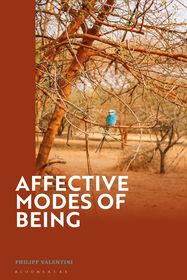
On the Affective Moods of Being
A Philosophical Exploration of Affects in Ibrahim Niasse's Thought
- Publisher's listprice GBP 85.00
-
40 608 Ft (38 675 Ft + 5% VAT)
The price is estimated because at the time of ordering we do not know what conversion rates will apply to HUF / product currency when the book arrives. In case HUF is weaker, the price increases slightly, in case HUF is stronger, the price goes lower slightly.
- Discount 13% (cc. 5 279 Ft off)
- Discounted price 35 330 Ft (33 647 Ft + 5% VAT)
Subcribe now and take benefit of a favourable price.
Subscribe
40 608 Ft

Availability
Not yet published.
Why don't you give exact delivery time?
Delivery time is estimated on our previous experiences. We give estimations only, because we order from outside Hungary, and the delivery time mainly depends on how quickly the publisher supplies the book. Faster or slower deliveries both happen, but we do our best to supply as quickly as possible.
Product details:
- Publisher Bloomsbury Publishing (UK)
- Date of Publication 5 February 2026
- Number of Volumes Hardback
- ISBN 9781350530188
- Binding Hardback
- No. of pages240 pages
- Size 216x138 mm
- Language English
- Illustrations 10 bw illus 700
Categories
Short description:
An insightful comparison of Ibrahim Niasse's and Heidegger's philosophies that illustrate the interesting similarities and differences between their affective ontologies.
MoreLong description:
Placing Senegalese scholar and Sufi Shaykh, Ibrahim Niasse (1900-1975), in dialogue with the German philosopher Martin Heidegger (1889-1976), this book considers meditations on Being through the affects of human experience.
At the heart of the divergence between these two philosophers lies a fundamental difference in their conceptions of time: Heidegger views death as the definitive end of existence, whereas Niasse envisions existence as oriented toward apocatastasis-a return to divine origin. Yet Philipp Valentini moves beyond this contrast to examine how both philosophers root their inquiries into Being in the realm of human affect. He draws compelling parallels between their treatments of shared affective states such as dismay, vengeance, relationality (being with another), and the experience of slow, extended time.
While previous studies have approached the relationship between Heidegger and the Islamicate intellectual tradition either historically or through speculative hybridization, Valentini offers a more nuanced comparative analysis. Through an insightful juxtaposition of modern Sufi and Heideggerian thought, Valentini reveals how both thinkers engage affect under the guidance of overarching metaphysical ideas. Ultimately, On the Affective Moods of Being invites readers to reflect on a profound question: what guiding idea should shape our affective experience of Being?
Table of Contents:
Introduction
1. Adam's Confusion
2. Ibrahim and the Plant-human Tonality
3. Solomon and the Tonality of Being-with-another-than-self
4. Moses and the Labour of Learning to Endure the Long Passing of Time
5. Jesus and the Tone of Vengeance
6. Muhammad's Multiple Paternal Tones: The Keystone of Niasse's Soteriological Thinking
7. The Decision Prior to Any Decision in Heidegger and Niasse. Making the Earth Habitable' vs 'Circling the Muhammadan Election'.

