

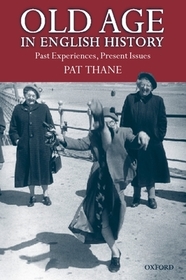
Old Age in English History
Past Experiences, Present Issues
- Publisher's listprice GBP 49.99
-
23 882 Ft (22 745 Ft + 5% VAT)
The price is estimated because at the time of ordering we do not know what conversion rates will apply to HUF / product currency when the book arrives. In case HUF is weaker, the price increases slightly, in case HUF is stronger, the price goes lower slightly.
- Discount 10% (cc. 2 388 Ft off)
- Discounted price 21 494 Ft (20 471 Ft + 5% VAT)
Subcribe now and take benefit of a favourable price.
Subscribe
23 882 Ft

Availability
printed on demand
Why don't you give exact delivery time?
Delivery time is estimated on our previous experiences. We give estimations only, because we order from outside Hungary, and the delivery time mainly depends on how quickly the publisher supplies the book. Faster or slower deliveries both happen, but we do our best to supply as quickly as possible.
Product details:
- Publisher OUP Oxford
- Date of Publication 7 March 2002
- ISBN 9780199250240
- Binding Paperback
- No. of pages548 pages
- Size 234x156x29 mm
- Weight 814 g
- Language English 0
Categories
Short description:
At the turn of the millennium more people are living into their seventies, eighties, nineties and even beyond. Is the existence of so many old people in Britain something new? Are they creating an intolerable burden of costs of care and pensions on a shrinking younger generation? This book shows that old people have always been an important presence in English society. It describes the variety of ways in which they have lived their lives, and argues that as more people live longer, they are fit and active for longer. Older people can and do benefit society more than they burden it.
MoreLong description:
At the end of the twentieth century more people are living into their seventies, eighties, nineties, and beyond, a process expected to continue well into the next millennium, This life spancould only have been dreamed of in earlier centuries; now many can expect to survive to old age in reasonably good health and remain active and independent to the end, in contrast to the high death rate, ill health, and destitution which affected all generations in the past.
Yes this change is generally greeted not with triumph but with alarm. It is assumed that the longer people live, the longer they are ill and dependent, thus burdening a shrinking younger generation with the cost of pensions and health care. It is also widely believed that 'the past' saw few survivors into old age and thse could be supported by their families without involoving the tax payer.
In this first survey of old age throughout English history, these assumptions are challenged. Vivid pictures are givenof the ways in which very large numbers of older people lived oftern vigorous and independent lives over many centuries. The book argues that old people have always been highly visible in English communities, and concludes that as people live longer, due to the benefits of the rise in living standards, far from being burdens they can be valuable contributors to their families and to society.
Thane's historical approach effectively demolishes myths of a list golden age for the old, and is an excellent corrective to the kind of social science that refers back to an imagined "traditional society".
Table of Contents:
Introduction
Old Age in Pre-Modern England
Did People in the Past Grow Old?
Representations
Representations of Old Age in Ancient Greece and Rome
Medieval Images of Old Age
Old Age in the Seventeenth and Eighteenth Centuries
Experiences
Independent Old People: Making a Living in Medieval England
The Aged Landless Poor: Work and Welfare in Medieval and Early Modern England
Old People and their Families
Lives of Expedients: Old People and the Old Poor Law
Inventing the Old-Age Pensioner
The New Poor Law and the Aged Poor
The Campaign for Old-Age Pensions
The First Piece of Socialism Britain has Entered upon? - The Introduction of Old-Age Pensions
Pensions for the Middle Classes: The Growth of Occupational Pensions
Living Longer in a Changing World: the 1830s to 1930s
An Unfailing Zest for Life: Images and Self-Images of Older People in the Nineteenth and Early Twentieth Centuries
Work and Retirement: the 1830s to 1930s
Kinship does not Stop at the Front Door: Old People and their Families, the 1830s to 1930s
Pensions and Pensioners in War and Depression
The Menace of an Ageing Population, the 1920s to 1950s
'I Dont Feel Old': The Reinvention of Old Age in the Welfare State
A Remarkable Discovery of Secret Need: Pensioners in the 1940s
Pensions from Beveridge to the Millennium
Shocked into Idleness: The Emergence of Mass Retirement
The Family Lives of Old People
Inventing Geriatric Medicine
You're as old as you Feel: Images and Self-Images of Older People at the End of the Millennium
Conclusion
Into the Twenty-First Century: An Ageing Society - Burden or Benefit?
Bibliography
Index
Introduction
Old Age in Pre-Modern England
Did People in the Past Grow Old?
Representations
Representations of Old Age in Ancient Greece and Rome
Medieval Images of Old Age
Old Age in the Seventeenth and Eighteenth Centuries
Experiences
Independent Old People: Making a Living in Medieval England
The Aged Landless Poor: Work and Welfare in Medieval and Early Modern England
Old People and their Families
Lives of Expedients: Old People and the Old Poor Law
Inventing the Old-Age Pensioner
The New Poor Law and the Aged Poor
The Campaign for Old-Age Pensions
The First Piece of Socialism Britain has Entered upon? - The Introduction of Old-Age Pensions
Pensions for the Middle Classes: The Growth of Occupational Pensions
Living Longer in a Changing World: the 1830s to 1930s
An Unfailing Zest for Life: Images and Self-Images of Older People in the Nineteenth and Early Twentieth Centuries
Work and Retirement: the 1830s to 1930s
Kinship does not Stop at the Front Door: Old People and their Families, the 1830s to 1930s
Pensions and Pensioners in War and Depression
The Menace of an Ageing Population, the 1920s to 1950s
'I Dont Feel Old': The Reinvention of Old Age in the Welfare State
A Remarkable Discovery of Secret Need: Pensioners in the 1940s
Pensions from Beveridge to the Millennium
Shocked into Idleness: The Emergence of Mass Retirement
The Family Lives of Old People
Inventing Geriatric Medicine
You're as old as you Feel: Images and Self-Images of Older People at the End of the Millennium
Conclusion
Into the Twenty-First Century: An Ageing Society - Burden or Benefit?
Bibliography
Index

