

- Publisher's listprice GBP 28.99
-
13 088 Ft (12 465 Ft + 5% VAT)
The price is estimated because at the time of ordering we do not know what conversion rates will apply to HUF / product currency when the book arrives. In case HUF is weaker, the price increases slightly, in case HUF is stronger, the price goes lower slightly.
- Discount 10% (cc. 1 309 Ft off)
- Discounted price 11 779 Ft (11 219 Ft + 5% VAT)
Subcribe now and take benefit of a favourable price.
Subscribe
13 088 Ft

Availability
Not yet published.
Why don't you give exact delivery time?
Delivery time is estimated on our previous experiences. We give estimations only, because we order from outside Hungary, and the delivery time mainly depends on how quickly the publisher supplies the book. Faster or slower deliveries both happen, but we do our best to supply as quickly as possible.
Product details:
- Publisher Bloomsbury Publishing (UK)
- Date of Publication 20 August 2026
- ISBN 9781350371484
- Binding Paperback
- No. of pages208 pages
- Size 198x129 mm
- Language
- Illustrations 10 bw illus 700
Categories
Long description:
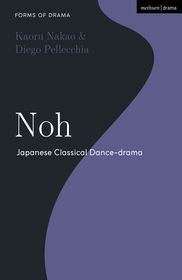
This volume provides the reader with a comprehensive overview of the rich traditions of noh, classical Japanese dance-drama.
Drawing from specialized scholarship in English and in Japanese, it takes an accessible approach useful for a range of readers, including students and researchers of Japanese culture and performing arts, as well as theatre practitioners.
The introduction provides an overview, describing noh from the point of view of both the audience and the practitioner. Chapter One traces the history of noh from its origins through stages of development and formalization to the present day. Chapter Two explores the different plays in the repertoire, discussing their structures, themes, and sources. Chapter Three delves into the staging conventions of noh, introducing aspects of movement, music, and chant, as well as costumes, masks, and stage properties. To conclude, this book raises questions about the current situation of noh and explores its potential future.
Since its emergence in the 14th century, noh has been appreciated by audiences ranging from the intellectual elites to the warrior class, from the Buddhist clergy to commoners. Throughout its history, noh has influenced other traditional performing arts and, since the early 20th century, it has also been a source of inspiration for theatre practitioners outside of Japan.
Table of Contents:
List of Figures
Series Preface
Note to the reader
Acknowledgments
Introduction
Watching Noh
Practicing Noh
1. History
Origins
Developments
Expansion and Formalization
Modernization
2. Plays
Repertory and Categorization
Structures and Themes
Literary Characteristics
3. Performance
Stage
Movement
Music and Chant
Masks, Costumes, Fans
Stage Properties
Conclusion
Notes
Bibliography
Recommended Online Resources
Index

