

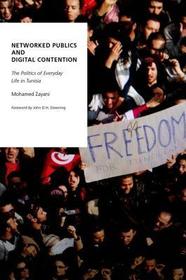
Networked Publics and Digital Contention
The Politics of Everyday Life in Tunisia
Series: Oxford Studies in Digital Politics;
- Publisher's listprice GBP 31.49
-
14 217 Ft (13 540 Ft + 5% VAT)
The price is estimated because at the time of ordering we do not know what conversion rates will apply to HUF / product currency when the book arrives. In case HUF is weaker, the price increases slightly, in case HUF is stronger, the price goes lower slightly.
- Discount 10% (cc. 1 422 Ft off)
- Discounted price 12 795 Ft (12 186 Ft + 5% VAT)
Subcribe now and take benefit of a favourable price.
Subscribe
14 217 Ft

Availability
printed on demand
Why don't you give exact delivery time?
Delivery time is estimated on our previous experiences. We give estimations only, because we order from outside Hungary, and the delivery time mainly depends on how quickly the publisher supplies the book. Faster or slower deliveries both happen, but we do our best to supply as quickly as possible.
Product details:
- Publisher OUP USA
- Date of Publication 24 September 2015
- ISBN 9780190239770
- Binding Paperback
- No. of pages304 pages
- Size 155x234x20 mm
- Weight 386 g
- Language English 0
Categories
Short description:
This book brings into focus the relationship between Internet development, youth activism, cyber resistance, and political participation.
MoreLong description:
How is the adoption of digital media in the Arab world affecting the relationship between the state and its subjects? What new forms of online engagement and strategies of resistance have emerged from the aspirations of digitally empowered citizens? Networked Publics and Digital Contention: The Politics of Everyday Life in Tunisia tells the compelling story of the concurrent evolution of technology and society in the Middle East. It brings into focus the intricate relationship between Internet development, youth activism, cyber resistance, and political participation. Taking Tunisia - the birthplace of the Arab uprisings - as a case study, it offers an ethnographically nuanced and theoretically grounded analysis of the digital culture of contention that developed in an authoritarian context. It broadens the focus from narrow debates about the role that social media played in the Arab uprisings toward a fresh understanding of how changes in media affect existing power relations. Based on extensive fieldwork, in-depth interviews with Internet activists, and immersive analyses of online communication, this book redirects our attention from institutional politics to the informal politics of everyday life. An original contribution to the political sociology of Arab media, Networked Publics and Digital Contention provides a unique perspective on how networked Arab publics negotiate agency, reconfigure political action, and reimagine citizenship.
Networked Publics and Digital Contention is a comprehensive sociological, historical, and political probe of Tunisia's contemporary history in the Digital Age. It also offers a substantial contribution to the study of the region and its rapidly evolving definition of political processes, agency, and democratic culture in the age of global networks. Considering the ephemeral nature of online communication, the book not only preserves Internet history but also provides a much-need theorization of citizenship and sociopolitical experiences in twenty-first century MENA.
Table of Contents:
Foreword
Acknowledgements
I. Introduction: On Digital Contention and Everyday Life
II. The Mirage of Progress: A Nation's Unfulfilled Promise
III. A Crisis of Authority: Offline Activism and Simmering Discontent
IV. Cyber Activism Comes of Age: Activists, Diasporas and Networks
V. The Politicization of the Blogosphere: When Diarists Become Activists
VI. The Battle over Internet Control: From the Web to the Street
VII. Mediatizing the Revolution: The Appeal of Social Networks
VIII. Post-Revolutionary Dynamics: Changes and Challenges
Appendix
Notes
References
Index

