

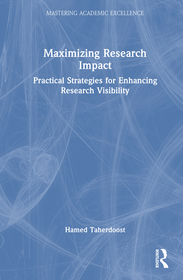
Maximizing Research Impact
Practical Strategies for Enhancing Research Visibility
Series: Mastering Academic Excellence;
-
GET 10% OFF
- Publisher's listprice GBP 171.99
-
77 653 Ft (73 955 Ft + 5% VAT)
The price is estimated because at the time of ordering we do not know what conversion rates will apply to HUF / product currency when the book arrives. In case HUF is weaker, the price increases slightly, in case HUF is stronger, the price goes lower slightly.
- Discount 10% (cc. 7 766 Ft off)
- Discounted price 69 887 Ft (66 560 Ft + 5% VAT)
69 887 Ft

Availability
printed on demand
Why don't you give exact delivery time?
Delivery time is estimated on our previous experiences. We give estimations only, because we order from outside Hungary, and the delivery time mainly depends on how quickly the publisher supplies the book. Faster or slower deliveries both happen, but we do our best to supply as quickly as possible.
Product details:
- Edition number 1
- Publisher Taylor & Francis
- Date of Publication 29 August 2025
- ISBN 9781032995533
- Binding Hardback
- No. of pages172 pages
- Size 234x156 mm
- Weight 480 g
- Language English
- Illustrations 68 Illustrations, black & white 608
Categories
Short description:
This book addresses the challenges and opportunities presented by the rapidly evolving research landscape, including the rise of digital platforms, open access publishing, and the importance of interdisciplinary collaboration. It provides actionable strategies to navigate these changes effectively.
MoreLong description:
Maximizing Research Impact: Practical Strategies for Enhancing Research Visibility offers a comprehensive guide for researchers, academics, and practitioners across disciplines who wish to increase the visibility, accessibility, and influence of their research outputs.
This book addresses the challenges and opportunities presented by the rapidly evolving research landscape, including the rise of digital platforms, open access publishing, and the importance of interdisciplinary collaboration. It provides actionable strategies to navigate these changes effectively and ensure that research is not only published but also widely disseminated, recognized, and utilized.
Designed for a diverse audience, this will be suitable for early-career researchers, established scholars, and graduate students seeking to build or enhance their academic presence. It will also be useful for research administrators and managers looking to support and promote research within institutions, as well as interdisciplinary and collaborative researchers aiming to navigate and leverage diverse networks. Additionally, the book offers insights for science communicators and media professionals involved in disseminating research to the public.
MoreTable of Contents:
About the Author
Preface
Acknowledgements
Chapter 1: Understanding Research Visibility
1.1. Introduction to Research Visibility
1.2. Theoretical Frameworks on Research Visibility
1.2.1. Metrics and Indicators of Visibility
1.2.2. Current Trends in Visibility Measurement
1.3. Practical Strategies for Enhancing Research Visibility
1.4. Challenges Faced by Published Research in Achieving Visibility
1.5. Practical Solutions to Overcome Visibility Challenges
1.6. Conclusion
Chapter 2: Building a Strong Research Identity
2.1. Introduction
2.1.1. What is an Academic Profile?
2.1.2. Practical Steps to Build an Academic Profile
2.1.3. Common Platforms for Academic Profiles
2.2. Utilizing ORCID and ResearcherID
2.2.1. Introduction to ORCID and ResearcherID
2.2.2. Setting Up an ORCID Profile
2.2.3. Leveraging ResearcherID
2.2.4. Practical Tips for Maximizing Impact
2.3. Best Practices for Enhancing Research Visibility
2.3.1. The Role of Digital Presence
2.3.2. Citation Management and Collaboration
2.4. Challenges and Ethical Considerations
2.5. Conclusion
Chapter 3: Optimizing Research Outputs for Visibility
3.1. Introduction
3.2. Theoretical Framework
3.2.1. The Impact of Visibility on Research Impact
3.2.2. Models of Knowledge Dissemination
3.2.3. Theories on Academic Publishing Trends
3.3. Strategic Publishing Choices
3.3.1. Selecting the Right Journal or Platform
3.3.2. Evaluating Journal Reputation and Audience
3.3.3. Aligning Research with Journal Scope and Focus
3.3.4. Practical Steps in Making Publishing Decisions
3.4. The Role of Open Access in Enhancing Visibility
3.5. Maximizing Research Impact through Open Access
3.6. Practical Considerations for Optimizing Visibility
3.6.1. Enhancing Online Presence
3.6.2. Social Media for Researchers
3.6.3. Tracking and Analyzing Impact
3.6.4. Overcoming Common Publishing Barriers and Pitfalls
3.7. Ethical Considerations in Strategic Publishing
3.8. Conclusion
Chapter 4: Leveraging Digital Platforms and Social Media
4.1. Introduction
4.2. Academic Networking Sites
4.3. Theoretical Foundations
4.4. Practical Strategies for Maximizing Impact
4.5. Social Media Strategies for Academics
4.5.1. The Power of Social Media in Academia
4.5.2. Theoretical Perspectives
4.5.3. Practical Applications and Strategies
4.6. Challenges and Ethical Considerations
4.7. Conclusion
Chapter 5: Engaging with the Broader Public and Media
5.1. Introduction
5.2. Writing for Non-Academic Audiences
5.2.1. Understanding the Target Audience: Why Context Matters
5.2.2. Key Differences Between Academic and Non-Academic Writing
5.2.3. Principles of Clear and Concise Writing
5.2.4. Crafting Compelling Narratives
5.2.5. Use of Visuals and Storytelling in Non-Academic Writing
5.3. Effective Communication with the Media
5.3.1. The Media Landscape: Types of Media and Their Role in Public Communication
5.3.2. Building Relationships with Journalists and Media Outlets
5.3.3. How to Create an Effective Press Release
5.3.4. Tailoring Messages for Different Media Formats
5.3.5. Managing Media Interviews: Preparation, Key Messages, and Delivery
5.3.6. Crisis Communication: Responding to Media Inquiries in Challenging Times
5.4. Practical Tools and Strategies
5.5. Challenges and Best Practices
5.6. Conclusion
Chapter 6: Enhancing Citation Impact
6.1. Introduction
6.2. Theoretical Foundations of Citation Impact
6.2.1. Understanding Citation Metrics
6.2.2. The Role of Citations in Academic Reputation
6.2.3. Citation Behavior: Theories and Models
6.3. Citation Analysis and Tracking
6.3.1. Tools and Platforms for Citation Tracking
6.3.2. Understanding Citation Data: Interpretation and Limitations
6.3.3. Citation Analysis Metrics
6.3.4. Impact of Self-Citations on Citation Counts
6.4. Strategies for Increasing Citations
6.4.1. Optimizing Paper Visibility and Accessibility
6.4.2. Enhancing Paper Discoverability
6.4.3. Promoting Research Output Effectively
6.5. Leveraging Data and Metrics for Improved Citation Impact
6.6. Ethical Considerations and Pitfalls in Citation Practices
6.7. Conclusion
Chapter 7: Collaboration and Networking for Greater Impact
7.1. Introduction
7.2. Building and Sustaining Research Collaborations
7.2.1. Theoretical Perspectives on Research Collaboration
7.2.2. Practical Strategies for Establishing Collaborations
7.2.2.1. Identifying Potential Collaborators and Research Synergies
7.2.2.2. Approaching Institutions, Researchers, and Organizations for Partnership
7.2.2.3. Creating Collaborative Agreements and Setting Clear Goals
7.2.3. Sustaining Long-Term Collaborations
7.2.3.1. Building Trust and Maintaining Open Communication
7.2.3.2. Managing Conflicts and Overcoming Challenges in Collaboration
7.2.3.3. Tools and Platforms for Effective Collaboration
7.3. Participating in Interdisciplinary Research Networks
7.3.1. Theoretical Foundations of Interdisciplinary Networks
7.3.2. Practical Approaches to Joining Interdisciplinary Networks
7.3.3. Enhancing Research Impact through Interdisciplinary Collaboration
7.4. Leveraging Networking for Career and Research Advancement
7.5. Challenges and Best Practices in Collaboration and Networking
7.6. Conclusion
Chapter 8: Navigating the World of Research Metrics
8.1. Introduction
8.2. Understanding Research Metrics
8.3. The h-index: A Measure of Research Impact
8.4. Altmetrics: Expanding Beyond Traditional Metrics
8.5. Impact Factor: A Controversial Standard
8.6. Using Metrics to Enhance Research Visibility
8.7. The Future of Research Metrics
8.8. Conclusion
Chapter 9: Long-Term Strategies for Sustained Impact
9.1. Introduction
9.2. The Role of Continuous Professional Development (CPD) in Research Visibility
9.2.1. Theoretical Perspectives on CPD
9.2.2. Practical Approaches to CPD
9.3. Adapting to Future Trends in Research Dissemination
9.3.1. Theoretical Foundations of Research Dissemination
9.3.2. Practical Strategies for Future-Proofing Research Dissemination
9.4. Measuring and Enhancing Research Impact
9.4.1. Theoretical Models of Research Impact
9.4.2. Practical Techniques for Increasing Research Impact
9.5. Conclusion
Chapter 10: Conclusion and Future Directions
10.1. The Future of Research Visibility
10.1.1. Theoretical Perspectives on Research Visibility
10.1.2. Practical Strategies for Enhancing Research Visibility
10.2. Final Thoughts and Recommendations
10.2.1. Theoretical Insights on Research and Knowledge Creation
10.2.2. Practical Recommendations for Future Research
10.3. Conclusion

