

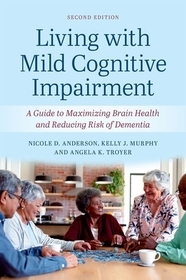
Living with Mild Cognitive Impairment
A Guide to Maximizing Brain Health and Reducing the Risk of Dementia
- Publisher's listprice GBP 23.99
-
10 831 Ft (10 315 Ft + 5% VAT)
The price is estimated because at the time of ordering we do not know what conversion rates will apply to HUF / product currency when the book arrives. In case HUF is weaker, the price increases slightly, in case HUF is stronger, the price goes lower slightly.
- Discount 10% (cc. 1 083 Ft off)
- Discounted price 9 748 Ft (9 284 Ft + 5% VAT)
Subcribe now and take benefit of a favourable price.
Subscribe
10 831 Ft

Availability
Estimated delivery time: In stock at the publisher, but not at Prospero's office. Delivery time approx. 3-5 weeks.
Not in stock at Prospero.
Why don't you give exact delivery time?
Delivery time is estimated on our previous experiences. We give estimations only, because we order from outside Hungary, and the delivery time mainly depends on how quickly the publisher supplies the book. Faster or slower deliveries both happen, but we do our best to supply as quickly as possible.
Product details:
- Edition number 2
- Publisher OUP USA
- Date of Publication 19 June 2024
- ISBN 9780197749340
- Binding Paperback
- No. of pages472 pages
- Size 235x156x25 mm
- Weight 649 g
- Language English 497
Categories
Short description:
Written by three clinicians and scientists who have years of experience working with people with mild cognitive impairment, or MCI, this new edition provides up-to-date and reliable information based on the science of MCI. The authors explain how MCI is diagnosed and treated, and they provide information on how to improve cognitive health through healthy eating, exercise, and social and cognitive engagement. The book also provides practical and effective memory strategies, using patient stories to illustrate the real-life issues facing people living with MCI. The book includes "Questions to Ask Your Doctor," recommended readings, links to relevant Web pages, and worksheets to guide readers through healthy lifestyle change.
MoreLong description:
Approximately one in ten adults over the age of 65 has greater memory or thinking problems than expected for their age. This is called mild cognitive impairment, or MCI. The previous edition was the first book exclusively geared towards people with MCI, their families, and the healthcare professionals who help them. Written by three clinicians and scientists who have years of experience working with people with MCI, this new edition provides up-to-date and reliable information based on the science of MCI. In short, digestible, MCI-friendly chapters, the authors explain how MCI is diagnosed and treated, and they provide information on how to improve cognitive health through healthy eating, exercise, and social and cognitive engagement. The book also provides practical and effective memory strategies, using patient stories to illustrate the real-life issues facing people living with MCI. The book includes "Questions to Ask Your Doctor," recommended readings, links to relevant Web pages, and worksheets to guide readers through healthy lifestyle change.
This second edition contains 52 accessible chapters with a new chapter on sex differences to summarize the growing knowledge of its importance in health and treatment of MCI. As advances in research continue to evolve, this book will continue to be essential reading for those impacted by MCI.
The book presents a comprehensive and compassionate path for making the best of a complicated diagnosis. Patients and loved ones alike can glean information from this book to make the best of their situation. This book will help bridge the information gap between patients and practitioners, enabling those with MCI to feel comfortable asking questions and engaging with tools at their disposal. This book will help patients feel like they aren't alone on this journey.
Table of Contents:
Foreword
By Ron Petersen
Acknowledgments
How to Read This Book
A Story about Joe and Ruth: Part One
SECTION ONE: WHAT IS MILD COGNITIVE IMPAIRMENT AND HOW DOES IT DIFFER FROM TYPICAL AGING?
1. Memory and Aging: The Basics
2. How Memory Typically Changes with Age
3. What is Mild Cognitive Impairment?
4. Clinical Criteria for Mild Cognitive Impairment
5. How Memory Changes in Amnestic Mild Cognitive Impairment
SECTION TWO: BEYOND MILD COGNITIVE IMPAIRMENT: WHAT IS DEMENTIA?
6. What is Dementia?
7. Alzheimer's Disease
8. Vascular Dementia
9. Frontotemporal Dementia
10. Dementia of Parkinson's Disease and Lewy Body Disease
SECTION THREE: FACTORS THAT AFFECT MILD COGNITIVE IMPAIRMENT
11. What is a Risk Factor? What is Prevalence? What is Incidence?
12. Risk Factors for Mild Cognitive Impairment and Dementia That Are Not Under Your Control
13. Risk Factors for Mild Cognitive Impairment and Dementia That Are Under Your Control
14. Sex Differences in Mild Cognitive Impairment: It's Complicated
SECTION FOUR: OUTCOMES OF MILD COGNITIVE IMPAIRMENT
15. When Mild Cognitive Impairment Stays Stable or Returns to Normal
16. When Mild Cognitive Impairment Progresses to Dementia
SECTION FIVE: GETTING TO A DIAGNOSIS
17. Bringing Your Concerns About Memory Change to Your Family Doctor
18. Cognitive Screening
19. Specialists You May be Referred to
20. Neuropsychological Evaluation
SECTION SIX: TREATMENT OF MILD COGNITIVE IMPAIRMENT
21. Drug Treatment of Mild Cognitive Impairment
22. Memory Intervention Programs
23. Involvement in Research Studies
SECTION SEVEN: PERSONAL MANAGEMENT OF MILD COGNITIVE IMPAIRMENT
24. Life as a Person with Mild Cognitive Impairment
25. Life as a Person Close to Someone with Mild Cognitive Impairment
26. Stress Management and Mental Wellness
27. Sleeping Well
28. Making Change for the Better
SECTION EIGHT: PRACTICAL CONSIDERATIONS FOR LIVING WITH MILD COGNITIVE IMPAIRMENT
29. What About Driving?
30. Planning for Current and Future Support Needs
31. Legal Matters
32. Resources for Taking Charge of Mild Cognitive Impairment
SECTION NINE: MANAGING MILD COGNITIVE IMPAIRMENT THROUGH HEALTHY EATING AND EXERCISE
33. Healthy Lifestyles: How Do We Know What We Know?
34. How Diet Affects Health
35. Making Sense of the Diet Buzz
36. How to Achieve Healthy Eating Habits
37. Exercise: Jog Your Memory
38. Physical and Cognitive Benefits of Exercise
39. Exercise Your Way to Better Brain Health
40. Types of Exercise and Activities
SECTION TEN: MANAGING MILD COGNITIVE IMPAIRMENT THROUGH ENGAGEMENT
41. What is Cognitive Engagement?
42. Benefits of Cognitive Engagement
43. What is Social Engagement?
44. Benefits of Social Engagement: A Good Friend is Good for You
45. Building a More Sociable Lifestyle
SECTION ELEVEN: USING MEMORY STRATEGIES
46. An Introduction to Memory Strategies
47. Using a Memory Book
48. Good Memory Habits
49. Attention as a Memory Strategy
50. Remembering by Thinking About What Something Means
51. Repeat, Repeat, … Repeat
52. Using Memory Strategies in Your Everyday Life
A Story about Joe and Ruth: Part Two
Bibliography
Index

