

- Publisher's listprice GBP 65.00
-
29 347 Ft (27 950 Ft + 5% VAT)
The price is estimated because at the time of ordering we do not know what conversion rates will apply to HUF / product currency when the book arrives. In case HUF is weaker, the price increases slightly, in case HUF is stronger, the price goes lower slightly.
- Discount 20% (cc. 5 869 Ft off)
- Discounted price 23 478 Ft (22 360 Ft + 5% VAT)
- Discount is valid until: 30 June 2026
Subcribe now and take benefit of a favourable price.
Subscribe
29 347 Ft

Availability
printed on demand
Why don't you give exact delivery time?
Delivery time is estimated on our previous experiences. We give estimations only, because we order from outside Hungary, and the delivery time mainly depends on how quickly the publisher supplies the book. Faster or slower deliveries both happen, but we do our best to supply as quickly as possible.
Product details:
- Publisher Bloomsbury Publishing (UK)
- Date of Publication 19 February 2026
- Number of Volumes Hardback
- ISBN 9781350174689
- Binding Hardback
- No. of pages232 pages
- Size 206x128x20 mm
- Weight 360 g
- Language English
- Illustrations 2 bw illus 681
Categories
Short description:
An introduction to the cultural history of jingju, from its origin to the present, with case studies demonstrating its practice and aesthetics.
MoreLong description:
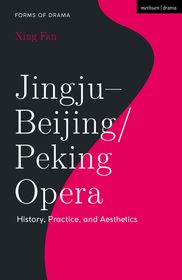
This is an accessible introduction to jingju (Beijing/Peking opera) which presents readers with an analysis of the different components of its aesthetic form in the context of its ongoing cultural history.
It traces the history of jingju from its origin during the 1790s to its present-day status as one of the few theatrical forms to enjoy nation-wide popularity in China. In 2010, UNESCO placed it on the Representative List of the Intangible Heritage of Humanity.
This book traces jingju's history through three lenses. Firstly, it introduces the stage practices that shape a jingju production-including the use of music, acting style, visual components and staging, and dramatic narrative-and details for the reader the practitioner's experience during the developmental creative process, in rehearsals and behind the curtain. Secondly, it illustrates jingju's development with close analyses of case studies, and sheds light on the process of jingju's transformation into its contemporary form. Lastly, it defines and interprets jingju's notion of the beautiful and how this sense of beauty is communicated through stylization.
Table of Contents:
"
List of Illustrations
List of Tables
Series Preface
Introduction
Chapter 1. Performance Practice: Music, Acting, Visual Components, Play Text, and Mounting Productions
Chapter 2. Performance History: ""Huangqiang,"" ""Pihuang,"" ""Luantan,"" ""Guoju,"" and ""Jingju""
Chapter 3: Performance as Legacy
Bibliography
Index

