
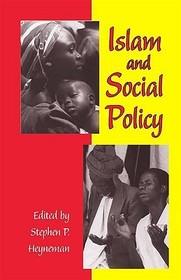
Islam and Social Policy
- Publisher's listprice GBP 64.00
-
30 576 Ft (29 120 Ft + 5% VAT)
The price is estimated because at the time of ordering we do not know what conversion rates will apply to HUF / product currency when the book arrives. In case HUF is weaker, the price increases slightly, in case HUF is stronger, the price goes lower slightly.
- Discount 10% (cc. 3 058 Ft off)
- Discounted price 27 518 Ft (26 208 Ft + 5% VAT)
Subcribe now and take benefit of a favourable price.
Subscribe
30 576 Ft
Availability
Not yet published.
Why don't you give exact delivery time?
Delivery time is estimated on our previous experiences. We give estimations only, because we order from outside Hungary, and the delivery time mainly depends on how quickly the publisher supplies the book. Faster or slower deliveries both happen, but we do our best to supply as quickly as possible.
Product details:
- Publisher University of Chicago Press
- Date of Publication 24 February 2026
- Number of Volumes Hardback
- ISBN 9780826514462
- Binding Hardback
- No. of pages232 pages
- Size 203x127 mm
- Weight 456 g
- Language English 700
Categories
Short description:
A discussion of how Muslim communities respond to social problems, including the rights of women, charity, education and general social welfare. The essays demonstrate how Islam offers guidance on these and other issues.
MoreLong description:
At a time when more nuanced understandings of Muslim countries and their legal and social practices are urgently needed in the West, the appearance of this collection is especially welcome. In these illuminating and accessible essays, the contributors explain how Islam sees itself in terms of social policy, how it treats women, and how it encourages charity, education, and general social welfare. The essays encompass many regional cultures and draw on court records and legal debates, field work on government ministries, and an extensive reading of Islamic law. In his overview of waqf (similar to the Western idea of a foundation, in which an endowment is set aside in perpetuity for specified purposes), Ahmad Dallal explains how charity, a central organizing principle in Islam, is itself organized and how waqf, traditionally a source of revenue for charitable purposes, can also become a source of tension and conflict. Donna Lee Bowen, in her essay on the position of women in Islamic law, points out the crucial differences between the Islamic principles of family equity and the Western notion of individual equality. In a subsequent essay, Bowen addresses the problems surrounding family planning and the dilemmas that have arisen within the Muslim world over differing ideas about birth control. The two final essays look at specific instances of how the modern state has treated Islamic social policy. Gall Richardson examines zakat, an Islamic tax used to assist the poor, and its administration in Pakistan. Carol Underwood, meanwhile, explores public health policy in Iran, both before and after the Islamic revolution that deposed the Shah. Addressing some of the most profound misunderstandings between Islamic and Western societies, Islam And Social Policy will be of vital interest not only to scholars and policymakers but to anyone concerned with Islam's critical place in the modern world. Stephen P. Heyneman is a professor of international education policy at Vanderbilt University. From 1976 to 1998, he helped design and implement education policies for the World Bank. He is the editor or author of a number of reports on international education, economic and social policy.
More