

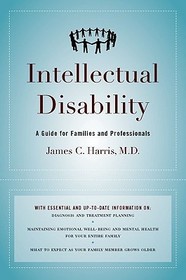
Intellectual Disability
A Guide for Families and Professionals
- Publisher's listprice GBP 33.99
-
15 346 Ft (14 615 Ft + 5% VAT)
The price is estimated because at the time of ordering we do not know what conversion rates will apply to HUF / product currency when the book arrives. In case HUF is weaker, the price increases slightly, in case HUF is stronger, the price goes lower slightly.
- Discount 10% (cc. 1 535 Ft off)
- Discounted price 13 811 Ft (13 154 Ft + 5% VAT)
Subcribe now and take benefit of a favourable price.
Subscribe
15 346 Ft

Availability
printed on demand
Why don't you give exact delivery time?
Delivery time is estimated on our previous experiences. We give estimations only, because we order from outside Hungary, and the delivery time mainly depends on how quickly the publisher supplies the book. Faster or slower deliveries both happen, but we do our best to supply as quickly as possible.
Product details:
- Publisher OUP USA
- Date of Publication 16 October 2010
- ISBN 9780195145724
- Binding Hardback
- No. of pages240 pages
- Size 236x157x25 mm
- Weight 499 g
- Language English 0
Categories
Long description:
Approximately 2.5 million people in the United States--one percent of the population--have an intellectual disability (previously referred to as mental retardation). These conditions range from genetic disorders such as Down syndrome to disabilities caused by infectious diseases and brain injury. Intellectual Disability: A Guide for Families and Professionals, by one of the country's foremost authorities on intellectual disability, is a comprehensive resource that will be of importance to anyone with a personal connection to a child or adult with a neurodevelopmental disorder.
Emphasizing the humanity of persons with intellectual and related developmental disabilities, psychiatrist and pediatrician James Harris provides essential information on assessment and diagnosis of intellectual disability, treatments for specific disorders, and ways to take advantage of the wide array of services available today. The focus throughout is on the development of the person, the positive supports necessary for self-determination, and, to the extent possible, independent decision making. Harris also surveys historical attitudes toward intellectual disability, the medical community's current understanding of its causes and frequency, and the associated physical, behavioral, and psychiatric conditions (such as seizure disorder, depression, and autism) that often accompany particular types of intellectual disability. The book addresses legal, medical, mental health, and research-related issues as well as matters of spirituality, highlighting the ways in which individuals with intellectual disability can meaningfully participate in the spiritual lives of their families and their communities. Each chapter ends with a series of key points to remember, and the book concludes with a list of additional resources of further interest.
Intellectual Disability is a must-read for parents and families of those with neurodevelopmental disorders, providing guidance and essential information to help their family members effectively, and to make a significant, positive difference in their lives now and in the future.

