

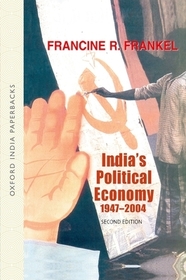
India's Political Economy
The Gradual Revolution (1947-2004)
- Publisher's listprice GBP 15.99
-
7 219 Ft (6 875 Ft + 5% VAT)
The price is estimated because at the time of ordering we do not know what conversion rates will apply to HUF / product currency when the book arrives. In case HUF is weaker, the price increases slightly, in case HUF is stronger, the price goes lower slightly.
- Discount 10% (cc. 722 Ft off)
- Discounted price 6 497 Ft (6 188 Ft + 5% VAT)
Subcribe now and take benefit of a favourable price.
Subscribe
7 219 Ft

Availability
Only to order.
Why don't you give exact delivery time?
Delivery time is estimated on our previous experiences. We give estimations only, because we order from outside Hungary, and the delivery time mainly depends on how quickly the publisher supplies the book. Faster or slower deliveries both happen, but we do our best to supply as quickly as possible.
Product details:
- Edition number 2
- Publisher OUP India
- Date of Publication 30 November 2006
- ISBN 9780195683790
- Binding Paperback
- No. of pages840 pages
- Size 242x159x45 mm
- Weight 1227 g
- Language English 0
Categories
Short description:
This book addresses the fundamental paradox of India's political economy: how do we achieve the goals of increased economic growth and reduced economic and social disparities without causing social turmoil and dissent and carries forward the analyses to the second-generation reforms in the 21st century.
MoreLong description:
This book addresses the fundamental paradox of India's political economy: how do we achieve the goals of increased economic growth and reduced economic and social disparities without causing social turmoil and dissent and carries forward the analyses to the second-generation reforms in the 21st century.
More
