

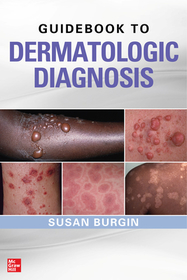
Guidebook to Dermatologic Diagnosis
Series: DERMATOLOGY;
- Publisher's listprice GBP 57.99
-
26 182 Ft (24 935 Ft + 5% VAT)
The price is estimated because at the time of ordering we do not know what conversion rates will apply to HUF / product currency when the book arrives. In case HUF is weaker, the price increases slightly, in case HUF is stronger, the price goes lower slightly.
- Discount 10% (cc. 2 618 Ft off)
- Discounted price 23 564 Ft (22 442 Ft + 5% VAT)
Subcribe now and take benefit of a favourable price.
Subscribe
26 182 Ft

Availability
Estimated delivery time: In stock at the publisher, but not at Prospero's office. Delivery time approx. 3-5 weeks.
Not in stock at Prospero.
Why don't you give exact delivery time?
Delivery time is estimated on our previous experiences. We give estimations only, because we order from outside Hungary, and the delivery time mainly depends on how quickly the publisher supplies the book. Faster or slower deliveries both happen, but we do our best to supply as quickly as possible.
Product details:
- Publisher McGraw-Hill Education
- Date of Publication 28 January 2021
- ISBN 9780071738750
- Binding Paperback
- No. of pages624 pages
- Weight 1002 g
- Language English 58
Categories
Long description:
Publisher's Note: Products purchased from Third Party sellers are not guaranteed by the publisher for quality, authenticity, or access to any online entitlements included with the product.
A unique, highly visual and systematic approach to dermatologic diagnosis
Guidebook to Dermatologic Diagnosis provides an innovative and methodical approach to the diagnosis of skin lesions and rashes. The mainstay of diagnosis in dermatology is the physical exam which rests on visual diagnosis. This resource classifies dermatoses on morphologic grounds with diseases that look the same grouped together. Centered around “The Wheel of Diagnosis” which factors in several important clinical considerations necessary to formulate an accurate diagnosis, the book is enhanced by numerous images organized by clinical appearance rather than known diagnosis. This type of image grouping is specifically designed to teach readers how to think through and eventually arrive at an accurate diagnosis.
Each chapter is enhanced by tips on special testing, management, as well as the diagnostic approach. Although primarily written to be an innovative way to enhance dermatologic diagnostic skills, this unique resource can also be used at the point of care to confirm diagnosis. Whether you are a medical student, dermatology resident, internist, family practitioner looking to develop your approach to dermatology, or a seasoned dermatologist looking to augment your methodology of teaching differential diagnosis, this book is intended to be your guide, your authority, and your companion.
Guidebook to Dermatologic Diagnosis provides in-depth coverage of:
- How to use the “Wheel of Diagnosis”
- Diagnostic clues from secondary lesions and pigment changes
- Reaction patterns and color differentials as diagnostic determinants
- Dermal, papulosquamous, vesiculobullous, vascular, and eczematous reaction patterns
- Examining the scalp, hair, nails, mucous membranes, and lymph nodes
- Bedside diagnostic maneuvers, and more
Publisher's Note: Products purchased from Third Party sellers are not guaranteed by the publisher for quality, authenticity, or access to any online entitlements included with the product.
A unique, highly visual and systematic approach to dermatologic diagnosis
Guidebook to Dermatologic Diagnosis provides an innovative and methodical approach to the diagnosis of skin lesions and rashes. The mainstay of diagnosis in dermatology is the physical exam which rests on visual diagnosis. This resource classifies dermatoses on morphologic grounds with diseases that look the same grouped together. Centered around “The Wheel of Diagnosis” which factors in several important clinical considerations necessary to formulate an accurate diagnosis, the book is enhanced by numerous images organized by clinical appearance rather than known diagnosis. This type of image grouping is specifically designed to teach readers how to think through and eventually arrive at an accurate diagnosis.
Each chapter is enhanced by tips on special testing, management, as well as the diagnostic approach. Although primarily written to be an innovative way to enhance dermatologic diagnostic skills, this unique resource can also be used at the point of care to confirm diagnosis. Whether you are a medical student, dermatology resident, internist, family practitioner looking to develop your approach to dermatology, or a seasoned dermatologist looking to augment your methodology of teaching differential diagnosis, this book is intended to be your guide, your authority, and your companion.
Guidebook to Dermatologic Diagnosis provides in-depth coverage of:
- How to use the “Wheel of Diagnosis”
- Diagnostic clues from secondary lesions and pigment changes
- Reaction patterns and color differentials as diagnostic determinants
- Dermal, papulosquamous, vesiculobullous, vascular, and eczematous reaction patterns
- Examining the scalp, hair, nails, mucous membranes, and lymph nodes
- Bedside diagnostic maneuvers, and more
Table of Contents:
Preface
Introduction
Chapter 1: The Wheel of Diagnosis
Chapter 2: Color in Differential Diagnosis
Chapter 3: Diagnostic determinants of primary lesions
Chapter 4: Secondary lesions: the clues they provide, and an approach
Chapter 5: An introduction to the reaction patterns
Chapter 6: Papulosquamous reaction pattern
Chapter 7: Vesicobullous reaction pattern
Chapter 8: Eczematous reaction pattern
Chapter 9: Dermal reaction pattern
Chapter 10: Vascular reaction pattern
Chapter 11: Ancillary reaction patterns: reticulate and poikiloderma
Chapter 12: More useful differentials
Chapter 13: More thoughts on groupings
Chapter 14: More thoughts on distribution
Chapter 15: An approach to mucous membrane and scalp lesions
Chapter 16: Special tests

