

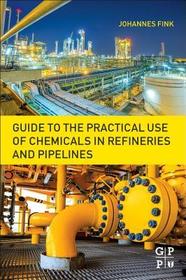
Guide to the Practical Use of Chemicals in Refineries and Pipelines
- Publisher's listprice EUR 132.00
-
54 747 Ft (52 140 Ft + 5% VAT)
The price is estimated because at the time of ordering we do not know what conversion rates will apply to HUF / product currency when the book arrives. In case HUF is weaker, the price increases slightly, in case HUF is stronger, the price goes lower slightly.
- Discount 10% (cc. 5 475 Ft off)
- Discounted price 49 272 Ft (46 926 Ft + 5% VAT)
Subcribe now and take benefit of a favourable price.
Subscribe
54 747 Ft

Availability
printed on demand
Why don't you give exact delivery time?
Delivery time is estimated on our previous experiences. We give estimations only, because we order from outside Hungary, and the delivery time mainly depends on how quickly the publisher supplies the book. Faster or slower deliveries both happen, but we do our best to supply as quickly as possible.
Product details:
- Publisher Elsevier Science
- Date of Publication 15 April 2016
- ISBN 9780128054123
- Binding Paperback
- No. of pages266 pages
- Size 228x152 mm
- Weight 360 g
- Language English 0
Categories
Long description:
Guide to Practical Use of Chemicals in Refineries and Pipelines delivers a well-rounded collection of content, references, and patents to show all the practical chemical choices available for refinery and pipeline usage, along with their purposes, benefits, and general characteristics.
Covering the full spectrum of downstream operations, this reference solves the many problems that engineers and managers currently face, including corrosion, leakage in pipelines, and pretreatment of heavy oil feedstocks, something that is of growing interest with today's unconventional activity.
Additional coverage on special refinery additives and justification on why they react the way they do with other chemicals and feedstocks is included, along with a reference list of acronyms and an index of chemicals that will give engineers and managers the opportunity to recognize new chemical solutions that can be used in the downstream industry.
MoreTable of Contents:
Part I: Pipeline Chemicals
Chapter 1: General Aspects of Pipelines
Chapter 2: Leakage in Pipelines
Chapter 3: Pretreatment Methods
Chapter 4: Gas Hydrate Inhibition
Chapter 5: Corrosion in Pipelines
Chapter 6: Drag Reduction and Flow Improvement
Chapter 7: Pipeline Cleaning
Chapter 8: Safety Aspects for Pipelines
Part II: Refinery Chemicals
Chapter 9: Refinery and Feedstocks
Chapter 10: Special Refinery Additives
Chapter 11: Processes
Chapter 12: Safety Aspects for Refineries
More
