

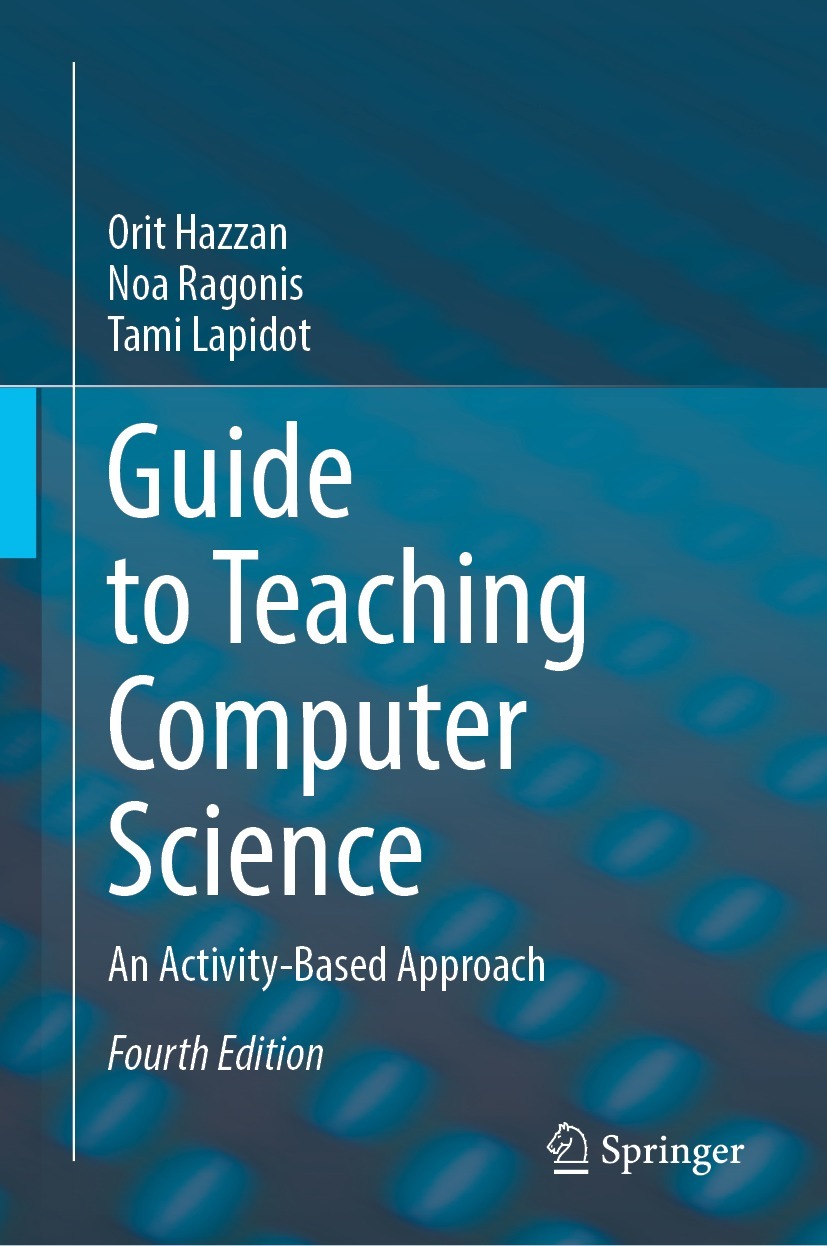
Guide to Teaching Computer Science
An Activity-Based Approach
- Publisher's listprice EUR 90.94
-
37 717 Ft (35 921 Ft + 5% VAT)
The price is estimated because at the time of ordering we do not know what conversion rates will apply to HUF / product currency when the book arrives. In case HUF is weaker, the price increases slightly, in case HUF is stronger, the price goes lower slightly.
- Discount 12% (cc. 4 526 Ft off)
- Discounted price 33 191 Ft (31 610 Ft + 5% VAT)
Subcribe now and take benefit of a favourable price.
Subscribe
37 717 Ft

Availability
Not yet published.
Why don't you give exact delivery time?
Delivery time is estimated on our previous experiences. We give estimations only, because we order from outside Hungary, and the delivery time mainly depends on how quickly the publisher supplies the book. Faster or slower deliveries both happen, but we do our best to supply as quickly as possible.
Product details:
- Edition number 4
- Publisher Springer Nature Switzerland
- Date of Publication 26 January 2026
- Number of Volumes 1 pieces, Book
- ISBN 9783032009524
- Binding Hardback
- No. of pages551 pages
- Size 235x155 mm
- Language English
- Illustrations XIX, 551 p. 27 illus., 18 illus. in color. 700
Categories
Long description:
This concise yet thorough textbook presents an active-learning model for the teaching of computer science. Offering both a conceptual framework and detailed implementation guidelines, the work is designed to support a Methods of Teaching Computer Science (MTCS) course, but may be applied to the teaching of any area of computer science at any level, from elementary school to university. This text is not limited to any specific curriculum or programming language, but instead suggests various options for lesson and syllabus organization.
Fully updated and revised, the third edition features more than 40 new activities, bringing the total to more than 150, together with new chapters on computational thinking, data science, and soft concepts and soft skills. This edition also introduces new conceptual frameworks for teaching such as the MERge model, and new formats for the professional development of computer science educators.
Topics and features:includes an extensive set of activities, to further support the pedagogical principles outlined in each chapter; discusses educational approaches to computational thinking, how to address soft concepts and skills in a MTCS course, and the pedagogy of data science (NEW); focuses on teaching methods, lab-based teaching, and research in computer science education, as well as on problem-solving strategies; examines how to recognize and address learners’ misconceptions, and the different types of questions teachers can use to vary their teaching methods; provides coverage of assessment, teaching planning, and designing a MTCS course; reviews high school teacher preparation programs, and how prospective teachers can gain experience in teaching computer science.
This easy-to-follow textbook and teaching guide will prove invaluable to computer science educators within all frameworks, including university instructors and high school teachers, as well asto instructors of computer science teacher preparation programs. MoreTable of Contents:
Introduction—What Is this Guide About?.- Active Learning and the Active-Learning-Based Teaching Model.- Overview of the Discipline of Computer Science.- Computational Thinking.- Computer Science Soft Concepts and Soft Skills.- Data Science and Computer Science Education.- Research in Computer Science Education.- Problem-Solving Strategies.- Learners’ Alternative Conceptions.- Teaching Methods in Computer Science Education.- Lab-Based Teaching.- Types of Questions in Computer Science Education.- Assessment.- Teaching Planning.- Design of Methods of Teaching Computer Science Courses.- Getting Experience in Computer Science Education.- High School Computer Science Teacher Preparation Programs.- Epilogue.
More

