

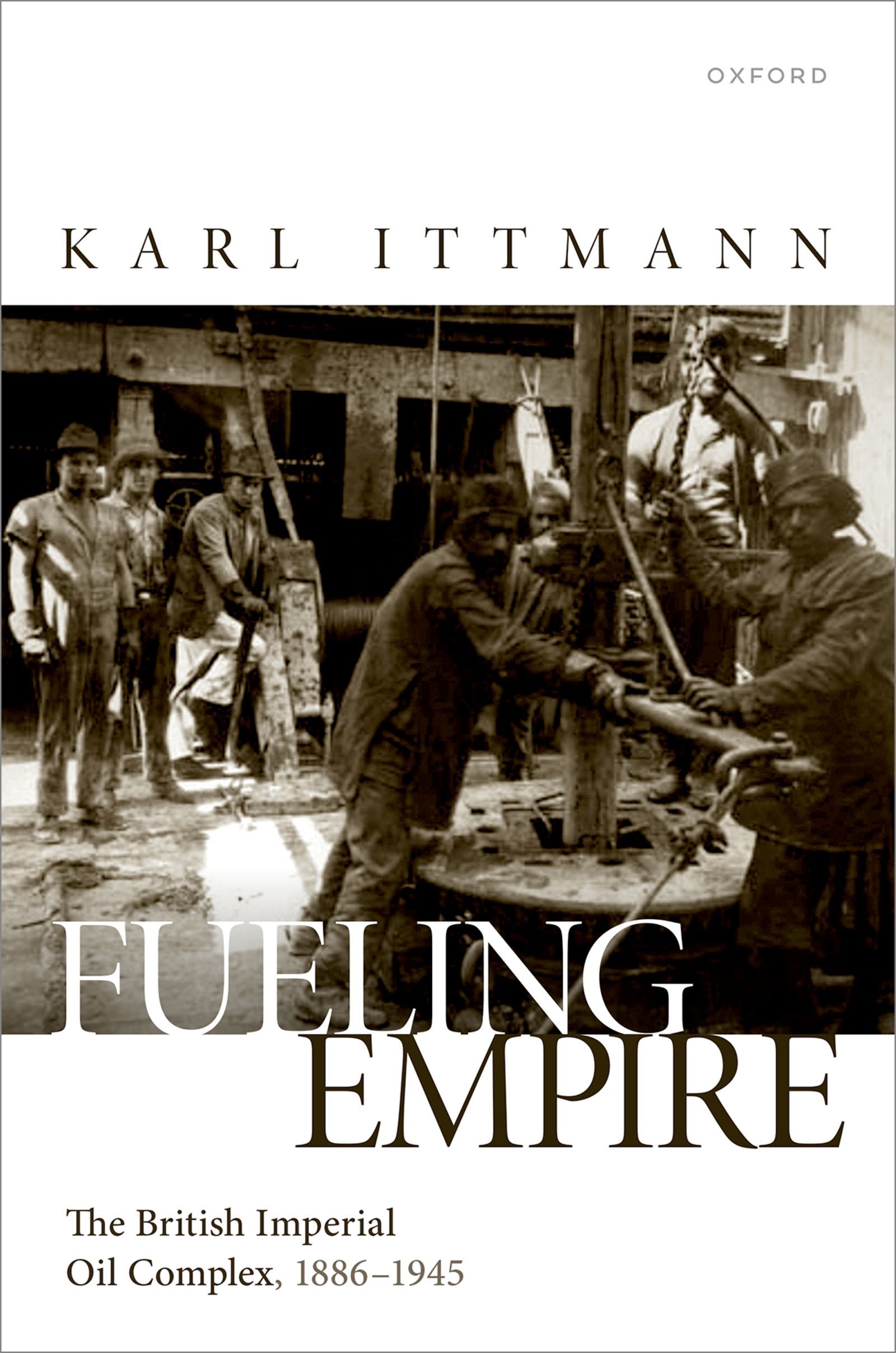
Fuelling Empire
The British Imperial Oil Complex, 1886–1945
- Publisher's listprice GBP 99.00
-
44 698 Ft (42 570 Ft + 5% VAT)
The price is estimated because at the time of ordering we do not know what conversion rates will apply to HUF / product currency when the book arrives. In case HUF is weaker, the price increases slightly, in case HUF is stronger, the price goes lower slightly.
- Discount 10% (cc. 4 470 Ft off)
- Discounted price 40 229 Ft (38 313 Ft + 5% VAT)
Subcribe now and take benefit of a favourable price.
Subscribe
44 698 Ft

Availability
Estimated delivery time: In stock at the publisher, but not at Prospero's office. Delivery time approx. 3-5 weeks.
Not in stock at Prospero.
Why don't you give exact delivery time?
Delivery time is estimated on our previous experiences. We give estimations only, because we order from outside Hungary, and the delivery time mainly depends on how quickly the publisher supplies the book. Faster or slower deliveries both happen, but we do our best to supply as quickly as possible.
Product details:
- Publisher OUP Oxford
- Date of Publication 26 June 2025
- ISBN 9780198963271
- Binding Hardback
- No. of pages336 pages
- Size 240x160x25 mm
- Weight 657 g
- Language English 615
Categories
Short description:
The book shifts the focus from company and government offices to working conditions, health and safety, and daily life in imperial oil fields. It also links British efforts to maintain control of oil states before 1945 to their postcolonial histories.
MoreLong description:
Beginning in the late nineteenth century, British companies used the resources of empire to create an imperial oil industry that controlled 20% of global oil reserves by 1939 and allowed for the movement of capital and labor between regions and companies. The imperial oil complex encompassed colonies-Burma and Trinidad -and dependent states-Iraq and Iraq. In both, the imperial state used its political and military power to support British oil interests. The oil complex drew on the resources of empire but also bolstered it with profits and tax revenues while a global set of oil sites supplied the British military and civilian consumers. British companies built an infrastructure of oil production that gave them quasi-state power in oil regions while connecting these areas to global and imperial networks of communication and transportation.
Fueling Empire highlights the significance of Britain to the development of the global oil industry. It demonstrates the ways in which the global histories of oil and empire are inextricably interlinked. The imperial oil complex relied on a racially stratified hierarchy of labour where white supervisors managed indigenous and migrant workers. The harsh conditions of work and low pay fuelled labour conflicts that resonated with emerging colonial nationalist movements that sought to limit the power of oil companies. Despite robust private and state security operations, the imperial oil complex faced greater insecurity before World War II. While the imperial oil complex survived the war, in the postwar era decolonization and Britain's financial weakness led to its decline.

