

- Publisher's listprice GBP 9.99
-
4 772 Ft (4 545 Ft + 5% VAT)
The price is estimated because at the time of ordering we do not know what conversion rates will apply to HUF / product currency when the book arrives. In case HUF is weaker, the price increases slightly, in case HUF is stronger, the price goes lower slightly.
- Discount 10% (cc. 477 Ft off)
- Discounted price 4 295 Ft (4 091 Ft + 5% VAT)
Subcribe now and take benefit of a favourable price.
Subscribe
4 772 Ft

Availability
Estimated delivery time: In stock at the publisher, but not at Prospero's office. Delivery time approx. 3-5 weeks.
Not in stock at Prospero.
Why don't you give exact delivery time?
Delivery time is estimated on our previous experiences. We give estimations only, because we order from outside Hungary, and the delivery time mainly depends on how quickly the publisher supplies the book. Faster or slower deliveries both happen, but we do our best to supply as quickly as possible.
Product details:
- Publisher OUP Oxford
- Date of Publication 26 January 2012
- ISBN 9780192803535
- Binding Paperback
- No. of pages160 pages
- Size 173x115x14 mm
- Weight 141 g
- Language English
- Illustrations 15 black and white halftones 40
Categories
Short description:
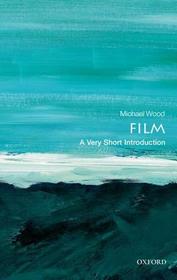
Film is considered to be the dominant art form of the twentieth century. It can be considered many other things; a record of events, a modern mythology, a career, an industry, an art, a hobby, and much else. Michael Wood explores the history of film, its venture into the digital age, and its role and impact on modern society.
MoreLong description:
Film is considered by some to be the most dominant art form of the twentieth century. It is many things, but it has become above all a means of telling stories through images and sounds. The stories are often offered to us as quite false, frankly and beautifully fantastic, and they are sometimes insistently said to be true. But they are stories in both cases, and there are very few films, even in avant-garde art, that don't imply or quietly slip into narrative. This story element is important, and is closely connected with the simplest fact about moving pictures: they do move.
Even the older meanings of the word 'film' - a membrane, a covering, a veil, an emanation - now seem to have something to do with moving pictures. Many people believe films are an instrument of illusion, an emphatic way of seeing what is not there; and this capacity has been both celebrated and condemned. 'Like a movie' mostly means like some sort of fairy-tale. But what about the reverse proposition: that more than any other invention film brings us close to the world as it actually is? 'Photography is truth', a character says in a film by Jean-Luc Godard. 'And cinema is the truth twenty-four times per second'. The same claim is made every day, albeit less epigrammatically, by newsreels and surveillance cameras.
In this Very Short Introduction Michael Wood provides a brief history and examination of the nature of the medium of film, considering its role and impact on society as well as its future in the digital age.
ABOUT THE SERIES: The Very Short Introductions series from Oxford University Press contains hundreds of titles in almost every subject area. These pocket-sized books are the perfect way to get ahead in a new subject quickly. Our expert authors combine facts, analysis, perspective, new ideas, and enthusiasm to make interesting and challenging topics highly readable.
This is an excellent short guide that manages to cram in a vast amount of information into a very small space. It never pretends to offer a history of film but is a superb resource for getting students to think about film as a medium, and to think about what makes film distinct as a means of conveying information, emotion, ideas at the same time as generating wonder, admiration, controversy, or ire. An unrivalled introduction to thinking about film as a medium. / Matthew Woodcock, University of East Anglia
Table of Contents:
Frame after Frame
Life in the Dark
Story Time
Digital Dreams

