
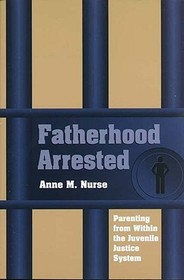
Fatherhood Arrested – Parenting from Within the Juvenile Justice System
Parenting from Within the Juvenile Justice System
- Publisher's listprice GBP 32.00
-
15 288 Ft (14 560 Ft + 5% VAT)
The price is estimated because at the time of ordering we do not know what conversion rates will apply to HUF / product currency when the book arrives. In case HUF is weaker, the price increases slightly, in case HUF is stronger, the price goes lower slightly.
- Discount 10% (cc. 1 529 Ft off)
- Discounted price 13 759 Ft (13 104 Ft + 5% VAT)
Subcribe now and take benefit of a favourable price.
Subscribe
15 288 Ft
Availability
Not yet published.
Why don't you give exact delivery time?
Delivery time is estimated on our previous experiences. We give estimations only, because we order from outside Hungary, and the delivery time mainly depends on how quickly the publisher supplies the book. Faster or slower deliveries both happen, but we do our best to supply as quickly as possible.
Product details:
- Publisher University of Chicago Press
- Date of Publication 24 February 2026
- Number of Volumes Paperback
- ISBN 9780826514059
- Binding Paperback
- No. of pages176 pages
- Size 228x152 mm
- Weight 300 g
- Language English
- Illustrations bibliography, index 700
Categories
Short description:
Crime and young fatherhood have generally been viewed as separate social problems, but researchers are increasingly finding that these problems are closely related. This volume is an in-depth study of these issues and the difficulties of parenting while in prison and on parole.
MoreLong description:
Crime and young fatherhood have generally been viewed as separate social problems. Increasingly, researchers are finding that these problems are closely related and highly concentrated in low-income communities. This volume is an in-depth study of these issues and the difficulties of parenting while in prison and on parole. By taking us inside the prison system, the author shows how its structure actively shapes an inmate's relationship with his children. For example, visitation is sometimes restricted to blood relatives and wives. Because relationships between unmarried men and the mothers of their children are often strained, some mothers are unwilling to allow their children to go to the prison with the inmate's family. Or the father may be allowed to receive visits from only one ""girlfriend"", which forces a man with multiple relationships, or with children by different women, to make impossible choices. Special attention is paid to the gendered nature of prison, its patriarchal and punitive structure, and its high-stress environment. The book then follows newly paroled men as they are released and return to their children.
More