

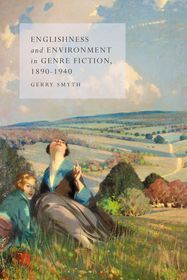
Englishness and Environment in Genre Fiction, 1890-1940
- Publisher's listprice GBP 23.99
-
10 831 Ft (10 315 Ft + 5% VAT)
The price is estimated because at the time of ordering we do not know what conversion rates will apply to HUF / product currency when the book arrives. In case HUF is weaker, the price increases slightly, in case HUF is stronger, the price goes lower slightly.
- Discount 20% (cc. 2 166 Ft off)
- Discounted price 8 665 Ft (8 252 Ft + 5% VAT)
- Discount is valid until: 30 June 2026
Subcribe now and take benefit of a favourable price.
Subscribe
10 831 Ft

Availability
Not yet published.
Why don't you give exact delivery time?
Delivery time is estimated on our previous experiences. We give estimations only, because we order from outside Hungary, and the delivery time mainly depends on how quickly the publisher supplies the book. Faster or slower deliveries both happen, but we do our best to supply as quickly as possible.
Product details:
- Publisher Bloomsbury Publishing (UK)
- Date of Publication 25 June 2026
- ISBN 9781350412477
- Binding Paperback
- No. of pages248 pages
- Size 230x156x20 mm
- Weight 300 g
- Language 700
Categories
Long description:
In this moment of growing anxiety about the environment and the fate of humanity, literature continues its vital role of articulating dynamic new ways of thinking about the relations between humanity, environment and technology. In this book, cultural historian Gerry Smyth focuses on English genre fiction of the late 19th and early 20th centuries, exploring the ways in which popular novelists of the period engaged with debates relating to environment (England), culture (English language and literature) and identity (Englishness). In sixteen case studies, the author covers examples of fantasy, science fiction, murder mystery and children's stories in order to trace the prehistory of modern environmentalism, especially as experienced in a key 50-year period running up to the start of the Second World War.
Environment and Genre Fiction, 1890-1940 offers new approaches to a variety of well-loved English novels, seeking and describing an unlikely but important alternative genealogy for both modern English literature and modern ecocriticism. Case studies include The Island of Dr Moreau, Heart of Darkness, The Wind in the Willows, Cold Comfort Farm, Brave New World and The Hobbit. In these and other popular novels Smyth examines themes such as evolution, industrialisation, the growth of technology, Britain's fading imperial status, assaults on traditional discourses of class, gender and sexuality, animal rights, artificial intelligence and war. The central focus is on the ways in which popular genre authors responded to a variety of changes that were overtaking the idea of England itself during this period. Accessible and innovative, this book reconfigures modern English literary history from an environmental perspective, insisting that questions of environment were always already embedded in the field of modern cultural debate.
Table of Contents:
Acknowledgements
Timeline
Introduction
Chapter 1: News from Nowhere (1890) by William Morris
Chapter 2: The Island of Dr Moreau (1896) by H.G. Wells
Chapter 3: Heart of Darkness (1901) by Joseph Conrad
Chapter 4: The Hill of Dreams (1907) by Arthur Machin
Chapter 5: The Wind in the Willows (1908) by Kenneth Grahame
Chapter 6: The Lost World (1912) by Arthur Conan Doyle
Chapter 7: The Return of the Soldier (1918) by Rebecca West
Chapter 8: Lolly Willowes (1926) by Sylvia Townsend Warner
Chapter 9: The Murder of Roger Ackroyd (1926) by Agatha Christie
Chapter 10: Swallows and Amazons (1930) by Arthur Ransome
Chapter 11: Cold Comfort Farm (1932) by Stella Gibbons
Chapter 12: Brave New World (1932) by Aldous Huxley
Chapter 13: The Hobbit (1937) by J.R.R. Tolkien
Chapter 14: Coming Up for Air (1939) by George Orwell
Conclusion: Optimism with a Broken Heart
Notes
References
Index

