

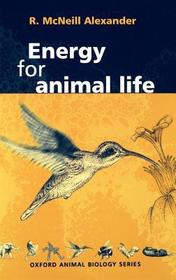
Energy for Animal Life
Series: Oxford Animal Biology Series;
- Publisher's listprice GBP 102.50
-
46 278 Ft (44 075 Ft + 5% VAT)
The price is estimated because at the time of ordering we do not know what conversion rates will apply to HUF / product currency when the book arrives. In case HUF is weaker, the price increases slightly, in case HUF is stronger, the price goes lower slightly.
- Discount 10% (cc. 4 627 Ft off)
- Discounted price 41 651 Ft (39 668 Ft + 5% VAT)
Subcribe now and take benefit of a favourable price.
Subscribe
46 278 Ft

Availability
Out of print
Why don't you give exact delivery time?
Delivery time is estimated on our previous experiences. We give estimations only, because we order from outside Hungary, and the delivery time mainly depends on how quickly the publisher supplies the book. Faster or slower deliveries both happen, but we do our best to supply as quickly as possible.
Product details:
- Publisher Oxford University Press
- Date of Publication 28 January 1999
- Number of Volumes laminated boards
- ISBN 9780198500537
- Binding Hardback
- No. of pages174 pages
- Size 239x159x14 mm
- Weight 404 g
- Language English
- Illustrations line illustrations 0
Categories
Short description:
Energy for Animal Life, the first book in the innovative new Oxford Animal Biology Series, is about how animals get energy, and how they use it. It explores all aspects of animal energetics, from the different levels of the food chain, the relative merits of different digestive systems or of different strategies for finding and choosing food, and the importance of temperature regulation, to the energy costs of motion, growth and reproduction. The book is
truly comparative, drawing on examples from across the animal kingdom, and looking for parallels that transcend taxonomy. Lots of practical information on relevant experiments is included. Accessibly written, the book is suitable as supplementary reading for undergraduates taking a degree course in biological
sciences.
Long description:
The Oxford Animal Biology Series is an innovative new series of supplementary undergraduate texts in comparative animal biology. Topics within each book are addressed using examples from throughout the animal kingdom, looking for parallels that transcend taxonomy. Further reading sections will guide the student into the literature at greater depth. The series will be international in scope, both in terms of the species used as examples and in references to
scientific work. Energy for Animal Life, the first book in the series, is about how animals get energy, and how they use it, a central topic in our understanding of animal biology. Life depends on energy, and much of the activity of animals is devoted to getting the food which is their energy source. It
encompasses the food chain, from solar radiation and photosynthesis to food sources for herbiviores and for carnivores, and compares the merits of different designs of digestive system, and of different strategies for finding and choosing food. Of course, animal energy isn't simply a question of feeding, and several chapters in turn look at energy use. The energy costs of motion - of running, swimming, and flight - are discussed in one chapter, and the energetic demands of growth and
reproduction in another. A chapter on body temperature shows how the processes of life go faster at higher temperatures, and discusses how animals regulate their temperature. A final chapter draws all of these aspects of energy use together, and considers the energy budgets of several different animals,
assessing the different energy gains and costs of their everyday activities in the wild. The book is truly comparative, drawing on examples from a wide range of animal species, and lots of practical information on relevant experiments is included. The style is very accessible, and suitable as supplementary reading for first and second year undergraduates taking a degree course in biological sciences.
Table of Contents:
Preface
Energy sources
Basic requirements
Feeding
Movement
Growth and reproduction
Body temperature
Energy budgets
Epilogue

