

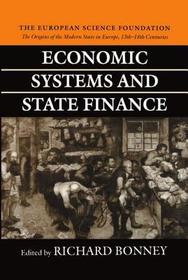
Economic Systems and State Finance
The Origins of the Modern State in Europe 13th to 18th Centuries
Series: The Origins of the Modern State in Europe, 13th to 18th Centuries;
- Publisher's listprice GBP 255.00
-
115 132 Ft (109 650 Ft + 5% VAT)
The price is estimated because at the time of ordering we do not know what conversion rates will apply to HUF / product currency when the book arrives. In case HUF is weaker, the price increases slightly, in case HUF is stronger, the price goes lower slightly.
- Discount 10% (cc. 11 513 Ft off)
- Discounted price 103 619 Ft (98 685 Ft + 5% VAT)
Subcribe now and take benefit of a favourable price.
Subscribe
115 132 Ft

Availability
printed on demand
Why don't you give exact delivery time?
Delivery time is estimated on our previous experiences. We give estimations only, because we order from outside Hungary, and the delivery time mainly depends on how quickly the publisher supplies the book. Faster or slower deliveries both happen, but we do our best to supply as quickly as possible.
Product details:
- Publisher OUP Oxford
- Date of Publication 20 April 1995
- ISBN 9780198205456
- Binding Hardback
- No. of pages674 pages
- Size 242x163x42 mm
- Weight 1154 g
- Language English
- Illustrations line figures 0
Categories
Short description:
This is a major study of state finance throughout Europe from the thirteenth to the eighteenth century. It is an immensely ambitious comparative analysis of economic and fiscal development over many countries and several centuries, written by a team of leading European scholars.
MoreLong description:
This is the first volume to appear in the 'Origins of the Modern State in Europe' series, which arises from an important international research programme sponsored by the European Sciences Foundation.The aim of the series, which comprises seven volumes, is to bring together specialists from different countries, who reinterpret from a comparative European perspective, different aspects of the formation of the state over the long period from the beginning of the thirteenth to the end of the eighteenth century. One of the main achievements of the research programme has been to overcome the long-established historiographical tendency to regard states mainly form the viewpoint of their twentieth-century borders.
Economic Systems and State Finance offers a new approach to the development of the state finance and fiscal systems in Europe. It covers a broad chronological span, beginning with a reassessment of the feudal system and beginnings of state finance, and counting with developments within a comparative European framework as far as 1815 when Britain emerged as the only state to have achieved economic hegemony. The conclusions are presented in four thematic chapters on expenditure, revenues, public credit, and the fiscal burden. The text is underpinned by the comprehensive apparatus of 97 figures, drawn from an important research database established during the research programme. Economic Systems and State Finance is a significant work of scholarship, which will make a permanent contribution to historical debate.
This ambitious collaboration has brought to bear an immense amount of data and expertise across a very broad chronological and geographical range. This range and variety makes it an extremely valuable book and it whets the appetite for the other projected volumes ... A rich and thought-provoking book that will serve as a work of reference for the generalist and a point of departure for future research. It deserves a wide readership and will certainly stimulate further comparative work on crucial aspects of European history in these six centuries.

