

- Publisher's listprice GBP 11.49
-
5 187 Ft (4 940 Ft + 5% VAT)
The price is estimated because at the time of ordering we do not know what conversion rates will apply to HUF / product currency when the book arrives. In case HUF is weaker, the price increases slightly, in case HUF is stronger, the price goes lower slightly.
- Discount 10% (cc. 519 Ft off)
- Discounted price 4 668 Ft (4 446 Ft + 5% VAT)
Subcribe now and take benefit of a favourable price.
Subscribe
5 187 Ft

Availability
Out of print
Why don't you give exact delivery time?
Delivery time is estimated on our previous experiences. We give estimations only, because we order from outside Hungary, and the delivery time mainly depends on how quickly the publisher supplies the book. Faster or slower deliveries both happen, but we do our best to supply as quickly as possible.
Product details:
- Publisher OUP USA
- Date of Publication 27 February 2014
- ISBN 9780199328147
- Binding Paperback
- No. of pages176 pages
- Size 209x141x12 mm
- Weight 196 g
- Language English 0
Categories
Short description:
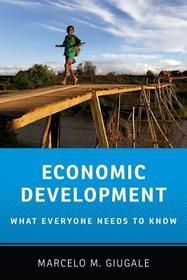
The practice of economic development has undergone significant transformation over the past decade, due to globalization and democratization. This book provides a clear and concise introduction to the development problems that policy-makers, professionals, development agencies, NGOs, charities, and private citizens face.
MoreLong description:
The practice of economic development has undergone significant transformation over the past decade, due to globalization and democratization. While beneficiaries previously held little sway in the way international economic institutions delegated funds for projects, today it would be difficult-if not impossible-for the average government or for the average multilateral organization to build a road, reform an education curriculum, or sign a mining concession without,
at a minimum, a process of consultation with those affected. This change has created a greater demand for development knowledge. Economic Development: What Everyone Needs to Know provides a clear and concise introduction to the development problems that policy-makers, professionals, development
agencies, NGOs, charities, and private citizens face.
Beginning with the basic concepts that inform the practice of development, this wide-ranging book addresses the major challenges that shape the field, highlighting the doubts, trade-offs, and dilemmas.
Drawing on his more than twenty-five years of experience working in development in the Middle East, Eastern Europe, Central Asia, Latin America and Africa, Marcelo Giugale illustrates his chapters with real-life examples from all over the globe. He looks at a host of topics including the reasons why seemingly obvious reforms never happen, power dynamics between governments and beneficiaries, government corruption, state violence, natural resources, globalization and trade, anticipating global
crises, measuring equity, ending poverty, the "new" poor, gender, indigenous peoples, children, health care, food prices, and technology.
While development is a complex area in which there are no definitive answers, Giugale highlights the very real challenges that face the profession now and will continue to face development practitioners in the years to come.
There is a lot of good news in Giugale's book, and a great deal of optimism. The government working for us? All children receiving an education that renders them literate? His readable and easily understandable case summaries explain clearly how we can all live interdependently, equitably and peacefully. An insider with no personal agenda; it doesn't get more reliable than that. This book is highly recommended for economics, political science, international studies
and graduate business collections.
Table of Contents:
Introduction
Part I - Governments: One Day, They Will Work For You
1. Why Do Obvious Reforms Never Happen? The Political Economy of Things
2. How Will I Relate To My Government? The State and Me
3. Do We Really Care About Graft? Cairo, Corruption and Cultural Change
4. Why Can't We Stop Conflict? Violence and the Failure of Institutions
5. Are Natural Resources A Good Thing? Blessed by Nature, Cursed By Politics
Part II - Economic Policy: The Basics You've Got to Get Right
6. Has Economic Wisdom Changed? Macroeconomics Catches Up With Reality
7. A New, Wasted Bonanza? Commodities and that Uncomfortable Feeling of Wealth
8. Will Globalization End? A Different Kind of Trade
9. Why Is It So Difficult to Agree on Tax Reform?
10. How Do You Prepare For Another Global Crisis?
Part III - Social Policy: Old War, New Weapons
11. How Do We Help Now? The Lingering Global Crisis And The New Poor
12. Can We End Poverty?
13. Is There A Way To Measure Equity? The Human Opportunity Index
14. Why Are Statistics So Important? Poverty in the Era of Data
15. Who Really Benefits? Winners, Losers and The Beauty of Impact Analysis
Part IV - Inclusion: Those Who Are Always Left Behind
16. Will We Ever Live In Gender Parity? Women, Growth and Generational Change
17. Has Globalization Helped or Hurt Women?
18. Are Average Housewives Powerless? The Greatest Generation of Argentine Women
19. What Have Economists Learned About Indigenous Peoples?
20. Why Is Early Childhood Development So Difficult? The Child From Mozambique
Part V - Sectors: What Ministers Will Worry About-or Should
21. How Will Technology Shape The World of Tomorrow's Leaders?
22. How Will Tomorrow's Infrastructure Be Built?
23. Can Emerging Economies Have Universal Health Coverage?
24. Is There New Power In Entertainment Education?
25. How Do You Deal With Rising Food Prices?
Part VI - Africa: The Last Frontier
26. Is Africa's Emergence For Real?
27. Can Africa Be Defragmented?
28. Who Will Be Africa's Brazil?
29. Is There A Latin Solution to Africa's Problem?
30. How Have The World's Newest Nations Fared?
31. Can Africa Compete With China?
32. Can Africa Feed Africa?
Glossary
Suggested Further Reading
Index

