

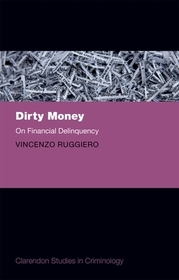
- Publisher's listprice GBP 76.00
-
34 314 Ft (32 680 Ft + 5% VAT)
The price is estimated because at the time of ordering we do not know what conversion rates will apply to HUF / product currency when the book arrives. In case HUF is weaker, the price increases slightly, in case HUF is stronger, the price goes lower slightly.
- Discount 10% (cc. 3 431 Ft off)
- Discounted price 30 883 Ft (29 412 Ft + 5% VAT)
Subcribe now and take benefit of a favourable price.
Subscribe
34 314 Ft

Availability
printed on demand
Why don't you give exact delivery time?
Delivery time is estimated on our previous experiences. We give estimations only, because we order from outside Hungary, and the delivery time mainly depends on how quickly the publisher supplies the book. Faster or slower deliveries both happen, but we do our best to supply as quickly as possible.
Product details:
- Publisher OUP Oxford
- Date of Publication 12 January 2017
- ISBN 9780198783220
- Binding Hardback
- No. of pages282 pages
- Size 223x144x24 mm
- Weight 482 g
- Language English 0
Categories
Short description:
Navigating financial crashes of the Late Middle Ages up to the present day and analysing them through the lenses of classical, positivist, functionalist and Marxist criminology, this book explores the growth of grey areas in the financial world and our understanding, or misunderstanding, of financial delinquency.
MoreLong description:
Navigating financial crashes of the Late Middle Ages up to the present day and analysing them through the lenses of classical, positivist, functionalist and Marxist criminology, Dirty Money: On Financial Delinquency explores the growth of grey areas in the financial world and our understanding, or misunderstanding, of financial delinquency.
Pope Francis, while denouncing the incapacity of governments to reduce poverty and fight the exploitation of cheap labour, has also condemned greed, repeating several times the old medieval adage: money is the excrement of the devil. This distinction between clean and excremental, pure and impure, informs the symbolic order of many traditional and contemporary societies; however, it can also be used to single out criminal activity as opposed to law-abiding conduct and, in particular, to separate acceptable from unacceptable practices in the economic domain. With a focus on financial crime, whose ambiguity, ubiquity and evolving nature make the separation between acceptable and unacceptable practices inherently problematic, this book examines the process whereby the excrement of the devil was slowly 'freed' from both its sinful and criminal character. It is a study of how human action turns something seemingly benign into an instrument for the production of harm. Its focus, therefore, is on dirty money - namely the illegitimate appropriation of financial resources by individuals and groups holding expert knowledge and, often, occupying positions of power. The ideological arguments accompanying this evolution are scrutinised, alongside the history of financial initiatives and the accompanying 'crunches'. The struggle juxtaposing criminalization and decriminalization is at the core of all chapters, which analyse a series of major events chronologically, from the exploits of John Law to the deeds of contemporary finance.
Analytically located in the area of white-collar crime, Dirty Money examines episodes of financial delinquency and discusses the way in which observers, including criminologists, shape an understanding of their causes and consequences. It will be of interest to scholars and students of criminology, sociology, criminal justice, history, and economics, as well as policy makers, finance professionals, and fraud investigators.
Table of Contents:
Introduction
Money and Salvation
Between Sin and Crisis
Bankers and Robber Barons
Black Tuesday and Beasts of Prey
Incompetent Muddlers and Organization Men
A Paper World
Psychopaths and Thrills
Varied Shades of Grey
The Hidden Wealth of Nations
Conclusion

