

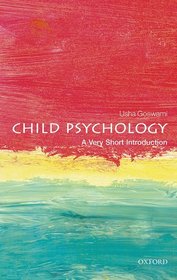
- Publisher's listprice GBP 9.99
-
4 510 Ft (4 295 Ft + 5% VAT)
The price is estimated because at the time of ordering we do not know what conversion rates will apply to HUF / product currency when the book arrives. In case HUF is weaker, the price increases slightly, in case HUF is stronger, the price goes lower slightly.
- Discount 10% (cc. 451 Ft off)
- Discounted price 4 059 Ft (3 866 Ft + 5% VAT)
Subcribe now and take benefit of a favourable price.
Subscribe
4 510 Ft

Availability
Estimated delivery time: In stock at the publisher, but not at Prospero's office. Delivery time approx. 3-5 weeks.
Not in stock at Prospero.
Why don't you give exact delivery time?
Delivery time is estimated on our previous experiences. We give estimations only, because we order from outside Hungary, and the delivery time mainly depends on how quickly the publisher supplies the book. Faster or slower deliveries both happen, but we do our best to supply as quickly as possible.
Product details:
- Publisher OUP Oxford
- Date of Publication 27 November 2014
- ISBN 9780199646593
- Binding Paperback
- No. of pages160 pages
- Size 174x114x7 mm
- Weight 137 g
- Language English
- Illustrations Approx 12 black and white illustrations 0
Categories
Short description:
This Very Short Introduction tracks child development from birth to early adolescence. Exploring the process of attachment and psychological relationships, as well as methods of active learning, including language and reasoning, Usha Goshwami explains how children develop as they do and how we can understand developmental differences.
MoreLong description:
This Very Short Introduction provides an up-to-date, authoritative, and accessible guide to modern child psychology, from birth to early adolescence. Beginning with infancy, Usha Goswami considers the process of attachment and 'bonding', showing how secure attachments enable the development of self-understanding. Exploring childhood learning, ranging from aspects of language and thinking to cognitive reasoning, Goswami looks at how babies and toddlers develop an understanding of the physical, biological, and social worlds, and develop complex abilities like language and morality.
Demonstrating how learning is shaped by the environments surrounding the child; at home, school, with peers, and in wider society, Goswami emphasizes the importance of childhood friendships and siblings for psychological development. Introducing the key theories in child psychology, Goswami explains why children develop as they do and how society can further optimize their development through the adolescent years.
ABOUT THE SERIES: The Very Short Introductions series from Oxford University Press contains hundreds of titles in almost every subject area. These pocket-sized books are the perfect way to get ahead in a new subject quickly. Our expert authors combine facts, analysis, perspective, new ideas, and enthusiasm to make interesting and challenging topics highly readable.
Table of Contents:
Babies and what they know
Learning about the outside world
Learning language
Friendships, famillies, pretend play and the imagination
Going to school
The learning brain
Theories and neurobiology of development
Further reading
Index

