
• Contact

  • Newsletter

  • About us

  • Delivery options

  • Prospero Book Market Podcast

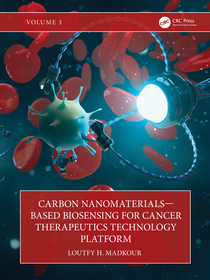
  • Carbon Nanomaterials—Based Biosensing for Cancer Therapeutics Technology Platform

    Carbon Nanomaterials—Based Biosensing for Cancer Therapeutics Technology Platform by Madkour, Loutfy H.;

      • GET 10% OFF

      • The discount is only available for 'Alert of Favourite Topics' newsletter recipients.
      • Publisher's listprice GBP 200.00
      • The price is estimated because at the time of ordering we do not know what conversion rates will apply to HUF / product currency when the book arrives. In case HUF is weaker, the price increases slightly, in case HUF is stronger, the price goes lower slightly.

        95 550 Ft (91 000 Ft + 5% VAT)
      • Discount 10% (cc. 9 555 Ft off)
      • Discounted price 85 995 Ft (81 900 Ft + 5% VAT)

    95 550 Ft

    db

    Availability

    Not yet published.

    Why don't you give exact delivery time?

    Delivery time is estimated on our previous experiences. We give estimations only, because we order from outside Hungary, and the delivery time mainly depends on how quickly the publisher supplies the book. Faster or slower deliveries both happen, but we do our best to supply as quickly as possible.

    Product details:

    • Edition number 1
    • Publisher CRC Press
    • Date of Publication 27 March 2026

    • ISBN 9781041083535
    • Binding Hardback
    • No. of pages856 pages
    • Size 280x210 mm
    • Language English
    • Illustrations 525 Illustrations, black & white; 363 Halftones, black & white; 162 Line drawings, black & white; 60 Tables, black & white
    • 700

    Categories

    Short description:

    This book summarizes  the recent progress in the research on the advancement of technology sensing based sensors and biosensors of carbon nanomaterials (mainly, CNTs and graphene or graphene oxide) and its biomedical applications particularly in drug delivery for anticancer diagnosis and therapies.

    More

    Long description:

    This book summarizes  the recent progress in the research on the advancement of technology sensing based sensors and biosensors of carbon nanomaterials (mainly, CNTs and graphene or graphene oxide) and its biomedical applications particularly in drug delivery for anticancer diagnosis and therapies. It discusses the main advances in the field over the last few years and explore the novel preparation methods of carbon nanomaterials (metal nanostructures/carbon materials) and their applications in various catalytic organic transformations.


    Carbon nanotubes are large molecules, made from a repeating pattern of sp2 hybridized carbon atoms in a hexagonal arrangement, wrapped into a cylinder of approximately 2.5–100 nm in diameter. Carbon nanotubes are single or multi-walled depending on the number of carbon sheets rolled together, while the ends are capped by a hemispherical carbon arrangement as seen in fullerenes. CNTs very sensitive to be affected by exposure to biomolecules as sensing elements for new biosensors with high sensitivity for the rapid detection of targeted substrates. The book discusses the basic working strategies and implementation principles of nano carbons family composites—based sensors, biosensors and gas/vapor strain sensors.  The book demonstrates, explains and considers the advanced applications of carbon nanomaterials depends on the specific structural stability, physical, chemical, magnetic, optical, electrical, thermal, electronic, mechanical and physicochemical properties of CNTs.  The book discusses the achievements and challenges in vitro and in vivo of CNTs for cancer vaccine co-delivery —based nanocarriers immunotherapy.


    In brief current studies regarding CBNMs have shown a very promising glimpse of what lies ahead in the future of medicines. Lastly, biomedical imaging, based on the inherent physical properties of SWNTs, may be combined with drug delivery for multimodality cancer diagnosis and therapy. Despite challenges on the way towards the clinic, carbon nanotubes exhibit great potential for biomedicine, and may bring unprecedented opportunities for the future of cancer diagnosis and therapy. Also, the trend of investigation of CNT-based carbohydrate biosensors has been studied.

    More

    Table of Contents:

     Foreword. Preface. Acknowledgment. Author Biograph. Introduction. Summary. Chapter 1 Carbon Nanotube Composites: Fundamentals and Synthesis Ways. Chapter 2 Basic Working Strategies and Implementation Principles of Nano Carbons Family Composites—Based Biosensors and Sensing Devices. Chapter 3 Mechanisms and Classifications of Carbon—Based Chemical, Physical and Field Effect Transistors (FETs) Biosensors as Sensing Platform. Chapter 4 Carbon—Based Nanomaterials (CBNMs) in Drug Delivery and Biomedical Applications for Cancer Diagnosis and Therapy. Chapter 5 Graphene—Based Biomedical Sensor Materials and Anticancer Drug Delivery Systems (DDSs). Chapter 6 Current Trends and Future Potential in Carbon Nanomaterials (CNMs)—Based High-Sensitivity Electrical Gas/Vapor Strain Sensors. Chapter 7 Recent Developments in Doped/Co—Doped Carbon Nanodots (CNDs) as Booming Material in Biomedicine Applications. Chapter 8 Advances Development in Processing Carbon Dots Composites and their Surface Modification Strategies Methods for Bioremediation Technological Applications. Chapter 9 Two-Dimensional Graphitic Carbon Nitride (g-C3N4)—Based Nanoplatforms Emerging Electrochemical and Biosensors for Healthcare and Biomedical Applications. Chapter 10 Carbon Nanotubes—Based Intelligent Platform for Cancer Vaccine Development Co-delivery Nanocarriers Immunotherapy Achievements: Challenges In vitro and In vivo. Chapter 11 Unique Principal Properties and Applications for Electrochemical BiosensorsBased on Carbon and Non-Carbon Functional Nanomaterials. Appendix: List of abbreviations. Index


    More
    0