

- Publisher's listprice GBP 47.99
-
22 927 Ft (21 835 Ft + 5% VAT)
The price is estimated because at the time of ordering we do not know what conversion rates will apply to HUF / product currency when the book arrives. In case HUF is weaker, the price increases slightly, in case HUF is stronger, the price goes lower slightly.
- Discount 10% (cc. 2 293 Ft off)
- Discounted price 20 634 Ft (19 652 Ft + 5% VAT)
Subcribe now and take benefit of a favourable price.
Subscribe
22 927 Ft

Availability
printed on demand
Why don't you give exact delivery time?
Delivery time is estimated on our previous experiences. We give estimations only, because we order from outside Hungary, and the delivery time mainly depends on how quickly the publisher supplies the book. Faster or slower deliveries both happen, but we do our best to supply as quickly as possible.
Product details:
- Publisher OUP USA
- Date of Publication 24 October 2019
- ISBN 9780190935580
- Binding Hardback
- No. of pages214 pages
- Size 145x213x17 mm
- Weight 357 g
- Language English 6
Categories
Short description:
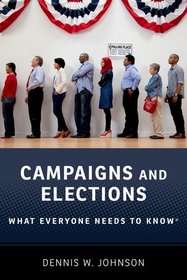
The United States, through its local, state, and national contests, holds more elections, more often, than any other democracy in the world. But in recent years, there have been troubling signs that our system of campaigns and elections has become much more fragile than we had previously thought. Through a clear, concise, and objective question-and-answer format, this book provides a solid understanding of why campaigns and elections are integral components of American democracy and how those fundamental elements may be vulnerable to misuse.
MoreLong description:
Frequent and fair elections, open to all, are fundamental elements of a democracy. The United States, through its local, state, and national contests, holds more elections, more often, than any other democracy in the world. But in recent years, there have been troubling signs that our system of campaigns and elections has become much more fragile than we had previously thought. More specifically, in the past twenty years, campaigns have changed profoundly: social media and viral messaging compete with traditional media, races once considered local in nature have become nationalized, Supreme Court decisions on campaign finance law now encourage mega-donors, voters are more polarized, party affiliation has waned, and the middle ideological ground has given way to extremist language and voter rage. Twice in sixteen years we have seen winning presidential candidates gaining fewer popular votes than their opponents. The fundamental right of every citizen to vote has been impeded by state legislatures demanding tighter access, more identification, and accusations of voter fraud. And we have faced the real threat of foreign influence in our national elections.
This book offers the most up-to-date examination of campaigns and elections, including the challenges and opportunities they present. It addresses fundamental questions about who votes in American elections, how legislative districts are reapportioned and why it matters, the realities of voter fraud, the pros and cons of reforming the Electoral College, the impact of dark money on campaigns, and the role of political consultants and specialists, among other topics. Given the fragility of our election process, what are the threats to a healthy American democracy? Do the candidates with the most money always win? This is not simply a book on how campaigns are run, but why campaigns and elections are integral components of American democracy and how those fundamental elements may be vulnerable to misuse.
the book is an asset
Table of Contents:
List of Tables
Introduction
Chapter 1: Voting and Participation
Chapter 2: Carving Out Legislative Districts
Chapter 3: Political Parties and Elections
Chapter 4: Statewide, Local, and Congressional Elections
Chapter 5: Money, Mega Donors, and Wide Open Spending
Chapter 6: Inner Workings of Modern Campaigns
Chapter 7: How Campaigns Have Changed
Chapter 8: Direct Democracy - Ballot Campaigns
Chapter 9: Threats to Democracy
References
Notes
Index

