

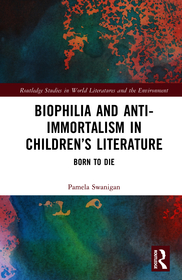
Biophilia and Anti-Immortalism in Children?s Literature
Born to Die
Series: Routledge Studies in World Literatures and the Environment;
-
GET 10% OFF
- Publisher's listprice GBP 171.99
-
77 653 Ft (73 955 Ft + 5% VAT)
The price is estimated because at the time of ordering we do not know what conversion rates will apply to HUF / product currency when the book arrives. In case HUF is weaker, the price increases slightly, in case HUF is stronger, the price goes lower slightly.
- Discount 10% (cc. 7 766 Ft off)
- Discounted price 69 887 Ft (66 560 Ft + 5% VAT)
69 887 Ft

Availability
Not yet published.
Why don't you give exact delivery time?
Delivery time is estimated on our previous experiences. We give estimations only, because we order from outside Hungary, and the delivery time mainly depends on how quickly the publisher supplies the book. Faster or slower deliveries both happen, but we do our best to supply as quickly as possible.
Product details:
- Edition number 1
- Publisher Routledge
- Date of Publication 23 October 2026
- ISBN 9781041327288
- Binding Hardback
- No. of pages224 pages
- Size 229x152 mm
- Language English 700
Categories
Short description:
This project takes a non-humanist, sociobiological approach, arguing that children?s literature has, for over a century, fostered what E. O. Wilson calls ?biophilia??an evolution-based affinity for living things expressed through innate impulses and predispositions.?
MoreLong description:
Children?s literature has traditionally been analyzed through humanist frameworks like psychoanalysis and gender theory, which, while legitimizing the genre?s study, fail to address its focus on animals, rural settings, and nature. This project takes a non-humanist, sociobiological approach, arguing that children?s literature has, for over a century, fostered what E. O. Wilson calls ?biophilia??an evolution-based affinity for living things expressed through innate impulses and predispositions. Focusing on chapter books with immortality as a theme, such as Frances Hodgson Burnett?s The Secret Garden, Natalie Babbitt?s Tuck Everlasting, and Ursula Le Guin?s The Other Wind, the study explores how children?s literature promotes a syncretic biotheism, revering life?s natural cycles while rejecting immortalist ideologies like Christian post-death immortality and secular life extension. These books depict human death as reintegration into nature, offering young readers a unique ?ecological literacy.? This literacy cultivates values that conflict with industrialism, urbanization, and Christianity, creating ?internal anomie? as readers transition into adulthood. By examining how children?s literature shapes ecological awareness and challenges dominant cultural mores, the project highlights the genre?s role in fostering a deeper connection to the natural world and its cycles, often overlooked in traditional critical analyses.
MoreTable of Contents:
Introduction??Strange non-bedfellows: How children?s literature and ecocriticism managed not to get together
Chapter 1??Pan, pantheism, and natural immanence: The beginning of children?s-literature syncretism in?The Wind in the Willows?and?The Secret Garden
Chapter 2??Explicating anomie:?Drowned Ammet?and?The Search for Delicious
Chapter 3???The belief in it a blunder, the hope of it a sin?: Honor as anti-immortalism and species self-limitation in?The Farthest Shore?and?Tuck Everlasting
Chapter 4??The children strike back: Anti-immortalism and social revolution in?The Amber Spyglass?and?The Other Wind
Conclusion
More
