

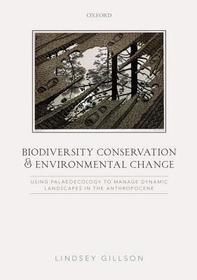
Biodiversity Conservation and Environmental Change
Using palaeoecology to manage dynamic landscapes in the Anthropocene
- Publisher's listprice GBP 132.50
-
59 823 Ft (56 975 Ft + 5% VAT)
The price is estimated because at the time of ordering we do not know what conversion rates will apply to HUF / product currency when the book arrives. In case HUF is weaker, the price increases slightly, in case HUF is stronger, the price goes lower slightly.
- Discount 10% (cc. 5 982 Ft off)
- Discounted price 53 841 Ft (51 278 Ft + 5% VAT)
Subcribe now and take benefit of a favourable price.
Subscribe
59 823 Ft

Availability
printed on demand
Why don't you give exact delivery time?
Delivery time is estimated on our previous experiences. We give estimations only, because we order from outside Hungary, and the delivery time mainly depends on how quickly the publisher supplies the book. Faster or slower deliveries both happen, but we do our best to supply as quickly as possible.
Product details:
- Publisher OUP Oxford
- Date of Publication 9 April 2015
- ISBN 9780198713036
- Binding Hardback
- No. of pages230 pages
- Size 239x171x18 mm
- Weight 610 g
- Language English 0
Categories
Short description:
Discusses how a knowledge of long-term change in ecosystems can inform and influence their conservation, integrating perspectives from archaeology, environmental history and palaeoecology.
MoreLong description:
Ecosystems today are dynamic and complex, leaving conservationists faced with the paradox of conserving moving targets. New approaches to conservation are now required that aim to conserve ecological function and process, rather than attempt to protect static snapshots of biodiversity. To do this effectively, long-term information on ecosystem variability and resilience is needed. While there is a wealth of such information in palaeoecology, archaeology, and historical ecology, it remains an underused resource by conservation ecologists. In bringing together the disciplines of neo- and palaeoecology and integrating them with conservation biology, this novel text illustrates how an understanding of long-term change in ecosystems can in turn inform and influence their conservation and management in the Anthropocene. By looking at the history of traditional management, climate change, disturbance, and land-use, the book describes how a long-term perspective on landscape change can inform current and pressing conservation questions such as whether elephants should be culled, how best to manage fire, and whether ecosystems can or should be "re-wilded"
Biodiversity Conservation and Environmental Change is suitable for senior undergraduate and post-graduate students in conservation ecology, palaeoecology, biodiversity conservation, landscape ecology, environmental change and natural resource management. It will also be of relevance and use to a global market of conservation practitioners, researchers, educators and policy-makers.
This is an often thoughtful book which presents the value of palaeoecological research and data over timescales which embrace not just the Anthropocene, but long periods preceding it.
Table of Contents:
The Conservation Paradox
The Elephant Dilemma: A long-term perspective on the management of African savannas
Where the Wild Things Were: Re-wilding and the sixth extinction
A Burning Question: Can long-term data inform fire management in the 21st century?
Past, present and future climate change: can palaeoecology help manage a warming world?
Ecosystem Services: Lessons from the past for a sustainable future
Nature, Culture, and Conservation in the Age of the Anthropocene
Conclusions: Conservation in the Anthropocene

