

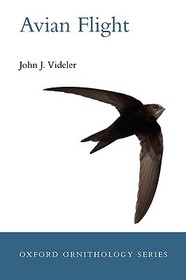
Avian Flight
Series: Oxford Ornithology Series;
- Publisher's listprice GBP 82.00
-
37 023 Ft (35 260 Ft + 5% VAT)
The price is estimated because at the time of ordering we do not know what conversion rates will apply to HUF / product currency when the book arrives. In case HUF is weaker, the price increases slightly, in case HUF is stronger, the price goes lower slightly.
- Discount 10% (cc. 3 702 Ft off)
- Discounted price 33 321 Ft (31 734 Ft + 5% VAT)
Subcribe now and take benefit of a favourable price.
Subscribe
37 023 Ft

Availability
printed on demand
Why don't you give exact delivery time?
Delivery time is estimated on our previous experiences. We give estimations only, because we order from outside Hungary, and the delivery time mainly depends on how quickly the publisher supplies the book. Faster or slower deliveries both happen, but we do our best to supply as quickly as possible.
Product details:
- Publisher OUP Oxford
- Date of Publication 10 August 2006
- ISBN 9780199299928
- Binding Paperback
- No. of pages288 pages
- Size 232x14x155 mm
- Weight 416 g
- Language English
- Illustrations numerous graphs. halftones. tables and line illustrations 0
Categories
Short description:
Avian Flight covers all the main aspects of aerial locomotion by birds including sections on the history of thinking about bird flight, aerodynamics, functional morphology, evolution, kinematics, physiology, energetics and the cost of flight. The subject is complex and still not yet fully understood, and the author argues a convincing case for rethinking or even abandoning some of the old, well-established concepts.
MoreLong description:
Bird flight has always intrigued mankind. This book provides an up-to-date account of our existing knowledge on the subject, offering new insights and challenging some established views.
A brief history of the science of flight introduces the basic physical principles governing aerial locomotion. This is followed by a treatment of flight-related functional morphology, concentrating on the difference in shape of the arm and hand part of the wings, on the structure and function of tails, and on the shape of the body. The anatomy and mechanical properties of feathers receive special attention. Aerodynamic principles used by birds are explained in theory by simply applying Newton's laws, and in practice by showing the direction and velocity of the attached flow around an arm wing cross section and of the leading edge vortex flow above a hand wing. The Archaeopteryx fossils remain crucial in our understanding of the evolution of bird flight despite the recent discovery of a range of well-preserved ancient birds. Avian Flight offers a novel insight into the interactions between wings and air which challenges established theories relating to the origin of bird flight. Take-off, flapping flight, gliding and landing are the basic ingredients of bird flight, and birds use a variety of flight styles from hovering to soaring. Flight muscles are the engines that generate the force required to keep the wings and tail in the gliding configuration and perform work during flapping motion. The energy required to fly can be estimated or measured directly, and a comparison of the empirical results provides insights into the trend in metabolic costs of flight of birds varying in shape and mass from hummingbirds to albatrosses.
The book will be of interest to biologists, ornithologists, and bird watchers. It will also be of relevance and use to physicists, mathematicians, and engineers involved with aerodynamics.
It will provide much food for thought for those of us who combine an interest in fluid mechanics with an interest in birds: in particular, the idea that simple explanations from conventional aerodynamics may not provide the whole story where bird flight is concerned.
Table of Contents:
Preface
Acquisition of knowledge
The flight apparatus
Feathers for flight
Aerodynamics
Evolution of bird flight
Bird flight modes
The bird flight engine
Energy required for flight
Comparing the metabolic costs of flight

