

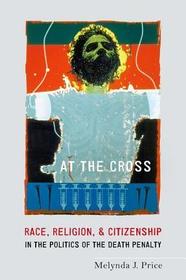
At the Cross
Race, Religion, and Citizenship in the Politics of the Death Penalty
- Publisher's listprice GBP 125.00
-
59 718 Ft (56 875 Ft + 5% VAT)
The price is estimated because at the time of ordering we do not know what conversion rates will apply to HUF / product currency when the book arrives. In case HUF is weaker, the price increases slightly, in case HUF is stronger, the price goes lower slightly.
- Discount 10% (cc. 5 972 Ft off)
- Discounted price 53 747 Ft (51 188 Ft + 5% VAT)
Subcribe now and take benefit of a favourable price.
Subscribe
59 718 Ft

Availability
printed on demand
Why don't you give exact delivery time?
Delivery time is estimated on our previous experiences. We give estimations only, because we order from outside Hungary, and the delivery time mainly depends on how quickly the publisher supplies the book. Faster or slower deliveries both happen, but we do our best to supply as quickly as possible.
Product details:
- Publisher OUP USA
- Date of Publication 27 August 2015
- ISBN 9780190205539
- Binding Hardback
- No. of pages232 pages
- Size 162x244x22 mm
- Weight 522 g
- Language English 0
Categories
Short description:
At the Cross tells a story of the relationship between the death penalty and race in American politics and how the legal and political impact of this form of punishment move beyond individual black defendants to larger numbers of African Americans.
MoreLong description:
Curing systemic inequalities in the criminal justice system is the unfinished business of the Civil Rights movement. No part of that system highlights this truth more than the current implementation of the death penalty. At the Cross tells a story of the relationship between the death penalty and race in American politics that complicates the common belief that individual African Americans, especially poor African Americans, are more subject to the death penalty in criminal cases. The current death penalty regime operates quite differently than it did in the past. The findings of this research demonstrate the the racial inequity in the meting out of death sentences has legal and political externalities that move beyond individual defendants to larger numbers of African Americans.
At the Cross looks at the meaning of the death penalty to and for African Americans by using various sites of analysis. Using various sites of analysis, Price shows the connection between criminal justice policies like the death penalty and the political and legal rights of African Americans who are tangentially connected to the criminal justice system through familial and social networks. Drawing on black politics, legal and political theory and narrative analysis, Price utilizes a mixed-method approach that incorporates analysis of media reports, capital jury selection and survey data, as well as original focus group data. As the rates of incarceration trend upward, Black politics scholars have focused on the impact of incarceration on the voting strength of the black community. Local, and even regional, narratives of African American politics and the death penalty expose the fractures in American democracy that foment perceptions of exclusion among blacks.
At the Cross is a well-written and important book that will be of interest to students and scholars of Black politics, history, and religion.
Table of Contents:
Prologue
Introduction
1. Can the Souls of Black Folk Be Redeemed? Race, Religion, and the Politics of Public Appeals for Salvation from the Execution Chamber
2. Performing Discretion or Performing Discrimination? Race, Ritual, and the Denial of Participatory Rights in Capital Jury Selection
3. Do Blacks Die Alone? The Role of Collective Identities in Individual African American Views of the Death Penalty
4. What We Tell Each Other: African American Folk Knowledge of the Death Penalty
5. Something Less than Equal but the Same: The Death Penalty and the Inversion of Equality in African American Deliberation of the Politics of Punishment
Conclusion: The Death Penalty and the Shared Legacy of Race
Epilogue: Troy, Trayvon, and the Trend(?) toward Abolition
Appendices
Notes
Bibliography
Index

