

- Publisher's listprice GBP 9.99
-
4 772 Ft (4 545 Ft + 5% VAT)
The price is estimated because at the time of ordering we do not know what conversion rates will apply to HUF / product currency when the book arrives. In case HUF is weaker, the price increases slightly, in case HUF is stronger, the price goes lower slightly.
- Discount 10% (cc. 477 Ft off)
- Discounted price 4 295 Ft (4 091 Ft + 5% VAT)
Subcribe now and take benefit of a favourable price.
Subscribe
4 772 Ft

Availability
Estimated delivery time: In stock at the publisher, but not at Prospero's office. Delivery time approx. 3-5 weeks.
Not in stock at Prospero.
Why don't you give exact delivery time?
Delivery time is estimated on our previous experiences. We give estimations only, because we order from outside Hungary, and the delivery time mainly depends on how quickly the publisher supplies the book. Faster or slower deliveries both happen, but we do our best to supply as quickly as possible.
Product details:
- Publisher OUP Oxford
- Date of Publication 23 February 2017
- ISBN 9780198712152
- Binding Paperback
- No. of pages176 pages
- Size 174x113x11 mm
- Weight 144 g
- Language English
- Illustrations 27 black and white illustrations 10
Categories
Short description:
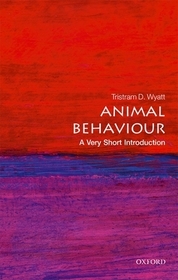
Animal behaviour is a central topic of zoology, and with the development of ideas concerning the role of genes as well as environment the subject has been transformed. Tristram Wyatt gives a modern view, including a sense of the power of gene knock-outs, computing, and image analysis to enable detailed experiments and observations of behaviour.
MoreLong description:
How animals behave is crucial to their survival and reproduction. The application of new molecular tools such as DNA fingerprinting and genomics is causing a revolution in the study of animal behaviour, while developments in computing and image analysis allow us to investigate behaviour in ways never previously possible. By combining these with the traditional methods of observation and experiments, we are now learning more about animal behaviour than ever before.
In this Very Short Introduction Tristram D. Wyatt discusses how animal behaviour has evolved, how behaviours develop in each individual (considering the interplay of genes, epigenetics, and experience), how we can understand animal societies, and how we can explain collective behaviour such as swirling flocks of starlings. Using lab and field studies from across the whole animal kingdom, he looks at mammals, butterflies, honeybees, fish, and birds, analysing what drives behaviour, and exploring instinct, learning, and culture. Looking more widely at behavioural ecology, he also considers some aspects of human behaviour.
ABOUT THE SERIES: The Very Short Introductions series from Oxford University Press contains hundreds of titles in almost every subject area. These pocket-sized books are the perfect way to get ahead in a new subject quickly. Our expert authors combine facts, analysis, perspective, new ideas, and enthusiasm to make interesting and challenging topics highly readable.
This slim volume ... is packed full of facts, photographs, diagrams, and helpful graphs. Wyatt's writing is clear and concise, and the content is comprehensively referenced ... This is a fine book that will undoubtedly entertain and educate a broad readership. I highly recommend this book to anyone with even a marginal interest in animal behaviour. This work will be of interest to students of biology, researchers and non-specialists alike.
Table of Contents:
How animals behave (and why)
Sensing and responding
How behaviour develops
Learning and animal culture
Signals for survival
Winning strategies
The wisdom of crowds
Applying behaviour
References
Further Reading
Index

