

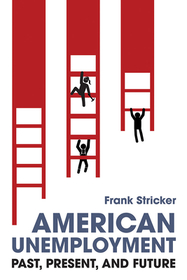
American Unemployment – Past, Present, and Future
Past, Present, and Future
- Publisher's listprice GBP 14.99
-
7 161 Ft (6 820 Ft + 5% VAT)
The price is estimated because at the time of ordering we do not know what conversion rates will apply to HUF / product currency when the book arrives. In case HUF is weaker, the price increases slightly, in case HUF is stronger, the price goes lower slightly.
- Discount 10% (cc. 716 Ft off)
- Discounted price 6 445 Ft (6 138 Ft + 5% VAT)
Subcribe now and take benefit of a favourable price.
Subscribe
7 161 Ft

Availability
Estimated delivery time: In stock at the publisher, but not at Prospero's office. Delivery time approx. 3-5 weeks.
Not in stock at Prospero.
Why don't you give exact delivery time?
Delivery time is estimated on our previous experiences. We give estimations only, because we order from outside Hungary, and the delivery time mainly depends on how quickly the publisher supplies the book. Faster or slower deliveries both happen, but we do our best to supply as quickly as possible.
Product details:
- Edition number 1st Edition
- Publisher MO – University of Illinois Press
- Date of Publication 19 May 2020
- Number of Volumes Paperback
- ISBN 9780252085024
- Binding Paperback
- No. of pages280 pages
- Size 227x152x21 mm
- Weight 400 g
- Language English
- Illustrations 9 tables 13
Categories
Long description:
The history of unemployment and concepts surrounding it remain a mystery to many Americans. Frank Stricker believes we need to understand this essential thread in our shared past. American Unemployment is an introduction for everyone that takes aim at misinformation, willful deceptions, and popular myths to set the record straight:
- Workers do not normally choose to be unemployed.
- In our current system, persistent unemployment is not an aberration. It is much more common than full employment, and the outcome of elite policy choices.
- Labor surpluses propped up by flawed unemployment numbers have helped to keep real wages stagnant for more than forty years.
- Prior to the New Deal and the era of big government, laissez-faire policies repeatedly led to depressions with heavy, even catastrophic, job losses.
- Undercounting the unemployed sabotages the creation of government job programs that can lead to more high-paying jobs and full employment.

