

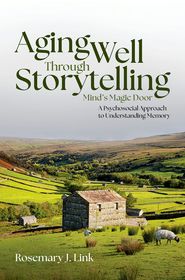
Aging Well Through Storytelling
Mind's Magic Door
- Publisher's listprice GBP 22.99
-
10 379 Ft (9 885 Ft + 5% VAT)
The price is estimated because at the time of ordering we do not know what conversion rates will apply to HUF / product currency when the book arrives. In case HUF is weaker, the price increases slightly, in case HUF is stronger, the price goes lower slightly.
- Discount 10% (cc. 1 038 Ft off)
- Discounted price 9 341 Ft (8 897 Ft + 5% VAT)
Subcribe now and take benefit of a favourable price.
Subscribe
10 379 Ft

Availability
Estimated delivery time: In stock at the publisher, but not at Prospero's office. Delivery time approx. 3-5 weeks.
Not in stock at Prospero.
Why don't you give exact delivery time?
Delivery time is estimated on our previous experiences. We give estimations only, because we order from outside Hungary, and the delivery time mainly depends on how quickly the publisher supplies the book. Faster or slower deliveries both happen, but we do our best to supply as quickly as possible.
Product details:
- Publisher OUP USA
- Date of Publication 25 November 2025
- ISBN 9780197808450
- Binding Hardback
- No. of pages224 pages
- Size 226x145x30 mm
- Weight 476 g
- Language English 657
Categories
Short description:
Aging Well Through Storytelling explores the beauty of aging and identifies key strategies and practices to age well. Weaving professional analysis and personal experience, Rosemary J. Link tells the story of a lifespan from infancy to seniority. Each chapter focuses on a life stage, laying the conceptual foundations from psychosocial theory and then marrying research to reality with a pair of personal reflections by Link and her mother, Gwendoline. Through this tale of two lifetimes, Link harnesses the science of lifespan development and her own life journey to present aging as a positive process of discovery and acquiring wisdom. She shares practice interventions and practical ways to age with vitality and embrace this precious aspect of life.
MoreLong description:
Growing old is often associated with negative images and commentary. Aging Well Through Storytelling explores the beauty of aging and identifies key strategies and practices to age well. Weaving professional analysis and personal experience, Rosemary J. Link tells the story of a lifespan from infancy to seniority. Each chapter focuses on a life stage, laying the conceptual foundations from psychosocial theory and then marrying research to reality with a pair of personal pieces by Link and her mother, Gwendoline--some correspondence between the two, and others as separate reflections on the same stage of life. The stories touch themes such as being trusted with tasks as a child, truanting, questioning authority, being absorbed in the joys and stings of beekeeping, being overwhelmed midlife, recovering from the death of a child, and embracing gender and reconciliation. Through this tale of two lifetimes, Link harnesses the science of lifespan development and her own life journey to present aging as a positive process of discovery and acquiring wisdom. Linking real-life stories to concepts, she shares practice interventions and practical ways to age with vitality and embrace this precious aspect of life.
MoreTable of Contents:
Introduction to the Psychosocial Theory of Aging and the Value of Storytelling
Contemporary Attitudes to Aging and Psychosocial Theory Stage One: Trust and Mistrust
Psychosocial Theory Stage Two: Autonomy and Shame
Psychosocial Theory Stage Three: Initiative and Guilt
Psychosocial Theory Stage Four: Industry and Inferiority
Psychosocial Theory Stage Five: Identity and Foreclosure
Psychosocial Theory Stage Six: Intimacy and Isolation
Psychosocial Theory Stage Seven: Generativity and Stagnation
Psychosocial Theory Stage Eight: Integrity and Despair
Conclusion and Tip Sheet for Aging Well

