

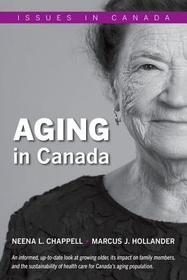
Aging in Canada
Series: Issues in Canada;
- Publisher's listprice GBP 13.49
-
6 090 Ft (5 800 Ft + 5% VAT)
The price is estimated because at the time of ordering we do not know what conversion rates will apply to HUF / product currency when the book arrives. In case HUF is weaker, the price increases slightly, in case HUF is stronger, the price goes lower slightly.
- Discount 10% (cc. 609 Ft off)
- Discounted price 5 481 Ft (5 220 Ft + 5% VAT)
Subcribe now and take benefit of a favourable price.
Subscribe
6 090 Ft

Availability
Only to order.
Why don't you give exact delivery time?
Delivery time is estimated on our previous experiences. We give estimations only, because we order from outside Hungary, and the delivery time mainly depends on how quickly the publisher supplies the book. Faster or slower deliveries both happen, but we do our best to supply as quickly as possible.
Product details:
- Publisher OUP Canada
- Date of Publication 25 July 2013
- ISBN 9780195447668
- Binding Paperback
- No. of pages208 pages
- Size 229x153x14 mm
- Weight 266 g
- Language English
- Illustrations 20 tables, 12 figures 0
Categories
Short description:
Two experts on aging consider how our health needs change as we age and evaluate our current system of care provision. From definitions of health and well-being to informal caregiving, from a cost-benefit analysis of continuing care to the wide range of options available to help manage our changing needs, this fascinating and informative book provides an eye-opening look at the realities of an aging population.
MoreLong description:
Canada, like other countries, is aging. The media has reported on a "grey tsunami," a demographic change reflecting longer life expectancy and the retirement of the so-called baby boomer generation. The numbers and percentages of older adults within our population continue to increase. In 2010, 15.3 percent of Canada's population was over 65; in 2030, it will be 24.1 percent. Many commentators have risen alarm about this flood of adults potentially bankrupting our health care system.
This book gives us the facts in a clear, concise, and balanced way. It is true that our population is aging; however, this is not a crisis. We learn that the actual cost drivers are technology, labour, and increased service utilization across all ages-not uncontrollable demographic factors like population growth. The perceived crisis in the sustainability of our health care system should be framed in terms of challenges related to the reorganization and management of health services, particularly for older adults. Cost effectiveness is the key.
Two experts on aging review the latest information. They explore topics such as how our health changes as we age and how our health care needs change as a consequence; how the needs of older adults are currently met; and how we can improve in the future. From discussion of informal caregiving to a cost-benefit analysis of continuing care, this fascinating and informative book provides an eye-opening look at the realities of our aging population.
Table of Contents:
List of Illustrations
Preface
Acknowledgements
1. Introduction
2. Population Health and Aging
Introduction
More Older Canadians
Dependency Ratios: Cause for Concern?
Interpreting Dependency Ratios
The Health of Older Canadians
Chronic Conditions
Functional Disability
Self-Perceptions of Health
Summary
Well-Being
Frailty
Subpopulations
Summary
Health Promotion and Disease Prevention
Summary
3. Informal Care
Introduction
Social Support and Caregiving
Caregiving in the West
Caregiver Stress and Burden
Understanding Caregiver Burden
Other Directions in Caregiving Research
Caregiving in the Future
In Sum
Social Policy and Caregiving
Caregiving Policies and Programs in Canada
International Experience
The Need for Care for Caregivers
Summary
4. The Evolution of Continuing Care for Older Adults
Introduction
The Historical Evolution of Continuing Care
The Emergence of Social Security in Canada (1700s-1945)
The Consolidation of Social Security (1945-early 1970s)
Fiscal Retrenchment (early 1970s-early 1990s)
Reform and Retrenchment (early 1990s-present)
Current Concerns
Discussion
5. The Economic Evaluation of Continuing Care
Introduction
An Overview of Economic Analysis
The Cost-Effectiveness of the Maintenance and Preventive Function of Home Care
Home Care as a Substitute for Residential Care
The Cost-Effectiveness of Home Care Compared to Acute Care Hospitals
The Cost-Effectiveness of Other Continuing Care Services
Discussion
6. Delivering Care for Older Adults: Models of Integrated Care
Introduction Examples of Successful Integrated Systems of Care
Larger Provincial Models
Smaller Models with Home, Community, and Residential Care Components
Smaller, Integrated Community Based Models
The Chronic Care Model
Frameworks to Inform the Development of Integrated Systems of Care Delivery
Three Highly Regarded Frameworks
The Enhanced Continuing Care Framework
Discussion Conclusion
7. Discussion and Blueprint for Action
Introduction
A Critical First Step
Twenty Years of Policy Drift A Response to the Skeptics
The Cost-Effectiveness Data No Longer Apply
Actual Savings are Not Possible
Large Scale Change is Not Feasible Getting it Right
Conclusions
References
Index

