

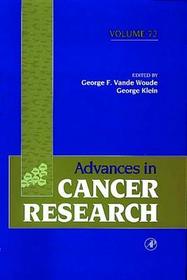
Advances in Cancer Research
Series: Advances in Cancer Research; 72;
- Publisher's listprice EUR 129.00
-
53 502 Ft (50 955 Ft + 5% VAT)
The price is estimated because at the time of ordering we do not know what conversion rates will apply to HUF / product currency when the book arrives. In case HUF is weaker, the price increases slightly, in case HUF is stronger, the price goes lower slightly.
- Discount 10% (cc. 5 350 Ft off)
- Discounted price 48 152 Ft (45 860 Ft + 5% VAT)
Subcribe now and take benefit of a favourable price.
Subscribe
53 502 Ft

Availability
cancelled
Why don't you give exact delivery time?
Delivery time is estimated on our previous experiences. We give estimations only, because we order from outside Hungary, and the delivery time mainly depends on how quickly the publisher supplies the book. Faster or slower deliveries both happen, but we do our best to supply as quickly as possible.
Product details:
- Publisher Elsevier Science
- Date of Publication 9 February 1998
- ISBN 9780120066728
- Binding Hardback
- No. of pages242 pages
- Size 229x152 mm
- Weight 530 g
- Language English 0
Categories
Long description:
The presentation of Foundations in Cancer Research articles has become a focal point of the Advances in Cancer Research series. This volume begins with two such timely reviews, the first of which is by series co-editor George Klein. Dr. Klein evaluates and reviews Leslie Foulds' suggestion that tumors develop in a series of steps and the effect that this 40-year-old hypothesis has had on cancer research. The second Foundations article by L.A. Loeb presents the historical significance of increased mutagenesis and clonal selection on tumor progression. The first regular article, by R. Khosravi-Far and colleagues, analyzes the functional role of Ras in signal transduction and the involvement that Rho family proteins have on Ras. Mark Saville and Roger Watson review supporting evidence that B-Myb may be a critical regulator of the cell cycle. S. Baylin and co-authors compare DNA methylation in normal cells with that in cancerous cells and discuss the specific consequences associated with tumor progression. Last, Steven Grant discusses the use of ara-C as a treatment for various types of cancer and summarizes its cellular metabolism, mode of action and resistance, and the molecular events involved in apoptosis.
MoreTable of Contents:
G. Klein, Foulds Dangerous Idea Revisited: The Multistep Development of Tumors 40 Years Later.
L.A. Loeb, Cancer Cells Exhibit a Mutator Phenotype.
R. Khosravi-Far, S. Campbell, K.L. Rossman, and C.J. Der, Increasing Complexity of Ras Signal Transduction: Involvement of Rho Family Proteins.
M. Saville and R. Watson, B-Myb: A Key Regulator of the Cell Cycle.
S.B. Baylin, J.G. Herman, J.R. Graff, P.M. Vertino, and J.-P. Issa, Alterations in DNA Methylation: A Fundamental Aspect of Neoplasia.
S. Grant, Ara-C: Cellular and Molecular Pharmacology.

