

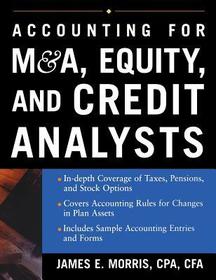
Accounting for M&A, Credit, & Equity Analysts
- Publisher's listprice GBP 75.99
-
34 309 Ft (32 675 Ft + 5% VAT)
The price is estimated because at the time of ordering we do not know what conversion rates will apply to HUF / product currency when the book arrives. In case HUF is weaker, the price increases slightly, in case HUF is stronger, the price goes lower slightly.
- Discount 10% (cc. 3 431 Ft off)
- Discounted price 30 878 Ft (29 408 Ft + 5% VAT)
Subcribe now and take benefit of a favourable price.
Subscribe
34 309 Ft

Availability
printed on demand
Why don't you give exact delivery time?
Delivery time is estimated on our previous experiences. We give estimations only, because we order from outside Hungary, and the delivery time mainly depends on how quickly the publisher supplies the book. Faster or slower deliveries both happen, but we do our best to supply as quickly as possible.
Product details:
- Publisher McGraw Hill
- Date of Publication 16 July 2004
- ISBN 9780071429696
- Binding Hardback
- No. of pages pages
- Size 236x193x26 mm
- Weight 706 g
- Language English 0
Categories
Short description:
Everything investment professionals need to know about accounting--in a practical desk reference format
In today's world of constantly changing accounting rules, models, and practices, investment professionals need an authoritative, all-in-one, fast-access reference for the latest knowledge and information. Accounting for M&A, Equity, and Credit Analysts provides comprehensive and easy-to-understand answers to the everyday accounting questions that come up time and again in the investing arena.
Noted M&A accounting authority James E. Morris has spent years dispensing accounting advice on Wall Street, and he knows which questions consistently baffle even the most experienced investment pros. He answers those questions and hundreds more as he provides clear and concise explanations of areas including:
- Subtle, less understood aspects of common accounting areas and procedures
- Purchase accounting for business combinations--essential not only for M&A analysts but for credit and equity analysts as well
- Accounting for employee stock options, and its effect on both earnings and cash flow
Today's investment accounting landscape is undergoing tumultuous and unprecedented change. Professionals who fail to keep up with that change risk being left behind. Accounting for M&A, Equity, and Credit Analysts updates you on virtually every important facet of investment accounting, and provides the handy reference you need to instantly know what the numbers are really saying to you--and, just as important, what they are not.
"This is not, by any means, another financial accounting textbook. Instead, I intend it as a sort of spotlight, illuminating what I have found in my investment experience to be the 'black holes' of accounting. It is merely the collected answers to the questions that analysts (associates, vice presidents, managing directors and clients as well) have asked me during the time I spent giving accounting advice on Wall Street."
--From the Preface
Investment professionals too often regard the acquisition of accounting knowledge as a necessary evil--and, therefore, too often know less than they should. This lack of knowledge often leads to simple misunderstandings or even out and out errors that, at best, serve as minor speed bumps in a high-stakes transaction and, at worst, lead to the delay or even derailing of the deals in question.
Accounting for M&A, Equity, and Credit Analysts helps investment professionals as well as undergraduate and graduate students of and investment banking ensure that they will always be able to quickly and confidently get their hands on the right answers to virtually every accounting question. Providing easy-access accounting information without needless detail and CPA doublespeak, this invaluable reference distinguishes itself from other texts of its type in four major areas as it:
- Bypasses common-knowledge accounting basics to concentrate only on information vital to investment analysts
- Takes an investment banking perspective as opposed to one solely focused on Generally Accepted Accounting Principles (GAAP) and reporting
- Integrates financial modeling and spreadsheet approaches that are essential to forecasting and analysis
- Provides in-depth coverage of items in enterprise valuation and business combination transactions
In the investment profession, few factors are as valuable or overlooked as solid knowledge in accounting. Unfortunately, when professionals seek to increase their accounting expertise, they are too often faced with either cartoonish workbooks or incomprehensible, 600-page textbooks.
Accounting for M&A, Equity, and Credit Analysts provides investment professionals, analysts, and bankers with only the information they need to understand how accounting impacts their everyday environment. The first investment accounting desk reference to bridge the gap between what is taught in business school and what is actually needed in the real world, it allows investment pros to focus on and truly understand the vital accounting details they encounter every day--and helps them ensure that minor accounting misunderstandings or mistakes won't mushroom into major deal-killers.
MoreTable of Contents:
Introduction
List of Abbreviations
Chapter 1 Equity Method of Consolidation
Introduction
Description of the Equity Method
Tax Considerations When Using the Equity Method
Accounting under the Equity Method—Excess of Cost over Equity Purchased
Accounting under the Equity Method—Intercompany Transactions
Guidance for Applying the Equity Method
SEC Staff Views Concerning the Equity Method
When to Use the Equity Method—Summary
Accounting for Cash Flows from Equity Method Investments
Modeling the Equity Method of Accounting in Projection Models
Chapter Summary
Chapter 2 Minority Interests
Introduction
Minority Interests
Overview of Accounting for Minority Interests
Treatment of Minority Interests for Enterprise Valuation
Forecasting Minority Interests
Treatment of Minority Interests in M&A Transactions
Modeling Minority Interests
Chapter Summary
Chapter 3 Deferred Income Taxes and Income Tax Reporting
Introduction
Basic Principles of Tax Reporting
The First Principle
The Second Principle
The Third Principle
The Fourth Principle
Treatment of Deferred Income Tax Items in M&A Transactions
Modeling Income Taxes in Projection Models
Calculating the Provision for Taxes—Detailed Calculation
Chapter Summary
Chapter 4 Deciphering the Deferred Tax Footnote
Introduction
Financial Statement Disclosure for Income Taxes
Reconstructing Deferred Taxes on the Financial Statements
Problems with Ratio Analysis
Valuation of Deferred Tax Items
Chapter Summary
Chapter 5 Estimating the Tax Basis of a Firm’s Assets
Introduction
Factors Affecting Differences Between Asset’s Book and Tax Bases
Depreciation (or Amortization) Using Different Schedules
Recognizing Asset Impairments
Transaction Fair Value Adjustments
Asset Sales or Deemed Asset Sales
Estimating the Tax Bases of Target Company’s Assets—Known Balance Sheet
Estimating the Tax Bases of Target Company’s Assets—Unknown Balance Sheet
Chapter Summary
Chapter 6 Pension and Other Postretirement Benefits
Introduction
Pension versus Other Postretirement Benefit Plans
Types of Pension Plans
Economic Objectives of Pension Plans
How Pension Plans Work
Net Periodic Pension Cost
Minimum Pension Liability
Pension Benefits Summary
Other Postretirement Benefit Plans
Net Periodic Postretirement Benefit Cost
Effects of Business Combinations
Chapter Summary
Chapter 7 Deciphering the Pension Footnote
Introduction
Pension Benefit Disclosure Requirements
Benefit Obligation Reconciliation
Plan Fair Value Reconciliation
Employer Securities Included in Plan Assets
Net Periodic Benefit Cost Disclosure
Funded Status and Unrecognized Items
Rate Disclosures
Health Care Disclosures
Chapter Summary
Chapter 8 Analyzing the Firm’s Pension Cash Flows
Introduction
Estimating Future Funding Cash Flows
Employer Company’s Plan Assets and Liabilities in an Acquisition
Plan Liquidation Values
Chapter Summary
Chapter 9 Employee Stock Options
Introduction
The Intrinsic Valuation Method
The Fair Value Method
Evaluating the Firm’s Inputs to the Option-Pricing Model
Tax Effects of Employee Stock Options
Calculation of Diluted Earnings per Share for Companies Expensing Stock Options
Accounting for Target Stock Options Rolled Over in a Purchase Acquisition
Projecting Earnings Per Share (EPS) for Option-Intensive Firms
Chapter Summary
Chapter 10 Restructuring Charges
Introduction
FASB’s New Changes to Financial Accounting for Restructuring Charges
Restructuring Charges—U.S. GAAP
Restructuring Charges—International Accounting Standards
Disclosure of Restructuring Charges
Restructuring Liabilities in Business Combinations
Chapter Summary
Chapter 11 Discontinued Operations
Introduction
How Results of Discontinued Operations Impact Earnings from Continuing Operations
Sources of Classification Bias
Criteria for Classifying Items as Discontinued Operations
The Operations Being Discontinued—Component of a Business
Disposal Criteria
International Accounting Treatment of Discontinued Operations
Chapter Summary
Chapter 12 Net Operating Loss Deductions
Introduction
Net Operating Loss Deductions
Other Tax Considerations Relating to NOLs
M&A Considerations Relating to NOLs
NOL Effects on Financial (GAAP) Reporting
Valuation Considerations
Modeling NOL Carrybacks and Carryforwards
Chapter Summary
Chapter 13 Purchase Accounting for Business Combinations
Introduction
Purchase Accounting Basics
Calculating Target Company’s Net Identifiable Assets
The Net Identifiable Assets Calculation
Calculating the Purchase Price
Transaction Fees
Fair Value of the Consideration Given
Calculating Goodwill
Negative Goodwill
Amortization of Goodwill
Accretion and Dilution of Earnings
Pro Forma Presentation (as If Combined)
Statements of Cash Flows Following Business Combinations
Limitations on the Use of Target Company’s Net Operating Loss (NOL) Carryforwards
Effects on Minority Interests in Business Combination Transactions
Chapter Summary
Chapter 14 Deemed Asset Sales under IRC Sections 338(h)(10) or 338(g)
Introduction
Overview of the Section 338(h)(10) Election
Benefits of Section 338(h)(10) Sales
Determining the Sale Price for a Section 338(h)(10) Election
Modeling Section 338(h)(10) Transactions
Chapter Summary
Glossary
Endnotes
Index

