

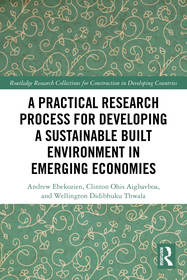
-
GET 10% OFF
- Publisher's listprice GBP 62.99
-
28 439 Ft (27 085 Ft + 5% VAT)
The price is estimated because at the time of ordering we do not know what conversion rates will apply to HUF / product currency when the book arrives. In case HUF is weaker, the price increases slightly, in case HUF is stronger, the price goes lower slightly.
- Discount 10% (cc. 2 844 Ft off)
- Discounted price 25 595 Ft (24 377 Ft + 5% VAT)
25 595 Ft

Availability
printed on demand
Why don't you give exact delivery time?
Delivery time is estimated on our previous experiences. We give estimations only, because we order from outside Hungary, and the delivery time mainly depends on how quickly the publisher supplies the book. Faster or slower deliveries both happen, but we do our best to supply as quickly as possible.
Product details:
- Edition number 1
- Publisher Routledge
- Date of Publication 20 July 2026
- ISBN 9781032912592
- Binding Paperback
- No. of pages150 pages
- Size 234x156 mm
- Language English
- Illustrations 11 Illustrations, black & white; 11 Line drawings, black & white; 18 Tables, black & white 0
Categories
Short description:
This book aims to fill the dearth of practical research guidance and reference material with specific focus on the built environment in developing countries. It has been structured so that each chapter is largely free-standing, allowing the reader (undergraduate, postgraduate, or practitioner) to reference the material with ease.
MoreLong description:
A Practical Research Process for Developing a Sustainable Built Environment in Emerging Economies aims to fill the dearth of practical research guidance and reference material with specific focus on the built environment in developing countries. Global policy agendas such as Agenda 2030 (the SDGs) highlight the importance and growth of research and knowledge from emerging nations who are increasingly contributing to research that is critical for development and advancement. The role of built environment practitioners will continue to evolve by building on the sound foundations laid down by the professions and by exploiting to the full the new technologies available to us through conducting innovative research, but more guidance on the research process is necessary to ensure the integrity and quality of the output.
This book has been structured so that each chapter is largely free-standing, allowing the reader (undergraduate, postgraduate, or practitioner) to reference the material with ease. It aims to provide practical guidance on conducting research and on writing a dissertation or report and begins by considering the general research background in a built environment context. It then covers research ethics, before moving on to discuss the importance of selecting the right research topic and title and writing a clear abstract. The chapters then cover introducing a research project, and the authors include a section on the problem statement, research questions, aims and objectives, research gap(s), and motivations for the study. The book goes on to cover the literature review section, theoretical and conceptual frameworks, the various types of methodological approaches, and when to apply them. The findings section, discussion of the results, and the study’s implications are then discussed, before the final chapters cover the conclusion and recommendations.
The book provides a useful reference for higher education students, graduates, postgraduates, and practitioners engaged in all aspects of construction and built environment research.
MoreTable of Contents:
1. General Research Background in the Built Environment
2. Ethics in the Built Environment Research
3. Understanding Researchable Title and Abstract Components in the Built Environment
4. Introduction Section
5. Literature Review Section
6. Methodology Section
7. Findings Section
8. Discussion of Findings Section
9. The Study's Implications Section
10. Conclusion and Recommendations Section

