

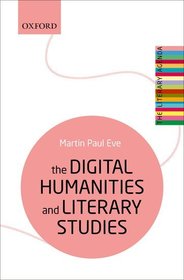
The Digital Humanities and Literary Studies
Series: The Literary Agenda;
- Publisher's listprice GBP 17.49
-
7 896 Ft (7 520 Ft + 5% VAT)
The price is estimated because at the time of ordering we do not know what conversion rates will apply to HUF / product currency when the book arrives. In case HUF is weaker, the price increases slightly, in case HUF is stronger, the price goes lower slightly.
- Discount 10% (cc. 790 Ft off)
- Discounted price 7 106 Ft (6 768 Ft + 5% VAT)
Subcribe now and take benefit of a favourable price.
Subscribe
7 896 Ft

Availability
Estimated delivery time: In stock at the publisher, but not at Prospero's office. Delivery time approx. 3-5 weeks.
Not in stock at Prospero.
Why don't you give exact delivery time?
Delivery time is estimated on our previous experiences. We give estimations only, because we order from outside Hungary, and the delivery time mainly depends on how quickly the publisher supplies the book. Faster or slower deliveries both happen, but we do our best to supply as quickly as possible.
Product details:
- Publisher OUP Oxford
- Date of Publication 10 February 2022
- ISBN 9780198850489
- Binding Paperback
- No. of pages208 pages
- Size 197x129x11 mm
- Weight 226 g
- Language English
- Illustrations 15 Illustrations 298
Categories
Short description:
A short introduction and overview of developing intersections between digital methods and literary studies that offers the best starting place for those who wish to learn more about the possibilities, but also the limitations, of the digital humanities in the literary space.
MoreLong description:
A comprehensive overview into digital literary studies that equips readers to navigate the difficult contentions in this space.
The Literary Agenda is a series of short polemical monographs about the importance of literature and of reading in the wider world and about the state of literary education inside schools and universities. The category of 'the literary' has always been contentious. What is clear, however, is how increasingly it is dismissed or is unrecognised as a way of thinking or an arena for thought. It is sceptically challenged from within, for example, by the sometimes rival claims of cultural history, contextualized explanation, or media studies. It is shaken from without by even greater pressures: by economic exigency and the severe social attitudes that can follow from it; by technological change that may leave the traditional forms of serious human communication looking merely antiquated. For just these reasons this is the right time for renewal, to start reinvigorated work into the meaning and value of literary reading.
You may have heard of the digital humanities--and what you may have heard may not have been good. Yet like an oncoming storm, the relentless growth of the use of digital methods for the study of literature seems inevitable. This book gives an insight into the ways in which digital approaches can be used to study literature and the ways in which humanistic study can be used to explore digital literature. Examining its subject across the axes of authorship, space, and visualization, maps and place, distance and history, and ethical approaches to the digital humanities, this book introduces newcomers to the topic while also offering plenty for seasoned digital humanities pros. Combining original research with third-party case studies and examples, this book will appeal both to students and researchers across all levels who wish to learn about digital literary studies.
Table of Contents:
Introduction
Authors and Writing
Space and Visualization
Maps and Place
Distance and History
Conclusion: Ethical Digitalism
Bibliography

