

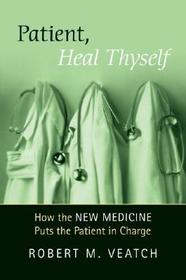
Patient, Heal Thyself
How the "New Medicine" Puts the Patient in Charge
- Publisher's listprice GBP 36.99
-
17 671 Ft (16 830 Ft + 5% VAT)
The price is estimated because at the time of ordering we do not know what conversion rates will apply to HUF / product currency when the book arrives. In case HUF is weaker, the price increases slightly, in case HUF is stronger, the price goes lower slightly.
- Discount 10% (cc. 1 767 Ft off)
- Discounted price 15 904 Ft (15 147 Ft + 5% VAT)
Subcribe now and take benefit of a favourable price.
Subscribe
17 671 Ft

Availability
printed on demand
Why don't you give exact delivery time?
Delivery time is estimated on our previous experiences. We give estimations only, because we order from outside Hungary, and the delivery time mainly depends on how quickly the publisher supplies the book. Faster or slower deliveries both happen, but we do our best to supply as quickly as possible.
Product details:
- Publisher OUP USA
- Date of Publication 13 November 2008
- ISBN 9780195313727
- Binding Hardback
- No. of pages304 pages
- Size 236x157x25 mm
- Weight 567 g
- Language English 0
Categories
Short description:
Patient, Heal Thyself is on a theme developed by the author for 30 years, that a radical change is sweeping through the American healthcare system that puts the patient in charge of treatment to an unprecedented extent.
MoreLong description:
Robert Veatch is one of the founding fathers of contemporary bioethics. In Patient, Heal Thyself, he sheds light on a fundamental change sweeping through the American health care system, a change that puts the patient in charge of treatment to an unprecedented extent. The change is in how we think about medical decision-making. Whereas medicine's core idea was that medical decisions should be based on the hard facts of science--the province of the doctor--the "new medicine" contends that medical decisions impose value judgments. Since physicians are not trained to make value judgments, the pendulum has swung greatly toward the patient in making decisions about their treatment. Veatch shows how this is presently true only for value-loaded interventions (abortion, euthanasia, genetics) but is coming to be true for almost every routine procedure in medicine--everything from setting broken arms to choosing drugs for cholesterol. Veatch uses a range of fascinating examples to reveal how values underlie almost all medical procedures and to argue that this change is inevitable and a positive trend for patients.
...engaging and thoughtful ruminations about the current medical paradigm that include interesting inquiries into historial practices and beliefs...a compelling examination of how to catch medicine up with the times, and is not to be missed.
Table of Contents:
Table of Contents
Detailed Table of Contents
List of Cases
Preface
The New Medicine: An Introduction
Part I: Why Doctor Does Not Know Best
The Puzzling Case of the Broken Arm
The Hernias, Diets, and Drugs
Doctor Doesn't Know Best: Why Physicians Cannot Know What Will Benefit Patients
Sacrificing Patient Benefit to Protect Patient Rights
Sacrificing a Patient: Societal Interests and Duties to Others
The New, Limited Twenty-first-century Role for Physicians as Patient Assistants
Abandoning Modern Medical Concepts: Doctors "Orders" and Hospital Discharge
Medicine Can't "Indicate:" So Why Do We Talk That Way?
Medical Necessity and Treatments of Choice: Who is Fooling Whom?
Part II: New Concepts for the New Medicine
Abandoning Informed Consent
Why Physicians Get It Wrong and the Alternatives to Consent: Patient Choice and Deep Value Pairing
The End of Prescribing: Why Prescription Writing is Irrational
The Alternatives to Prescribing
Are Fat People Overweight
Beyond Prettiness: Death, Disease, and Being Fat
Universal but Varied Health Insurance: Only Separate is Equal
Health Insurance: The Case for Multiple Lists
Why Hospice Care Should Not be a Part of Ideal Health Care: The History of the Hospice
Why Hospice Care Should Not be a Part of Ideal Health Care: Hospice in a Postmodern Era
Part III: The New Medicine and the New Medical Science
Randomized Human Experimentation: The Modern Dilemma
Randomized Human Experimentation: A Proposal for the New Medicine
Clinical Practice Guidelines and Why They Are Wrong
Outcomes Research and How Values Sneak into Finding of Fact
The Consensus of Medical Experts and Why it is Wrong So Often
Epilogue: A Patient Manifesto

